Posts

Every week, Tuesday to Friday.

Cash, partners and succession, in the companies of those who sign. The same posts as on LinkedIn, in full, with the image or the carousel, translated from Portuguese.

Follow on LinkedIn

Apr 25, 2026

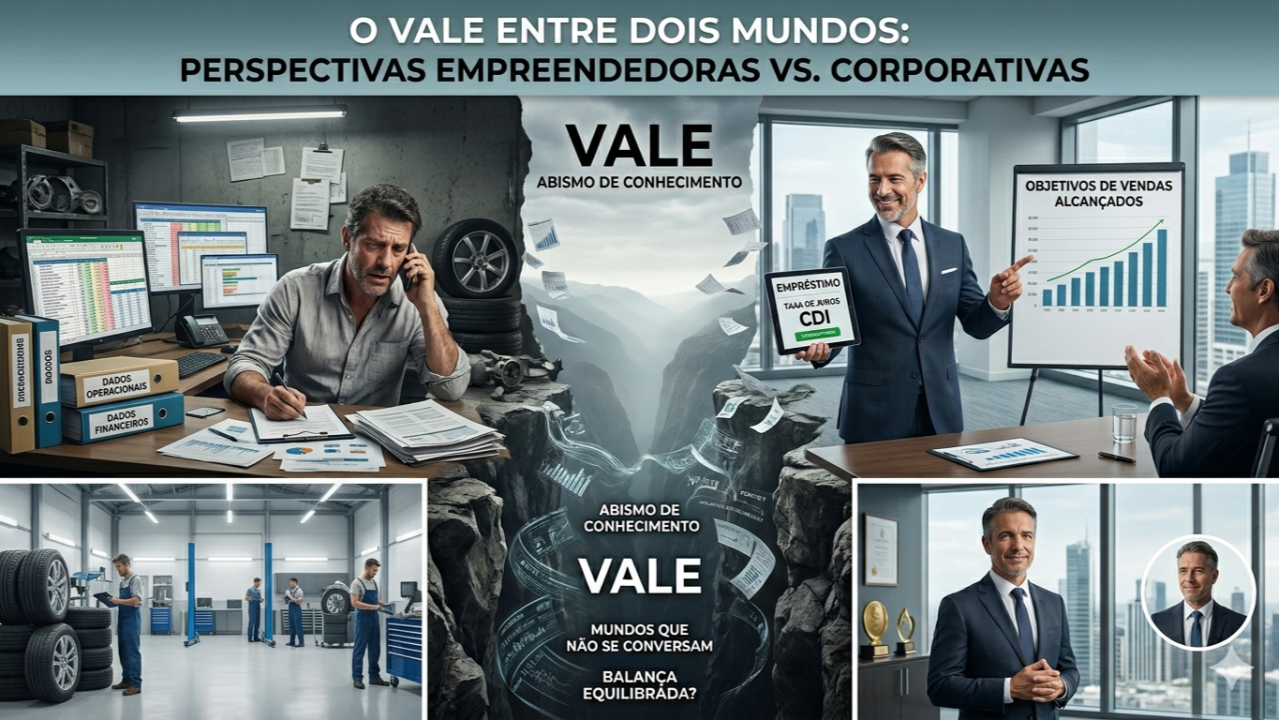
Entrepreneurs and corporations do not speak the same language. And that gap has a cost

Entrepreneurs and corporations do not speak the same language. And that gap has a cost.

A sales director sold a year of production in one month. He was applauded. Nobody told him the company had neither the cash, the production nor the logistics to sustain it, because the model did not foresee that he needed to know.

It is not an individual failure. It is a structural inefficiency.

Post page · Comment on LinkedIn

Apr 24, 2026

The founder was 72 and had a successor announced 15 years earlier

The founder was 72 and had a successor announced 15 years earlier.

An impeccable org chart. Aligned internal communication. A family office presenting the transition plan at every company event.

And nothing had been decided.

Every critical decision still went through the founder, around the official CEO. The market noticed before the Board did. Senior executives began negotiating loyalty with two centers of power at the same time.

When the founder was diagnosed, succession happened in four weeks. No revisited tax planning. No updated shareholders' agreement. No alignment of the key executives who had already chosen sides.

The succession did not fail at the announcement. It failed the first time the successor decided, and the founder undid it.

• Valuation fell 22% in two quarters after the forced transition
• Three key executives left within six months, taking operational continuity with them
• The shareholders' agreement signed at the wake cost eight years of probate

There is no postponed succession. There is succession transferred to the event that will not ask.

The question was never whether the founder would decide. It was whether he would decide before the event that was already on its way.

Post page · Comment on LinkedIn

Apr 18, 2026

One of life's greatest riches is when your role models become friends

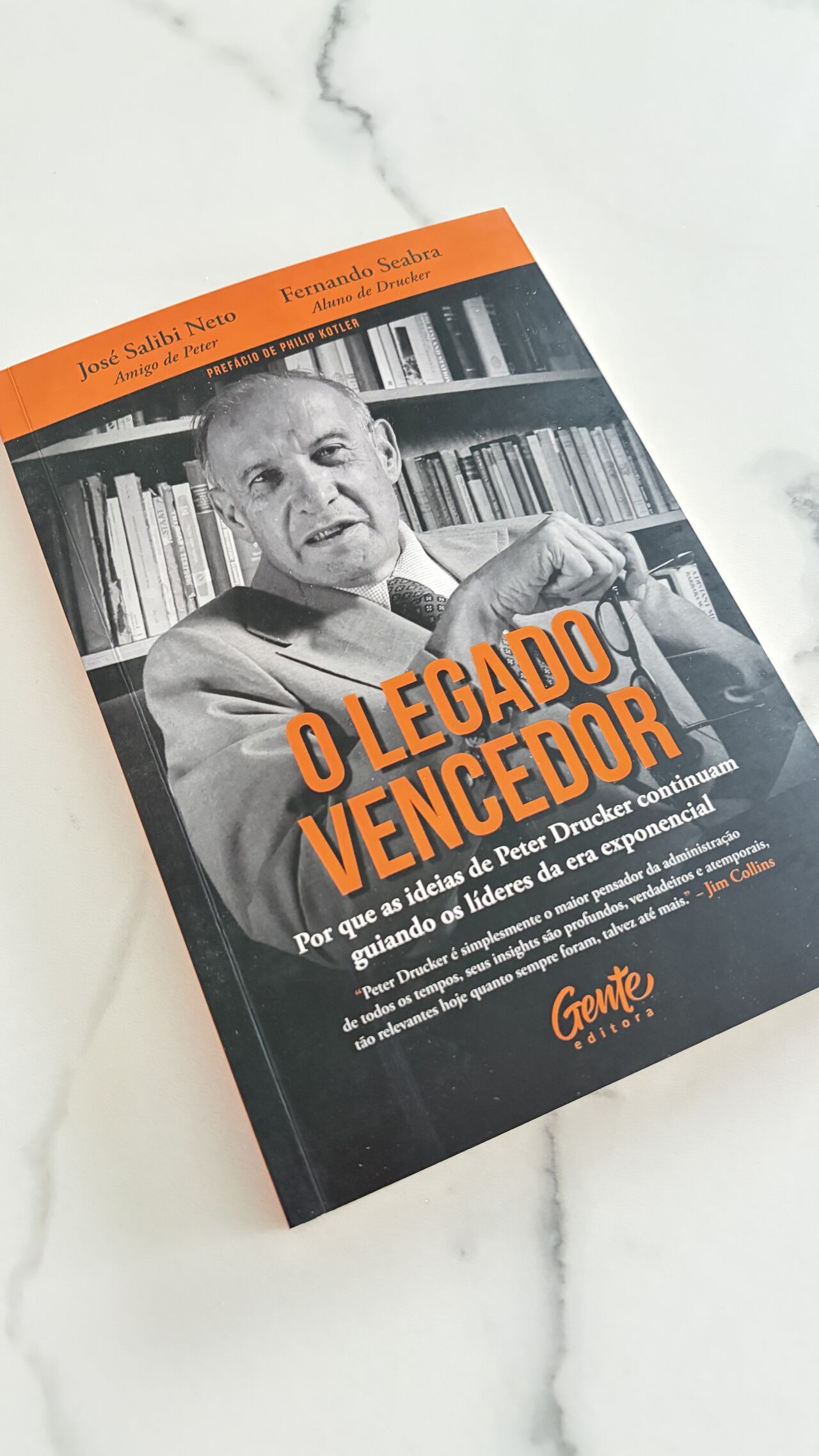
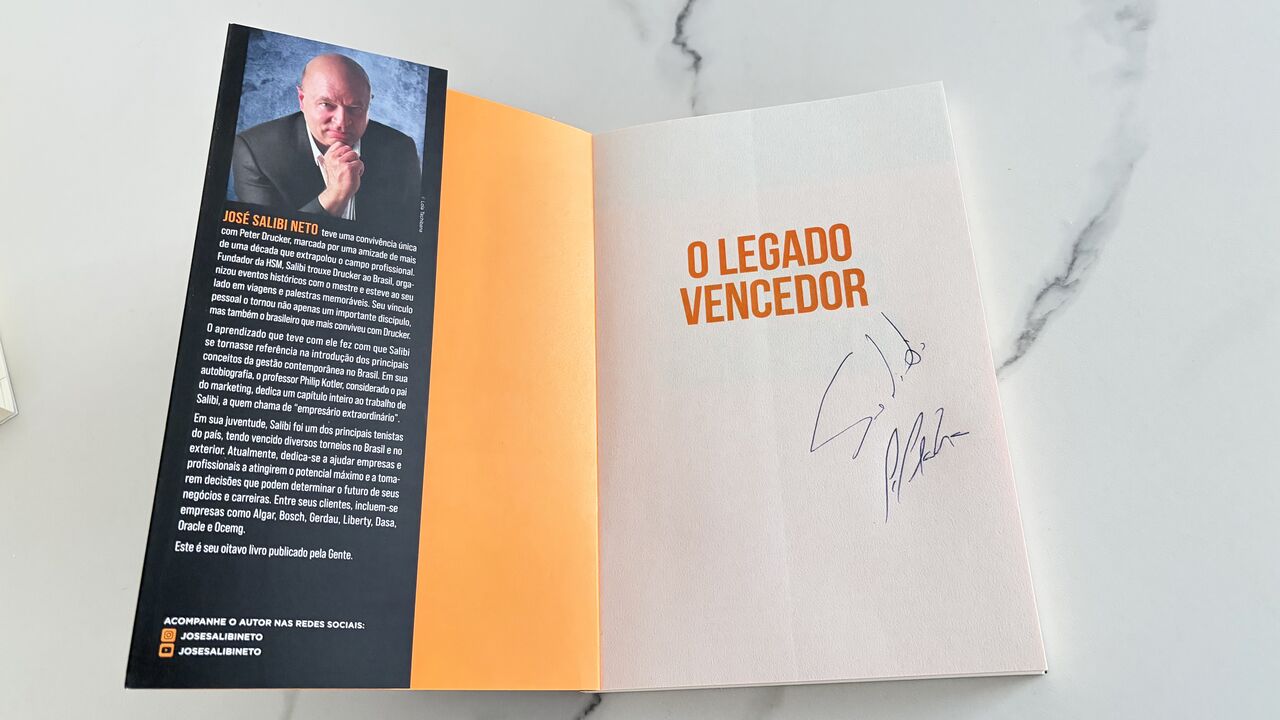
José Salibi Neto co-founded HSM, which brought major management events to Brazil with names such as Peter Drucker and Jack Welch. Fernando Seabra is a professor and co-wrote the book with him.

image 1/2image 2/2
1 / 2

One of life's greatest riches is when your role models become friends.

This week I received the book co-written by two professors who deeply marked my path: José Salibi Neto and Fernando Seabra.

Professor Salibi was one of the people who helped me see horizons I did not yet know existed, through the knowledge he shared and the events he created with a unique energy. It is hard to explain the impact of someone who expands you before you knew you needed it.

Professor Fernando has been closely following this new journey I have been building in São Paulo, as a Board member, advisor and executive. Having him by my side in this process is one of the reasons I move forward with more conviction.

Receiving the book signed by both of them is something I keep with genuine affection.

I will read it this weekend. I have heard the story a few times, and even so I am sure it will surprise me in a new way.

Thank you, Salibi and Fernando. For sharing what you know, what you lived and what you built. That is worth more than any page.

Do you also have someone like that in your path, that person whose influence changed the direction of everything?

Post page · Comment on LinkedIn

Apr 18, 2026

I received a book today. And with it, a reflection I can no longer ignore

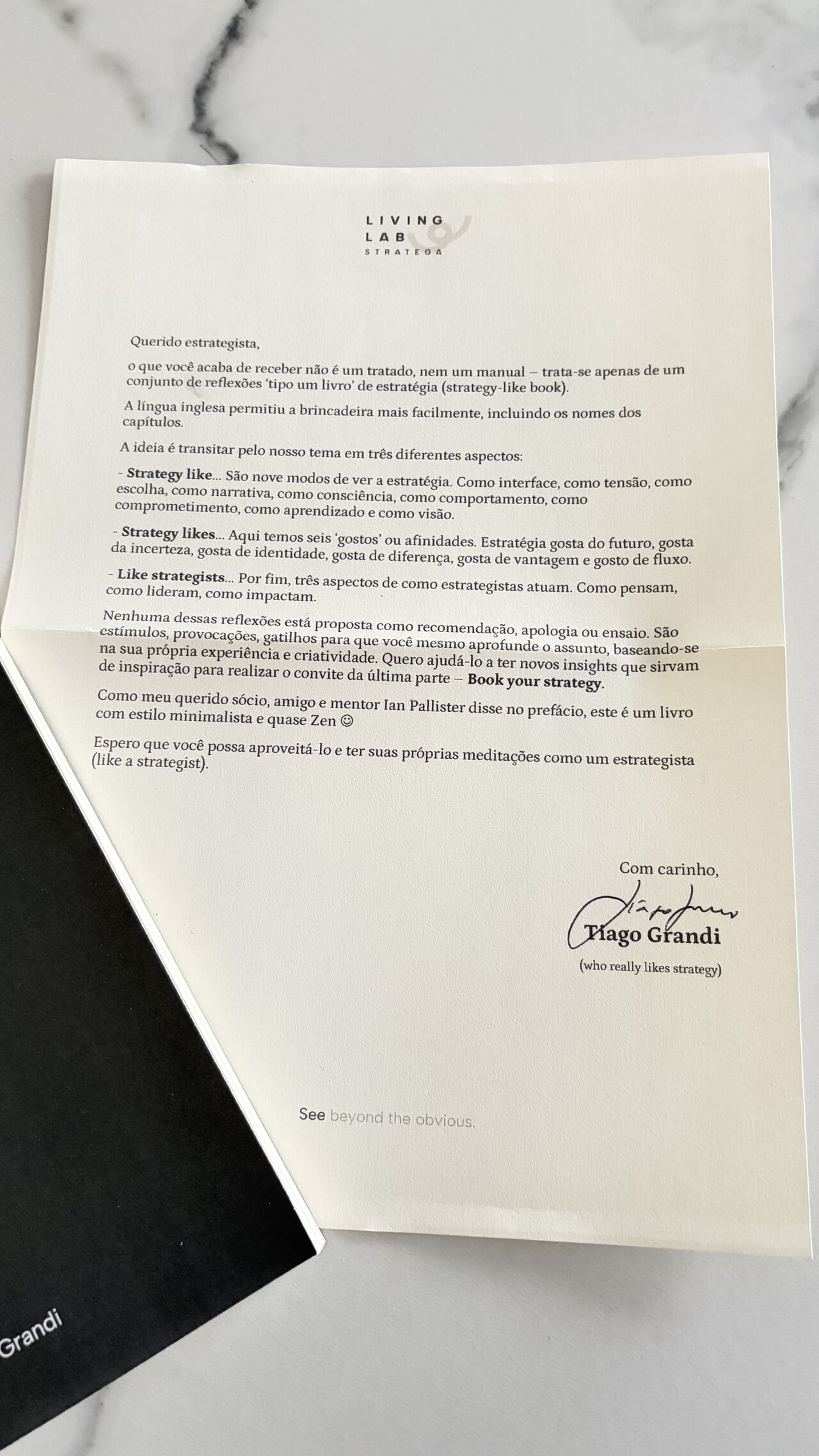
Tiago Grandi, of STRATEGA.GLOBAL, a strategy consultancy, leads the Living Lab together with inovabra, Bradesco's innovation ecosystem. The project brings together strategists from across Brazil around one idea: strategy before the decision. Junior Thonon and Jerusa Garay are part of it.

image 1/3image 2/3image 3/3
1 / 3

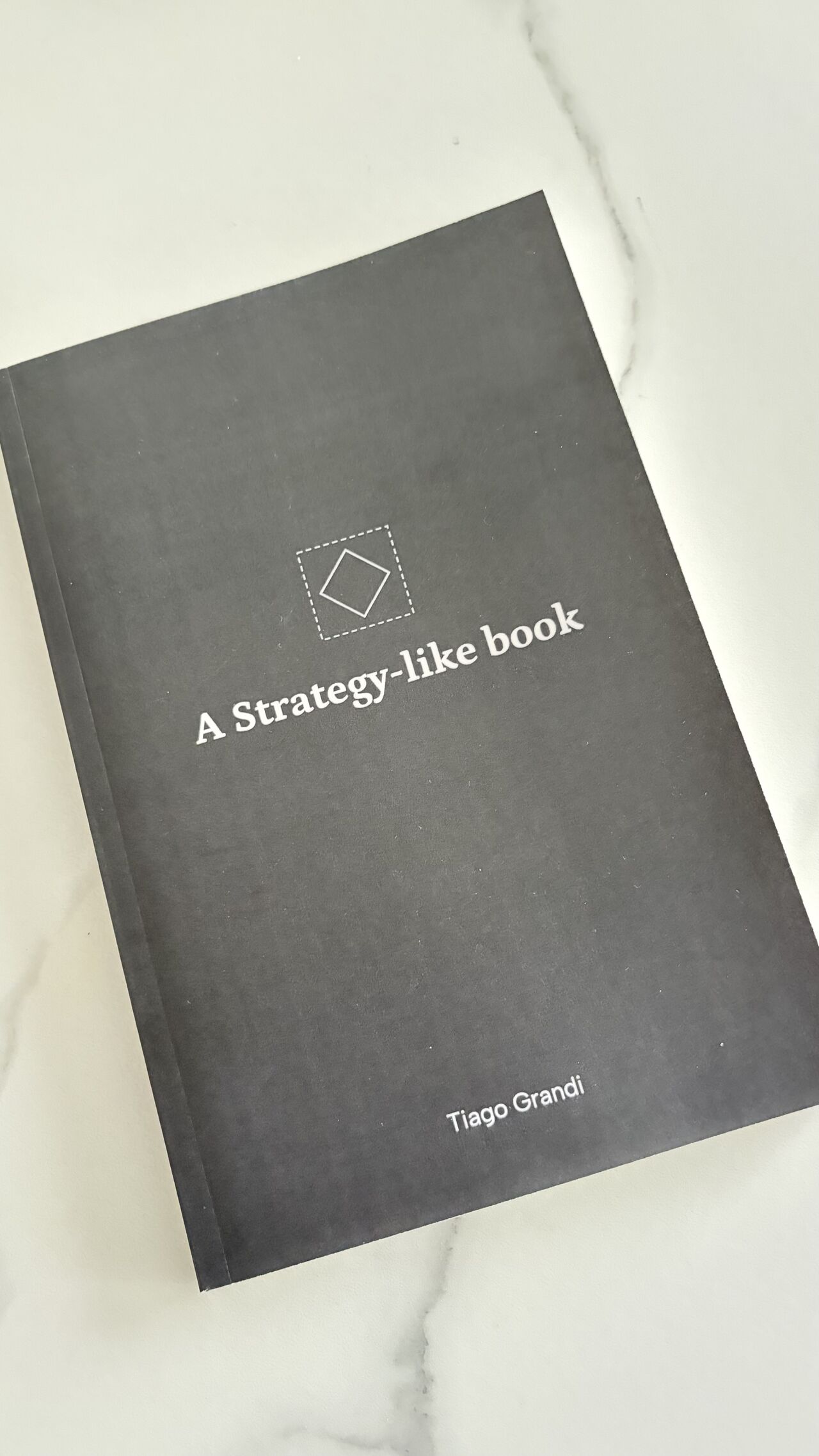
I received a book today. And with it, a reflection I can no longer ignore.

Tiago Grandi, of STRATEGA.GLOBAL, leads together with inovabra the Living Lab project, an initiative that brings together great strategists from across the country with a clear purpose: putting strategy before the decision.
Not as theory. As real practice in companies and in people.

Junior Thonon and Jerusa Garay are among those making this movement concrete, and they made a point of getting this book to me. That says a lot about who they are.

The Living Lab is not just a project.

It is a serious attempt to change the way Brazil decides.

Thank you, Tiago. Thank you, Júnior and Jerusa. And everyone building this with real intention.

Post page · Comment on LinkedIn

Apr 16, 2026

The data center is not the problem. The strategic planning that puts it in the wrong place is

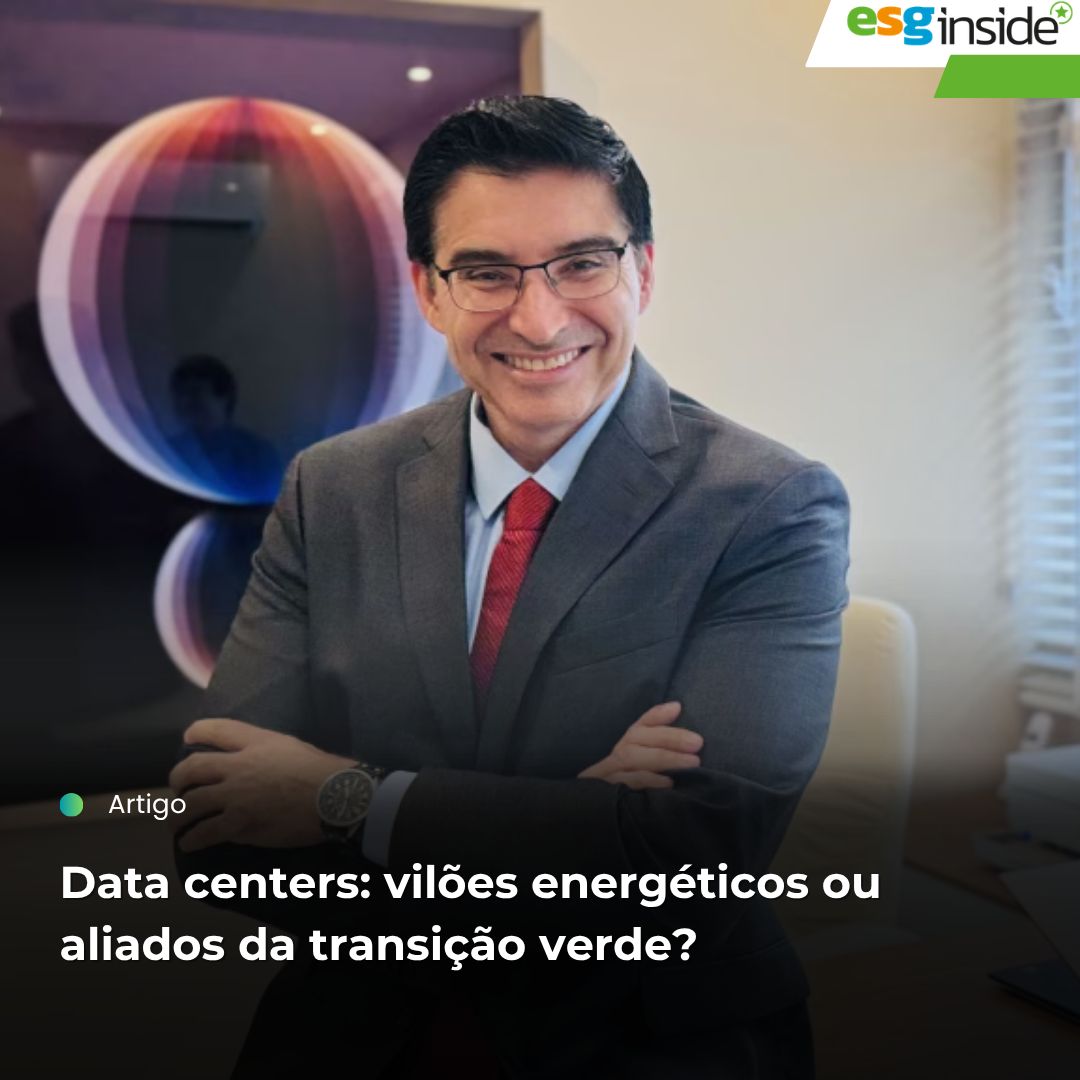
Comment on the article published by ESG Inside, by Fernando Palamone, on data centers and the energy transition.

The data center is not the problem. The strategic planning that puts it in the wrong place is.

The industry chose the Southeast for proximity to the customer. And inherited everything the Southeast can no longer support.

Energy under pressure. Water disputed with urban supply. Cost per m² among the highest in the country. Last-mile latency that geographic proximity no longer solves.

Meanwhile, the Northeast operates with a structural surplus of the asset that defines the sector's viability over the next decade.

In the first eight months of 2025, 17.6% of the wind and solar energy produced in Brazil was curtailed by the grid operator. 75% of that loss is in the Northeast.

• Renewable energy wasted every day within exactly the radius where the data center could consume it

• Fortaleza concentrating 90% of the country's international traffic through submarine cables

• Coastline for desalination without competing with drinking water

• Land, labor and operating costs below the national average

The data center did not become a villain because of what it does. It became one because of where it is. Pecém already has R$ 50 billion in projects with Chinese interest. The global market has already read the map.

Whoever decides first occupies the territory. And you, how are you reading yours?
Post page · Comment on LinkedIn

Apr 13, 2026

When the executive sees it and stays silent

When the executive sees the problem and stays silent, the cost stops being operational and becomes structural.

The problem was seen. The diagnosis exists. The meeting happened.

Competence was not missing. What was missing was sustaining the decision that was already clear.

• The process eroding margin stays intact because nobody signed the change.
• The misaligned executive stays because confrontation was traded for context.
• The operation holding back growth continues because the cost has not yet appeared on the balance sheet.

The executive's silence is not neutrality. It is a choice. The cost was not avoided. It was only pushed forward, and it has already come back bigger.

It is no longer a risk. It is already in the results.

You are not accumulating risk. You are carrying a decision you chose not to make. And it is already in the results.

Post page · Comment on LinkedIn

Apr 10, 2026

Better execution does not solve it. It amplifies it

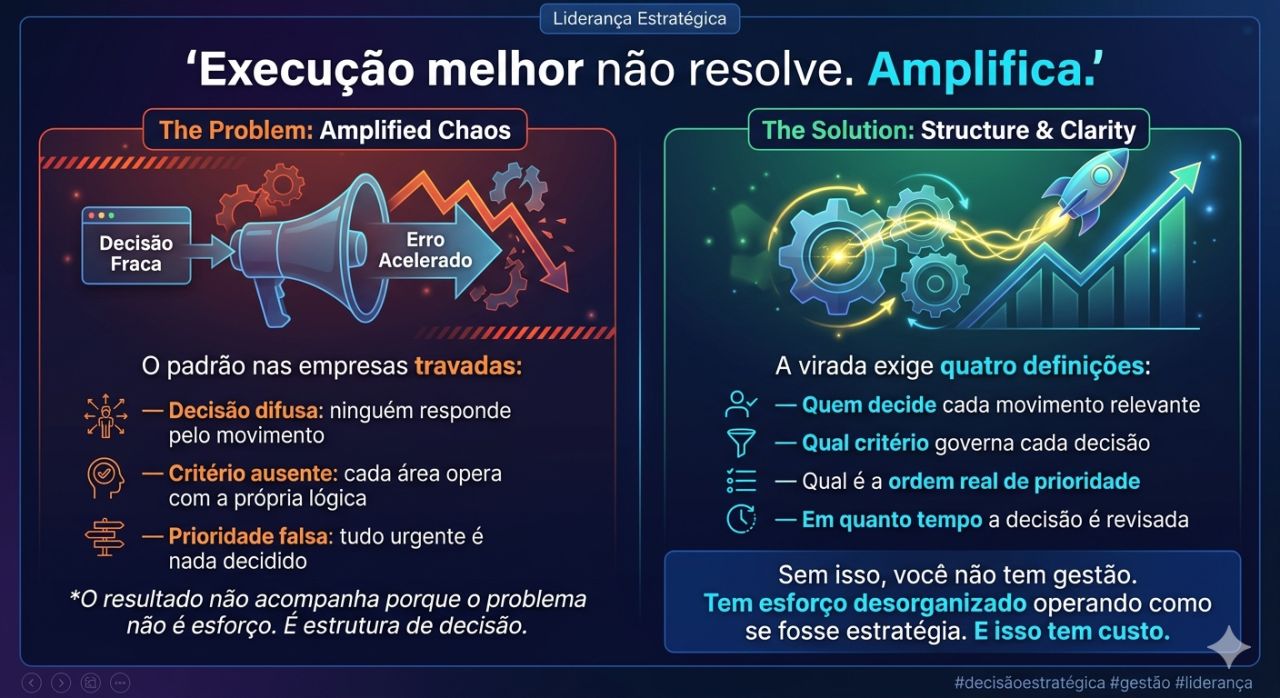
Better execution does not solve it. It amplifies it.

The company grows. The team gets bigger. The numbers swing.

The answer comes immediately: we need to execute better.

That is not it.

Execution amplifies what was decided, right or wrong. A weak decision executed fast only accelerates the error.

The pattern in stuck companies is always the same:
• Diffuse decision: nobody answers for the move
• Missing criteria: each area operates with its own logic
• False priority: if everything is urgent, nothing is decided

Results do not follow because the problem is not effort. It is decision structure.

The turnaround requires four definitions:
• Who decides each relevant move
• Which criterion governs each decision
• What the real order of priority is
• How often the decision is reviewed

Without that, you do not have management.

You have disorganized effort operating as if it were strategy. And that has a cost.

Post page · Comment on LinkedIn

Apr 8, 2026

Billing more and earning less is not growth. It is error being scaled

Billing more and earning less is not growth. It is error being scaled.

This pattern repeats in companies that should have learned by now.

Revenue rising. Margin evaporating. Operations at the limit.

The company opened multiple channels. One of them destroyed value.

Everyone knew.

Nobody decided. Because cutting a channel hurts ego, the growth narrative and the stories leadership wants to keep.

When the decision does not come, the cost grows invisibly:
• Revenue comes in. Margin disappears.
• Operations grow. Results do not follow.
• Complexity increases. Clarity decreases.

The turnaround came with one decision: fewer channels, more coherence. Margin came back. Operations got unstuck. Growth started to make sense.

If your company bills more and keeps less, the question is not how to sell more.

It is which channel you already know you should cut, and still have not decided to.

A postponed decision is not prudence. It is accumulated cost.

Post page · Comment on LinkedIn

Apr 8, 2026

You call it expansion. BYD calls it dominance

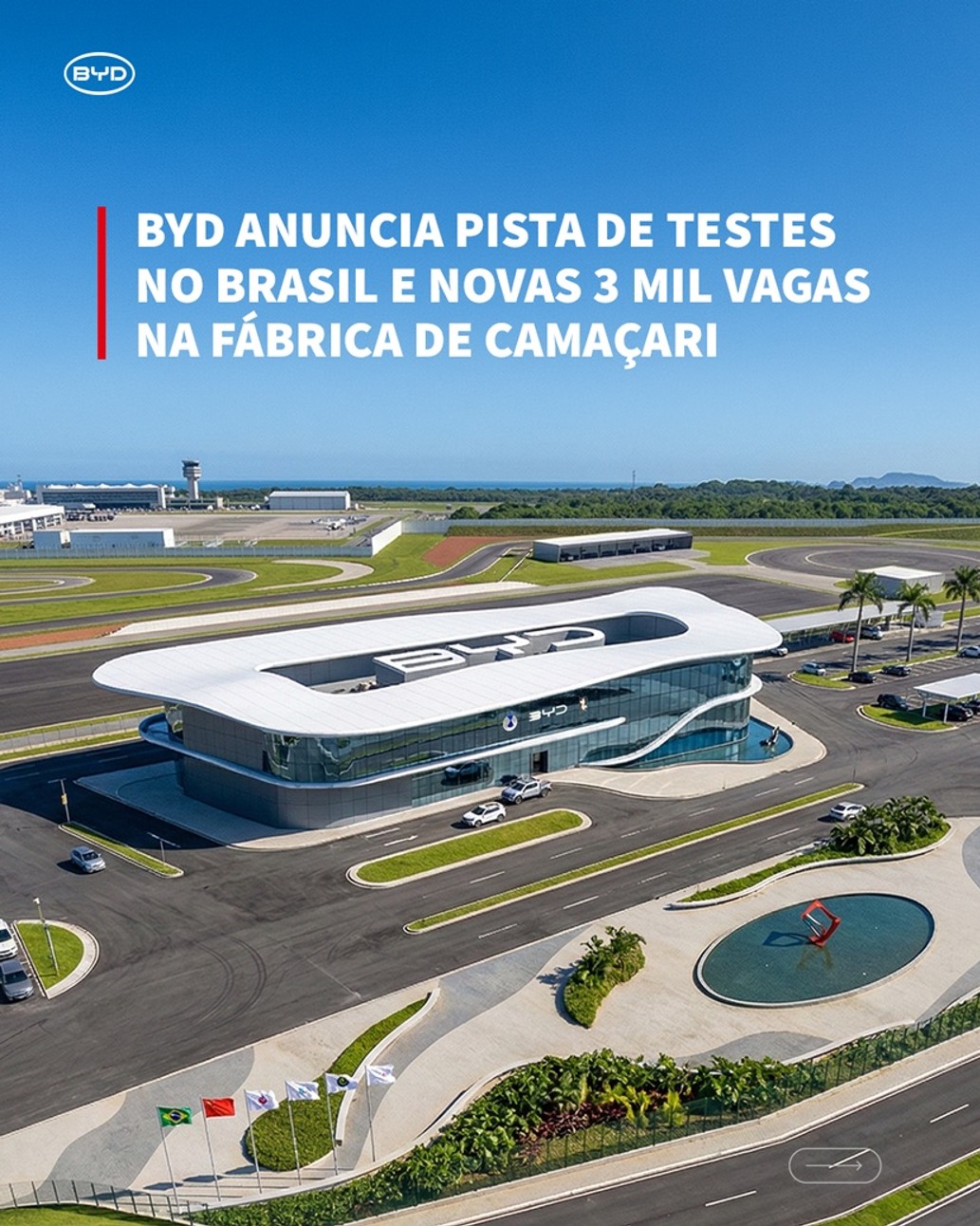
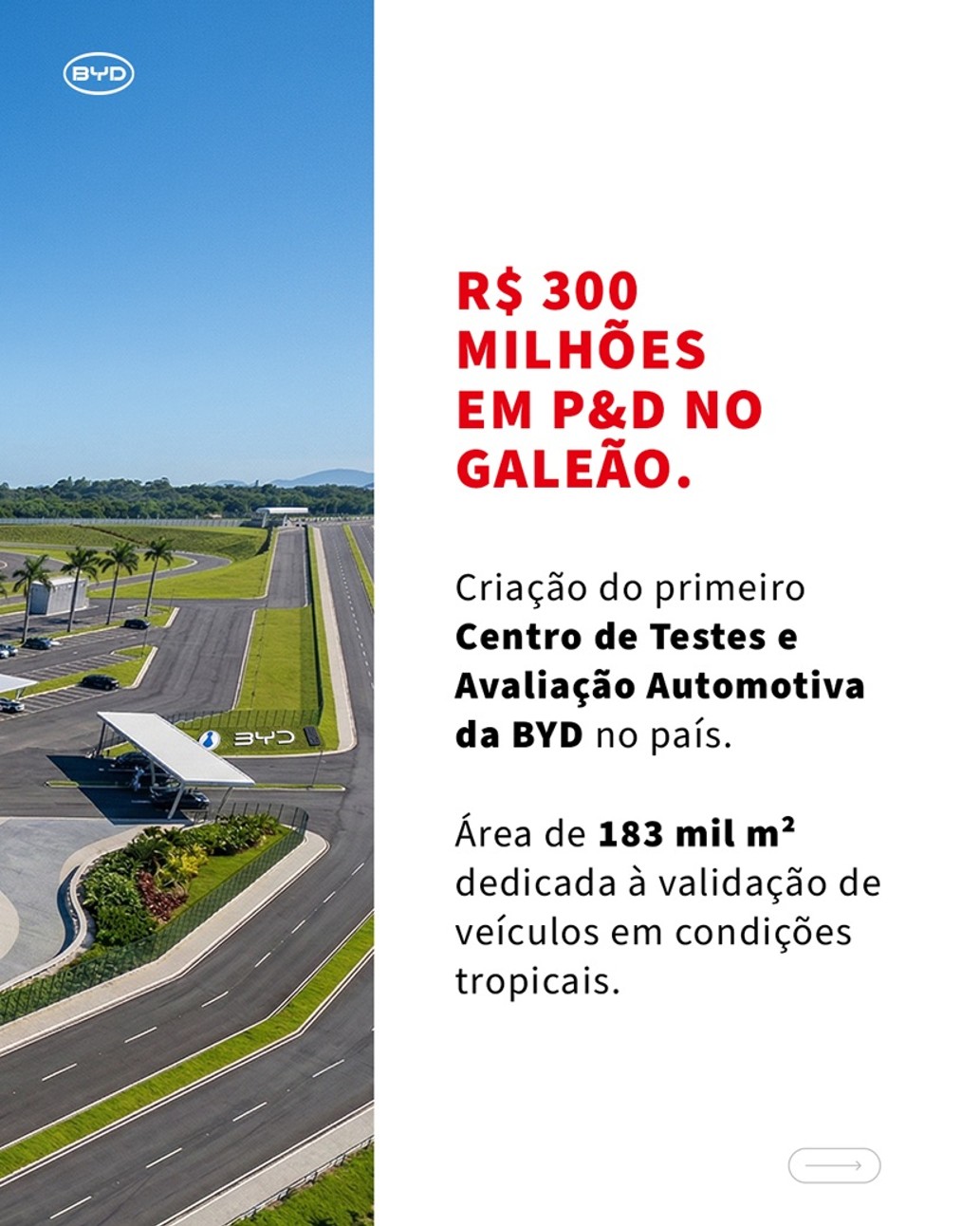
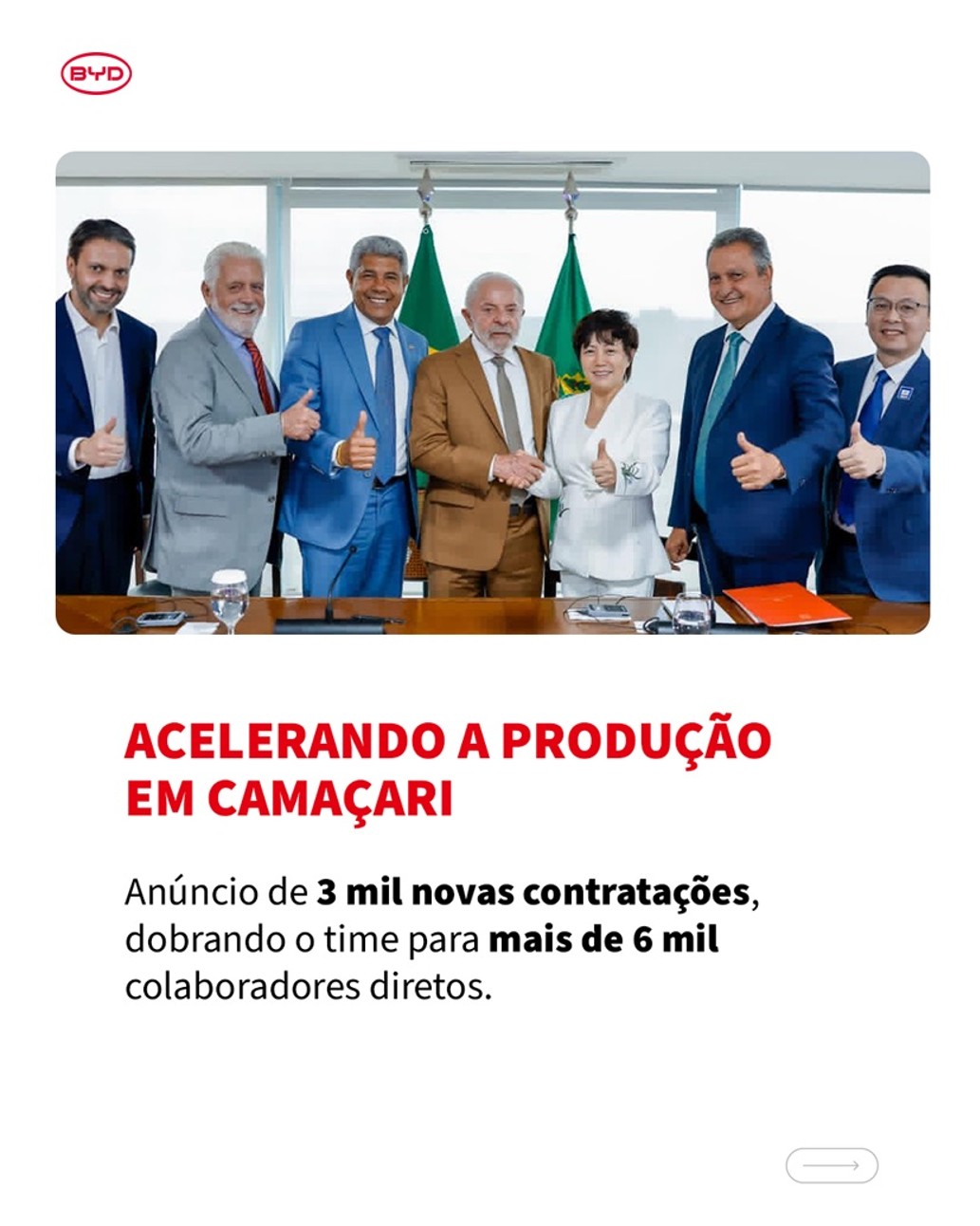
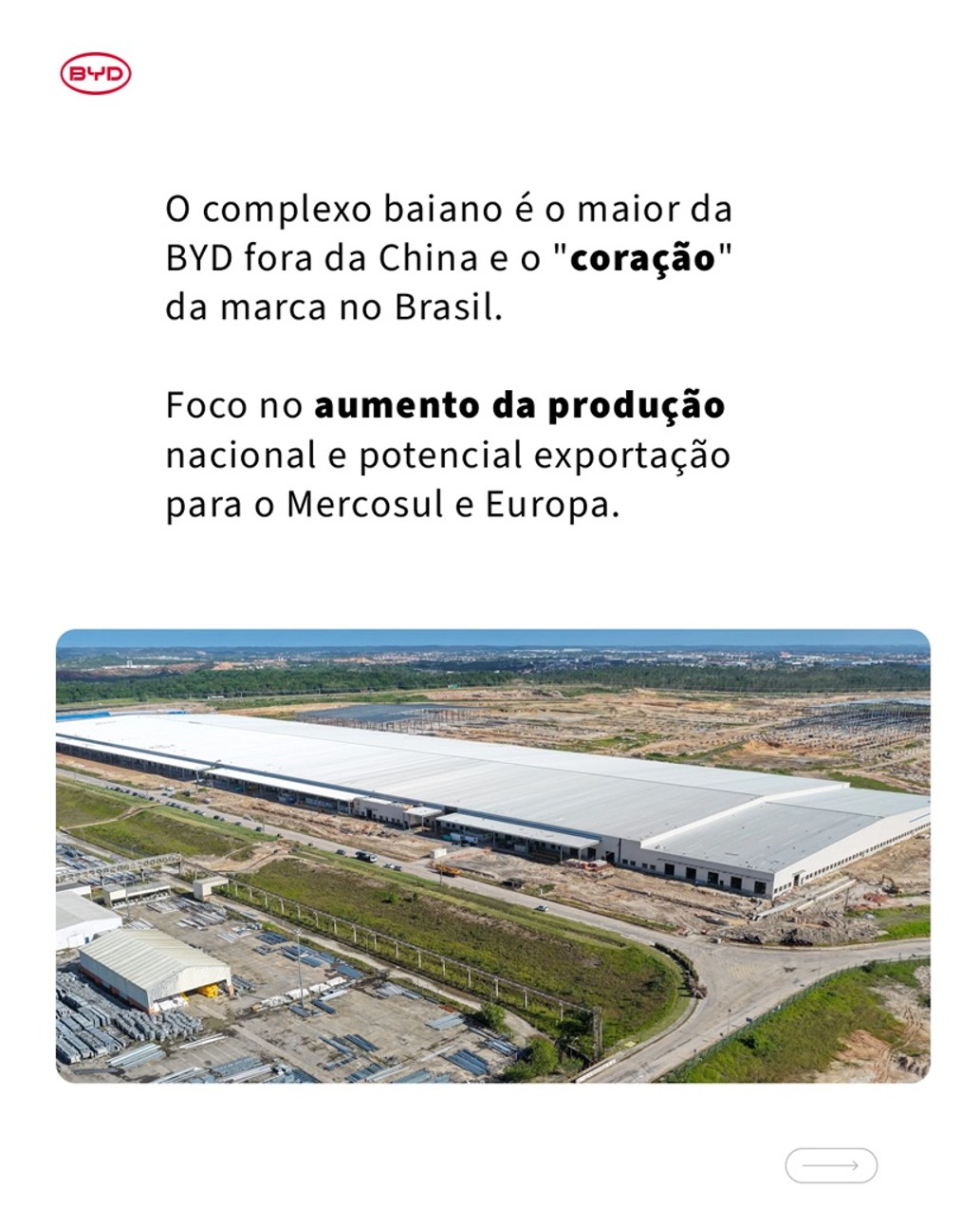
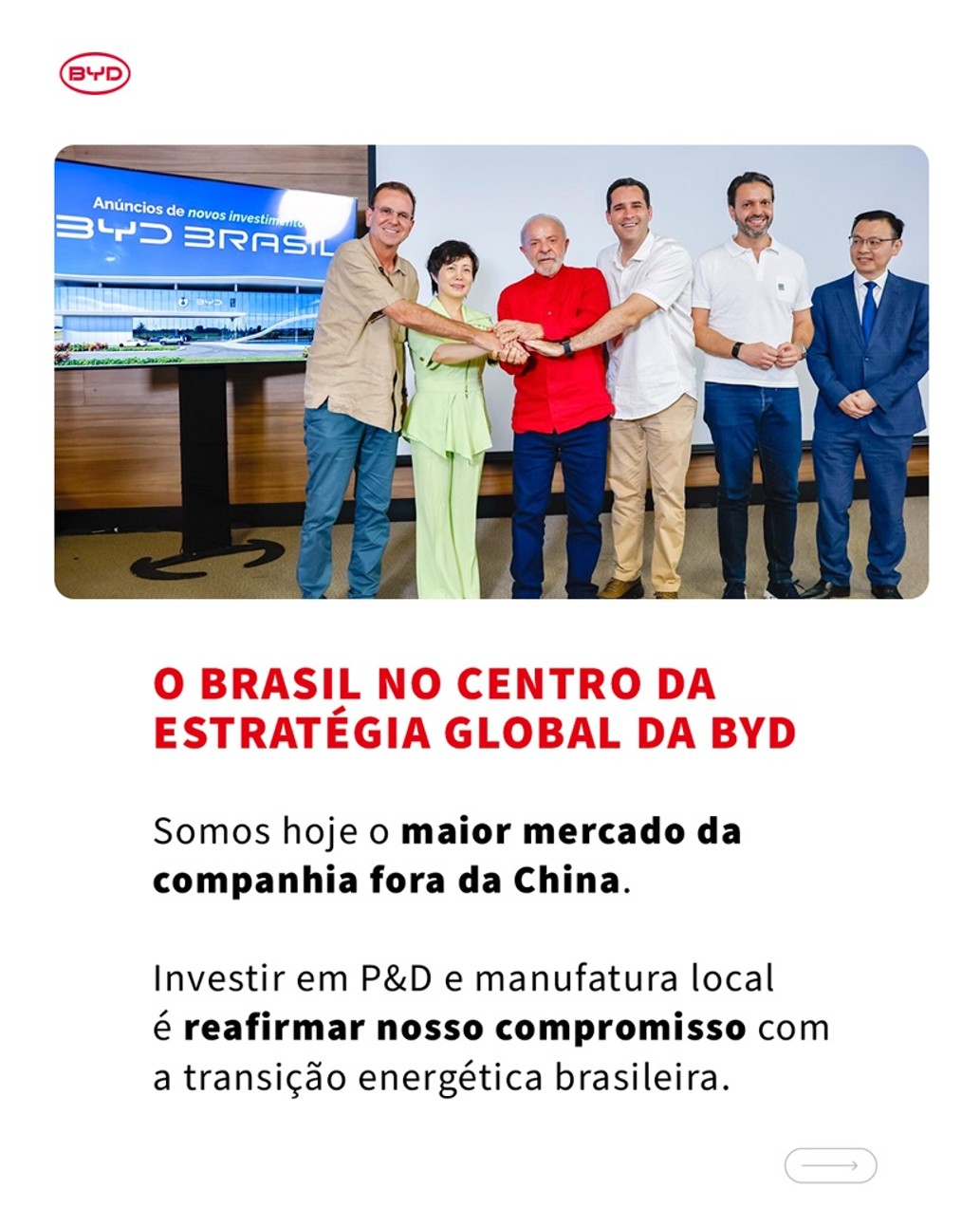
Comment on BYD Brasil's announcement of R$ 300 million in R&D and 3,000 new jobs.

image 1/7image 2/7image 3/7image 4/7image 5/7image 6/7image 7/7
1 / 7

You call it expansion. BYD calls it dominance.

The factory was the opening position. The second move confirms the sequence: two R&D hubs, Brazil and China, are not geography. They are control over adaptation, speed and technological ownership.

Whoever sets the standard does not need to fight for market. He already is the market.

Part of the market ignored this move, and the cost of that neglect does not show up on the current balance sheet. It is already in the position.

• Local R&D captures margin and sets the standard: whoever only distributes handed over that position without negotiation and without recovery
• Territorial intelligence applied to the value chain separates a strategic platform from a replaceable supplier, and that separation has already happened
• The sequence is entry, production, development, dominance. Whoever recognizes the pattern after the third step has already entered a game defined by someone else

The question is not whether this will affect your company. It is where you are already falling behind, and still calling it strategy.

Post page · Comment on LinkedIn

Apr 7, 2026

This is not about having good people

Comment on Guilherme Manganelli Lopes's post about operations that depend on heroes.

image 1/4image 2/4image 3/4image 4/4
1 / 4

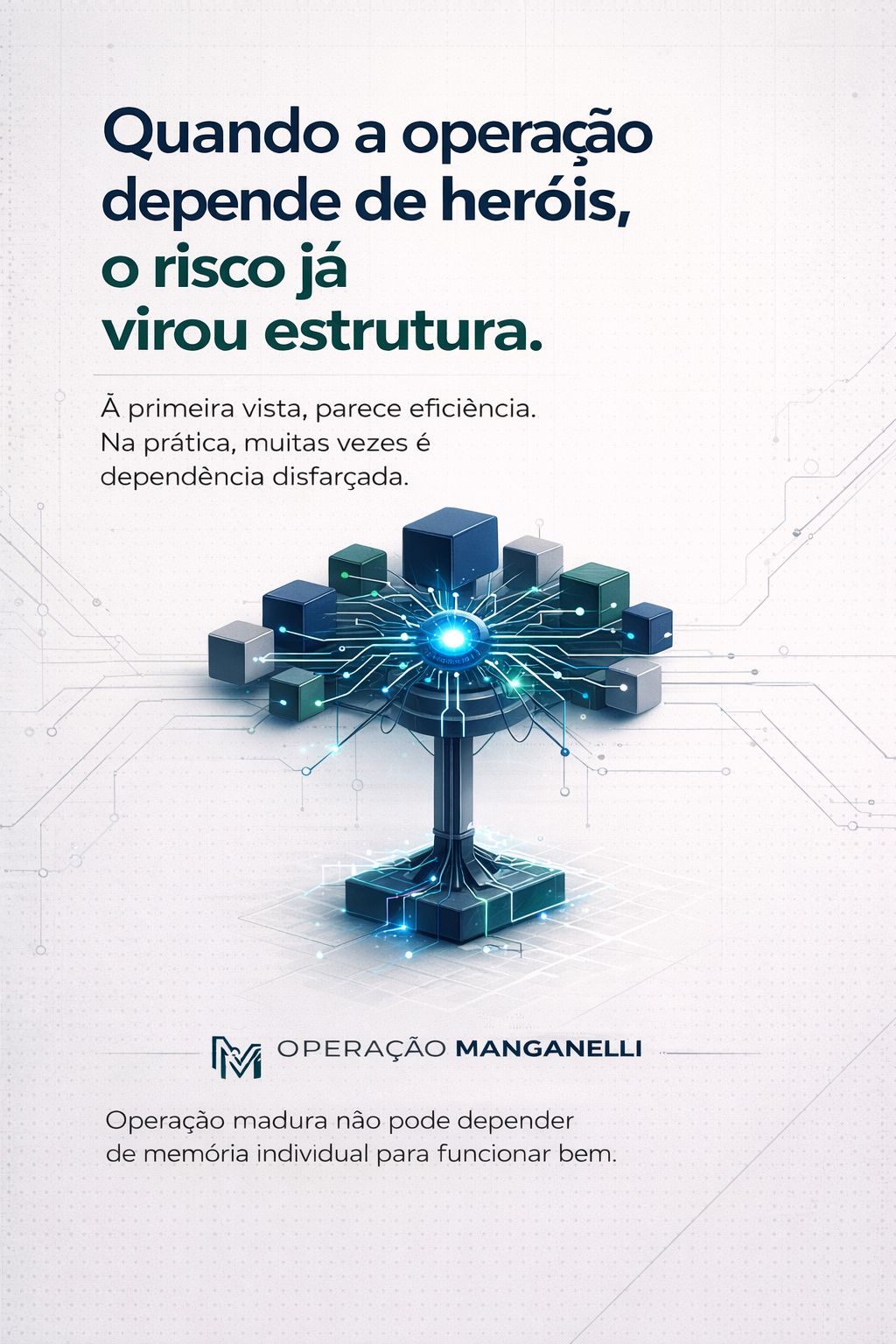
This is not about having good people.
It is about the risk you decided to accept.

You have seen this scenario: the "hero" solves everything, connects what is not documented, holds up what the process does not cover.

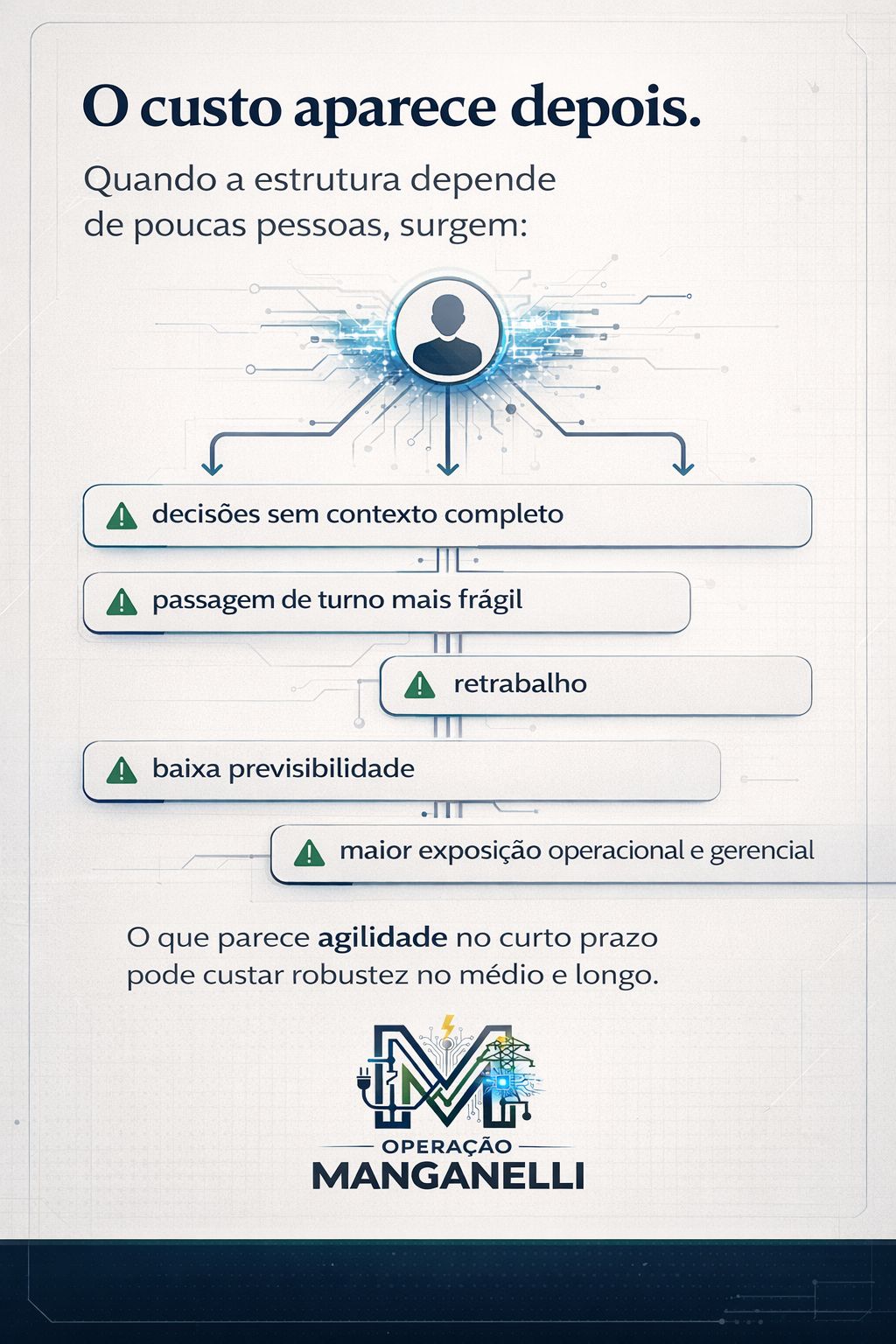
It is not efficiency. It is active operational risk, already built into the operation.

• If the company depends on one person, leadership decided not to build structure
• If knowledge is not documented, someone decided not to prioritize continuity
• If an absence becomes a crisis, the problem is not the absence, it is neglected governance

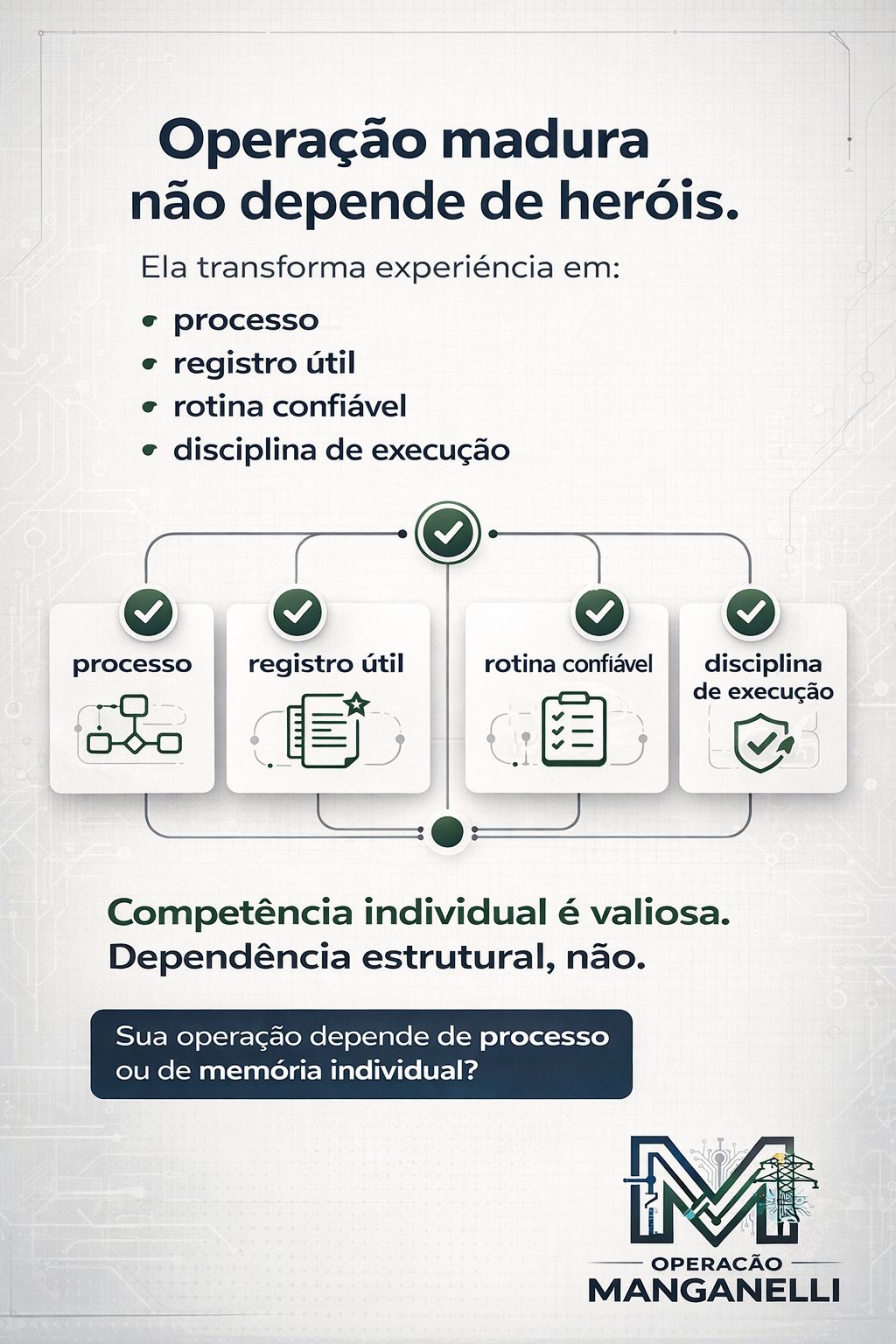
The hero is not the mistake.
The mistake is the company having institutionalized dependence and called it culture.

Process does not replace talent, it protects the result.

Without it, there is no scale. There is accumulated risk operating disguised as efficiency.

This is already happening. The only variable is how much more it will cost until someone decides to fix it.

Post page · Comment on LinkedIn

Apr 6, 2026

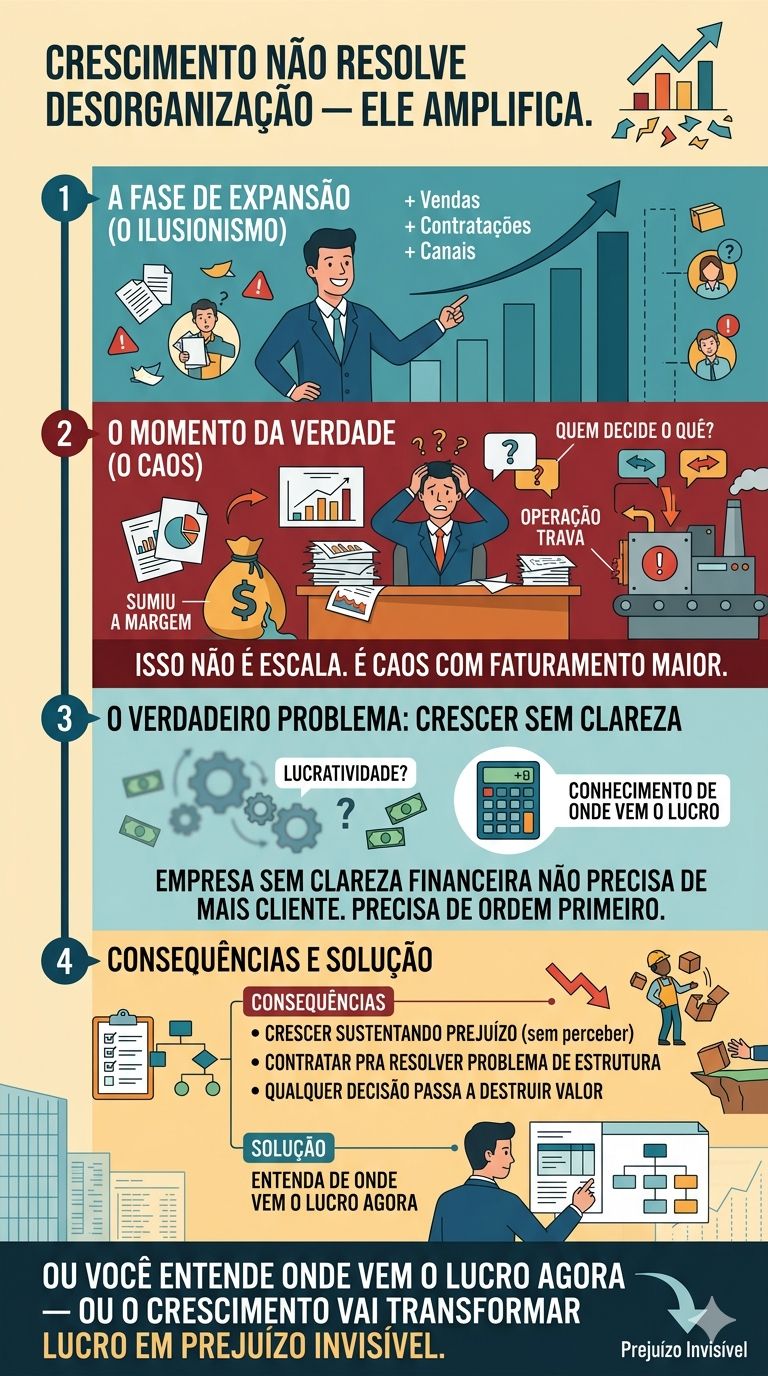
Growth does not solve disorganization, it amplifies it

Growth does not solve disorganization, it amplifies it.

You sell more. You hire more. You open a new channel. And suddenly margin disappears, operations stall and nobody knows anymore who decides what.

That is not scale. It is chaos with bigger revenue.

The problem was never growing slowly. It was growing without knowing where the profit comes from.

A company without financial clarity does not need more customers. It needs order first.

And if you do not organize now:
• you will grow while sustaining losses without noticing
• you will hire to solve what is a structural problem
• you will reach a point where any decision starts destroying value

Either you understand where the profit comes from now, or growth will turn profit into invisible loss.

Post page · Comment on LinkedIn

Apr 6, 2026

Innovation does not depend on geniuses. It depends on attention

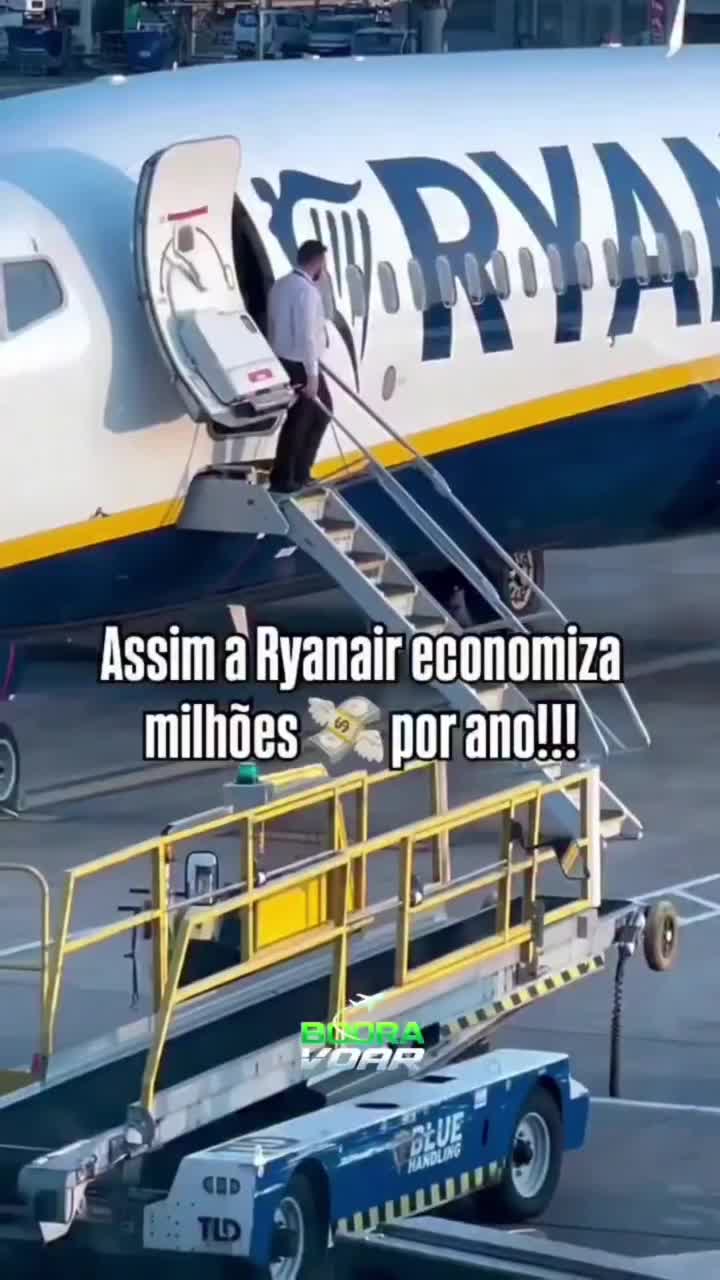
Comment on Carlos Alberto Tavares Ferreira's post about Ryanair's operational efficiency.

Innovation does not depend on geniuses. It depends on attention.

The savings generated here did not come from disruptive technology. They came from someone who stopped and questioned what everyone already accepted as normal.

That question costs nothing. Its absence erodes margin, every day, in silence, with your authorization.

Most companies do not have an innovation gap. They have a more expensive problem: nobody is looking.
• Processes running for years without a real owner
• Cash bleeding in decisions nobody revisits
• Leadership busy with the agenda while money slips away with no owner
• Competitiveness lost not to the market, but to internal inertia

Operational inertia does not show up in the meeting minutes. It shows up on the balance sheet.
It is not a lack of ideas. It is accumulated neglect, and the cost is already on the books.

Post page · Comment on LinkedIn

Did one of these posts describe your company?