Posts

Every week, Tuesday to Friday.

Cash, partners and succession, in the companies of those who sign. The same posts as on LinkedIn, in full, with the image or the carousel, translated from Portuguese.

Follow on LinkedIn

Oct 30, 2026

Minutes No. 047/2026
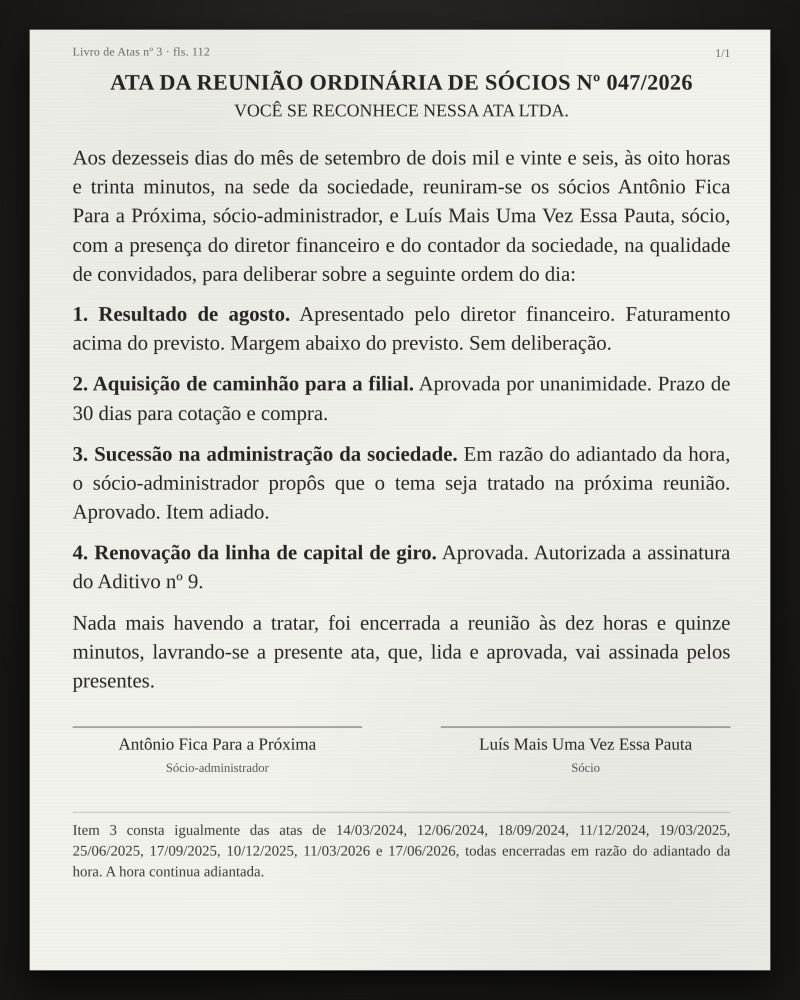
Minutes No. 047/2026.

Transcript of the published image:

MINUTES OF THE ORDINARY PARTNERS' MEETING No. 047/2026. YOU RECOGNIZE YOURSELF IN THESE MINUTES LTD.

On the sixteenth day of September, two thousand and twenty-six, at eight thirty in the morning, at the company's headquarters, the partners Antônio Leave It For Next Time, managing partner, and Luís This Item Again, partner, met in the presence of the finance director and the company's accountant, as guests, to deliberate on the following agenda:

1. August results. Presented by the finance director. Revenue above forecast. Margin below forecast. No resolution.

2. Purchase of a truck for the branch. Approved unanimously. 30 days for quotes and purchase.

3. Succession in the management of the company. Given the late hour, the managing partner proposed that the matter be addressed at the next meeting. Approved. Item postponed.

4. Renewal of the working capital credit line. Approved. Signature of Amendment No. 9 authorized.

There being no further business, the meeting was adjourned at ten fifteen, and these minutes were drawn up, read, approved and signed by those present.

Item 3 also appears in the minutes of 03/14/2024, 06/12/2024, 09/18/2024, 12/11/2024, 03/19/2025, 06/25/2025, 09/17/2025, 12/10/2025, 03/11/2026 and 06/17/2026, all adjourned due to the late hour. The hour is still late.

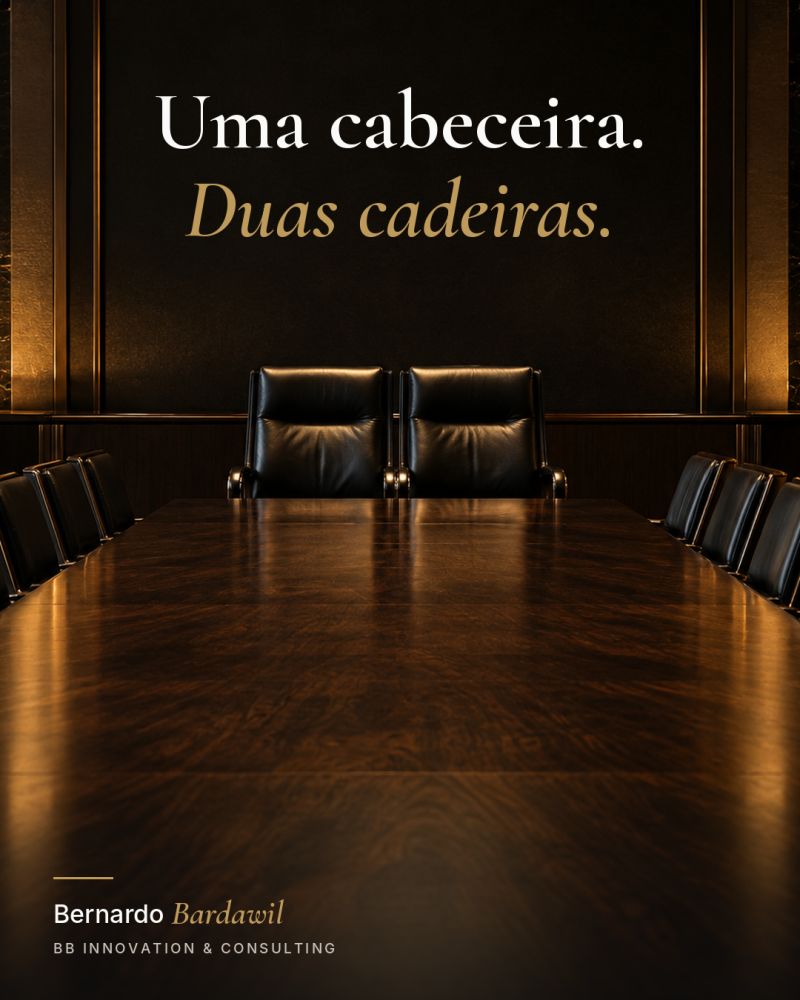
Post page · Comment on LinkedIn

Oct 29, 2026

The risk is too high

I once wanted to bet on something and the conversation ended in one sentence: "the risk is too high."

It was true. The technology was not ready yet, the concept was abstract and there was no way to measure the risk. Nobody bought the bet.

Today what was abstract is working, and the same bet would have paid off.

I do not tell this because I was right. Being right after the numbers close is easy, and those who said no were not wrong to be afraid.

The problem was something else: the sentence ended the conversation. "The risk is high" answered whether the whole bet was worth it, when the useful question was the smallest size of it that lets you learn without breaking.

Waiting is also a bet, only without a number and without an owner.

In an owner-led company, the same sentence stalls expansion, the successor and the new partner. And it tends to stall everything at once, when it could have been decided in parts.

That is where I work with the owner: I separate what can be tested small from what needs to wait, and hand back the decision with a name and a date.

Which bet in your company is stalled whole, when it could start small?

Post page · Comment on LinkedIn

Oct 28, 2026

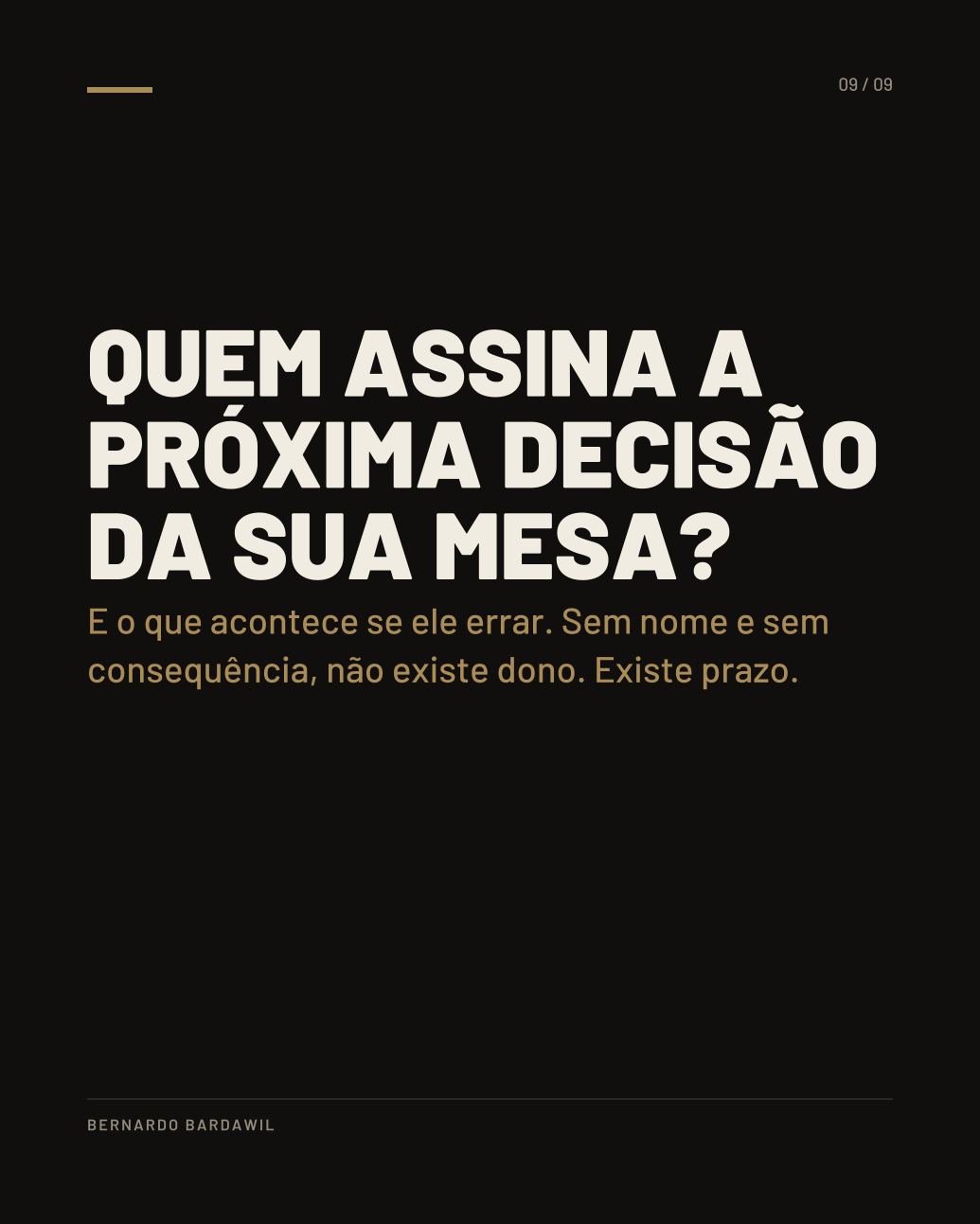
Two decision-makers in the same room form a queue

Two decision-makers in the same room do not form a partnership. They form a queue.

I saw this in a diagnostic at a family business. The founder in charge, his son inside the operation for years, with no room to change anything. From the outside, it looked like a family conflict: a father and son who do not get along.

It was not. It was overlapping authority. Two people with the power to decide on the same thing, in the same space, at the same time. In that arrangement no agreement holds, because every decision by one undermines the other.

What solves it is not therapy or an alignment meeting. It is separating the arenas: each one owns a front, and the two decide together only on what is truly shared, product, price and expansion.

The founder put it in place on his own, his way, in about a year. It still works today.

A strong family business is not the one that avoids conflict. It is the one that builds a structure to decide in spite of it.

If in your company two people can say yes to the same thing, count how many decisions are waiting for one of them to give up.

Post page · Comment on LinkedIn

Oct 27, 2026

We will decide after the election

The sentence I heard most this year, at owners' tables:

"we will decide after the election."

The election ended on Sunday.

Whatever your vote, your company's queue of decisions is exactly where it was.

The investment left in the drawer.
The conversation with the partner nobody scheduled.
The successor who has been waiting years for a date.
The credit line renewed once again so the structure would not be touched.

None of these decisions depended on Brasília. They depended on an alibi, and the alibi is over.

The uncertainty is not over. Interest rates, the exchange rate and fiscal rules will keep moving, as they always have. What is over is the excuse to wait for them.

I have seen it from the inside: those who get through a political cycle well are not the ones who called the result. They are the ones who decided what was in their own hands while everyone else waited.

Sunday defined the government. What your company does in 2027 is defined at your table.

A postponed decision is not prudence. It is accumulated cost.

My work starts in that queue: sitting with the owner, putting a number on each month of waiting and handing back the decisions with names and dates.

Which decision did you push to after Sunday?

Post page · Comment on LinkedIn

Oct 23, 2026

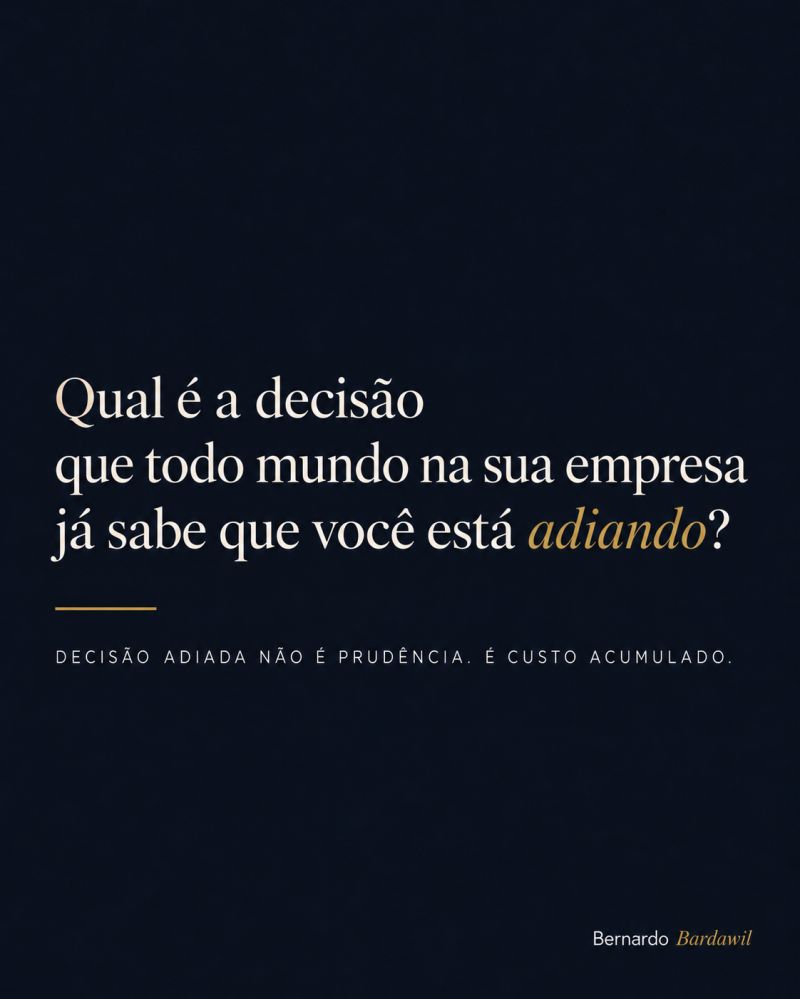
The decision everyone already knows you are postponing

I have spent the last few weeks more at owners' tables than here.

Almost every conversation starts with money. Tight cash, the bank pressing, a partner who wants out, a son or daughter who wants in.

Almost none of them ends with money.

They end with a decision that has been stalled for months. Everyone in the company knows which one it is. The owner knows too. What is missing is not information. It is someone from outside, with no seat to lose, saying how much each month of delay costs.

That is the work. Sitting with the owner, putting a number on the delay and handing back the decision agenda with names and dates.

The rhythm here comes back. What changes is the subject: cash, partners and succession, in the companies of those who sign.

A question for the weekend:

What is the decision everyone in your company already knows you are postponing?

Post page · Comment on LinkedIn

Oct 13, 2026

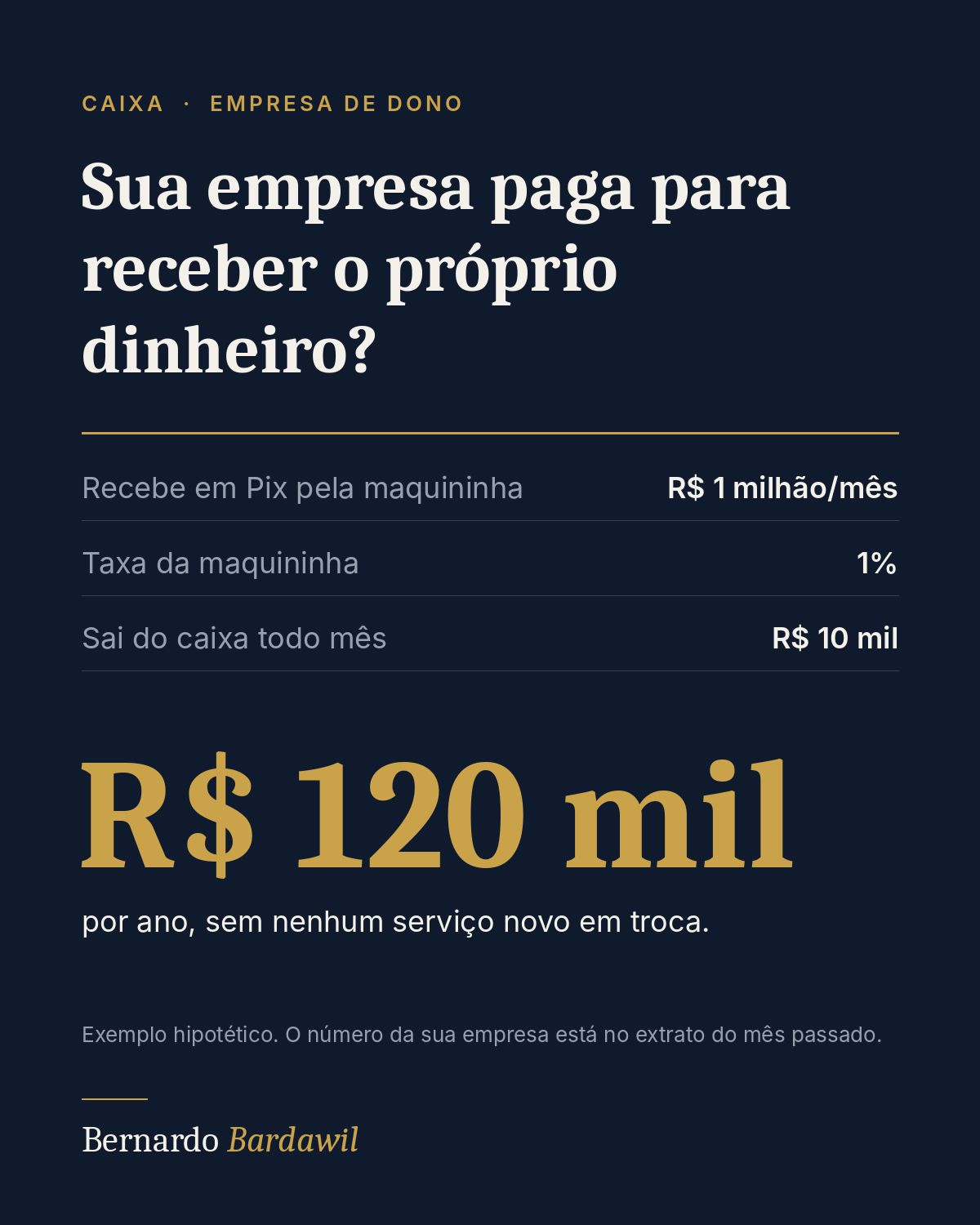
Your company is paying to receive its own money

Your company is paying to receive its own money if:

• the customer pays by Pix, Brazil's instant payment system, on the card machine, and the machine keeps a percentage;
• the bank slip carries a Pix QR Code, and the fee charged is the same as for the barcode;
• the bank charges the company to receive Pix, when there are banks that charge nothing;
• someone justified all of this with "it's because of the integration with the system".

Do a simple calculation, with hypothetical numbers. A store that receives R$ 1 million a month in Pix through the card machine and pays a 1% fee hands over R$ 10 thousand a month. That is R$ 120 thousand a year leaving cash with no new service in return.

Your company's number is in last month's bank statement. It takes ten minutes: add up the receiving fees and see how much of them falls on money that could arrive for free.

Integration with the system is the excuse I hear most. Today there are platforms that integrate at no cost. When the fee stays, it is almost always because nobody stopped to look.

If you do the math and the number bothers you, send me a message. That is the first leak I look for when I walk into a company with tight cash.

Post page · Comment on LinkedIn

Oct 11, 2026

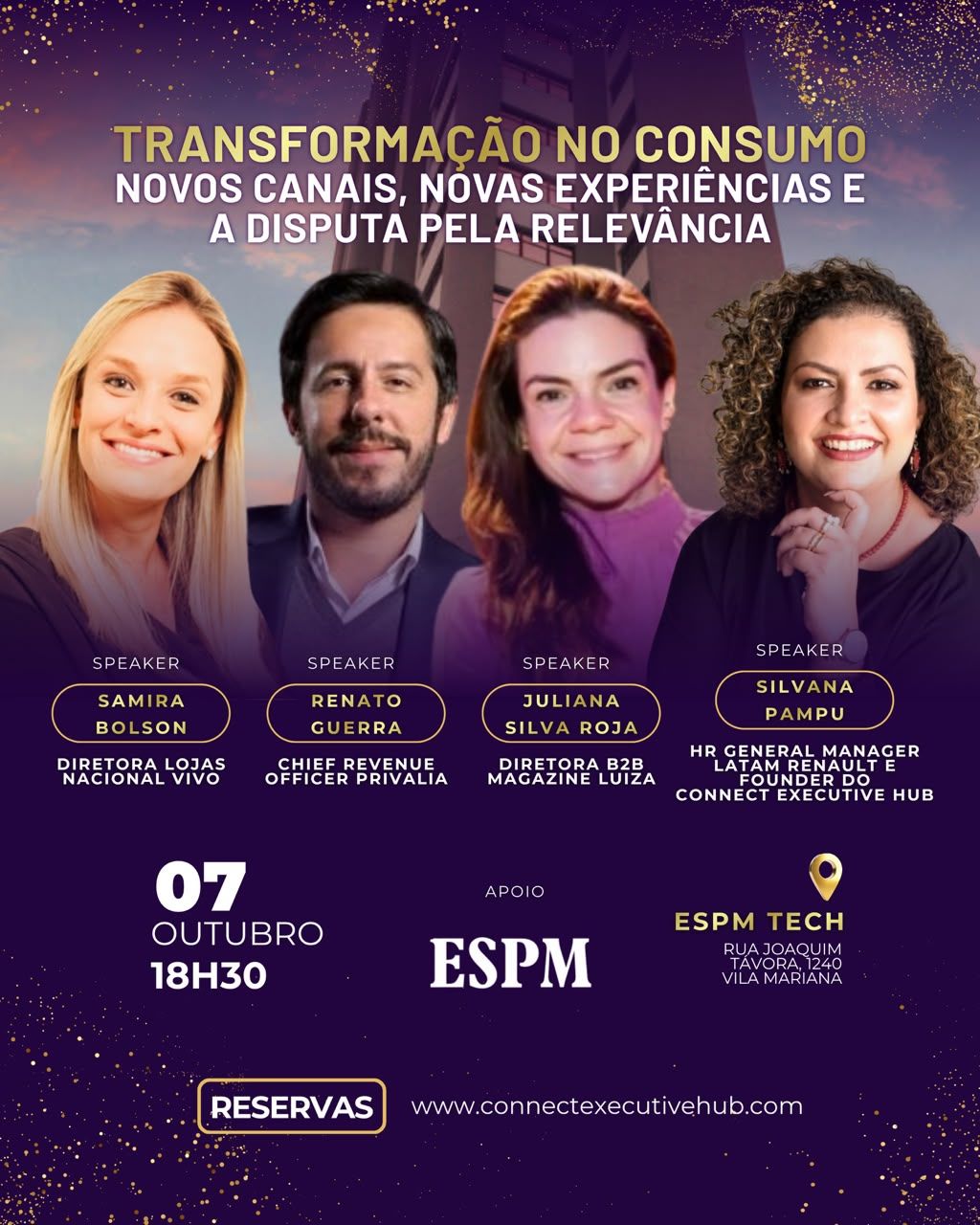
Reconnecting with retail at Connect Talk

Comment on the invitation from Connect Executive Hub and ESPM to the Connect Talk on consumer transformation.

Thank you, Silvana Pampu, and everyone at Connect Executive Hub, for the invitation to hear about retail, which is my passion. After more than 20 years in it, you never forget your first store or your farewell. It was good to reconnect with a market I took part in for so long, and to know that being on the other side of the operation today, supporting companies on this journey, also makes me very proud.

Post page · Comment on LinkedIn

Oct 11, 2026

AI has become an infrastructure problem

This week I was at Futurecom at the invitation of Lamerica Tech and Jackie Chen. Thank you for the trust. Standing alongside the people building infrastructure changes the quality of the questions we bring back to our companies.

My takeaway from the event, for those of us who sit on Boards:

The conversation about artificial intelligence is no longer about software. It is about what sustains the software: connectivity, data centers, energy, and security. AI has become an infrastructure problem.

And infrastructure has a trait Boards tend to underestimate: timelines are long, contracts are long, and so are the mistakes.

The question for the next Board meeting is not "which AI tool should we adopt?" It is "can our foundation support the strategy we are approving?"

Those who answer it first capture the gains. Those who answer it later pay the cost of adapting.

TI Inside's coverage, in Portuguese, sums up this year's agenda well: https://lnkd.in/d9C2Ah5S

Post page · Comment on LinkedIn

Sep 8, 2026

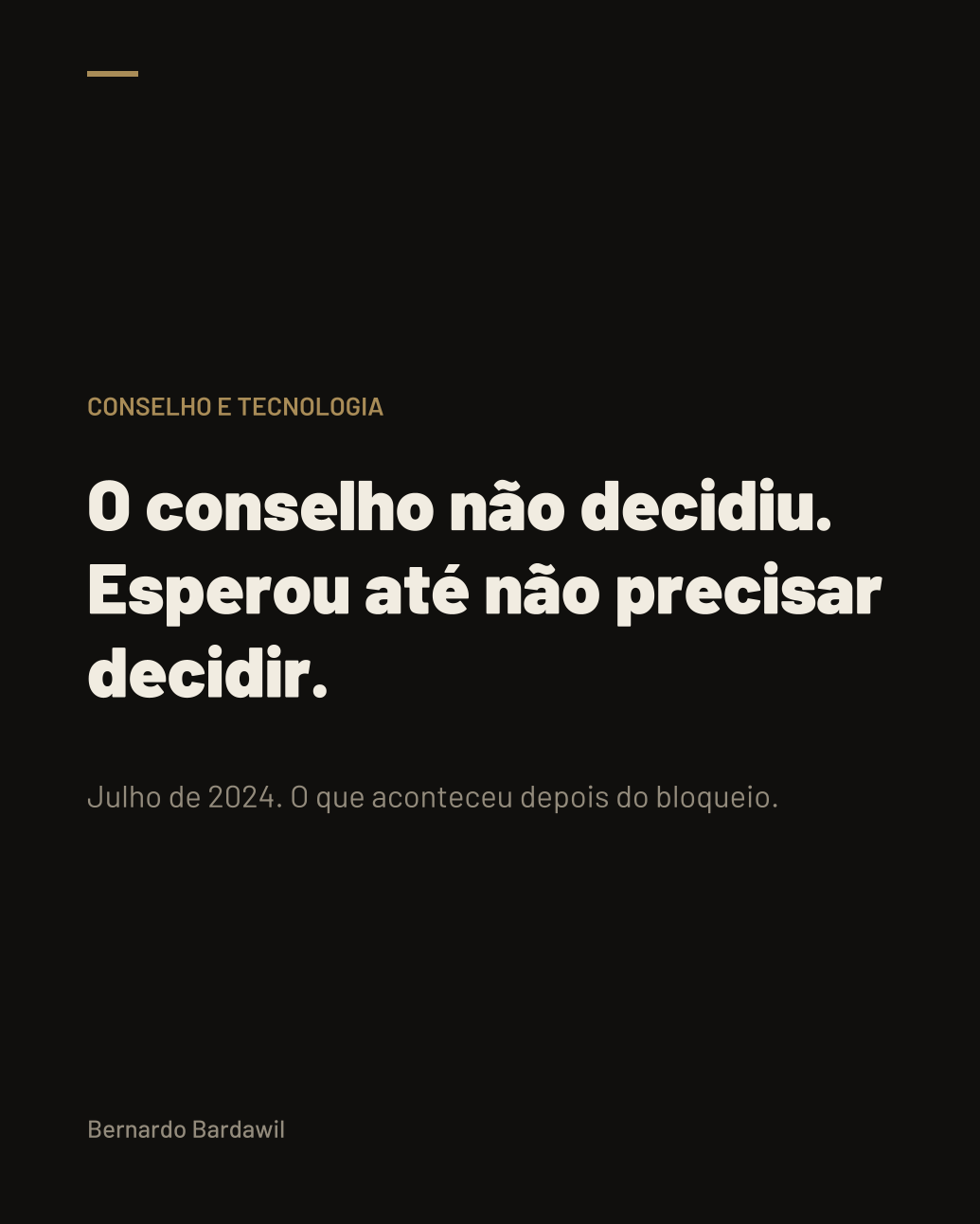
The Board did not decide. It waited until it no longer had to

image 1/11image 2/11image 3/11image 4/11image 5/11image 6/11image 7/11image 8/11image 9/11image 10/11image 11/11
1 / 11

The Board did not decide. It waited until it no longer had to.

Have you ever voted, on a Board, to ban something that was already running inside the company?

The table rarely decides on technology. It waits until it no longer has to decide.

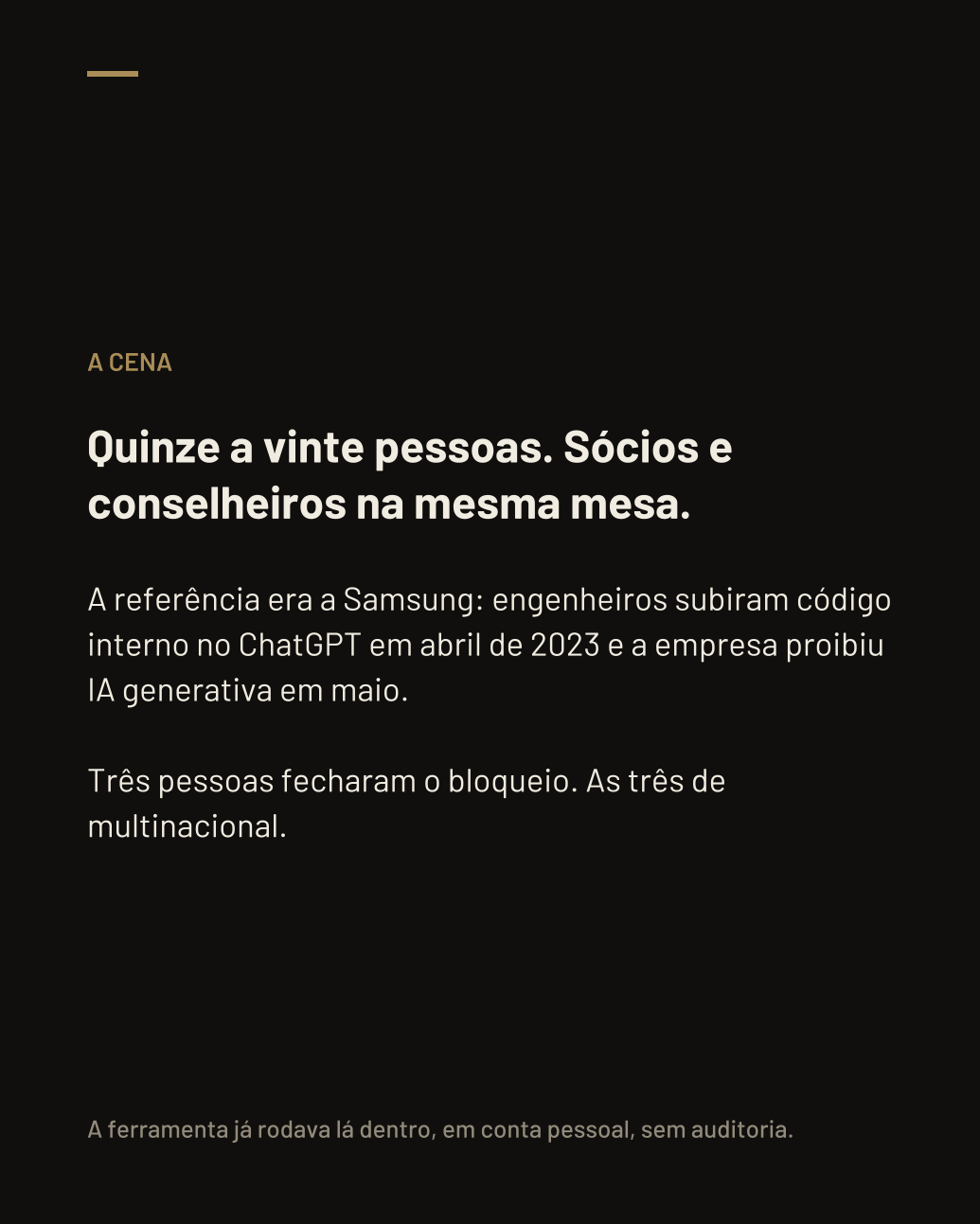
July 2024. Fifteen to twenty people, partners and Board Members at the same table. The reference was Samsung: engineers uploaded internal code to ChatGPT in April 2023 and the company banned generative AI in May. Three people closed the ban, all three from multinationals. The tool was already running inside, on personal accounts, with no audit trail.

In the first half of 2025 I proposed the ugly way out: a single shared password, everything auditable. Bad security practice, and the only thing that exposed the real size of the usage.

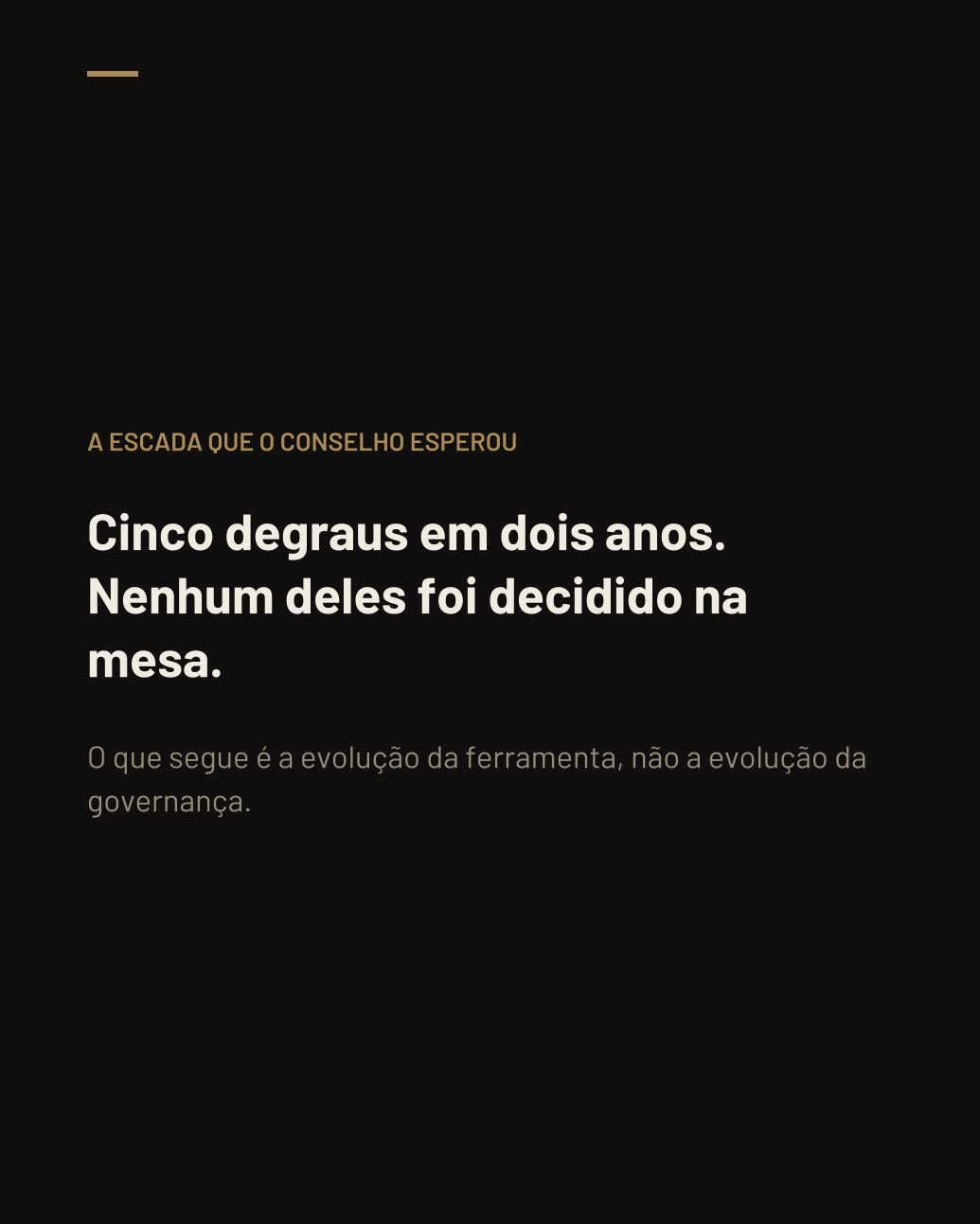
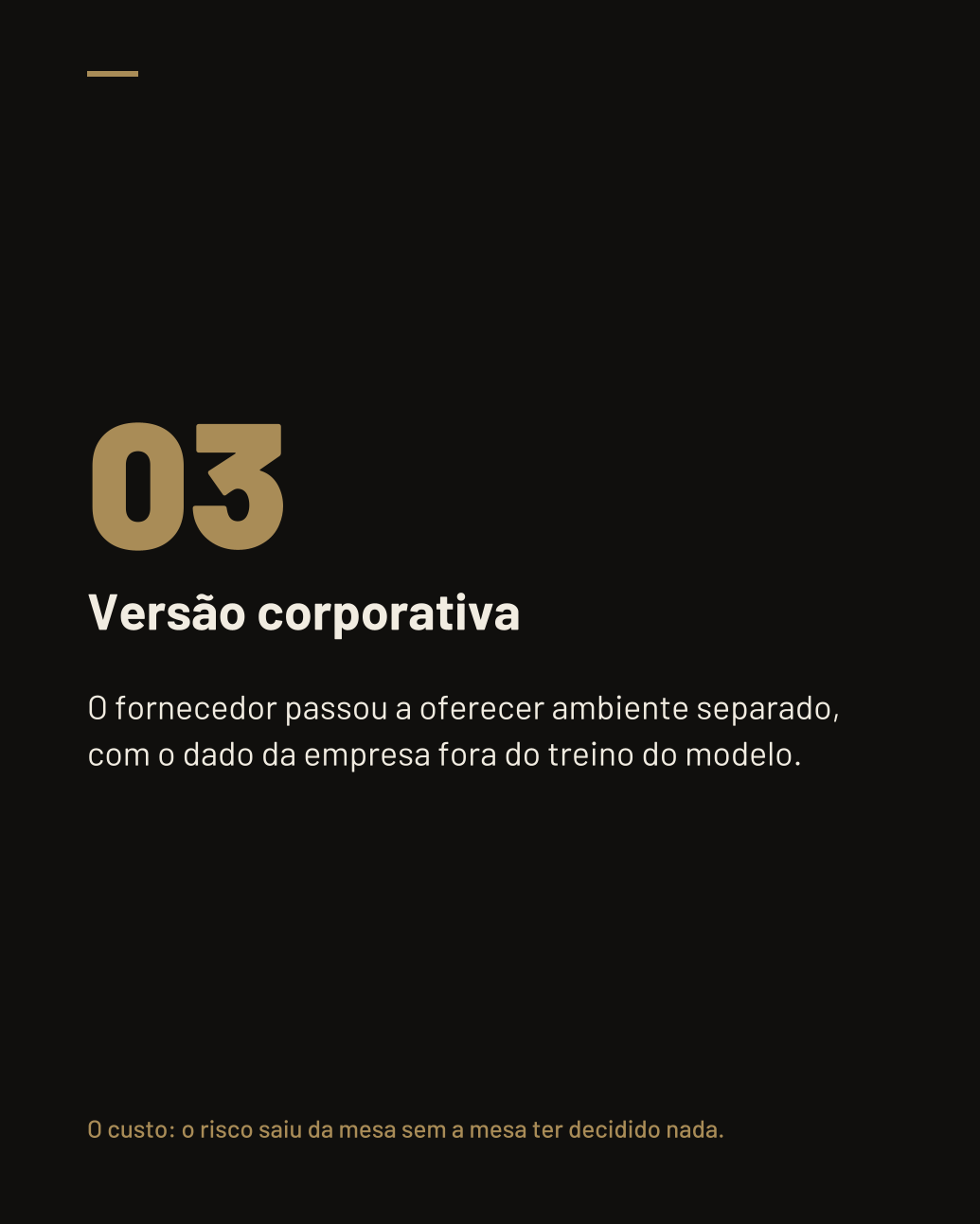
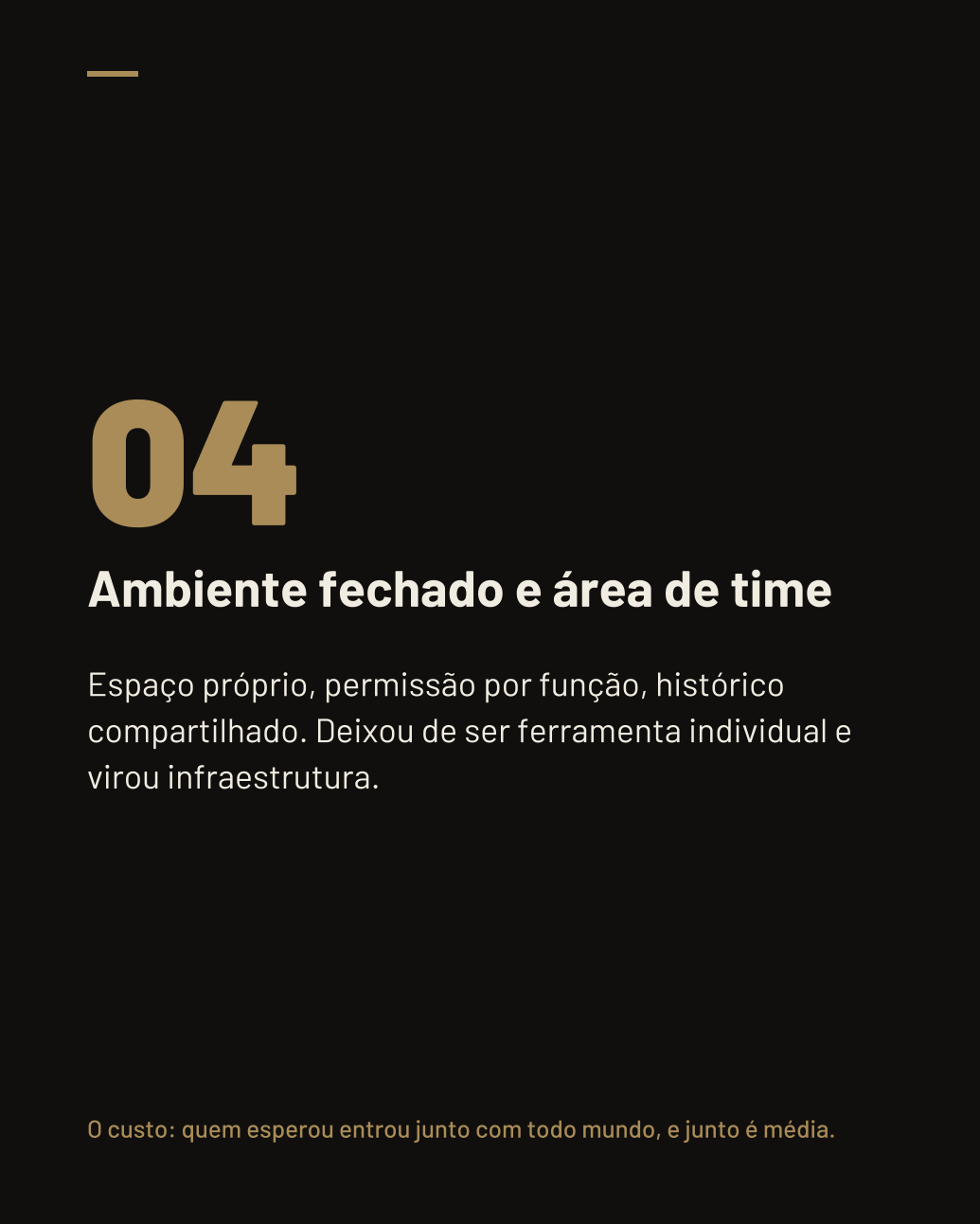
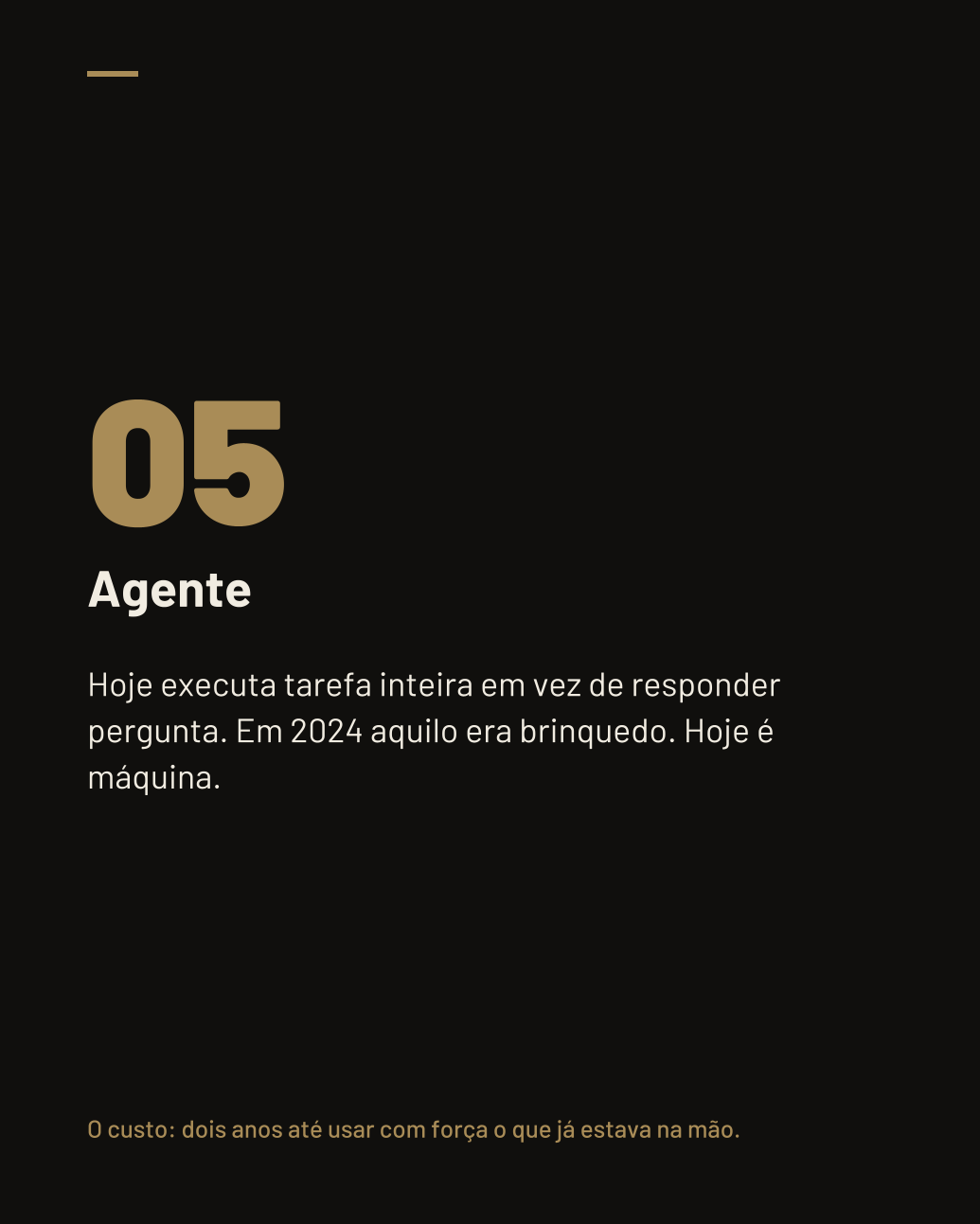
What changed the Board came from outside: a corporate version, a closed environment, a team workspace. In 2024 it was a toy. Today it is a machine.

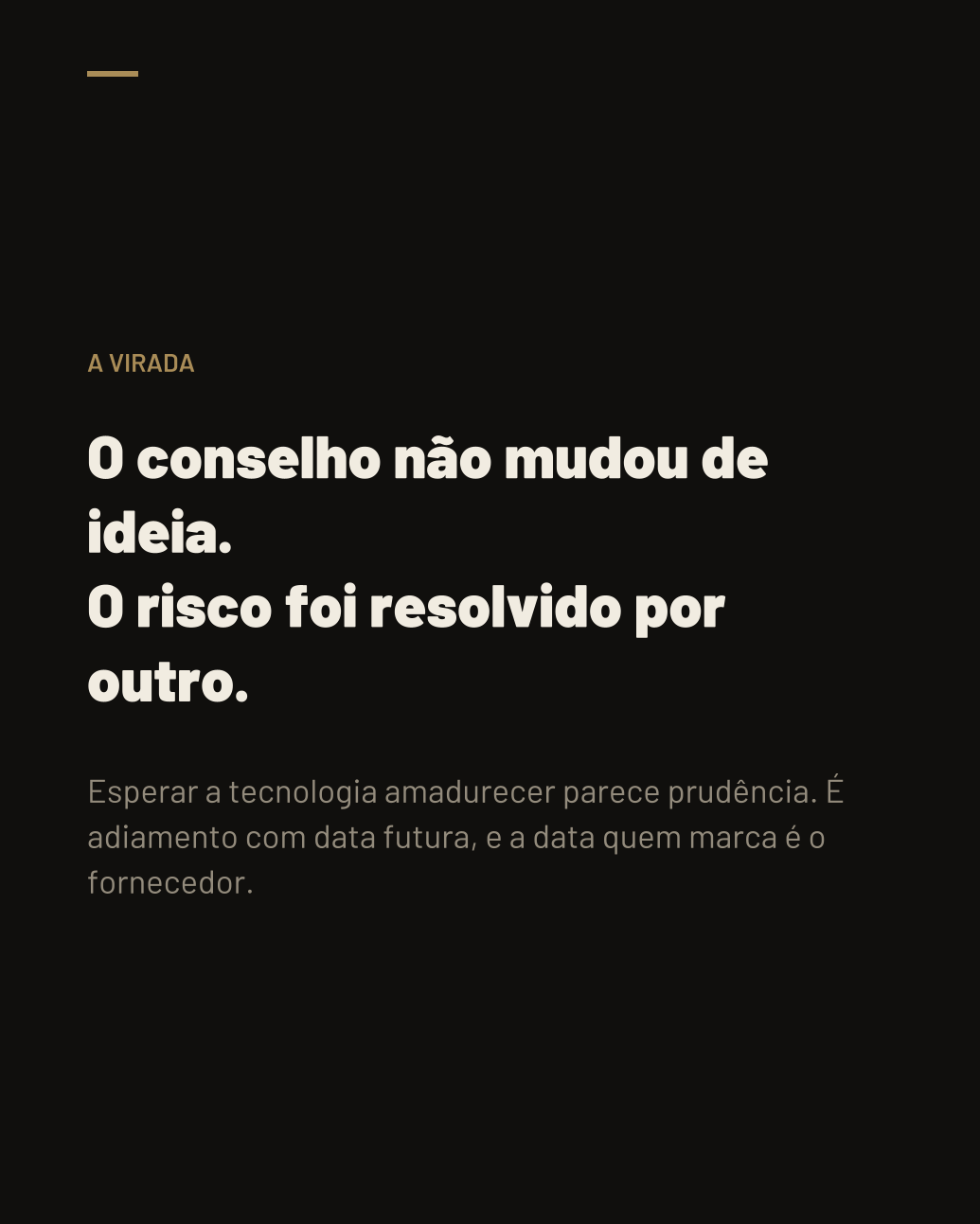
The Board did not change its mind. The risk was solved by someone else.

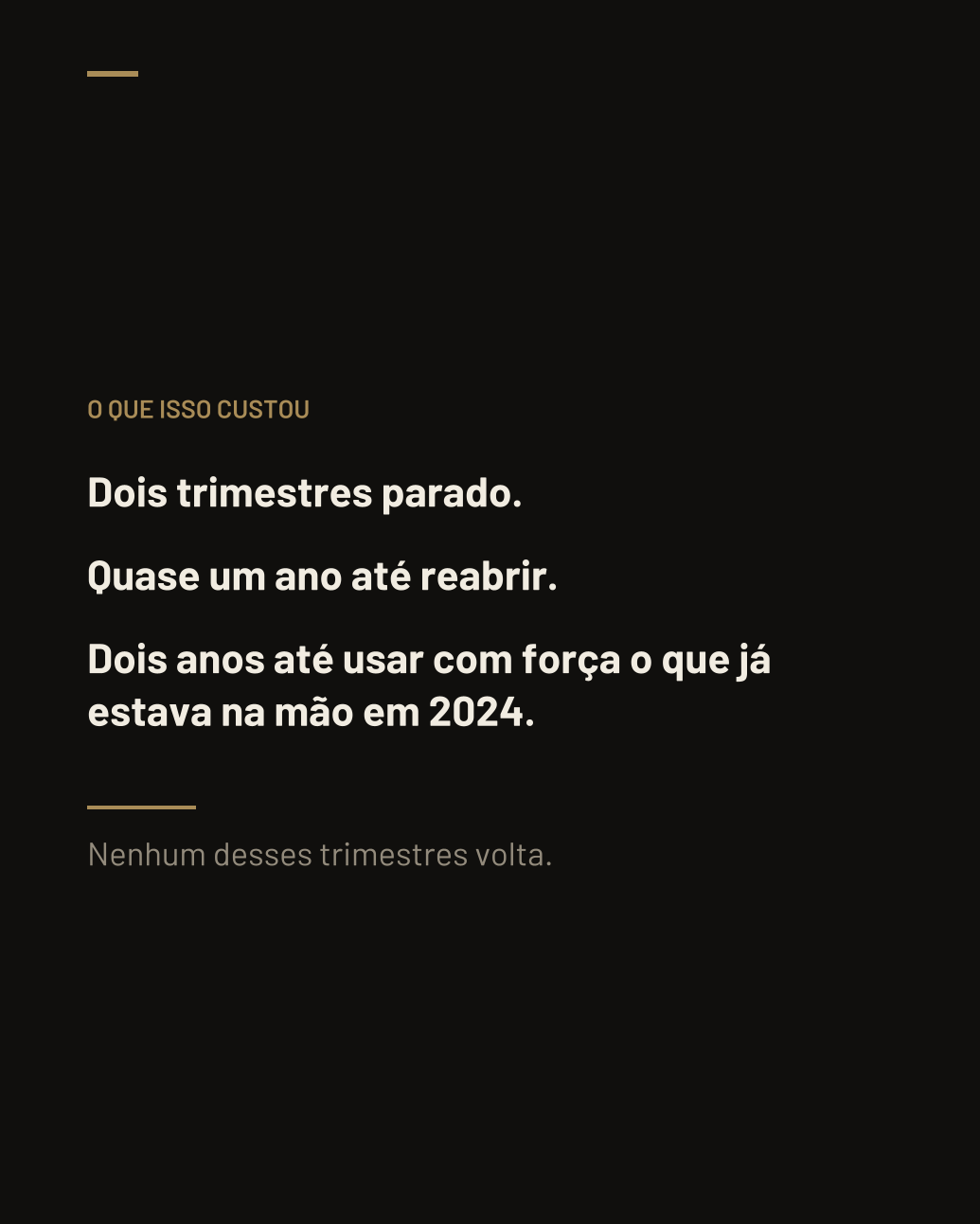
Blocked use does not become zero use, it becomes unrecorded use. Whoever comes in after the vendor has solved the risk arrives together with everyone else, and together means average. Two quarters stalled, almost a year to reopen, two years to use with force what was already in hand.

A table that only signs after the risk is gone is waiting for permission. And permission arrives for everyone on the same day.

Post page · Comment on LinkedIn

Sep 4, 2026

There is always a technically correct number draining cash

image 1/11image 2/11image 3/11image 4/11image 5/11image 6/11image 7/11image 8/11image 9/11image 10/11image 11/11
1 / 11

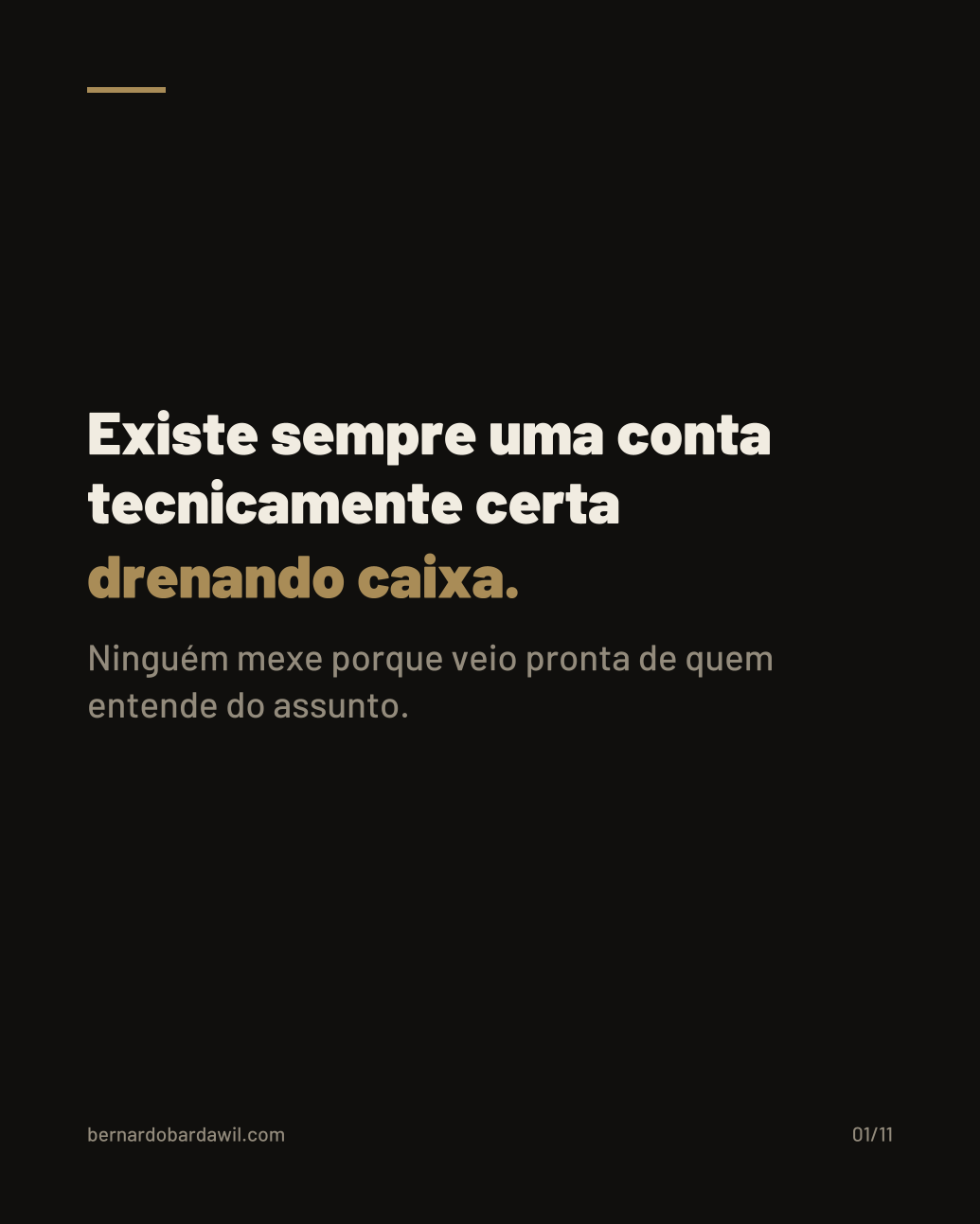
There is always a technically correct number draining cash. Nobody touches it because it came ready-made from someone who knows the subject.

Whoever signs the opinion does not pay the bill · The reference error nobody authorized.

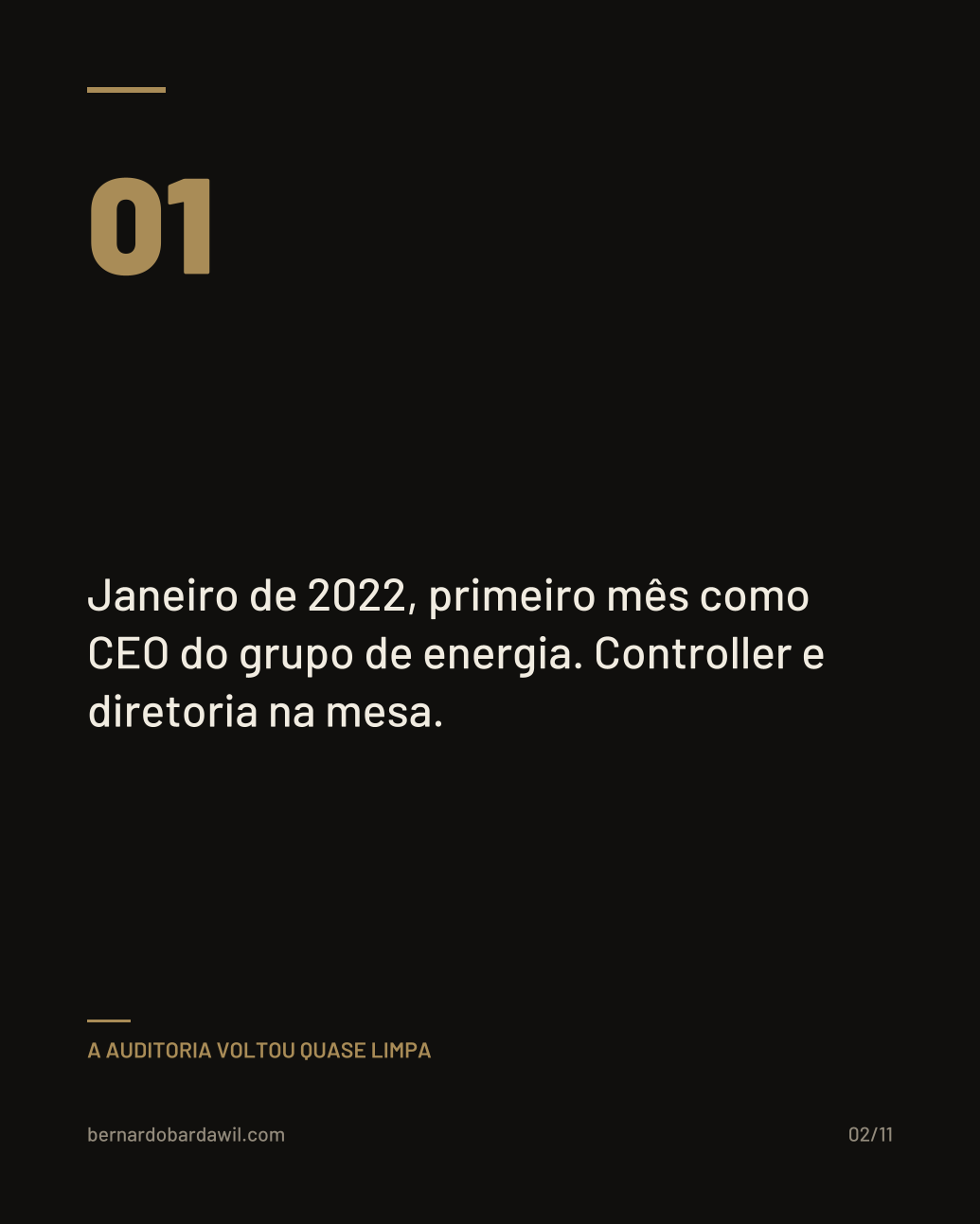
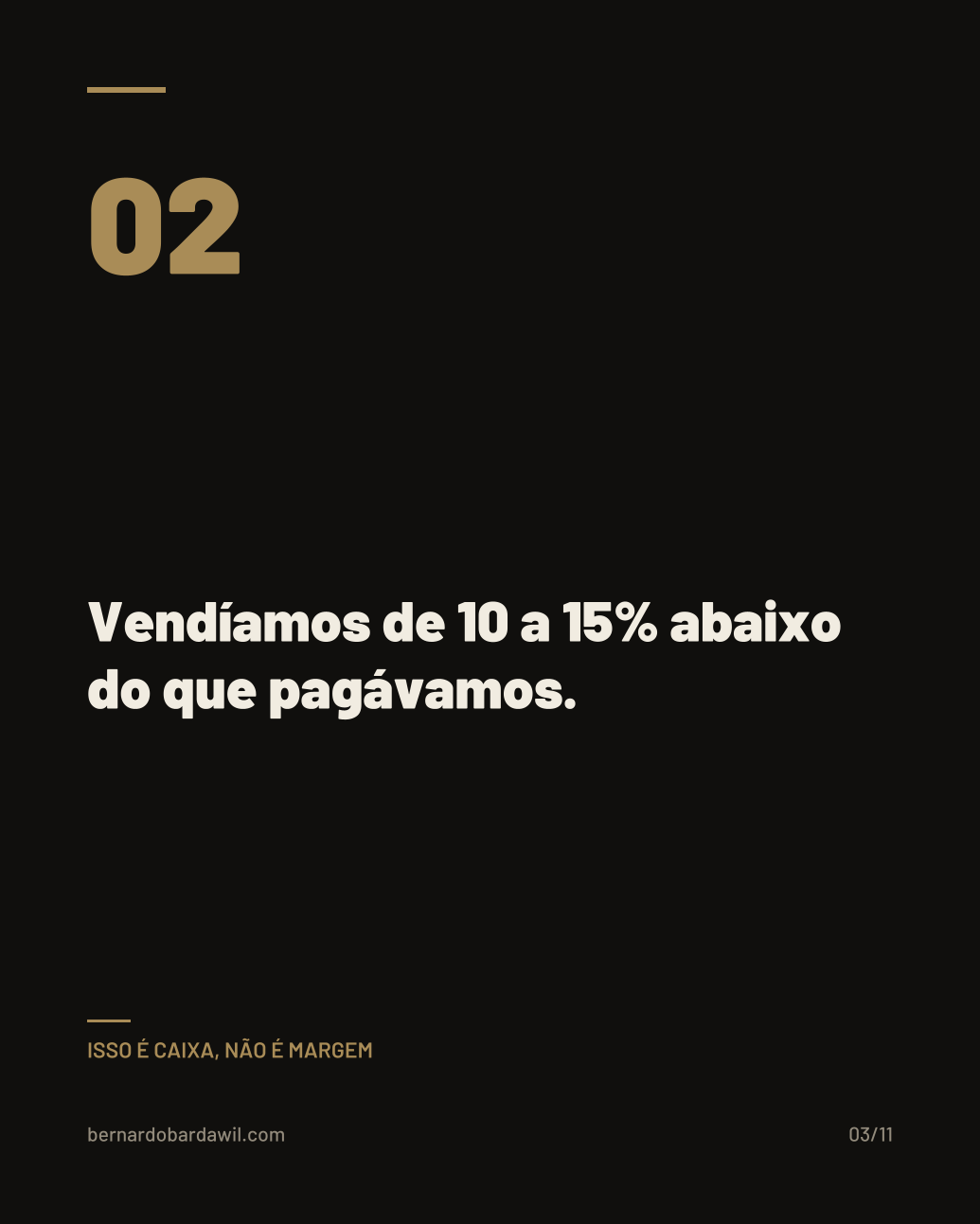
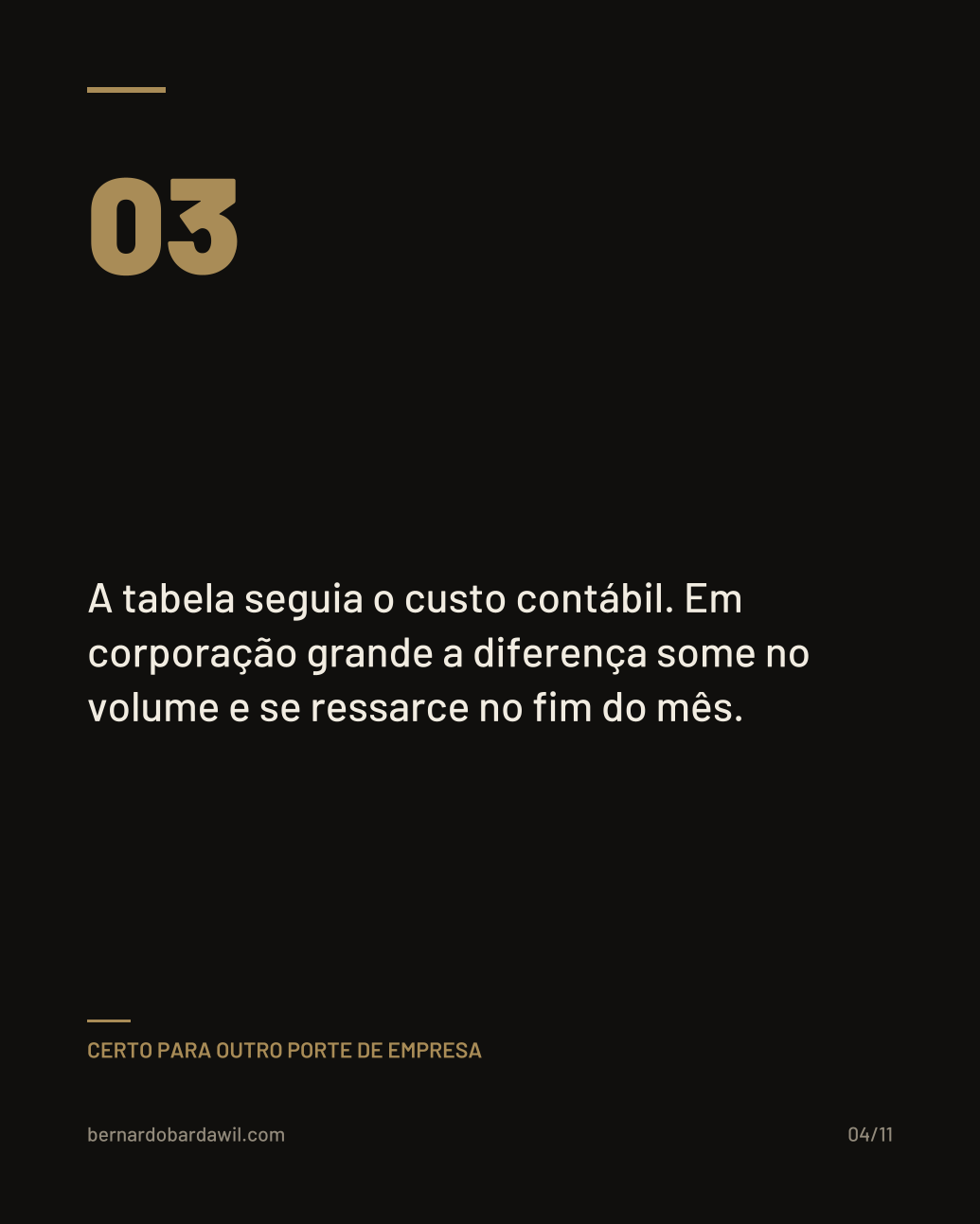
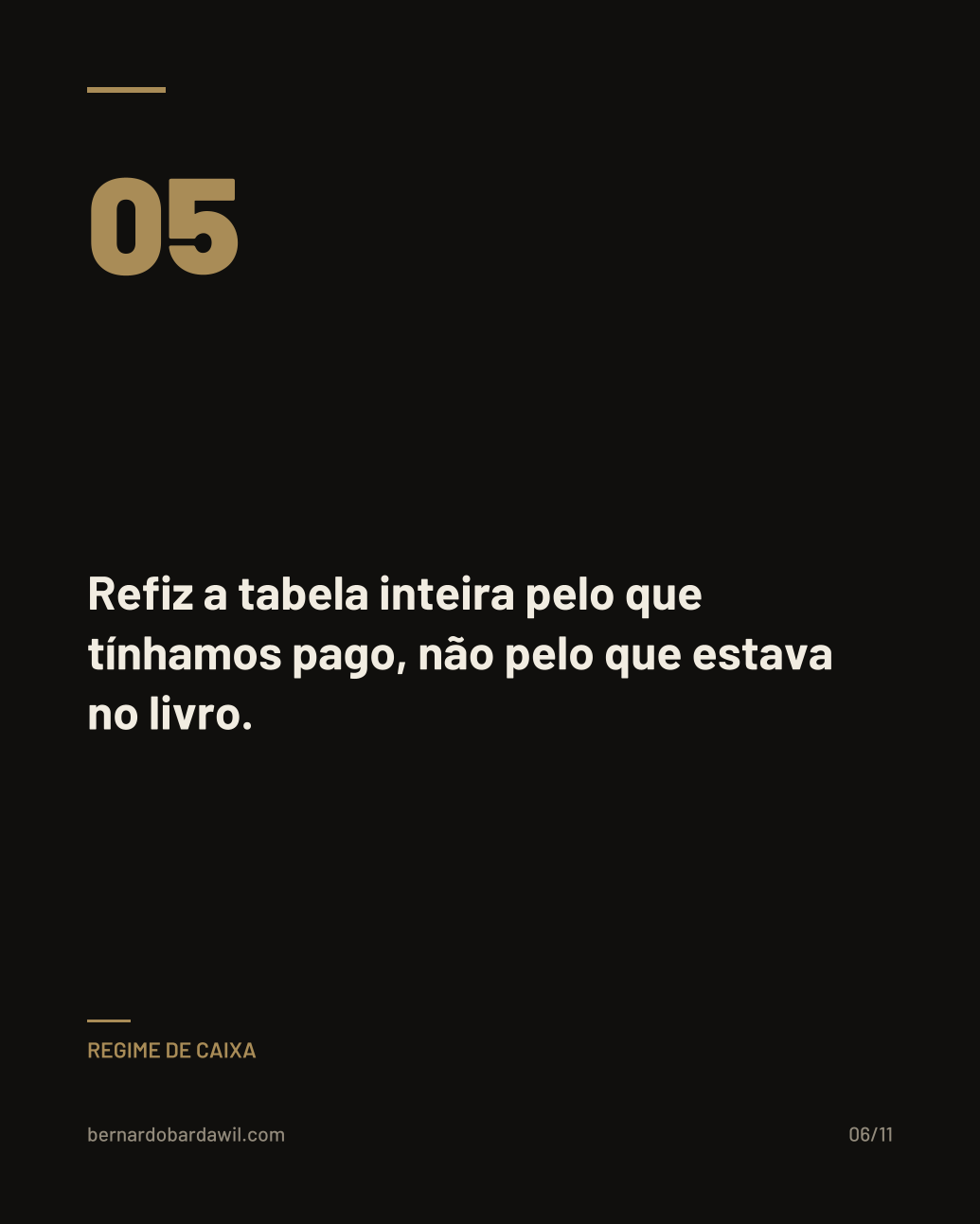
January 2022, my first month as CEO of the energy group. With the controller and the executive team at the table, I saw that we were selling 10 to 15% below what we had paid. The price list followed accounting cost, correct in a large corporation, where the difference disappears in volume and is reimbursed at month end. That was not our case. I froze sales that same day and rebuilt the price list on what we had actually paid.

Sales, purchasing and accounting wanted to kill me. On the screen, all I was doing was raising prices.

The number was right. Right for another company.

A decision that moves cash stops being technical and becomes the owner's. Whoever signs the opinion is not the one who pays the bill.

Three months of operation were being financed by a wrong reference that nobody had to authorize. It did not show up in the income statement, because the income statement closed. It showed up in cash, which is where corporate governance is tested, and always afterwards.

In September your company chooses how it will pay IBS and CBS, the new Brazilian consumption taxes. It will arrive as an accountant's matter. The effect is cash and credit along the chain, it applies from January to June and reopens in March.

You have until September 30 to find out who, in your company, will tick that option. After that, it has already been ticked.

Post page · Comment on LinkedIn

Sep 2, 2026

Disagreeing with the owner is the easy part. The hard part comes later

image 1/11image 2/11image 3/11image 4/11image 5/11image 6/11image 7/11image 8/11image 9/11image 10/11image 11/11
1 / 11

Disagreeing with the owner is the easy part. The hard part comes later.

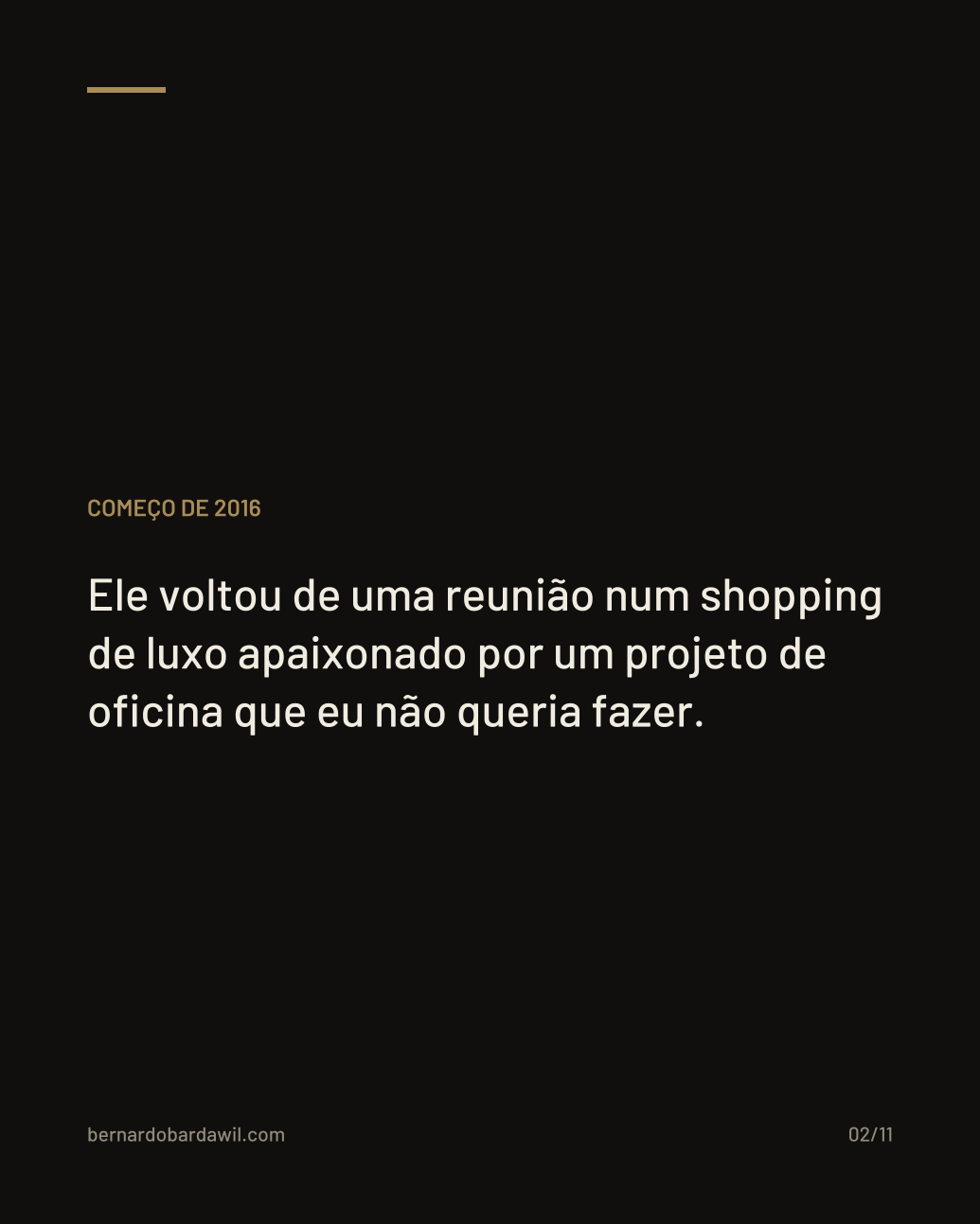
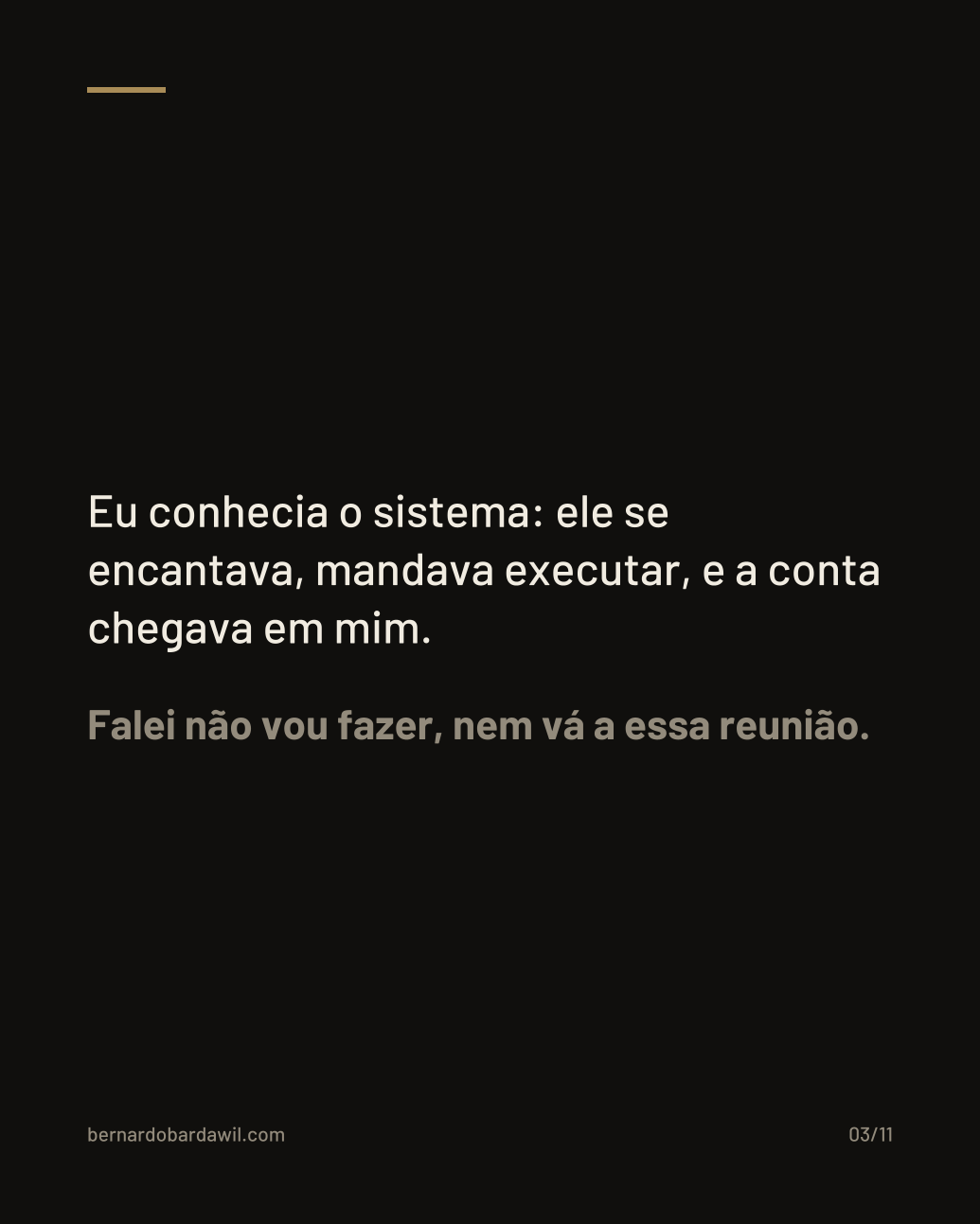
Early 2016. He came back from a meeting at a luxury mall in love with a car service shop project I did not want to do. I knew the system: he fell in love with an idea, ordered it executed, and the bill landed on me. I said I will not do it, and do not even go to that meeting. An owner is an owner. He came back the way I feared, and I, in protest, said that if he wanted that dream so much, he could make it happen on his own. Then he used my curiosity against me: I accept, as long as you prove it will not work.

Six months with the union, city hall, architect, engineer and legal together, plus neuroscience and mall behavior. The store opened billing like a street unit, with half the fixed cost. The pandemic stopped the expansion at three stores, and the malls were already calling me an anchor.

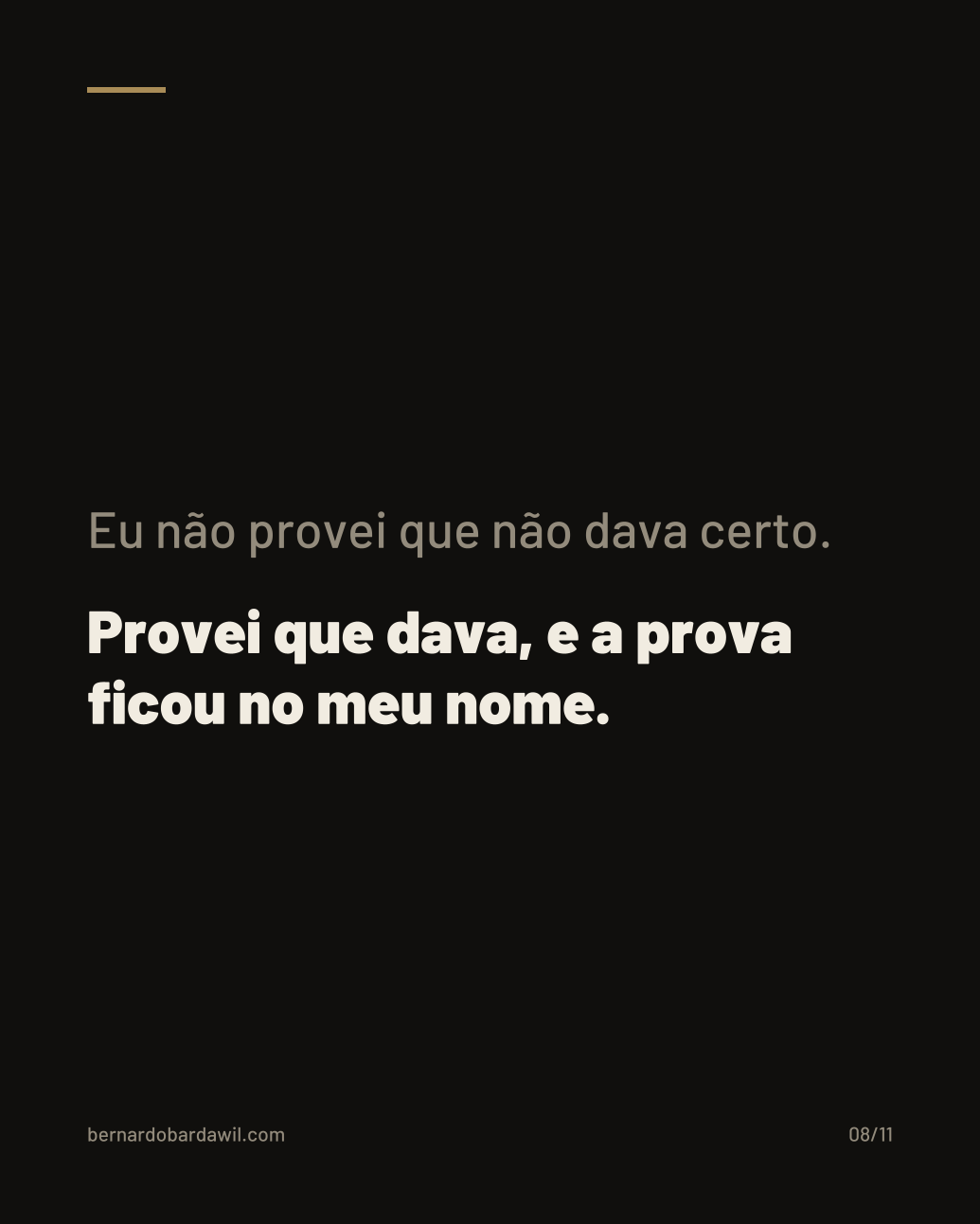
I did not prove it would not work. I proved it would, and the proof stayed under my name.

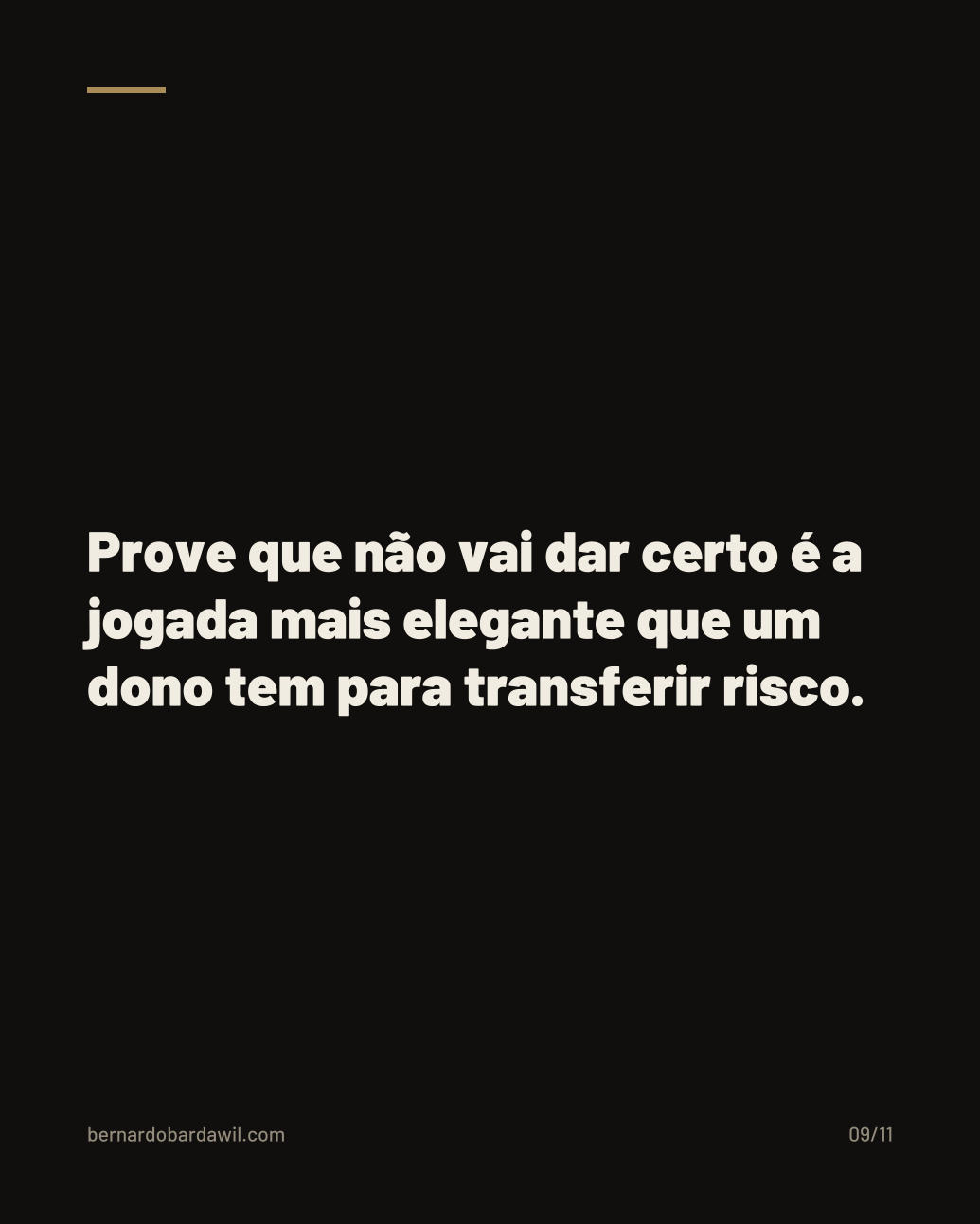
Prove it will not work is the most elegant move an owner has to transfer risk.

If it goes wrong, the blame already has a name. If it goes right, the idea still belongs to whoever only had the idea. And the executive learns to disagree less next time.

From a firm no to a passionate yes. To this day I do not know whether I won that argument or lost it in a more expensive way.

Post page · Comment on LinkedIn

Aug 31, 2026

When the numbers turn, the table does not ask what to do. It asks how much it will cost

image 1/10image 2/10image 3/10image 4/10image 5/10image 6/10image 7/10image 8/10image 9/10image 10/10
1 / 10

When the numbers turn, the table does not ask what to do. It asks how much it will cost.

January 2023. Year-end close, Board Members and partners at the table, me with one year as CEO. Until the next slide: the price of the goods was falling and within the quarter the drop would reach 30% of the value sold in December. The year would open with a loss already declared. The happy faces disappeared and what remained was anger and worry. The only weapon was a lean inventory: sell it off fast, and the loss would not reach the projected 70%.

It was decided right there: sell it off before it drops further.

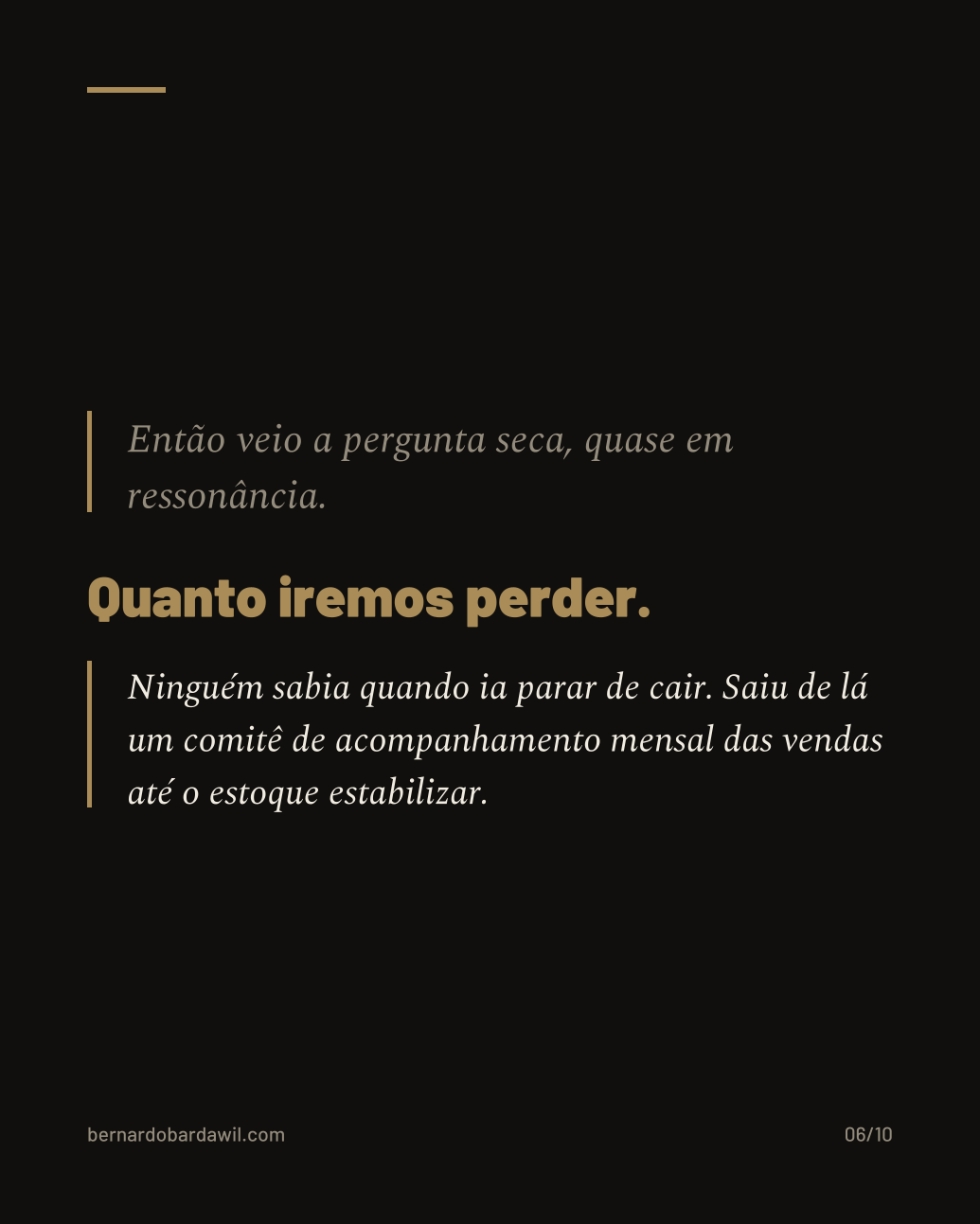
Then came the blunt question, almost in unison. How much will we lose. Nobody knew when it would stop falling. What came out of that room was a committee to follow sales monthly until inventory stabilized.

The number the table asks for at that moment does not exist. The request does.

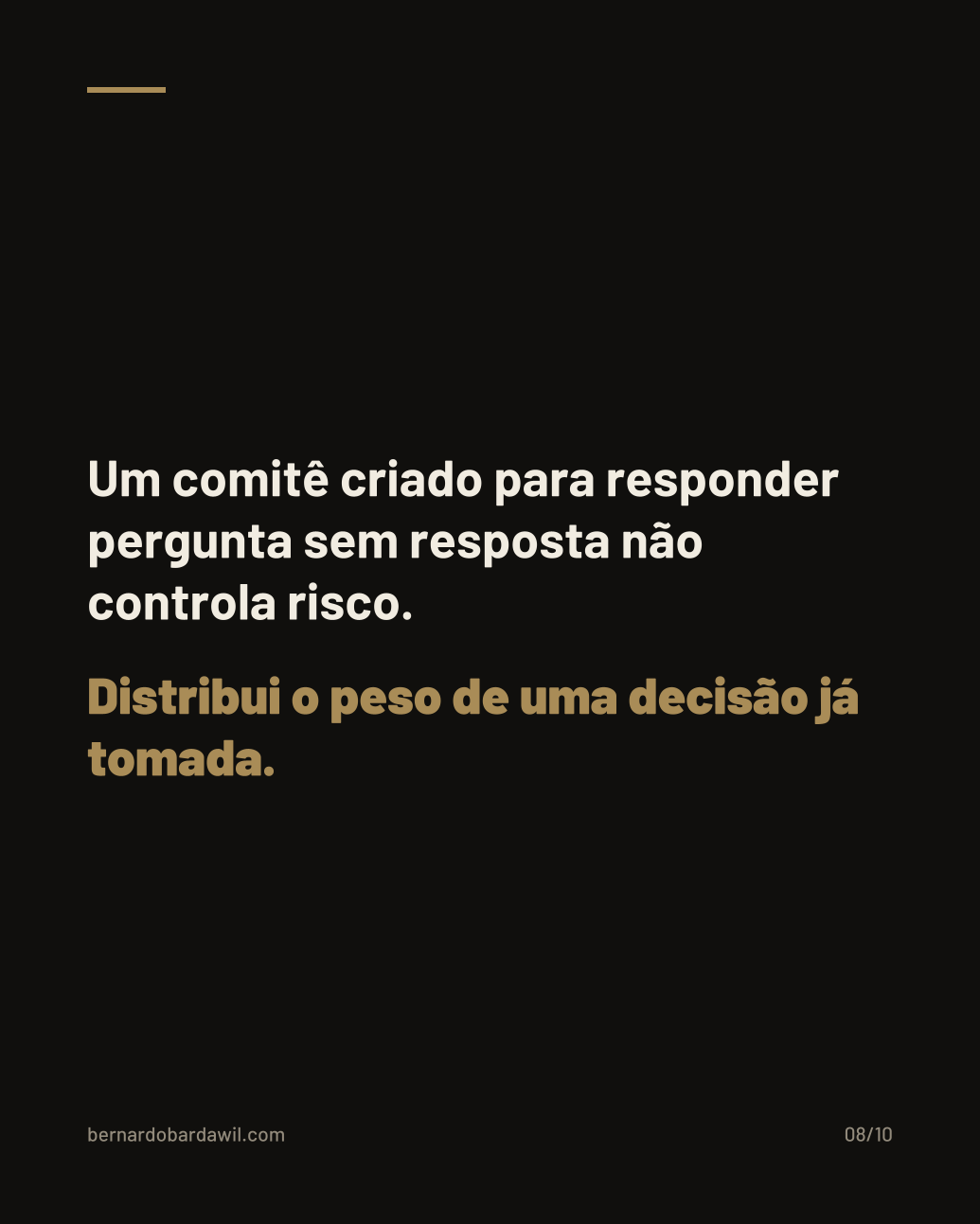
A committee created to answer a question that has no answer does not control risk. It spreads the weight of a decision already made.

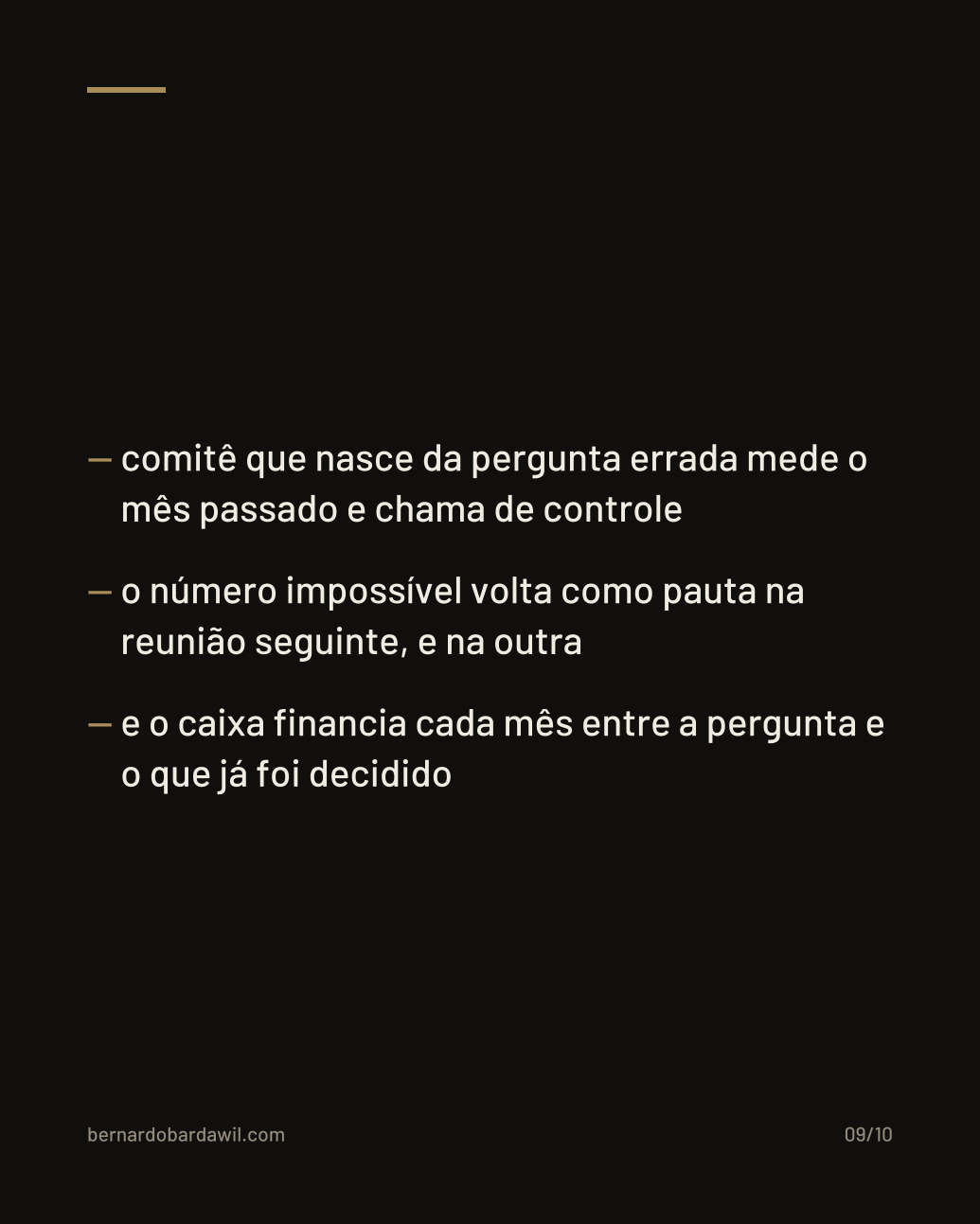
• a committee born from the wrong question measures last month and calls it control
• the impossible number comes back on the agenda at the next meeting, and the one after
• and cash finances every month between the question and what has already been decided

The meeting ended bitter.

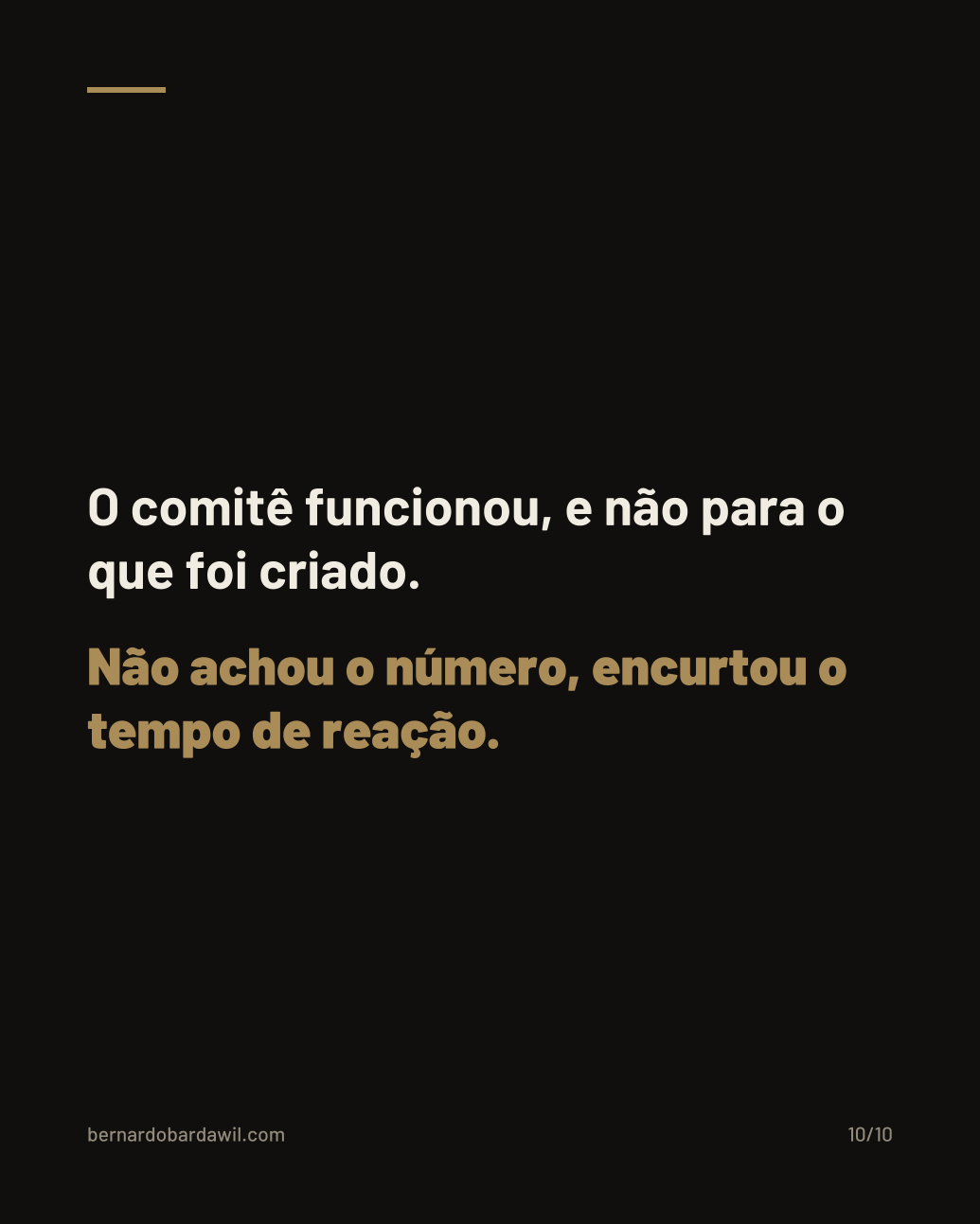
The committee worked, just not for what it was created for. It did not find the number, it shortened the reaction time.

Post page · Comment on LinkedIn

Aug 3, 2026

Succession does not start with whoever takes the chair

image 1/10image 2/10image 3/10image 4/10image 5/10image 6/10image 7/10image 8/10image 9/10image 10/10
1 / 10

Have you ever seen a succession plan, perfect on paper, fail to survive the owner's office?

When the owner says the successor is not ready, he is describing himself.

2007, a tire distributor. The owner fell ill and the doctors treated the case as terminal. Weeks later the diagnosis fell apart. Recovered, he was persuaded to hire a succession consultancy.

The consultancy executed the playbook without missing a line. It mapped the family, named the successor, divided the areas among the children and reserved for him the chair of the Board.

No Corporate Governance design survives the absence of whoever still signs the decisions: the org chart changes, the power stays where it always was.

They presented his retirement ready-made, on a slide. Nobody had sat down with him beforehand.

He paid every remaining month of the contract, without asking for a discount, and gave them five minutes to leave the room.

Succession does not start with whoever takes the chair. It starts with whoever is going to leave it.

• A plan closed without the owner stalls at the first decision that goes against his will.
• A successor with a title and no mandate teaches the team to keep asking the father.
• The bill is paid in full, the contract ends in months and command stays where it always was.

The owner may be paying for the process without agreeing with it.

Until the conversation starts with him, succession keeps being decided. Only by illness, by the calendar or by the estate inventory.

Post page · Comment on LinkedIn

Jul 31, 2026

The room where everyone agrees and nothing is decided

image 1/9image 2/9image 3/9image 4/9image 5/9image 6/9image 7/9image 8/9image 9/9
1 / 9

Have you ever been in the room where everyone agrees and nothing is decided?

In a tire operation, I held the helm with several owners at the table. Each had a different opinion. The only common ground was that nobody wanted to fight.

So the position never closed. It stayed open until the deadline arrived.

And when it arrived, I decided with what I had in hand. Never with what I needed to have.

That was not a lack of information. A company with many owners and no decision forum has Corporate Governance on the org chart, not in practice, and the price comes out of cash in the form of late decisions.

Harmony between partners is not a sign of health. It is the most expensive asset a company carries when it replaces deliberation.

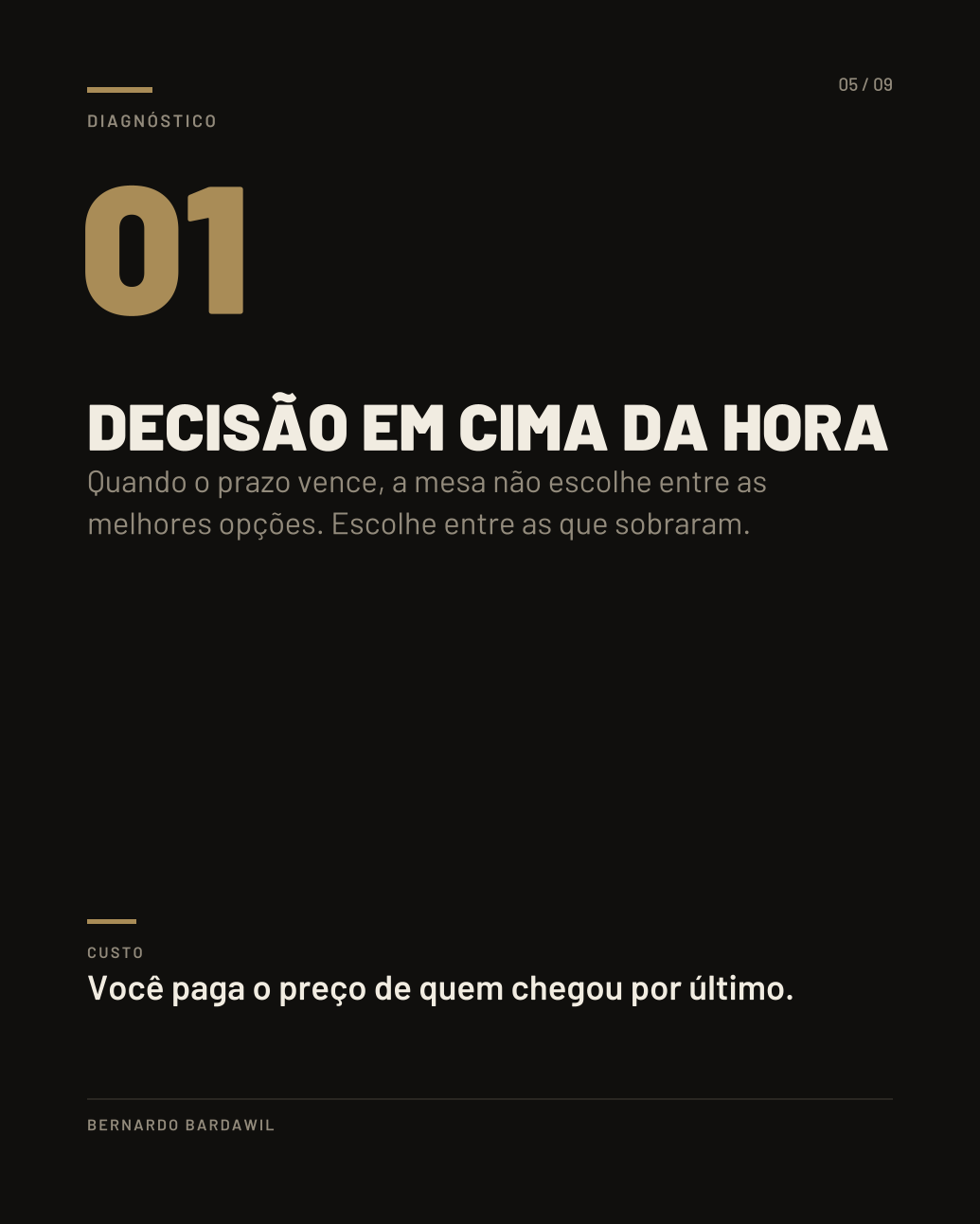
• A last-minute decision does not choose the best option. It chooses the one still available.
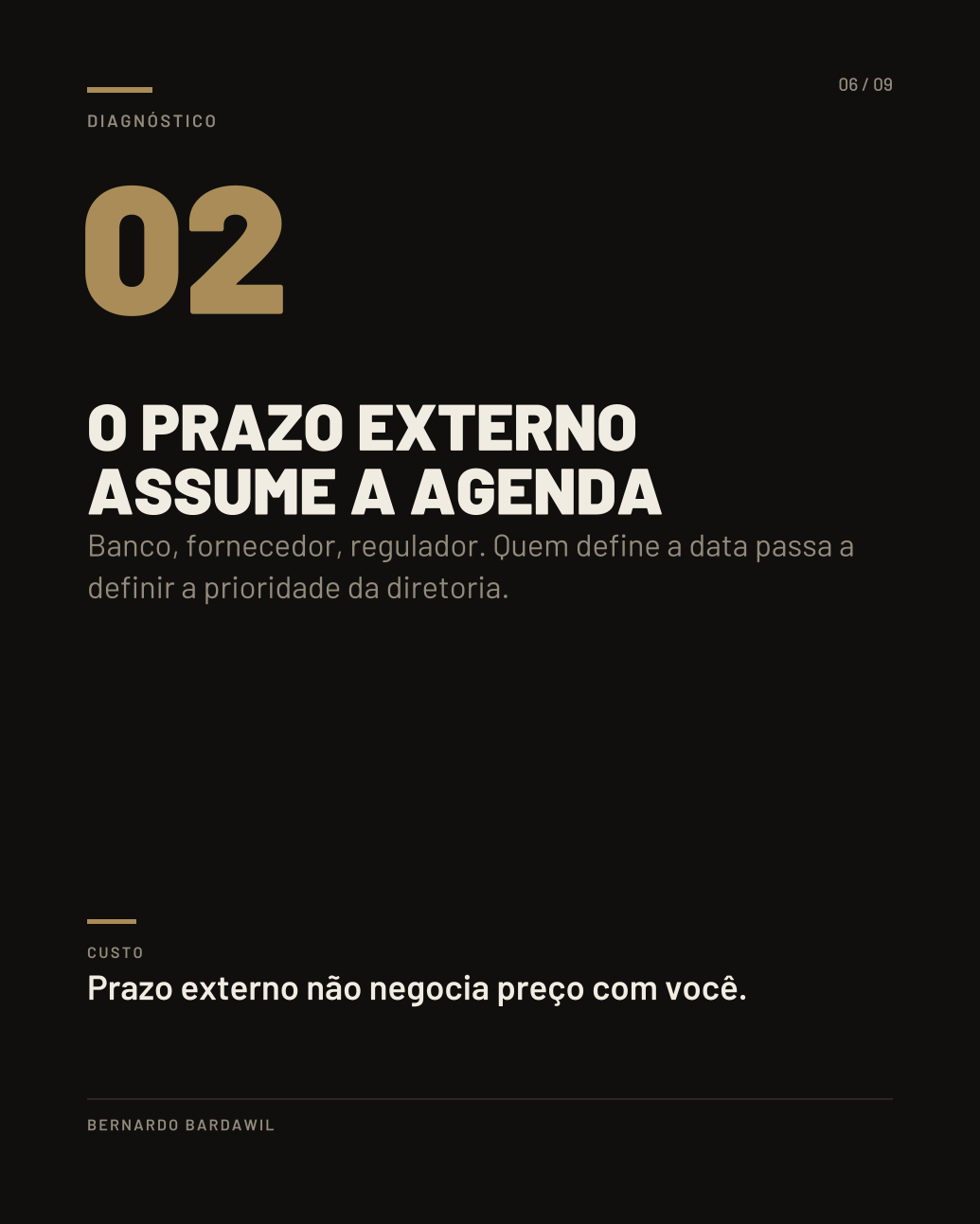
• The external deadline starts to set the agenda, and an external deadline does not negotiate price.
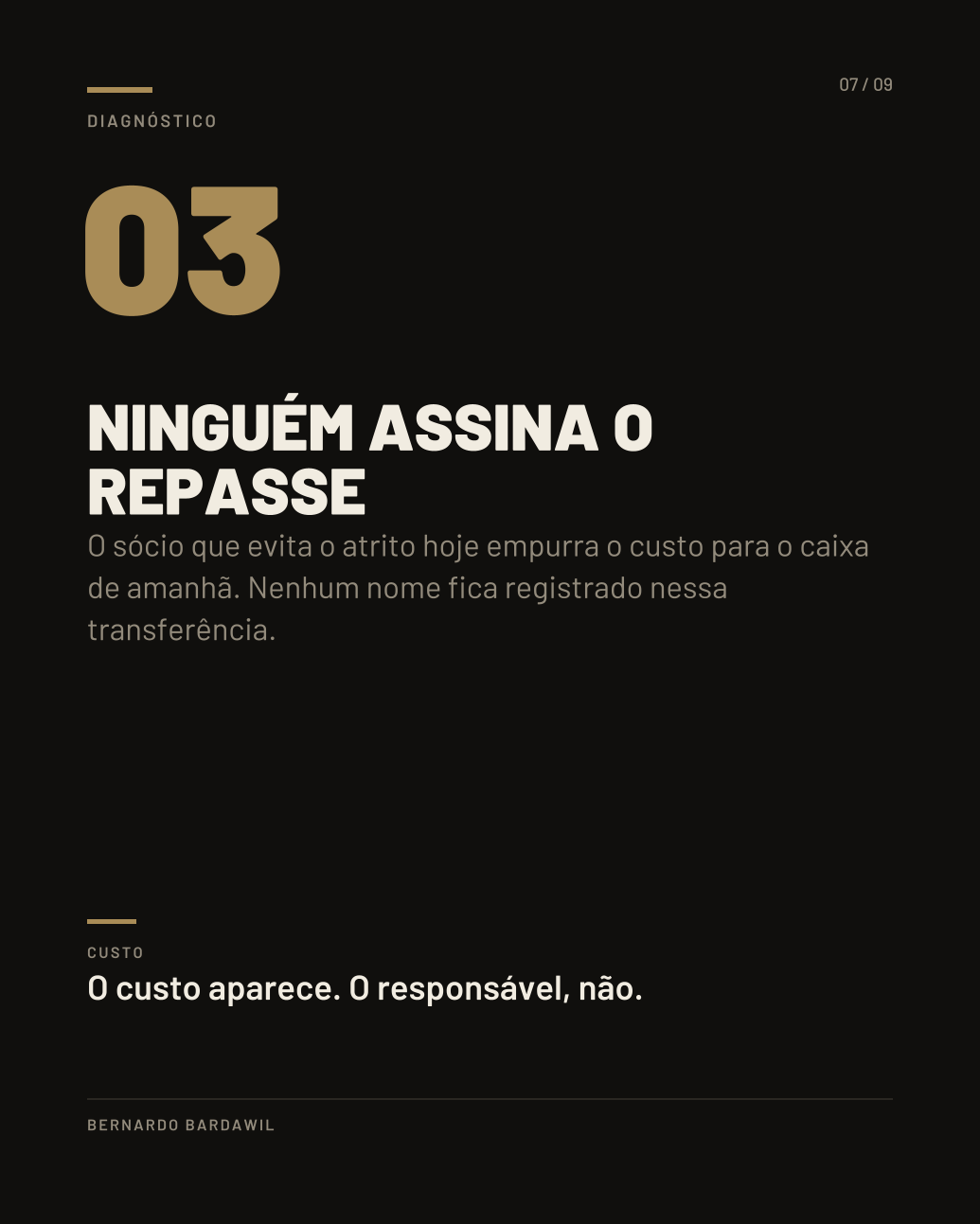
• Whoever avoids friction today transfers the cost to tomorrow's cash, and nobody signs that transfer.

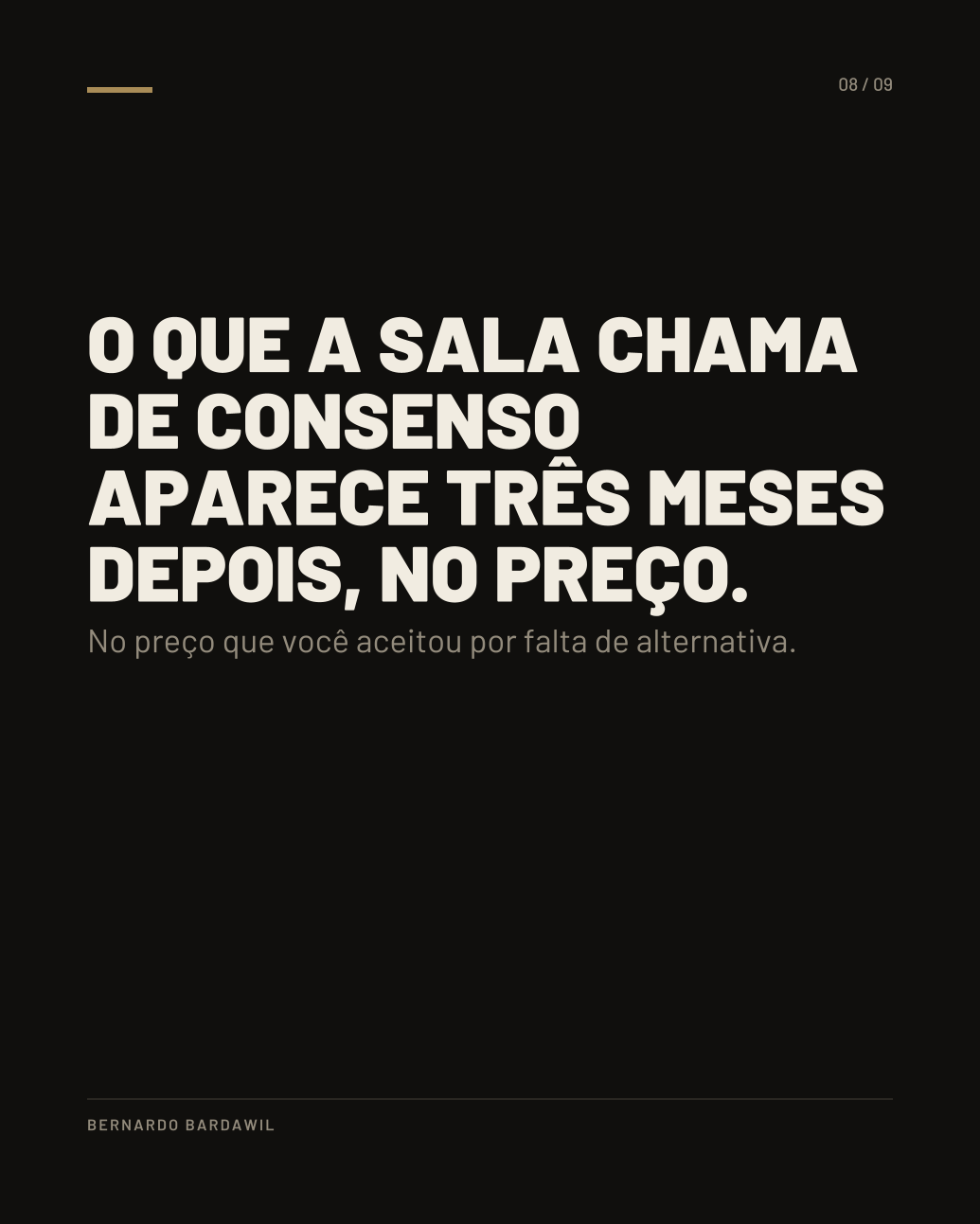
What the room calls consensus shows up three months later, in the price you accepted for lack of an alternative.

Look at the next decision on your table and answer two things: who signs, and what happens if he gets it wrong. Without a name and without a consequence, there is no owner. There is a deadline.

Post page · Comment on LinkedIn

Jul 29, 2026

Most companies are not behind on AI. They are behind on doing the math

Most companies are not behind on AI. They are behind on doing the math.

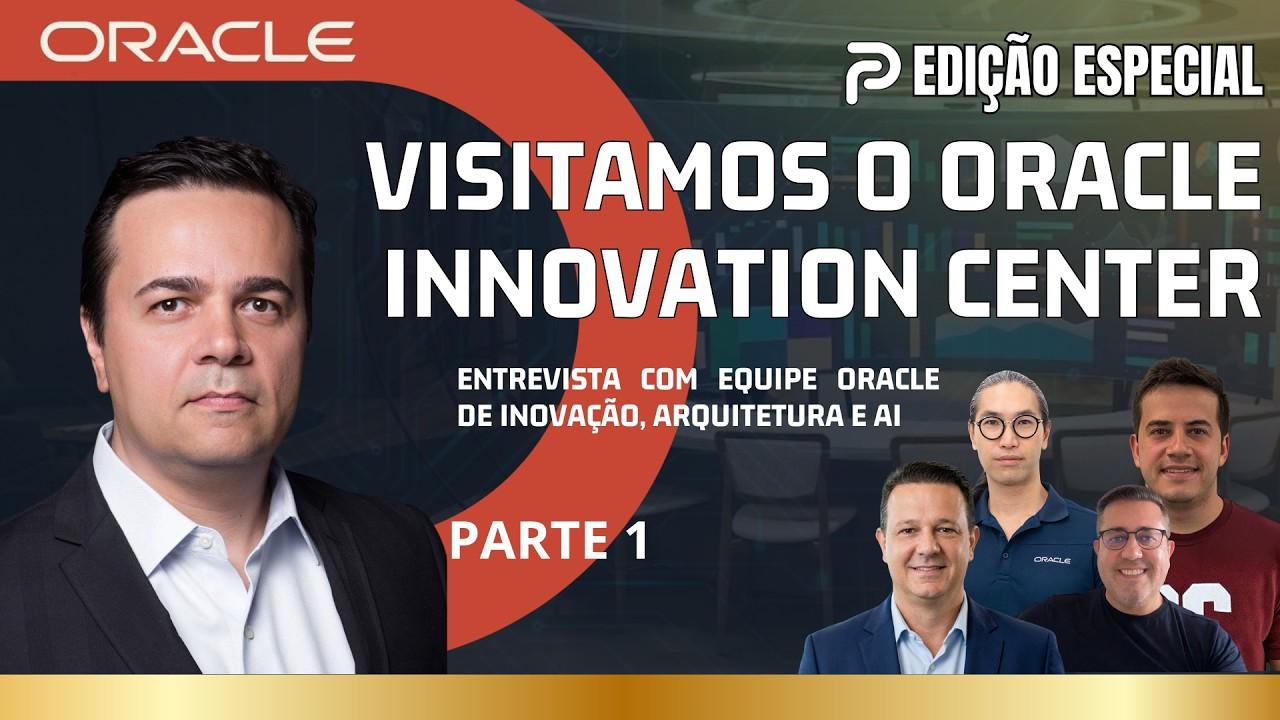
At Oracle's headquarters, on the PodTecno YouTube channel, Weligton Pinto put the numbers on the table: AI demands heavy capital, the return takes years, and the technology is replaced every two.

This is not a technology discussion. It is arithmetic.

From 2016 on, I started using data centers in the companies I ran. And I have already paid to learn this math. I contracted cloud on a pay-per-use model. It looked like the prudent choice, you only pay for what you use. But the bill moved with the dollar, with volume, with everything I did not control. Every month was a surprise.

Then I contracted a server ten times larger than my need, on a long contract. The annual cost was lower than the flexible model. And there was capacity left over.

The smaller company almost always picks the variable model, because it looks cheap in the first month. It is the most expensive over the year.

A technology decision is a financial decision. Whoever treats it as an IT matter does not decide, only signs.

The episode is live on PodTecno.

Post page · Comment on LinkedIn

Jul 24, 2026

I have lived both sides of this table

image 1/7image 2/7image 3/7image 4/7image 5/7image 6/7image 7/7
1 / 7

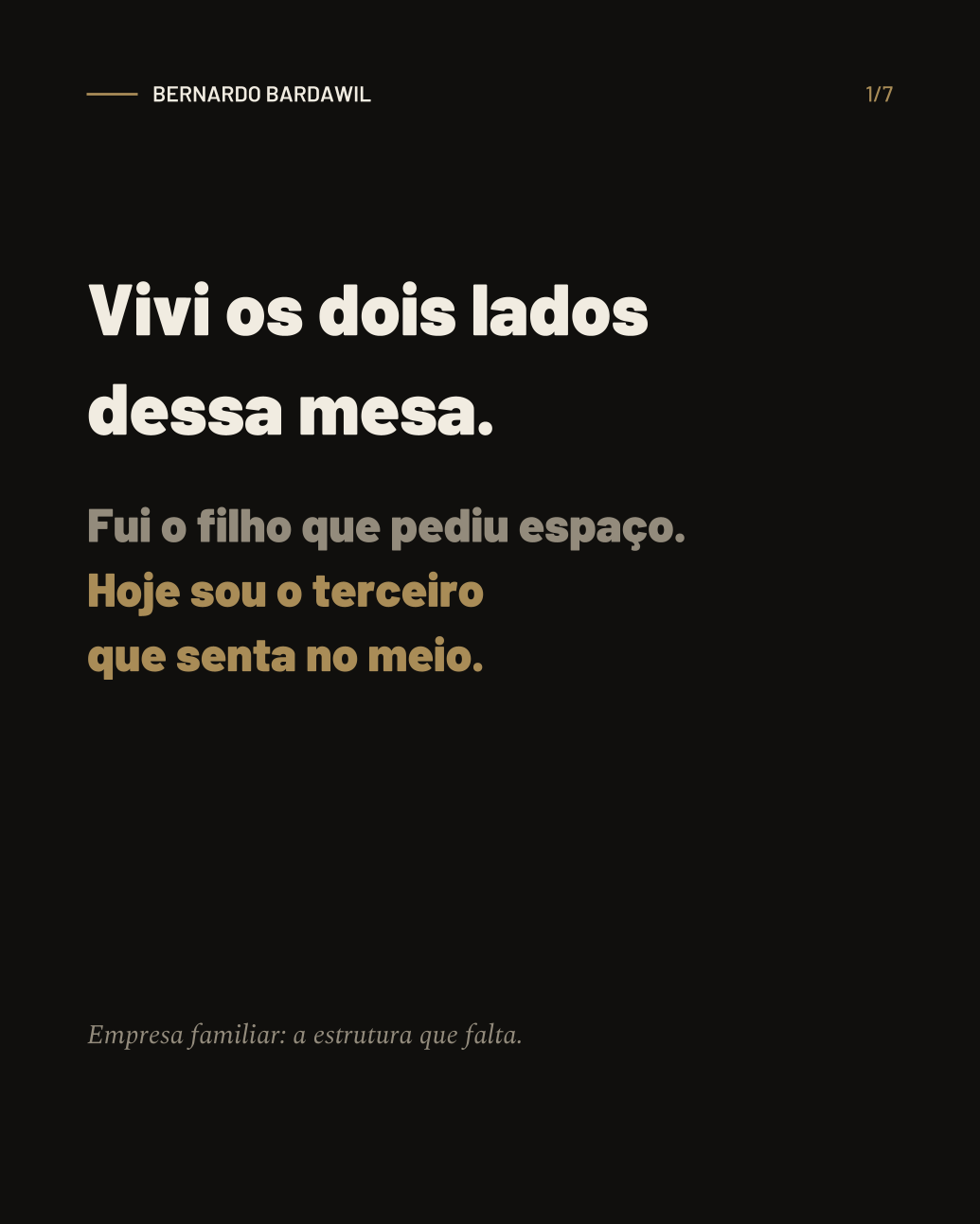
I have lived both sides of this table. I was the son who asked for room. Today I am the third party who sits in the middle.

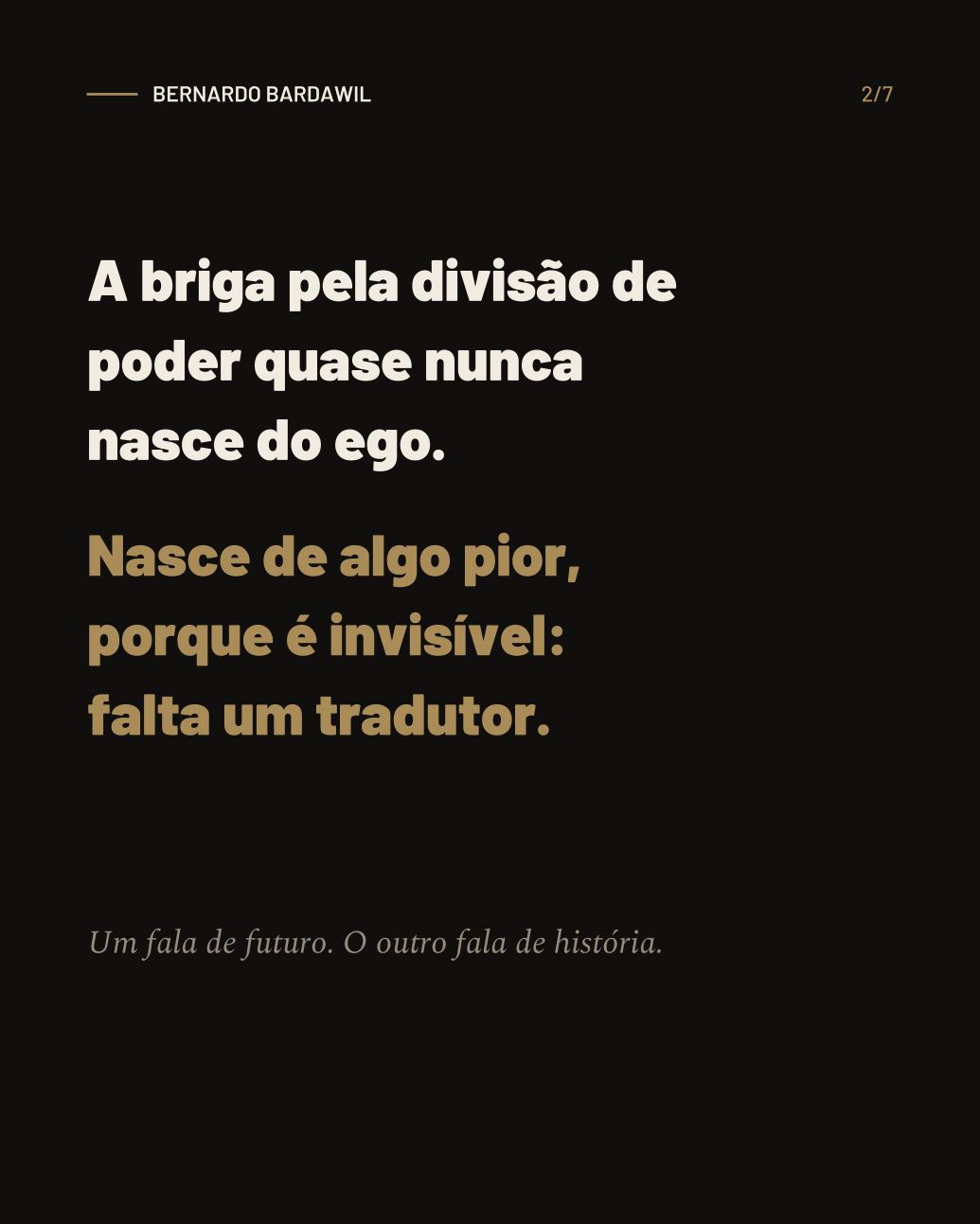
And what I have learned watching business families is uncomfortable: the fight over the division of power almost never comes from ego. It comes from something worse, because it is invisible: there is no translator.

The son does not want the father's place. The father does not want to lose what he built. Both want compatible things and fight anyway, because they speak different languages: one speaks of the future, the other speaks of history.

Without that bridge, the missing structure is always the same:

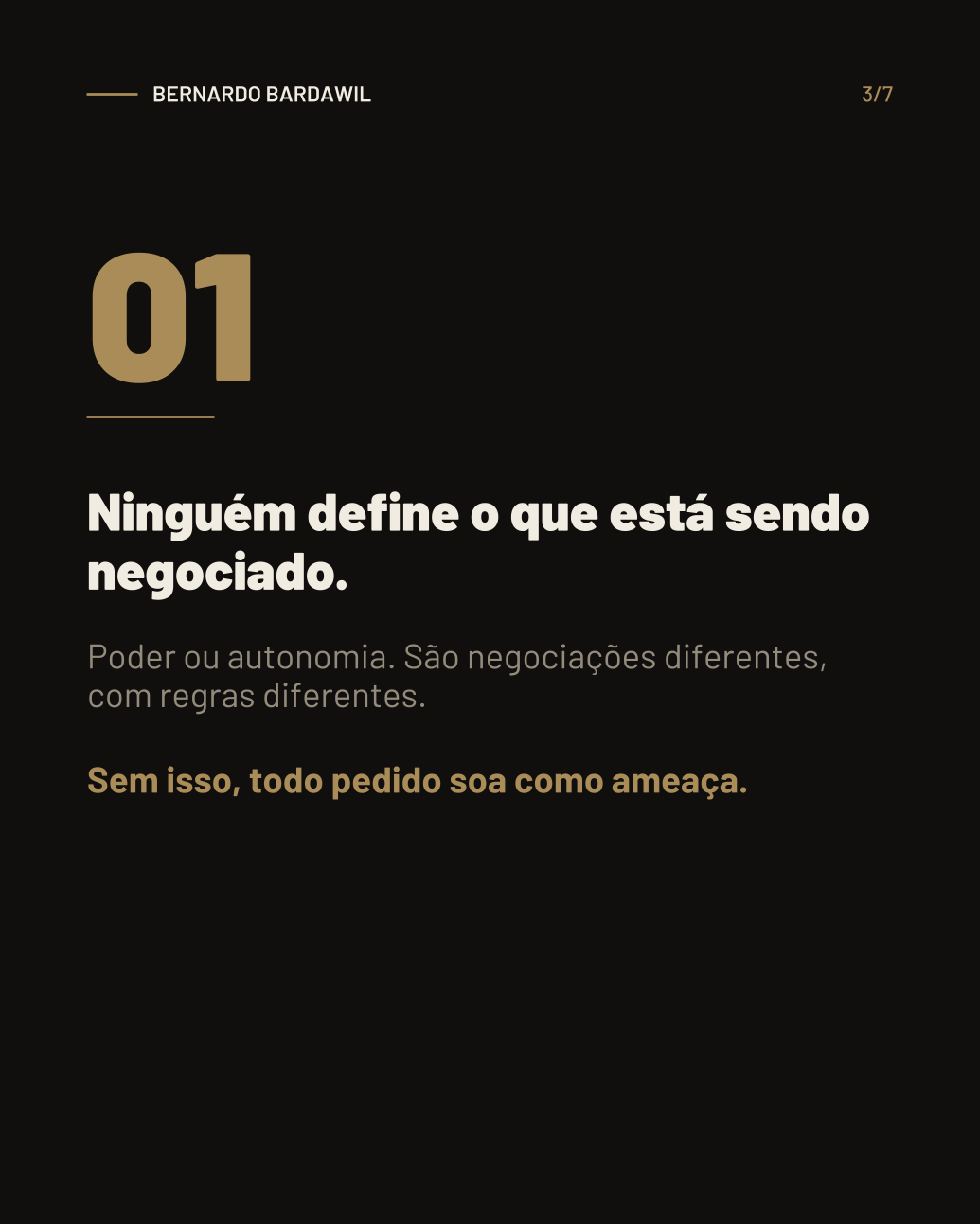
• Nobody defines what is being negotiated: power or autonomy. Without that, every request sounds like a threat.
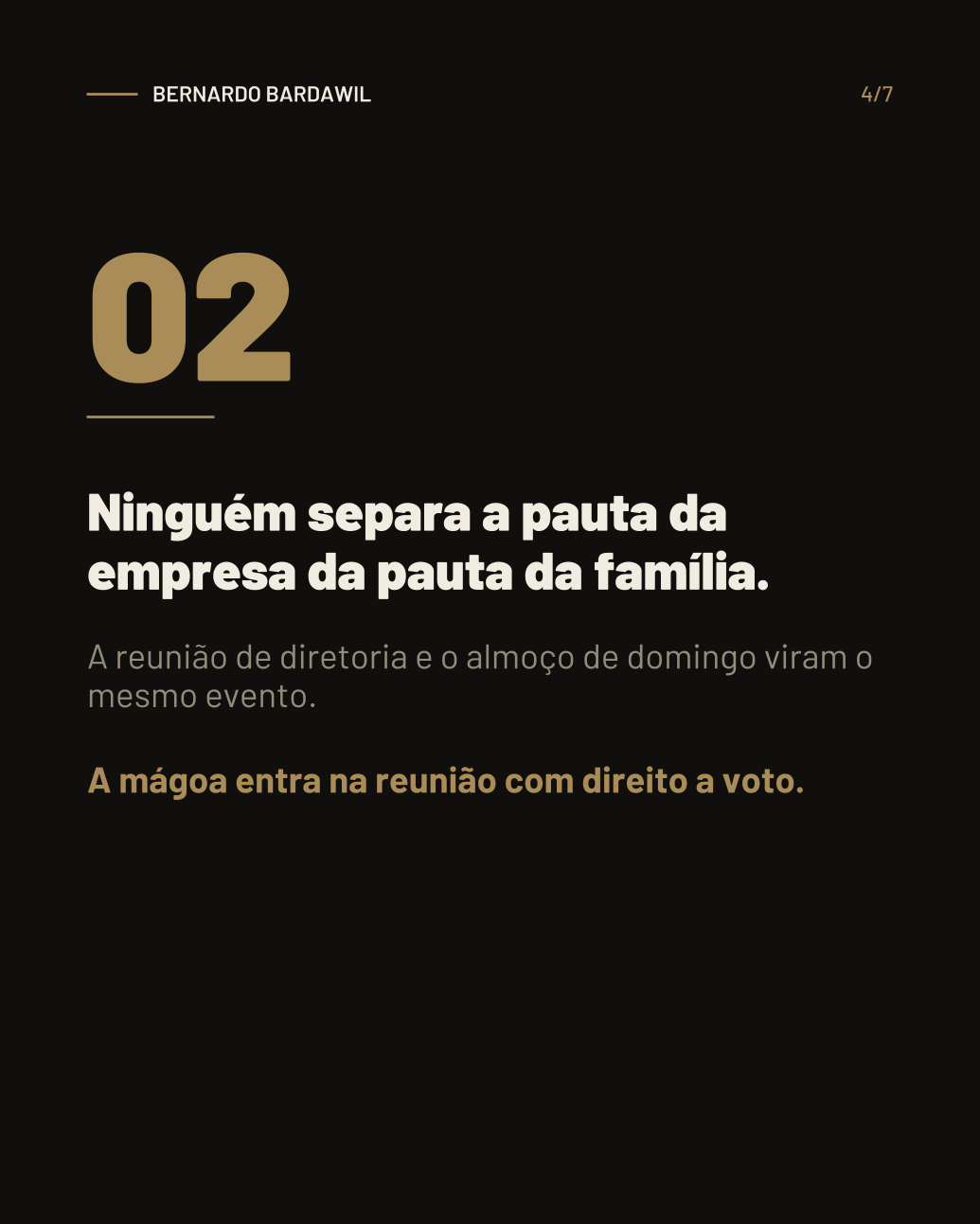
• Nobody separates the company's agenda from the family's agenda. Hurt feelings walk into the meeting with voting rights.
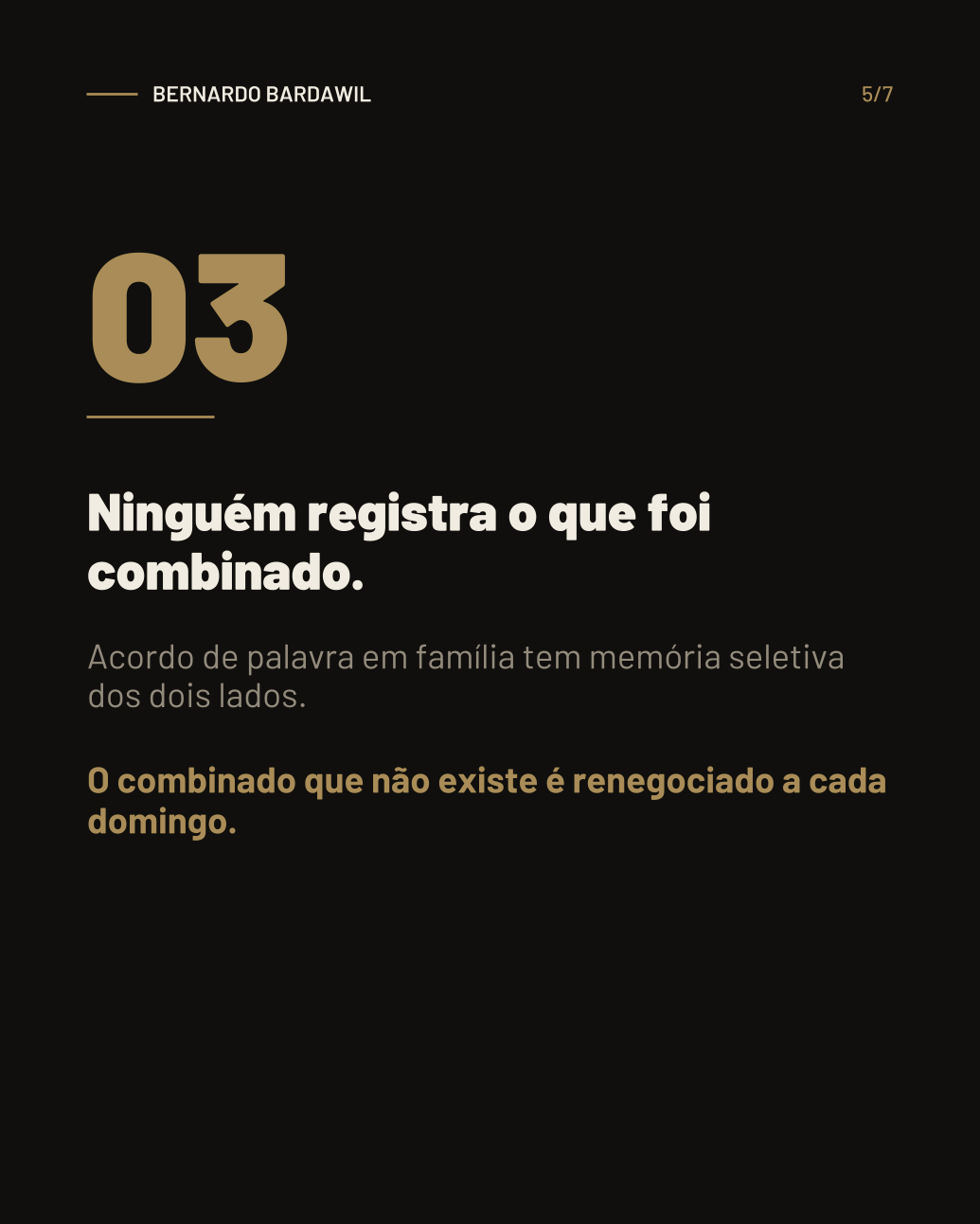
• Nobody records what was agreed. And an agreement that does not exist gets renegotiated every Sunday.

A well-built Board, or an advisor who knows this dynamic, does not decide for the family. It takes each person to the point they need to reach and cannot reach alone.

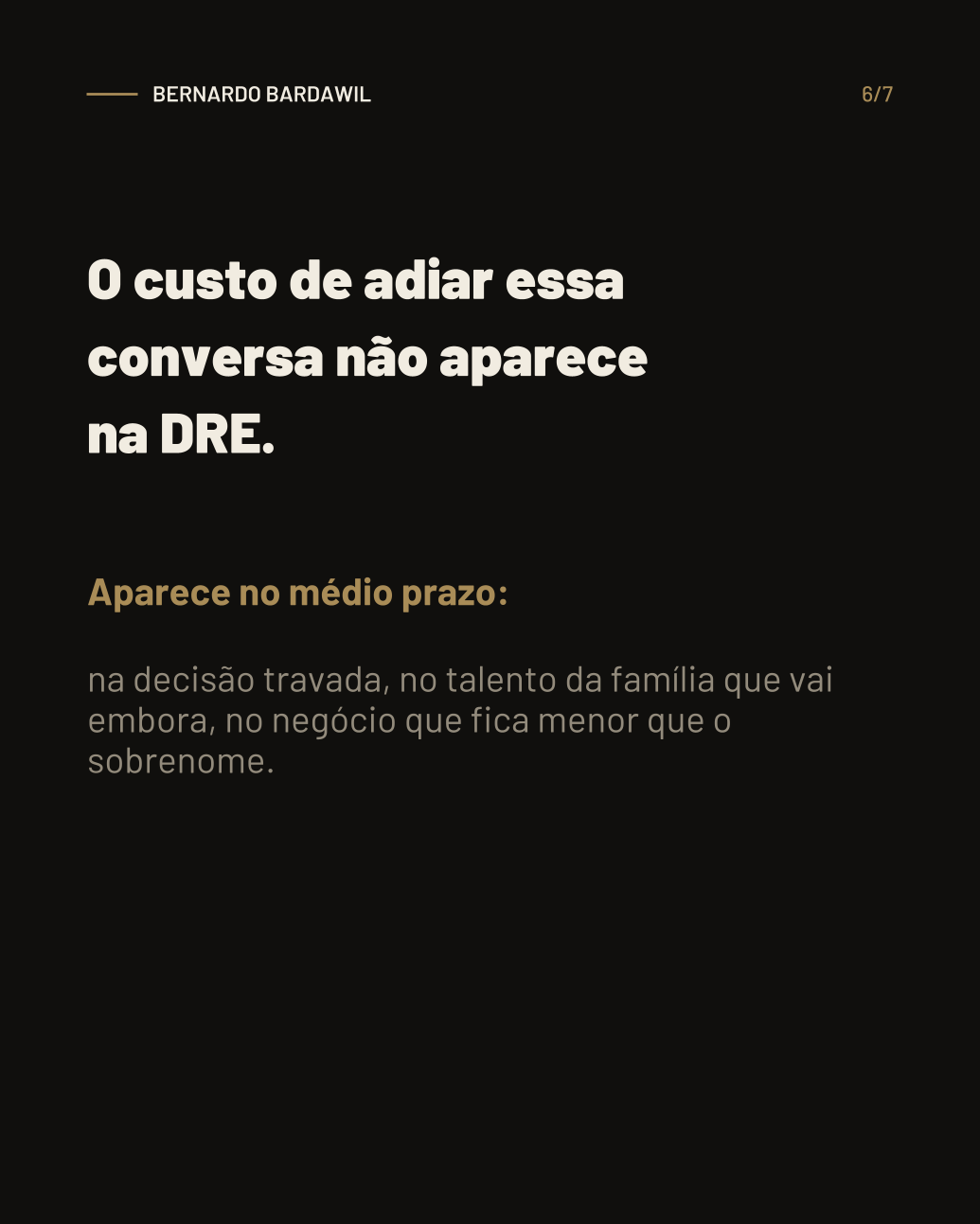
The cost of postponing this conversation does not show up in the income statement. It shows up in the medium term: in the stalled decision, in the family talent that leaves, in the business that ends up smaller than the surname.

If this conversation is being postponed in your company, the cost has already started. The bridge is built before the next meeting, not after the next fight. Send me a message.

Post page · Comment on LinkedIn

Jul 22, 2026

The fight did not start with a shout. It started with a polite request

image 1/7image 2/7image 3/7image 4/7image 5/7image 6/7image 7/7
1 / 7

The fight did not start with a shout. It started with a polite request.

I have sat in that room more than once. On one side, the founder: the man who built everything from scratch, who went through sleepless nights, who carries the company the way one carries an eldest child. On the other, the real son, asking for room.

And the answer is almost always the same: "he is not ready. He does not know what I went through to get here."

What I have seen up close is more delicate than it looks. The founder's attachment is not ego. It is history. Letting go of something born from his own dream is different from delegating a task.

But this is where the void is born. The father cannot explain why he does not hand over authority. The son only feels he has been pushed aside. And the plain truth: one does not know how to say it, the other only knows how to feel it.

The fight that explodes months later is not about a title. It is about the conversation that never happened.

In the room I was in, the course changed when the father said the first honest sentence: "I do not know how to live without this." The son did not want his chair. He wanted to hear that.

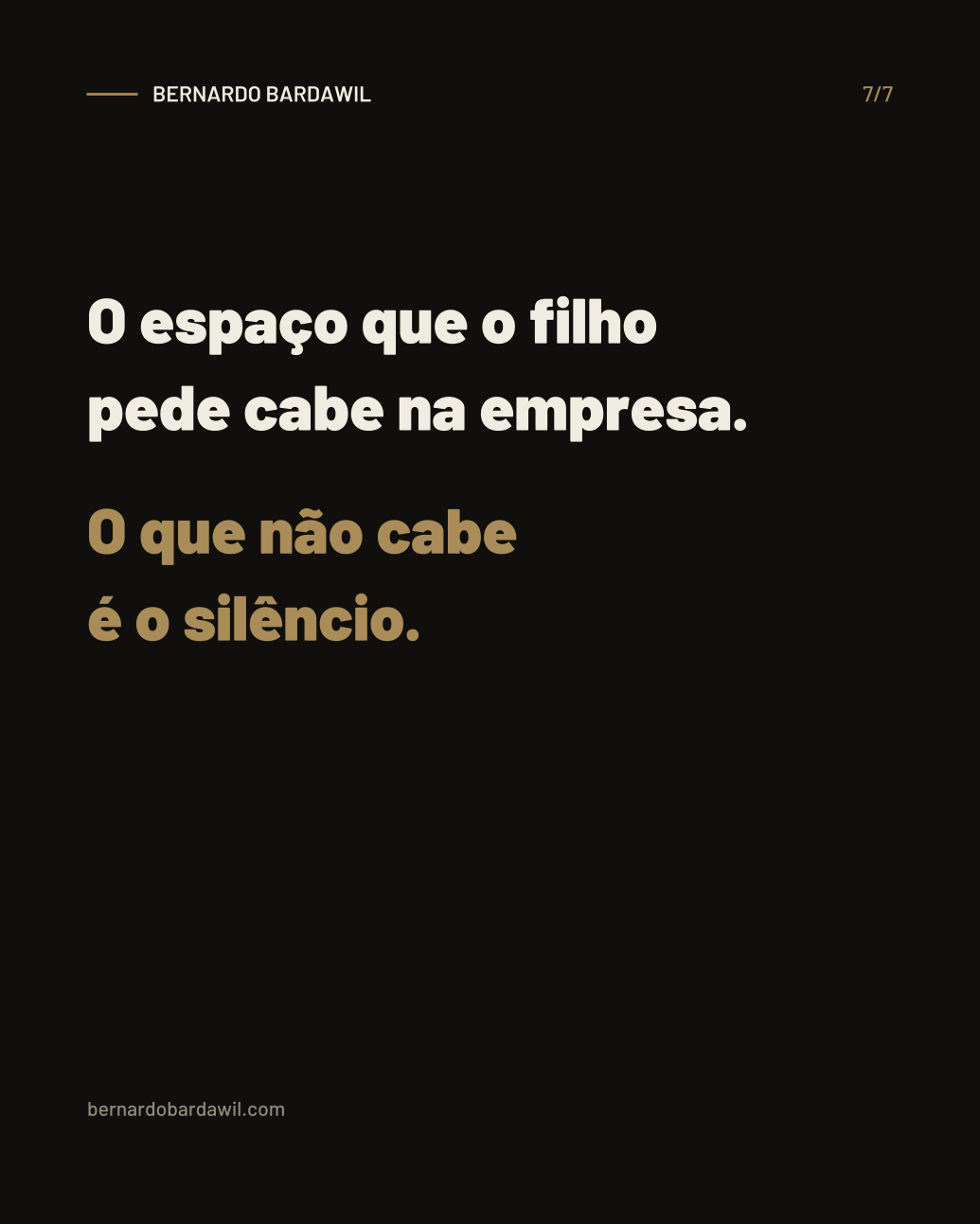
The room the son asks for fits inside the company. What does not fit is the silence.

Post page · Comment on LinkedIn

Jul 8, 2026

The most important decision of my expansion was not to expand

image 1/8image 2/8image 3/8image 4/8image 5/8image 6/8image 7/8image 8/8
1 / 8

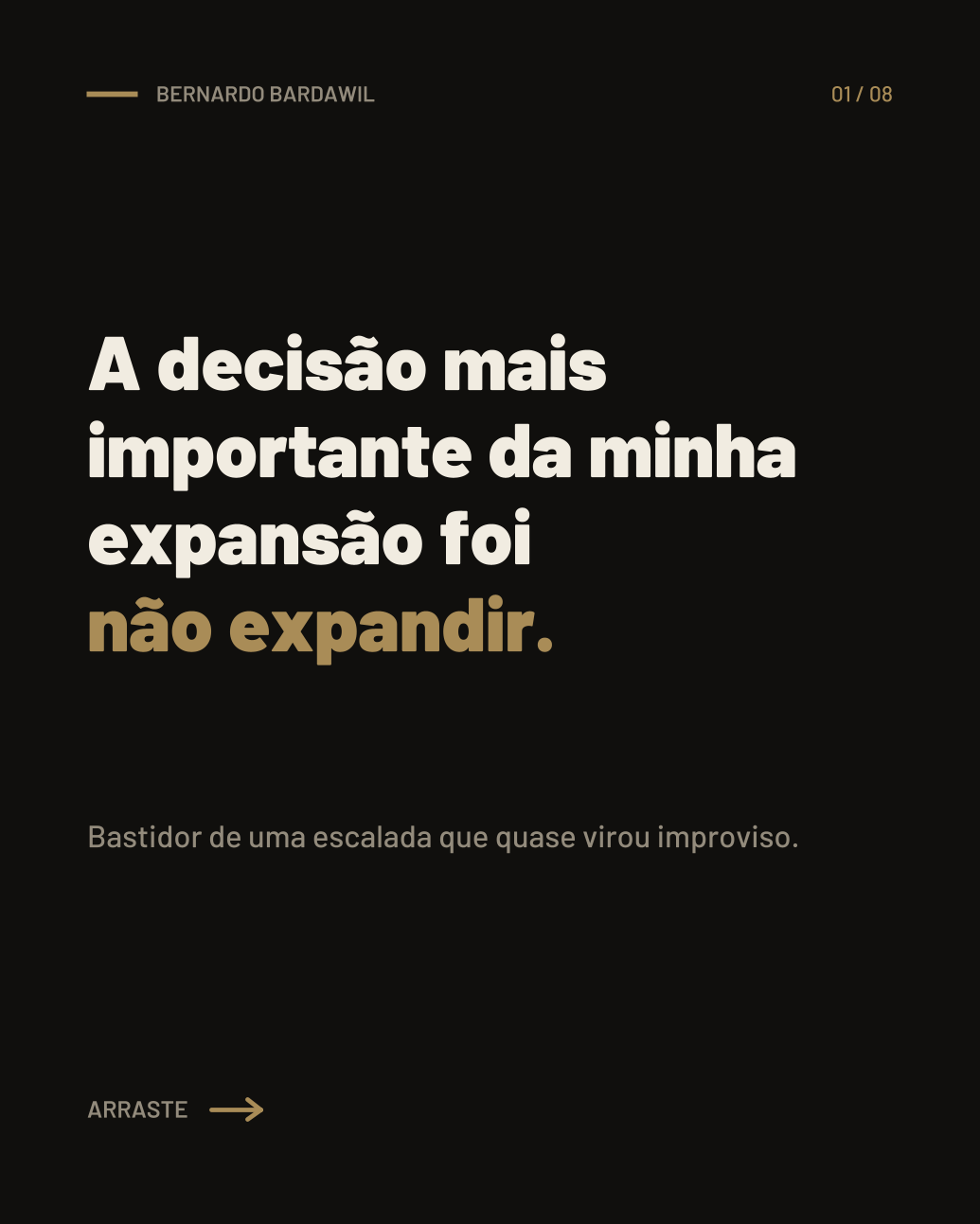
The most important decision of my expansion was not to expand.

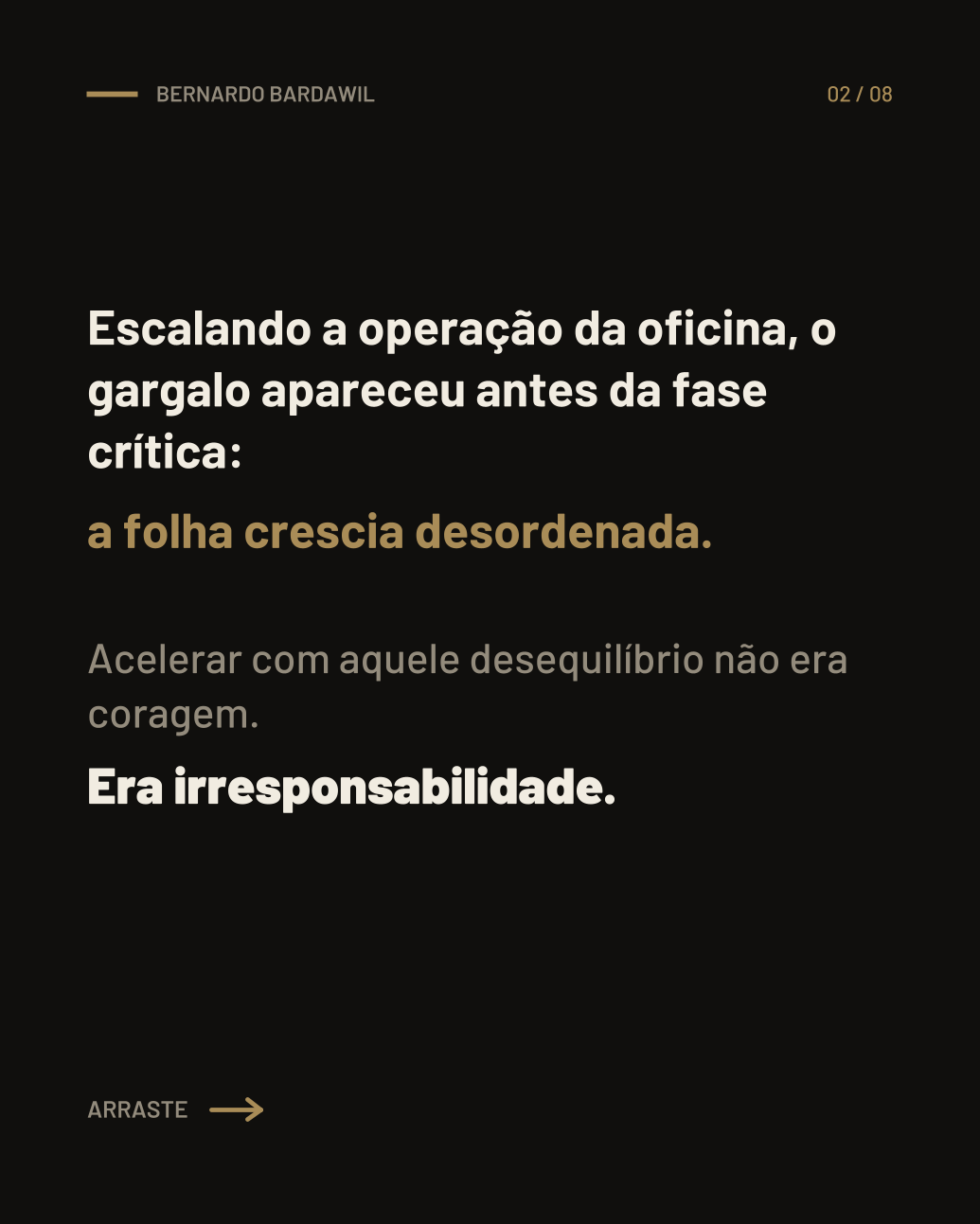
Scaling up the car service operation, the bottleneck appeared before the critical phase: payroll was growing in disorder. Accelerating with that imbalance was not courage. It was irresponsibility.

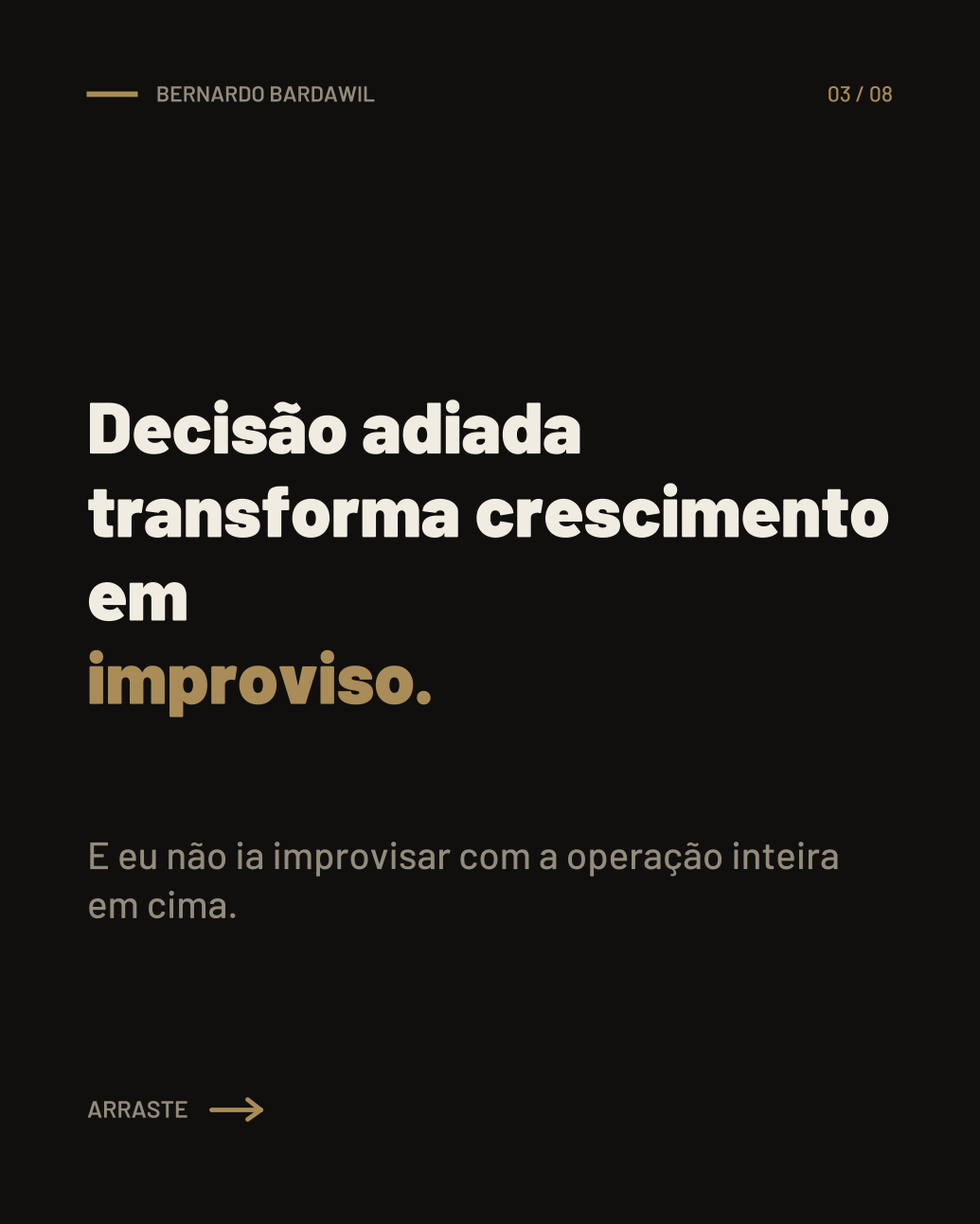
A postponed decision turns growth into improvisation. And I was not going to improvise with the whole operation riding on it.

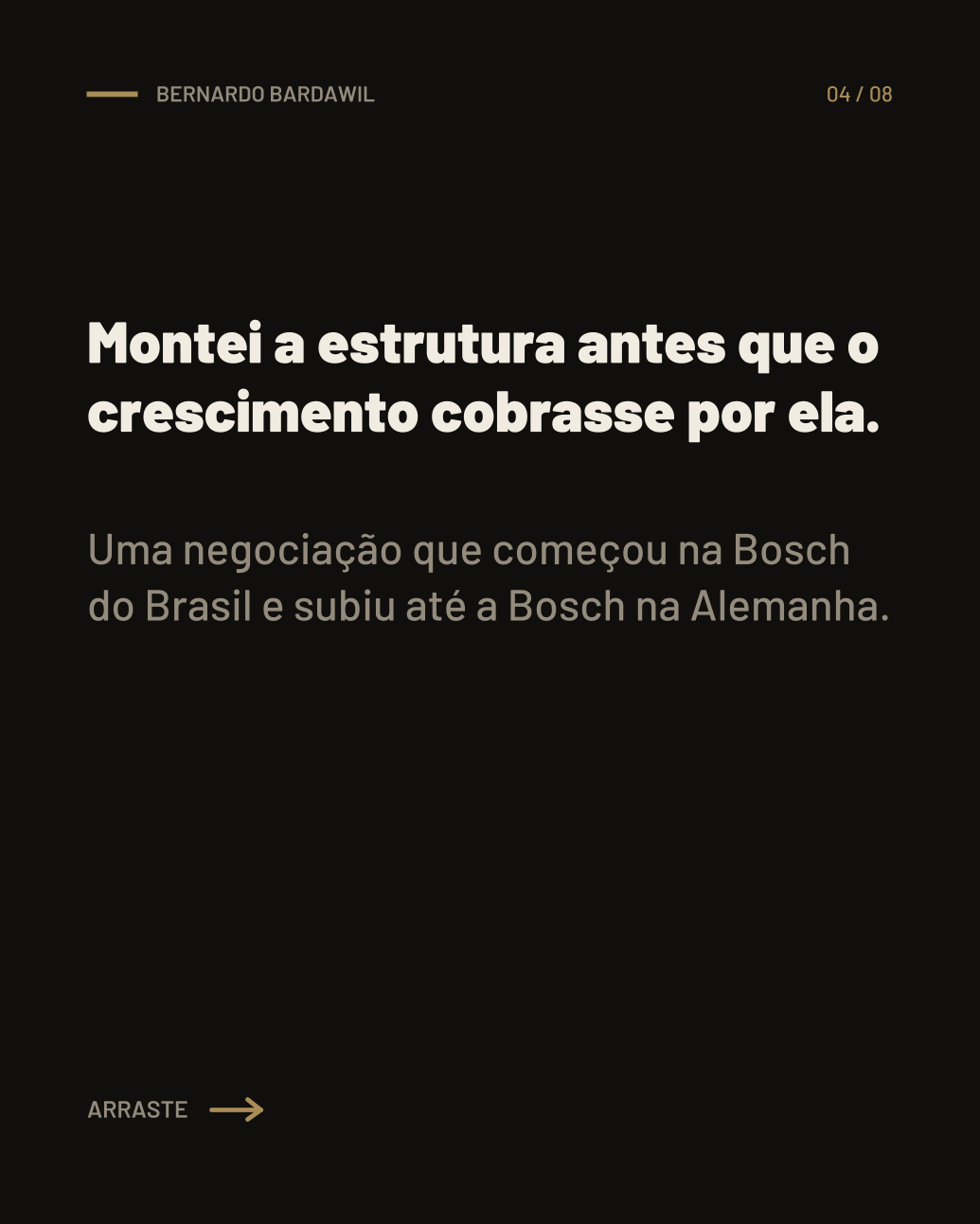
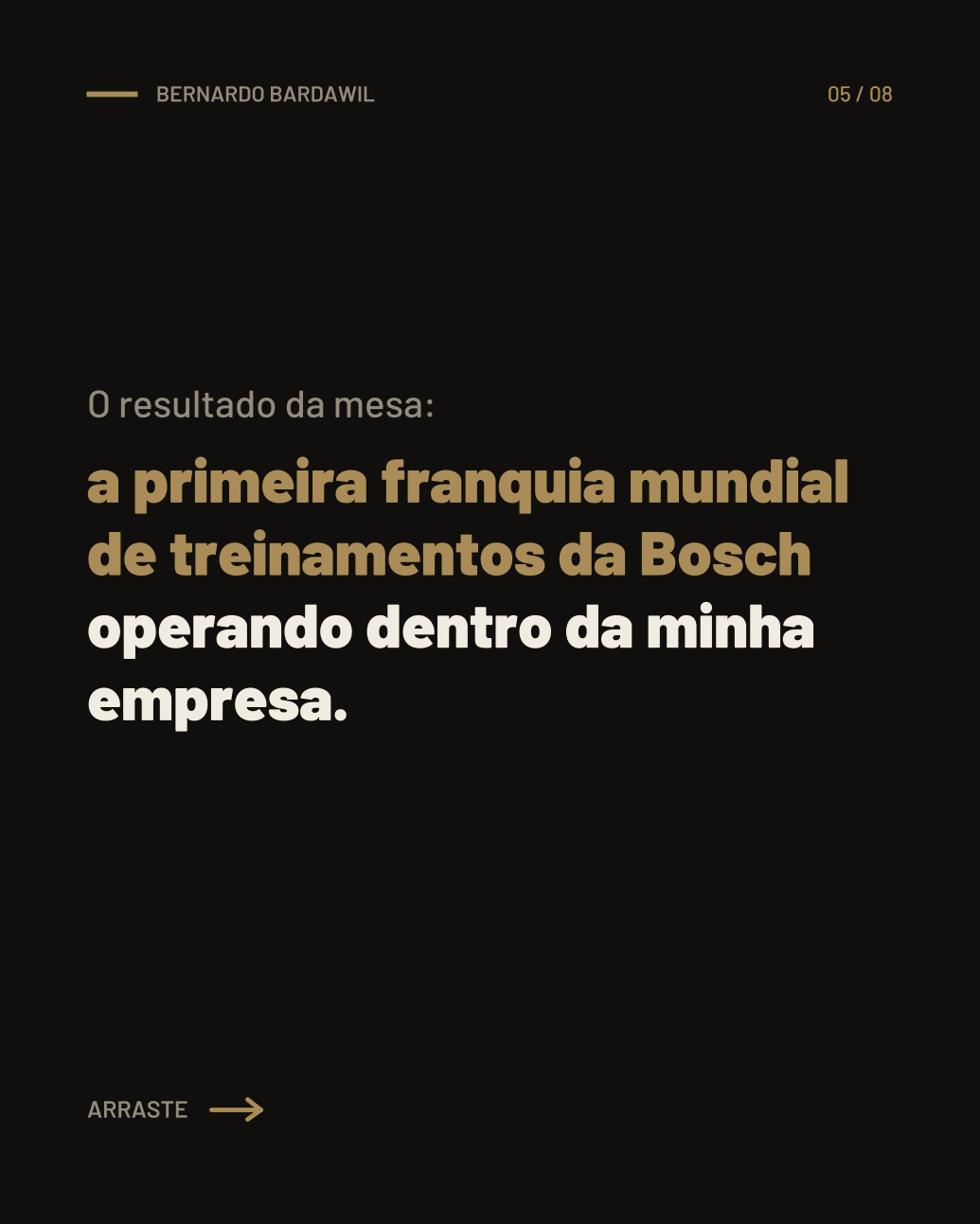
We lacked standardized labor to sustain what was coming. So I built the structure before growth charged for it: a negotiation that started at Bosch Brazil, went up to Bosch in Germany and ended with Bosch's first training franchise in the world operating inside my company.

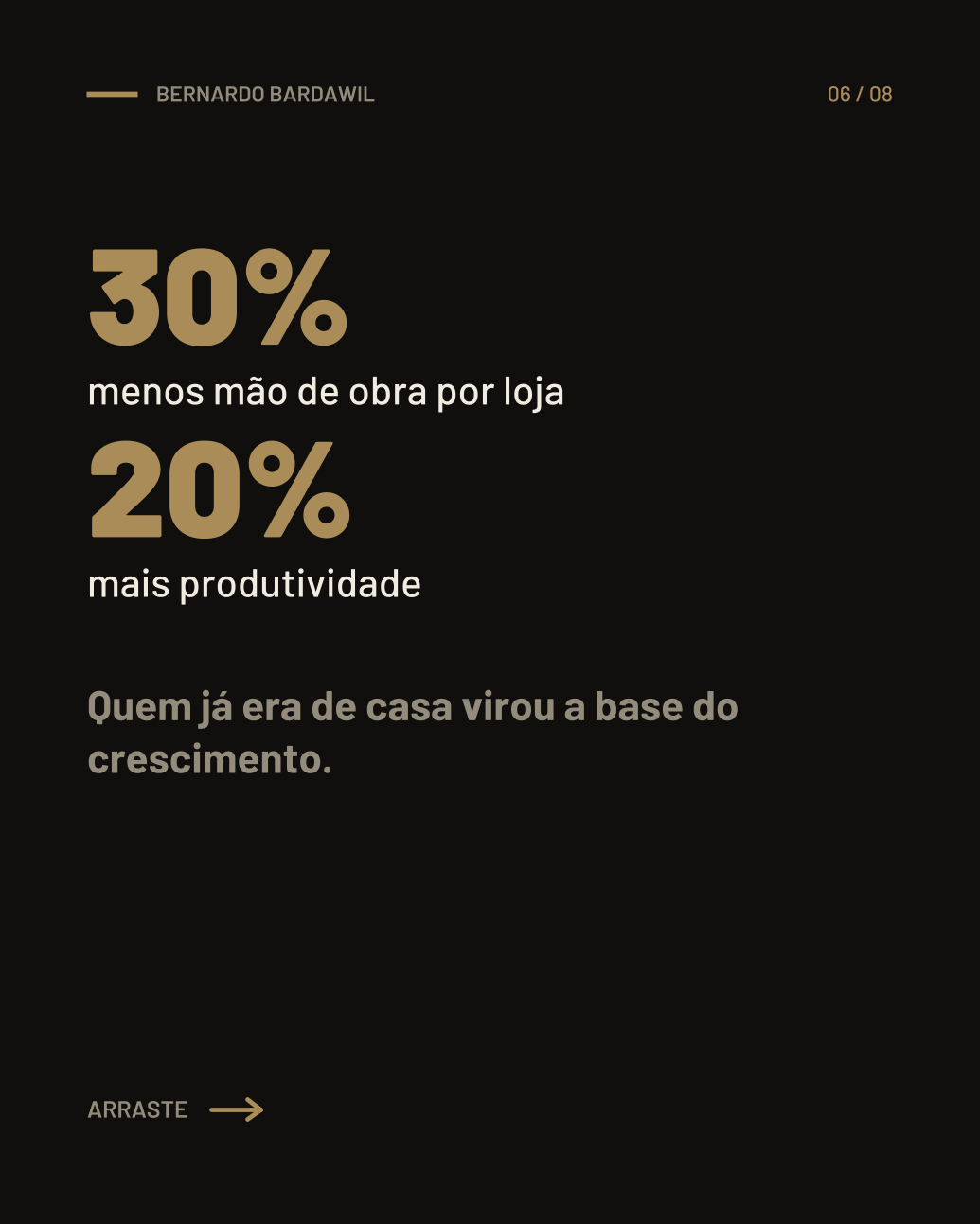
The result: 30% less labor per store and 20% more productivity. Those already on the team became the base of growth. Productivity paid for the expansion.

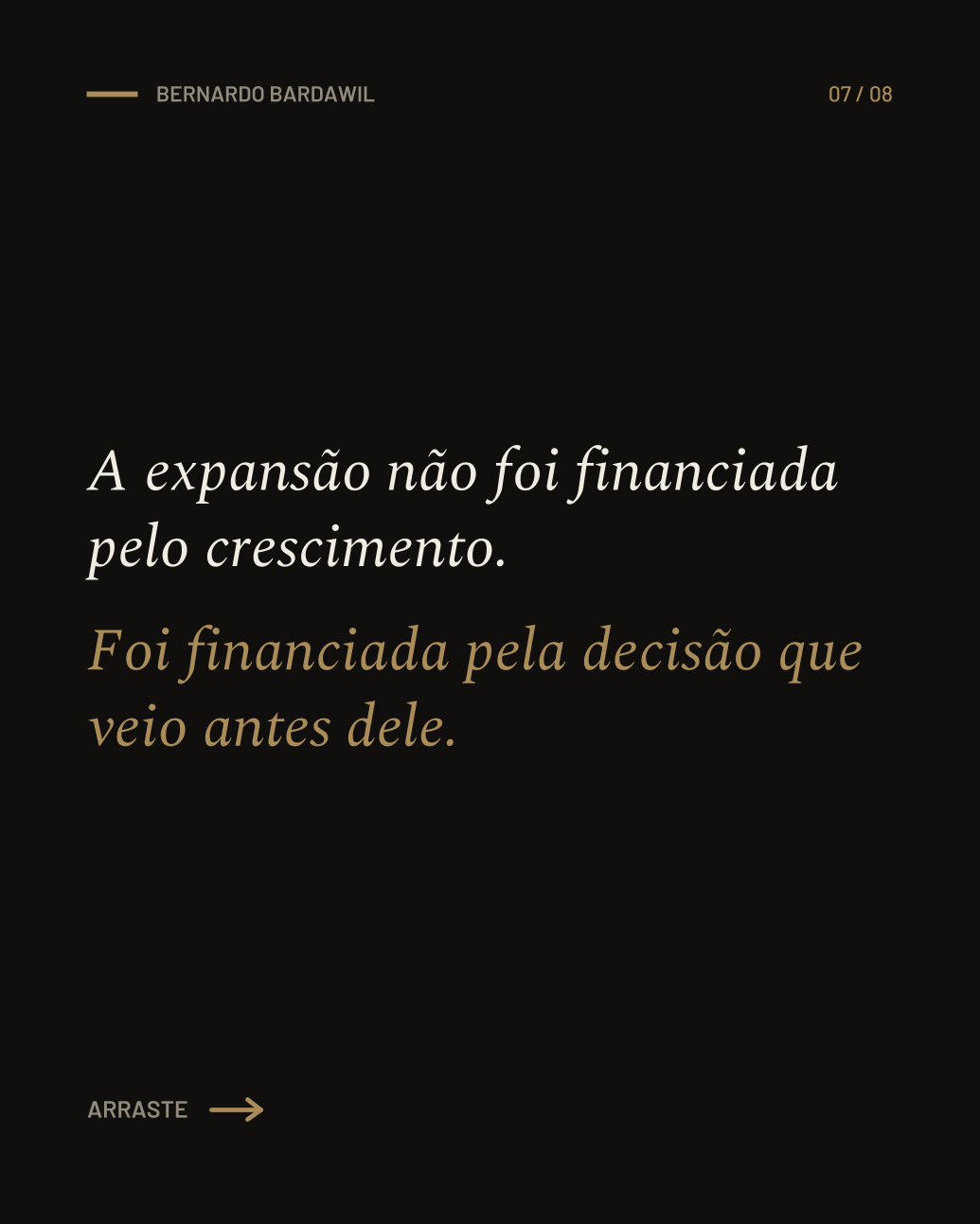
The expansion was not financed by growth. It was financed by the decision that came before it.

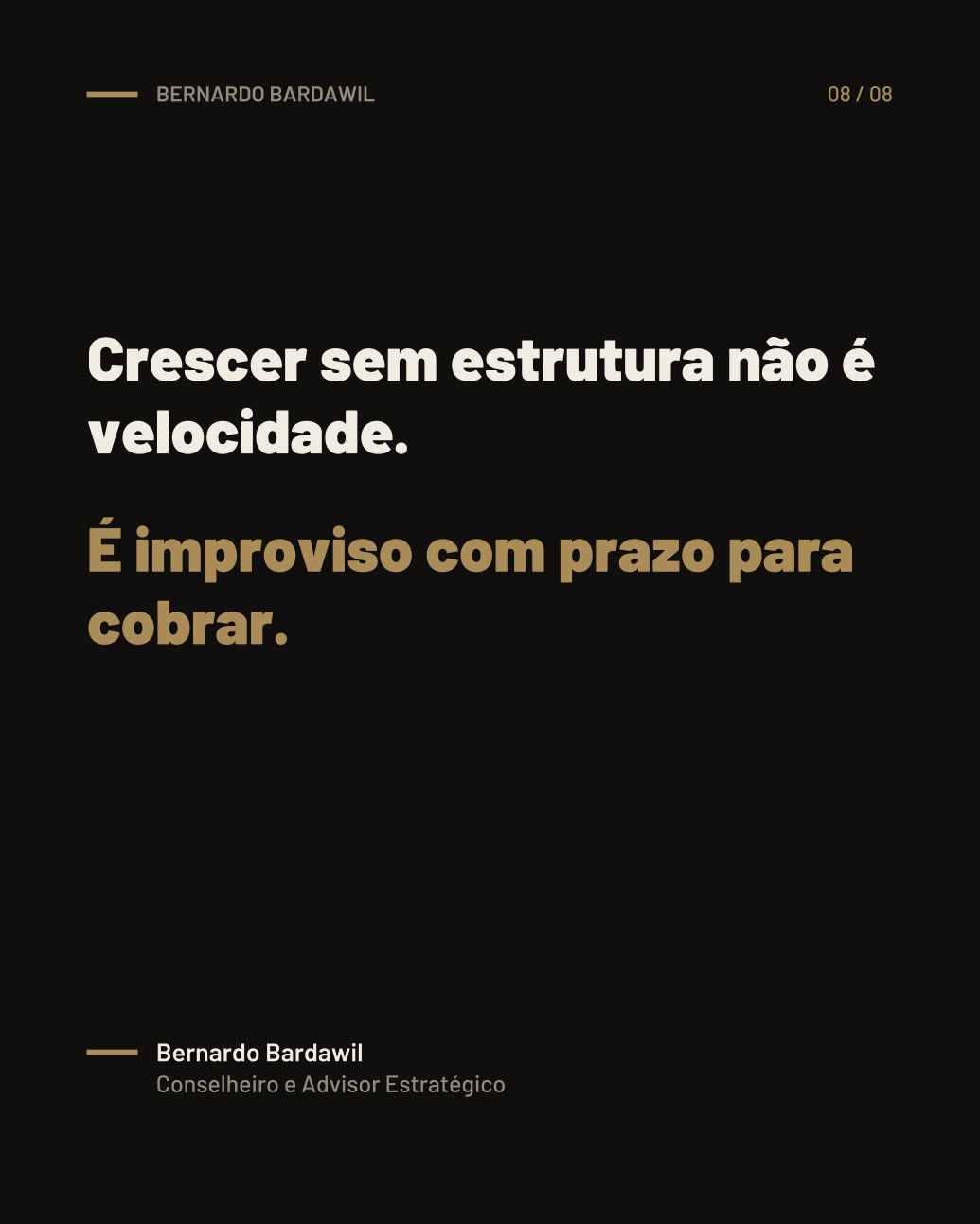
Growing without structure is not speed. It is improvisation with a due date.

Post page · Comment on LinkedIn

Jul 7, 2026

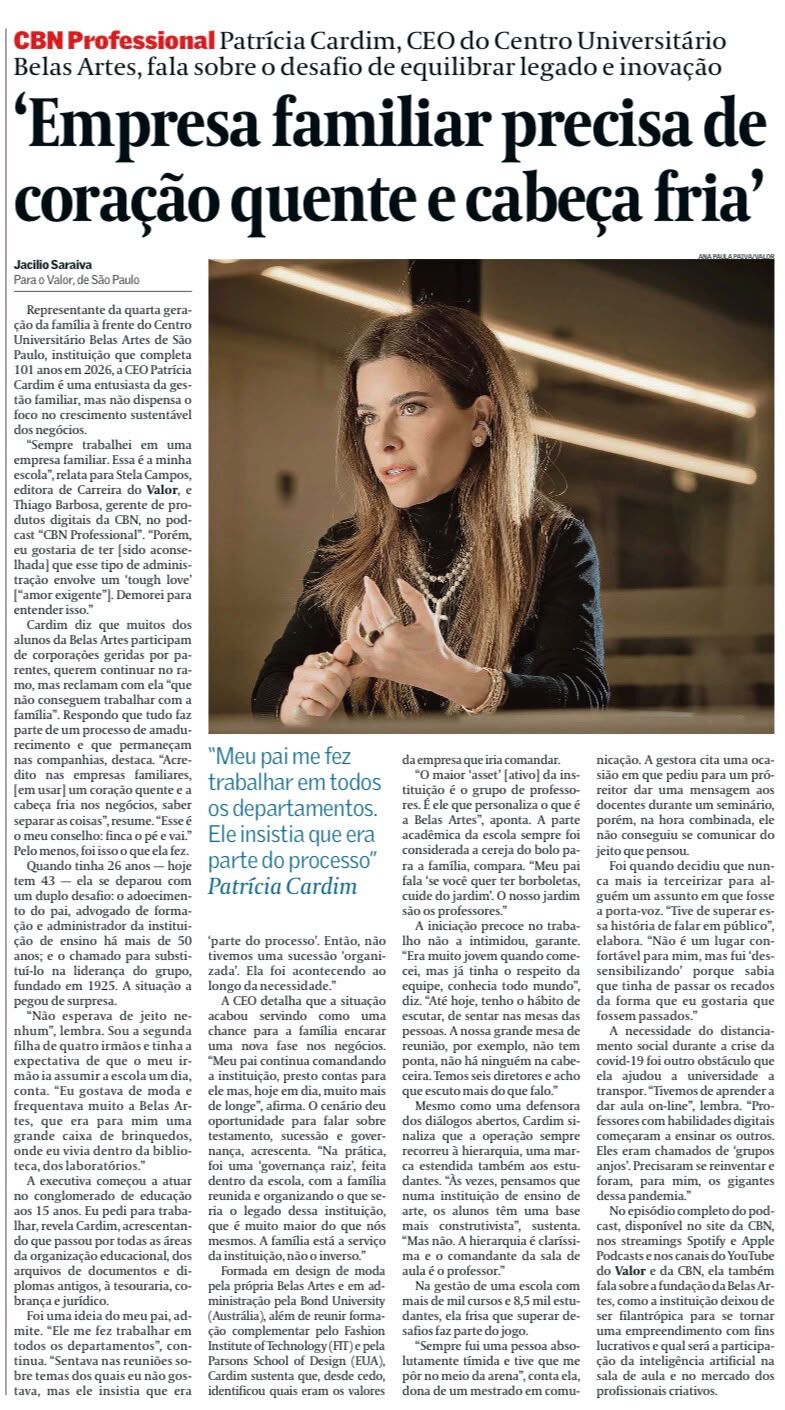
Every owner-led company will be a family business one day

Comment on the Valor Econômico article "A family business needs a warm heart and a cool head", shared by Daniel Faria.

Daniel Faria, this topic moves me. I came from a family business with a path almost identical to the one described in the article. Patricia Gomes Cardim's trajectory is nearly a copy of mine, only in automotive, not education.

But the point is not the coincidence. It is the pattern. In most family businesses, the son comes in with no defined space, goes through the whole company as if looking for where he fits, and suddenly has to take over the operation. Succession is not planned: it is imposed by necessity.

Today I dedicate myself to changing that. Every owner-led company will be a family business one day. What stalls the transition is not the successor's lack of talent: it is fear, the absence of a process, and the founder's discomfort with having someone close enough to one day take his place.

Brazil is mostly made of family businesses, and almost all of them tell the same story. The role here is not only to tell your own: it is to make this transition natural and, more than that, intentional, so the successor is ready before the trigger, not after.

I make this a life's journey as a Board Member. But the process only exists when the founder is open to building it. With that openness, the company flows without pain. Without it, no process solves it.

Post page · Comment on LinkedIn

Jul 6, 2026

Have you ever postponed a decision swearing it was caution

image 1/7image 2/7image 3/7image 4/7image 5/7image 6/7image 7/7
1 / 7

Have you ever postponed a decision swearing it was caution?

So have I. I called it waiting for the right moment. Until I entered the renewable energy market, where the right moment lasts a day. Today the dollar shows up on every page of my phone: I do not unlock the screen without knowing where it is.

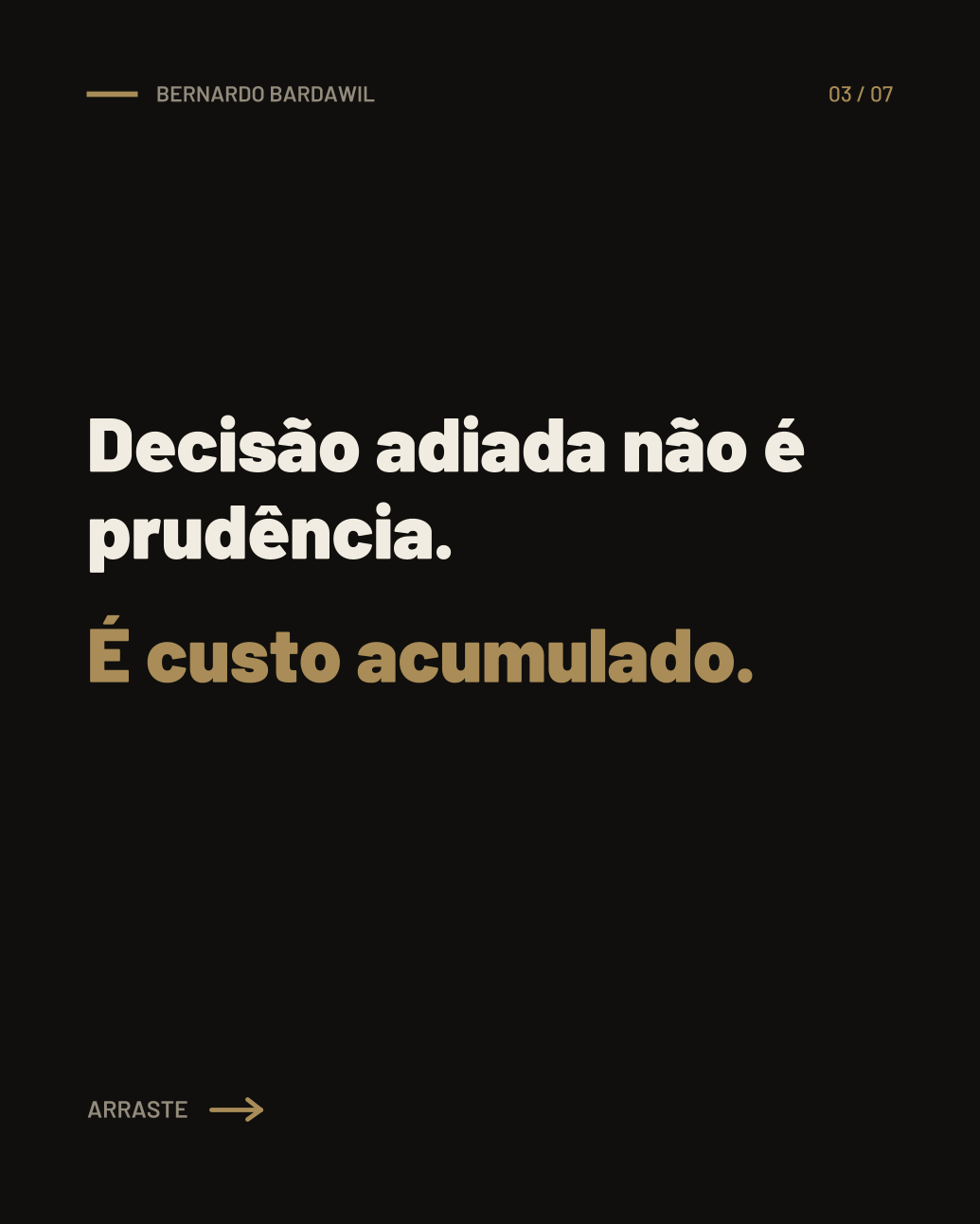
A postponed decision is not prudence. It is accumulated cost.

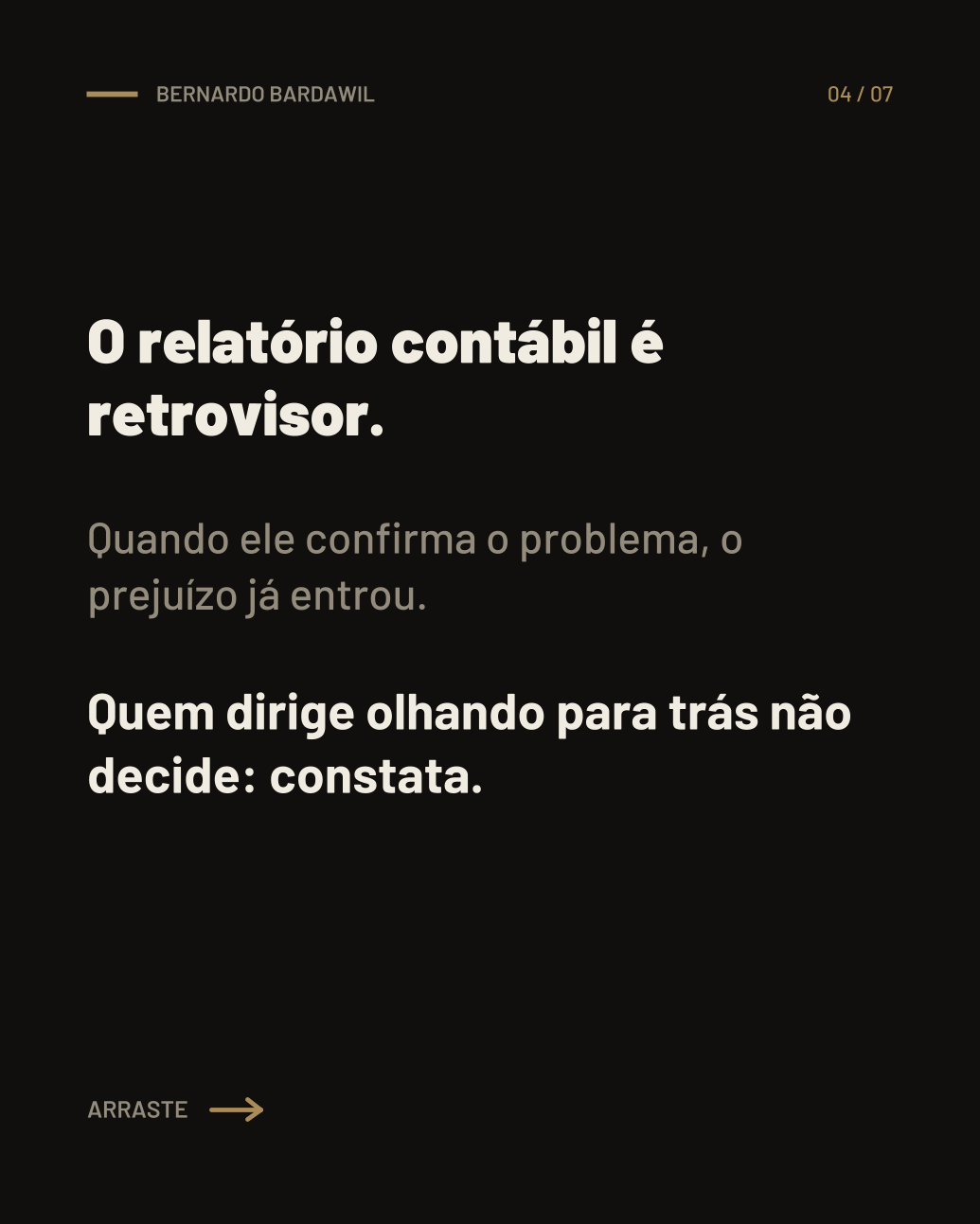
The accounting report is a rear-view mirror. When it confirms the problem, the loss is already in. Whoever drives looking backwards does not decide: he merely observes.

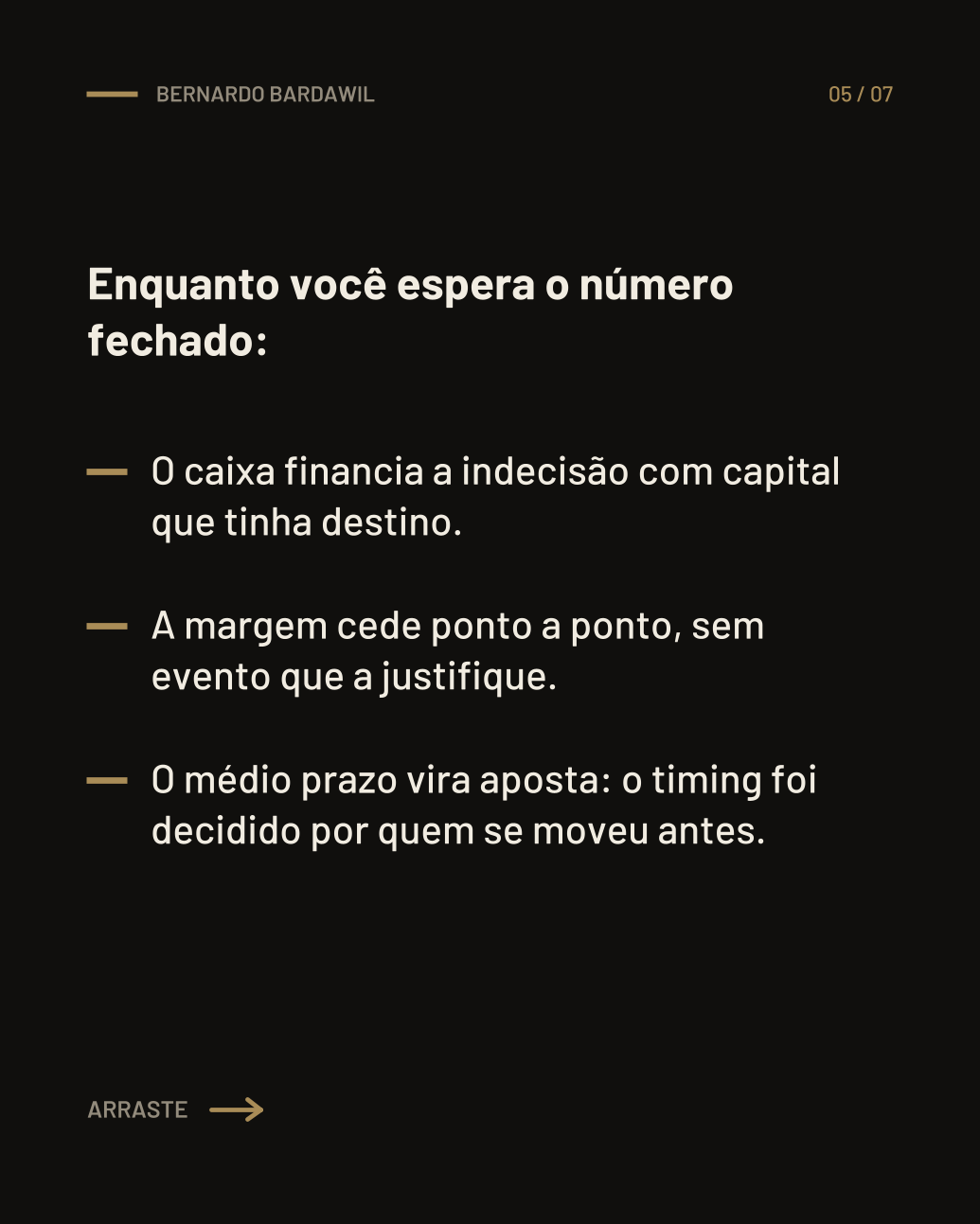
While you wait for the closed number:
• Cash finances indecision with capital that had a destination.
• Margin gives way point by point, with no event to justify it.
• The medium term becomes a bet, because the timing was decided by whoever moved first.

Data that arrives ready already arrives old.

Deciding without waiting for the report is not emotion. It is context built every day.

The cost of your prudence has already started running.

Post page · Comment on LinkedIn

Jun 23, 2026

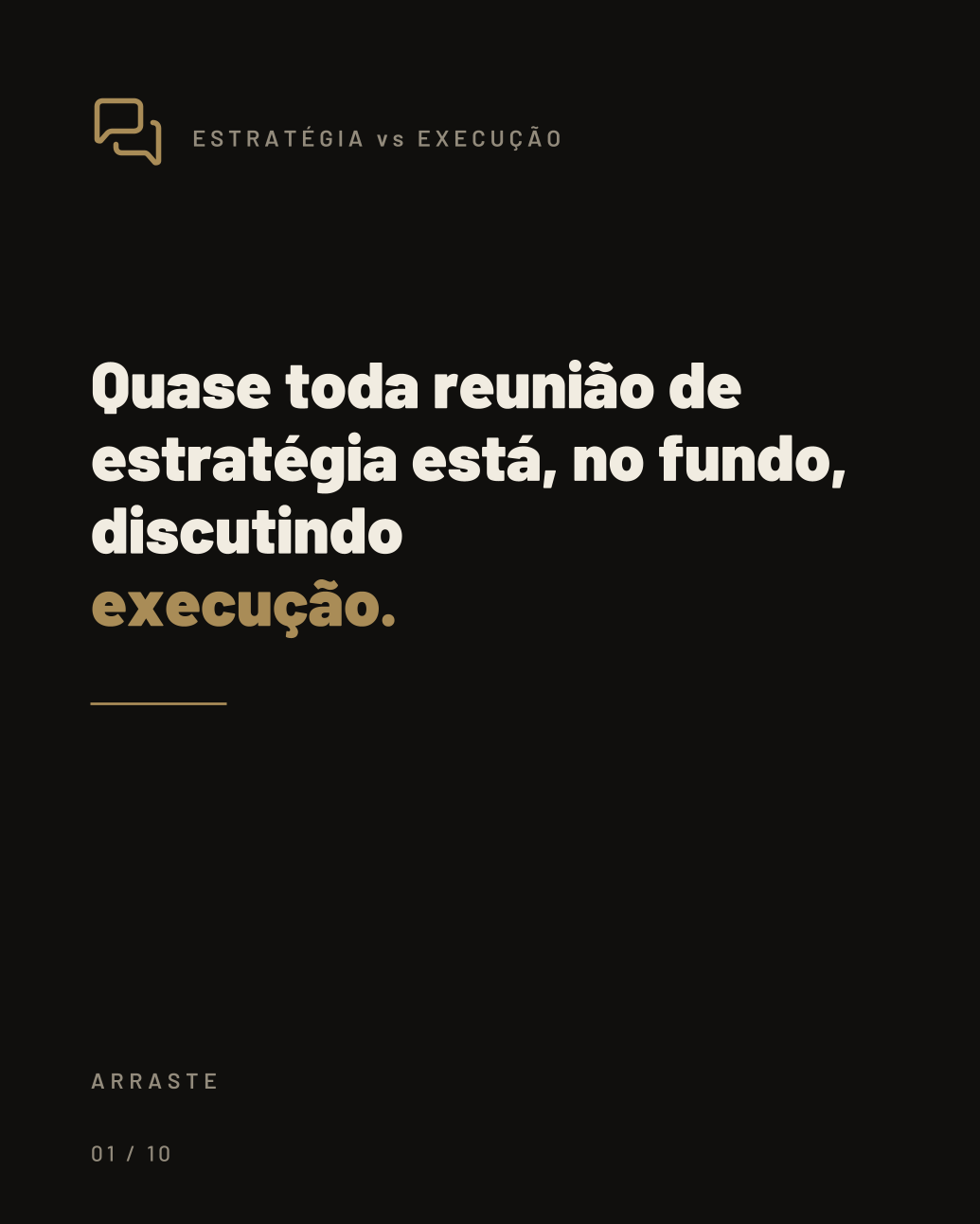
Almost every strategy meeting is, deep down, discussing execution

image 1/10image 2/10image 3/10image 4/10image 5/10image 6/10image 7/10image 8/10image 9/10image 10/10
1 / 10

Almost every meeting called strategy is, deep down, discussing execution.

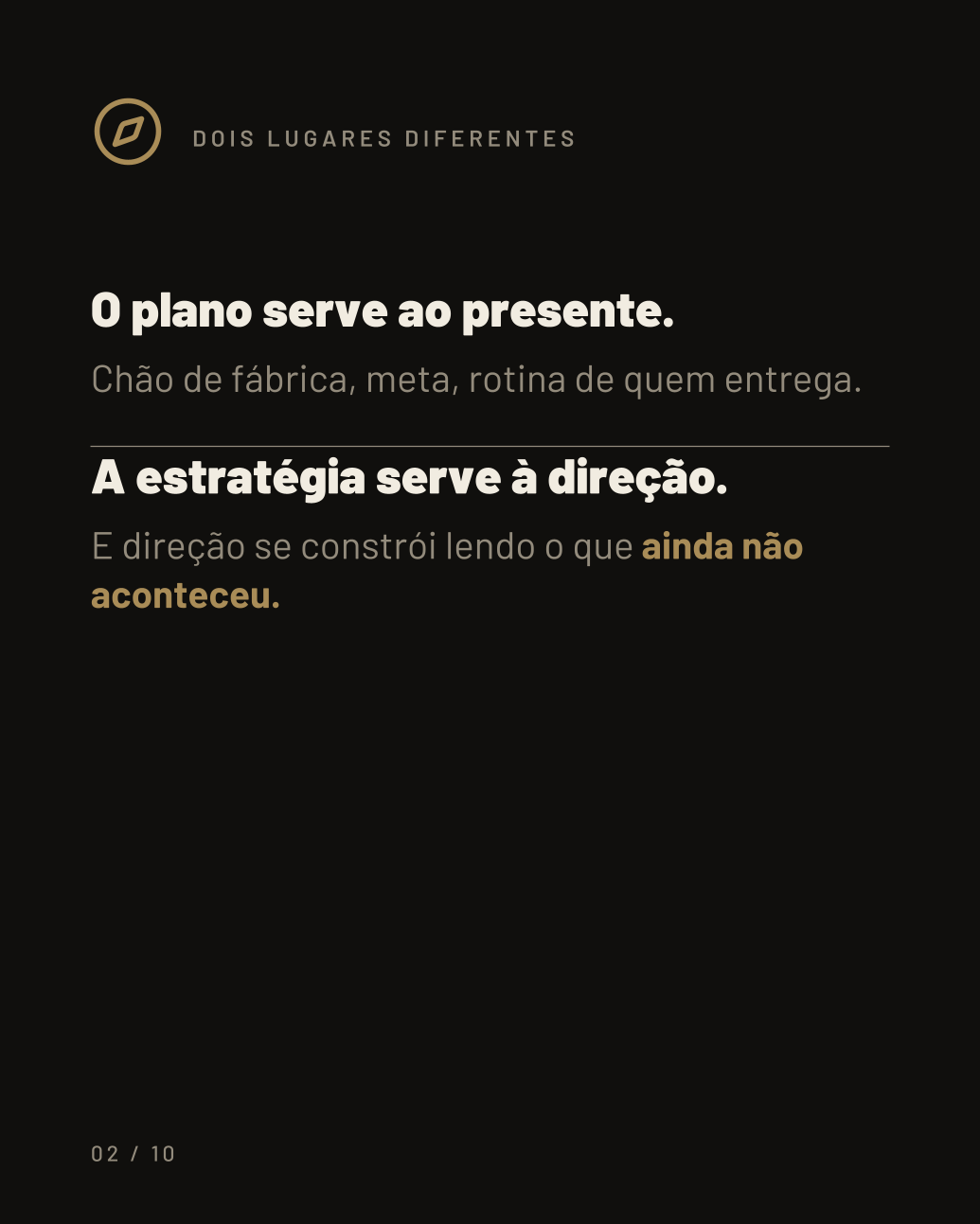
An action plan and a strategy do not occupy the same place. The plan serves the present: the shop floor, the target, the routine of those who execute. Strategy serves direction, and direction is only built by reading what has not happened yet: politics, the economy, the next move of whoever regulates your sector. That is where real Business Strategy comes in, the difference between anticipating the scenario and chasing it afterwards.

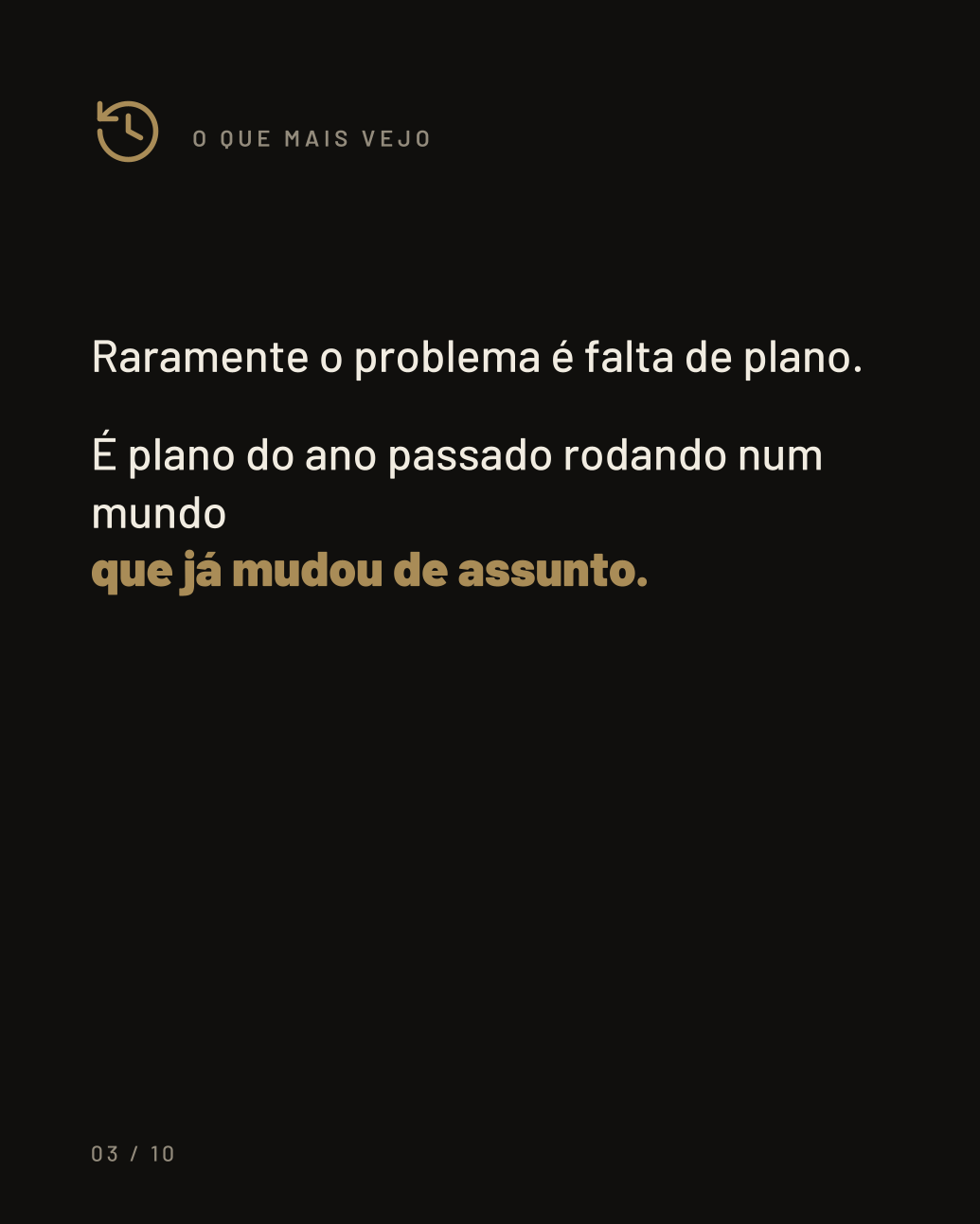
In Corporate Governance work, what I see most is last year's plan running in a world that has already changed the subject.

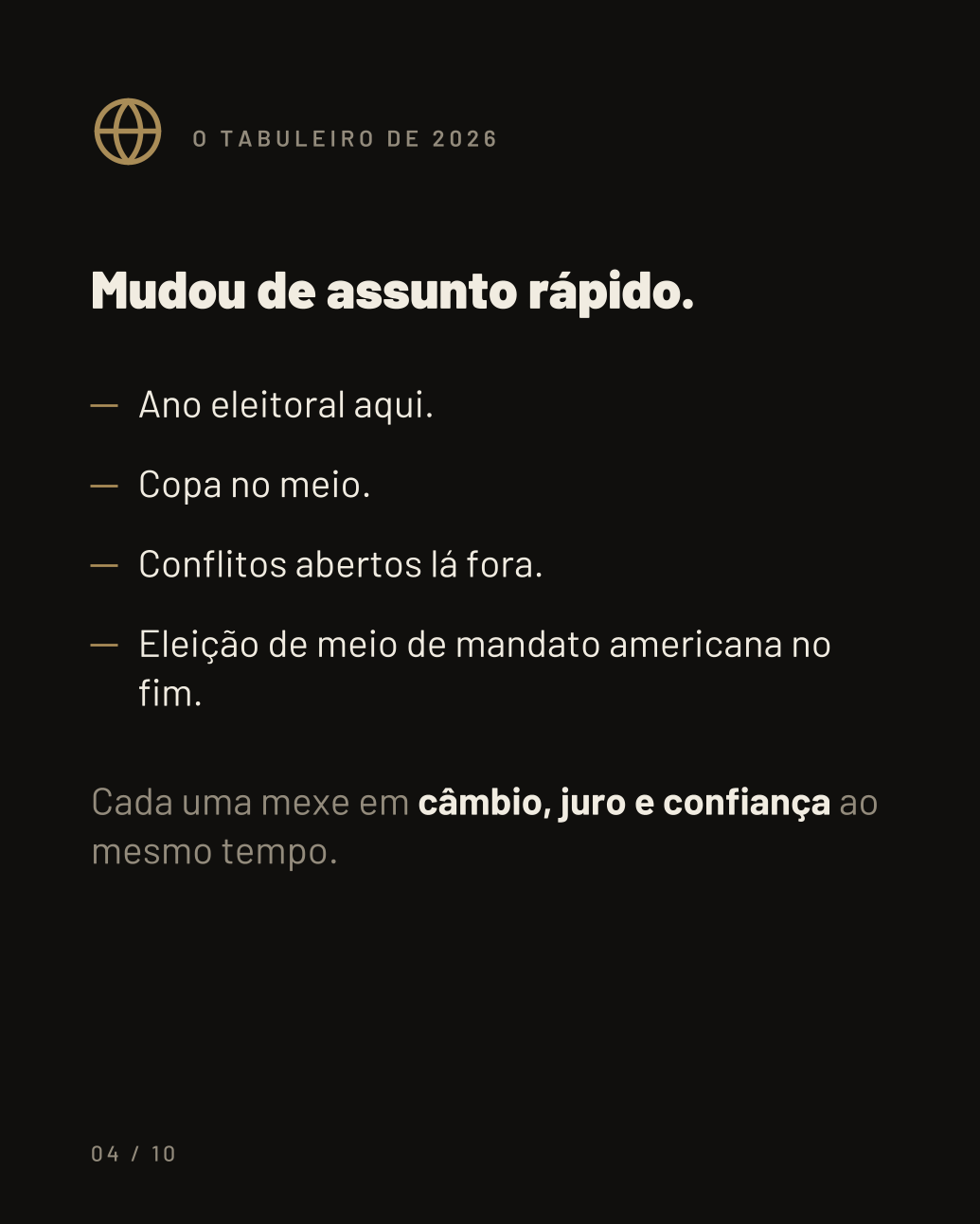
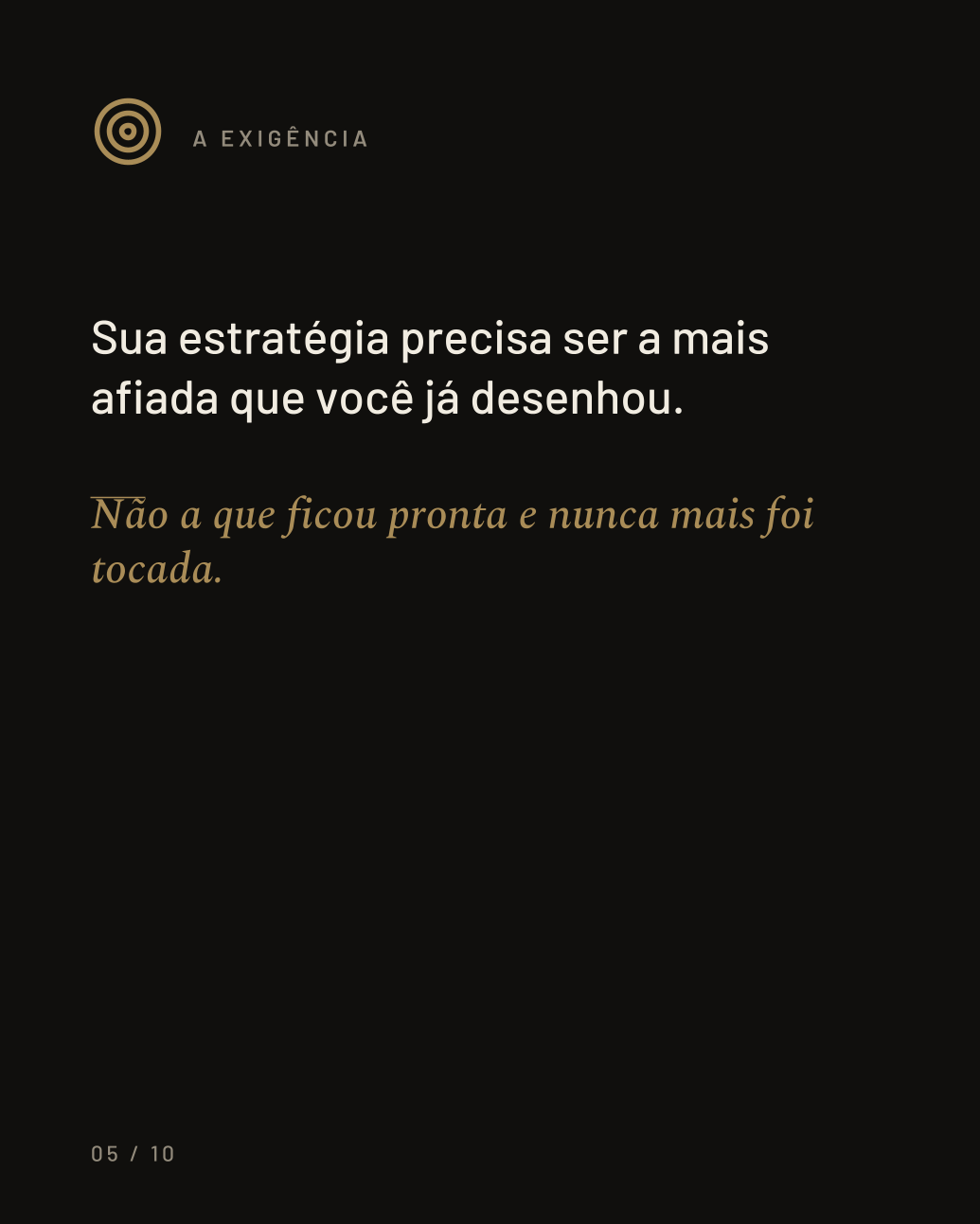
And 2026 changed the subject fast. An election year here, the World Cup in the middle, open conflicts abroad, the American midterm election at the end. Each of these pieces moves exchange rates, interest rates and confidence at the same time. Your strategy needs to be the sharpest you have ever drawn. Not the one that was finished and never touched again.

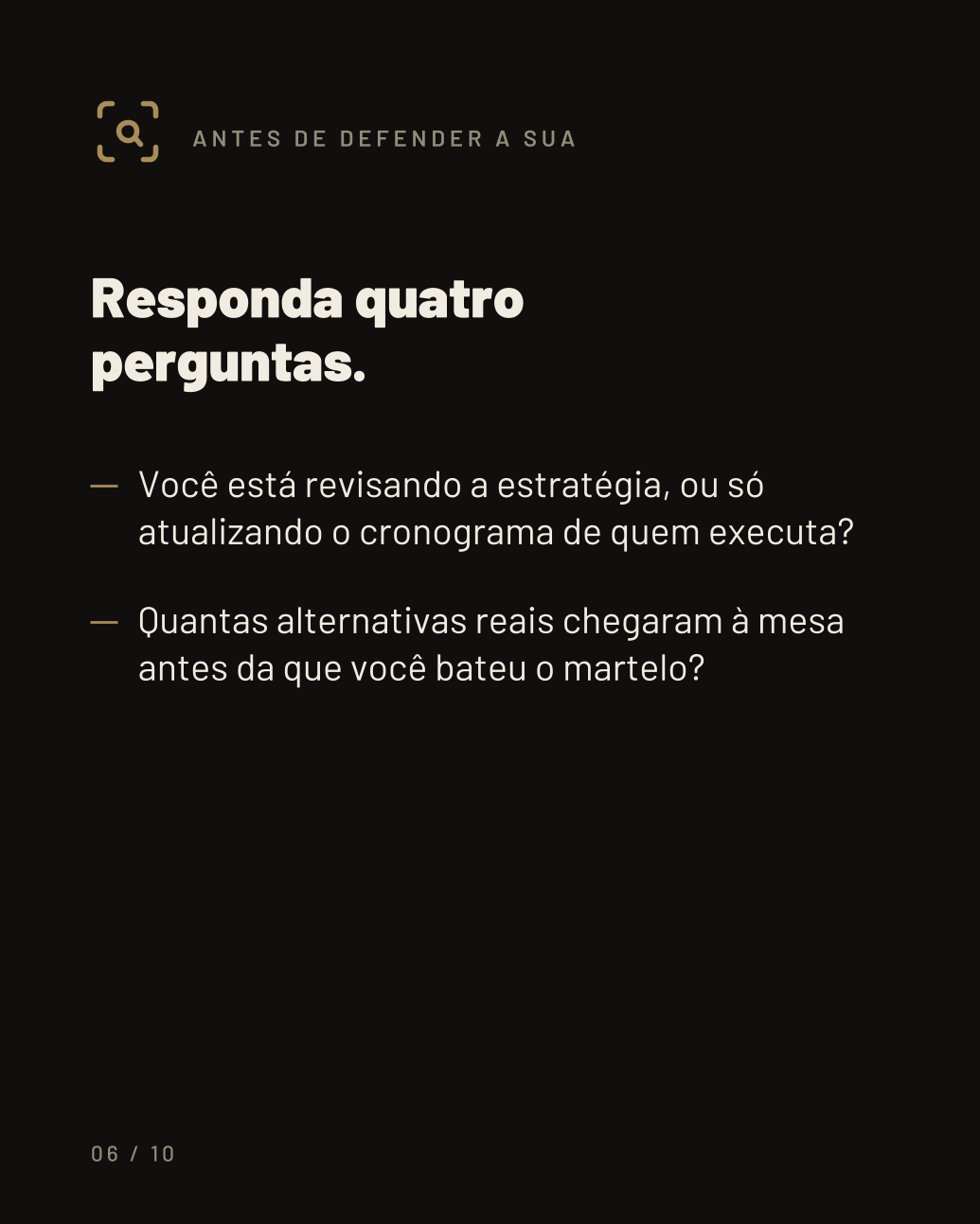
Before defending yours, answer four questions:
• Are you reviewing the strategy, or just updating the schedule of those who execute?
• How many real alternatives reached the table before the one you settled on?
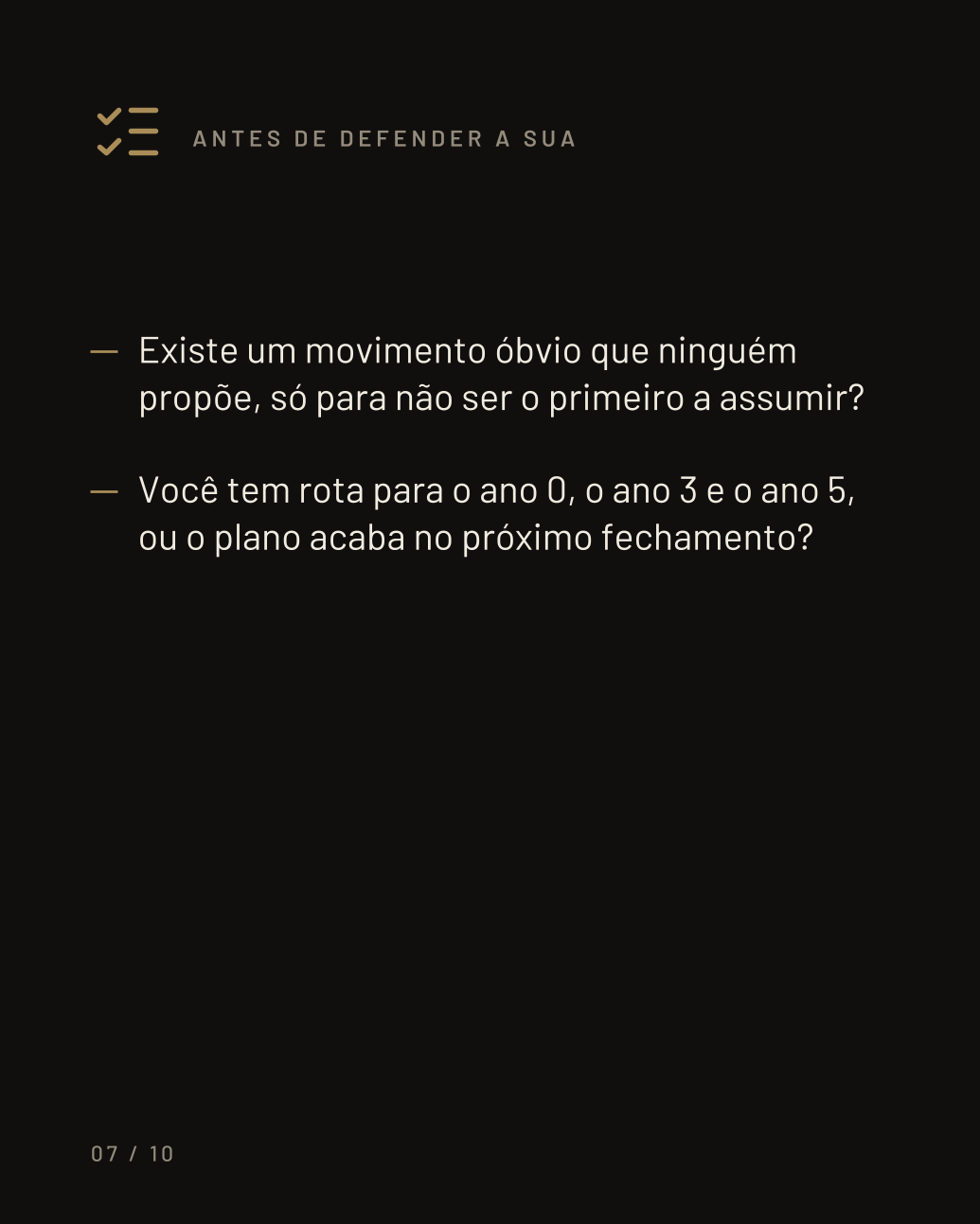
• Is there an obvious move nobody proposes, just to avoid being the first to own it?
• Do you have a route for year 0, year 3 and year 5, or does the plan end at the next close?

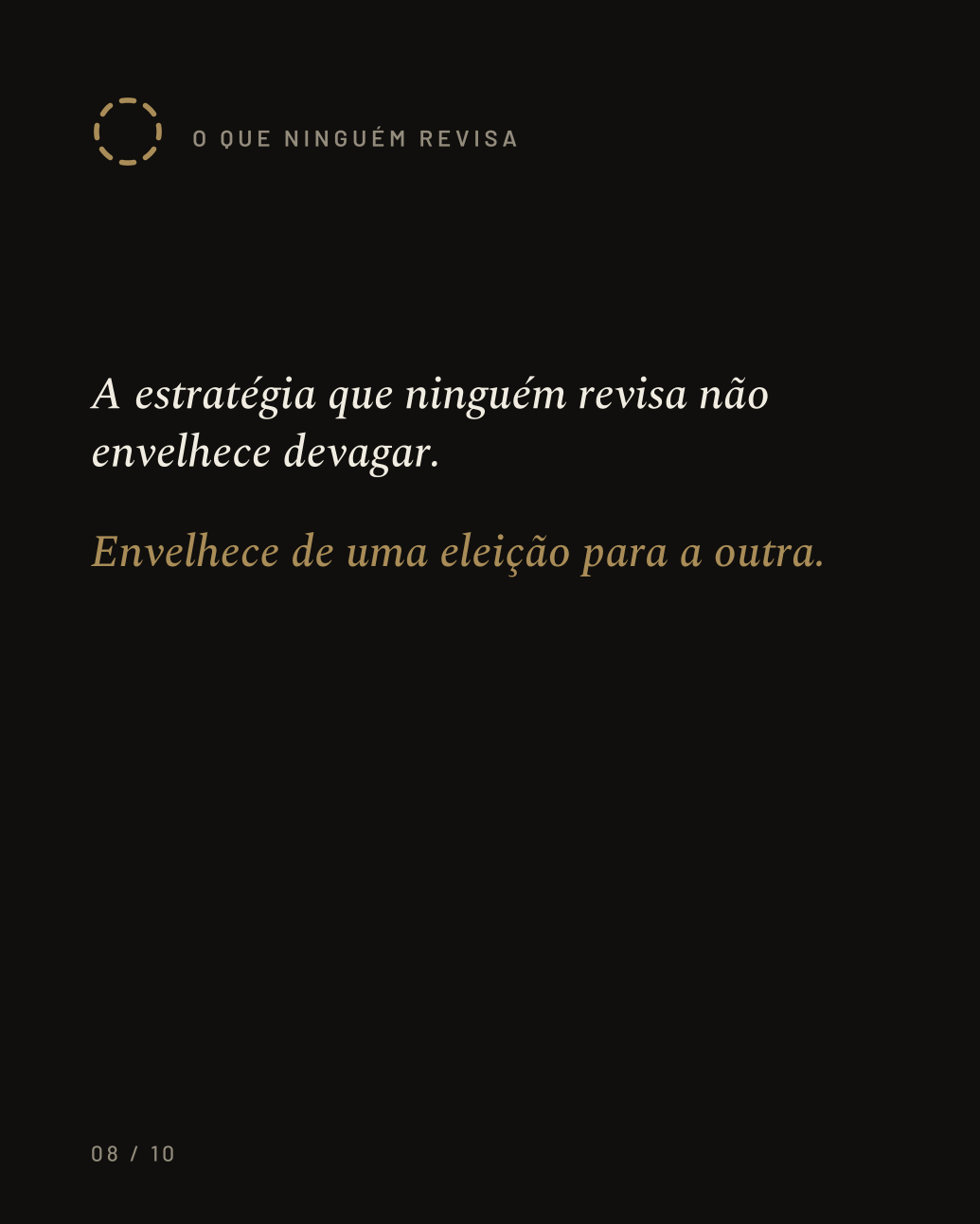
A strategy nobody reviews does not age slowly. It ages from one election to the next.

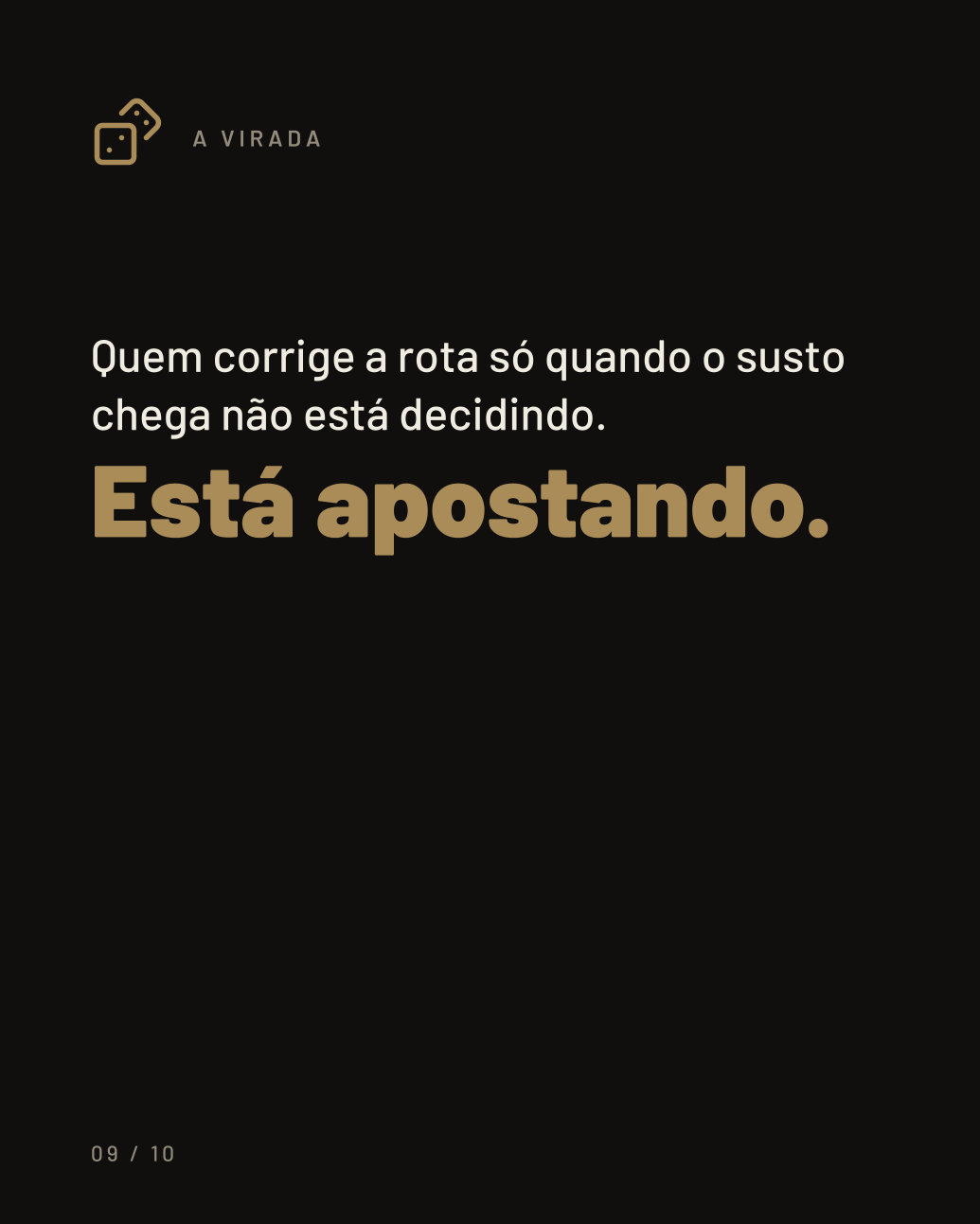
Whoever corrects course only when the scare arrives is not deciding. He is betting.

And the year that will collect this bill has already begun.

Post page · Comment on LinkedIn

Jun 22, 2026

I entered the best market for someone like me. And the worst, at the same time

image 1/11image 2/11image 3/11image 4/11image 5/11image 6/11image 7/11image 8/11image 9/11image 10/11image 11/11
1 / 11

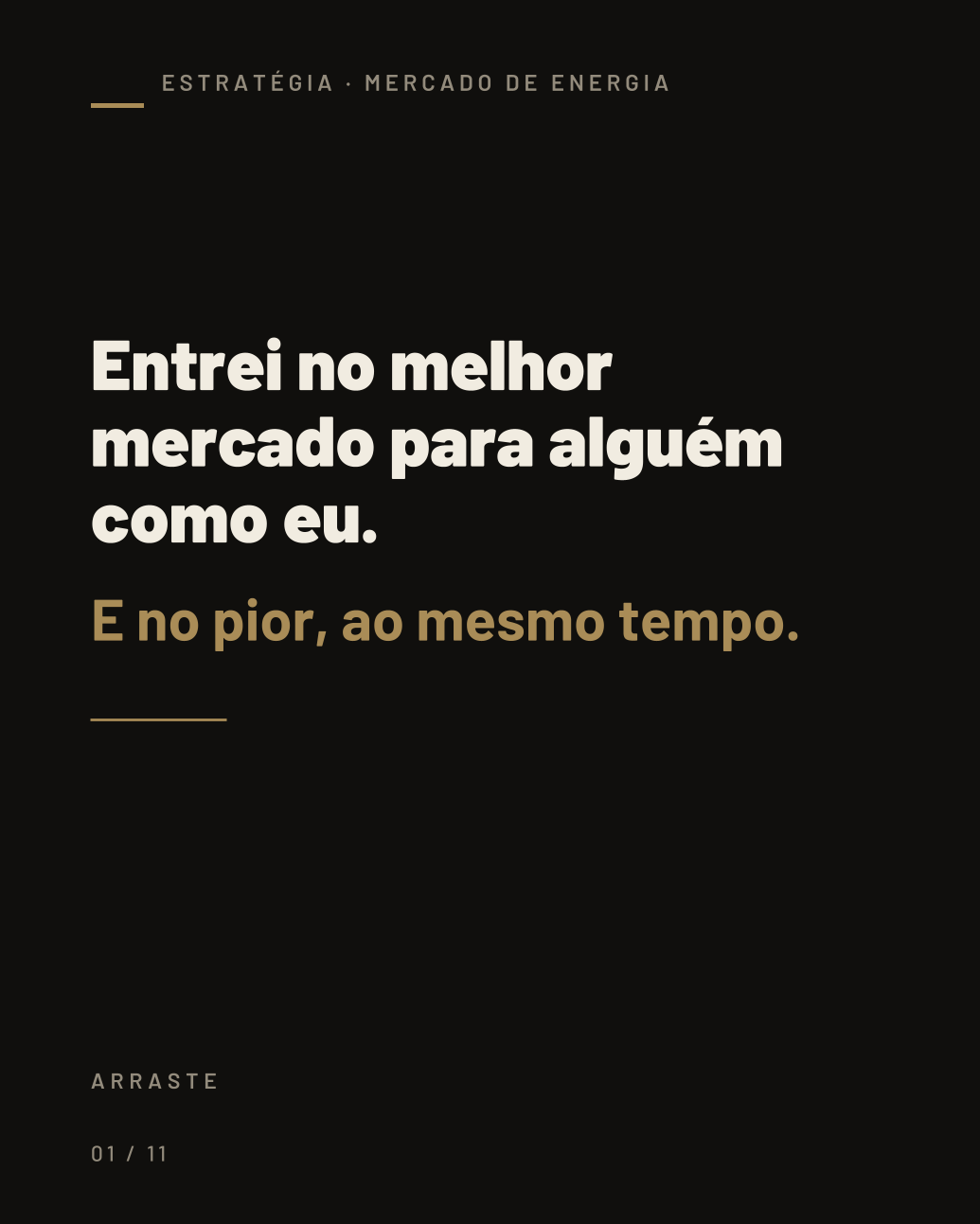
I entered the best market for someone like me. And the worst, at the same time.

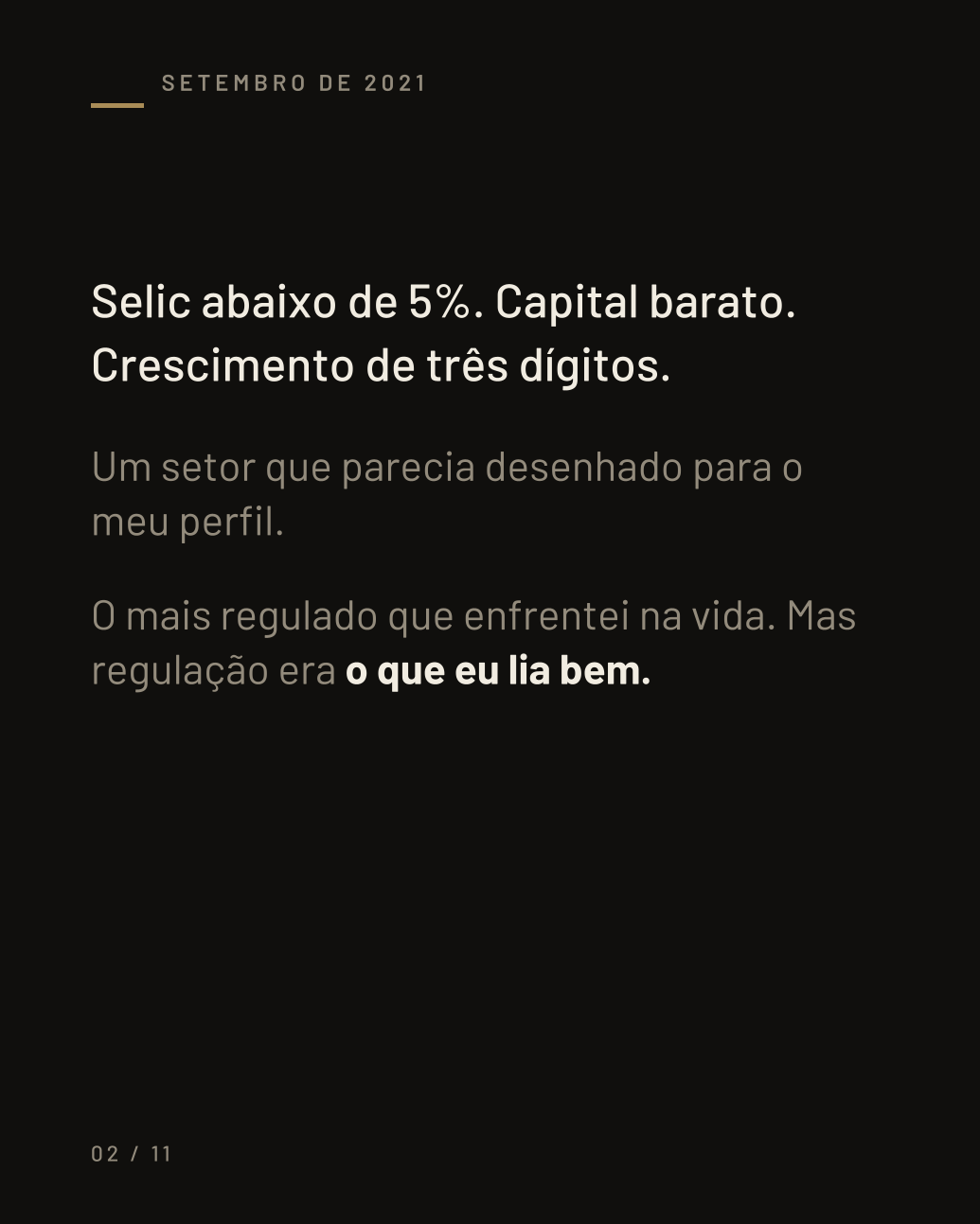
September 2021. Brazil's Selic rate below 5%, cheap capital, triple-digit growth, a sector that seemed designed for my profile. The most regulated one I have faced in my life, but regulation was exactly what I read well. I arrived, executed, delivered results. Everything was right.

And that was exactly when I made my biggest mistake: confusing the market I had understood with the market that existed.

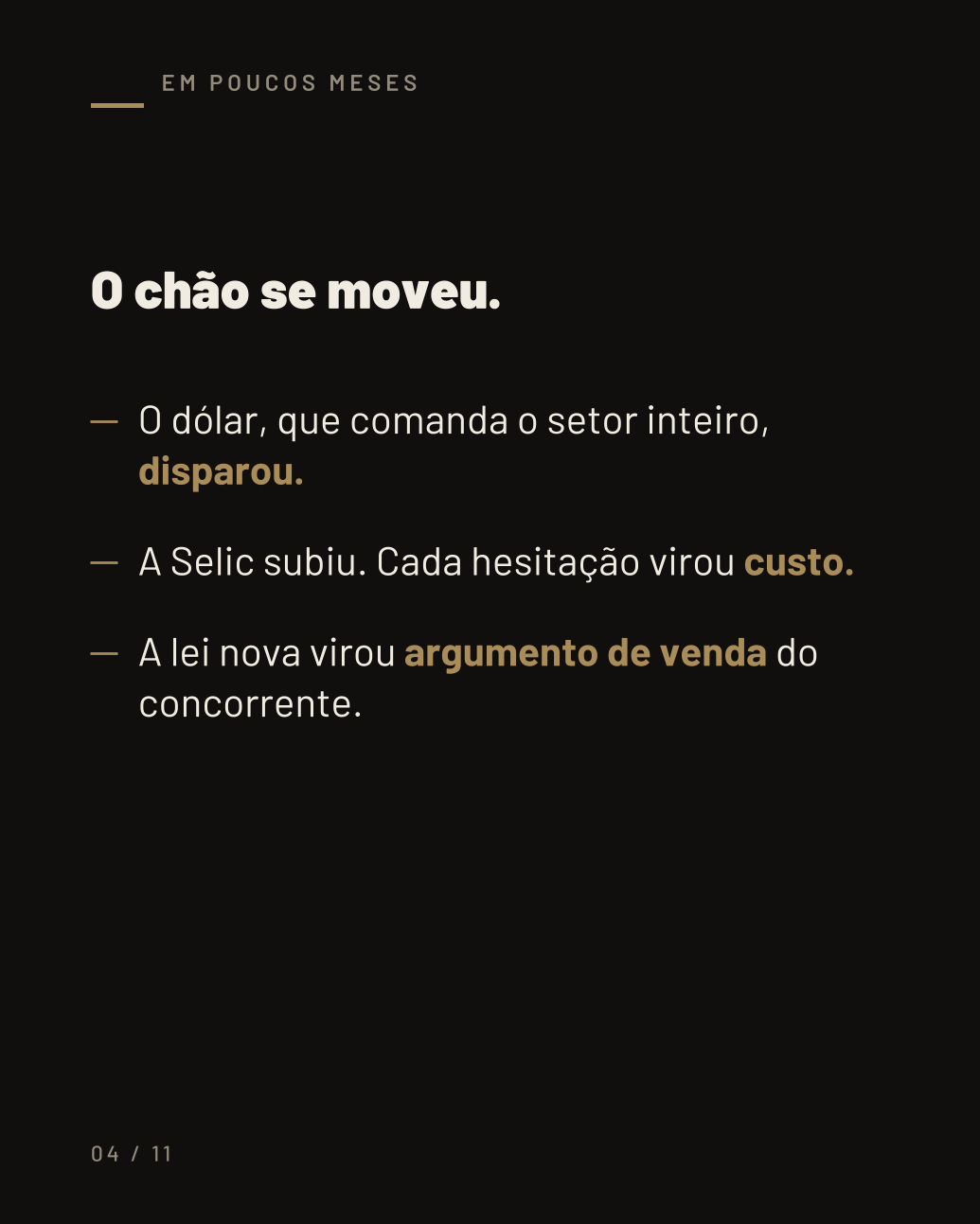
In a few months the ground moved. The dollar, the currency that commands the entire sector, shot up. The Selic rose and turned every hesitation into cost. A new law approved for 2023 came into play, and the fear of it became a competitor's sales pitch.

The plan I had was not wrong. It was old. Old within months. The market did not wait for me to finish executing before changing the rules.

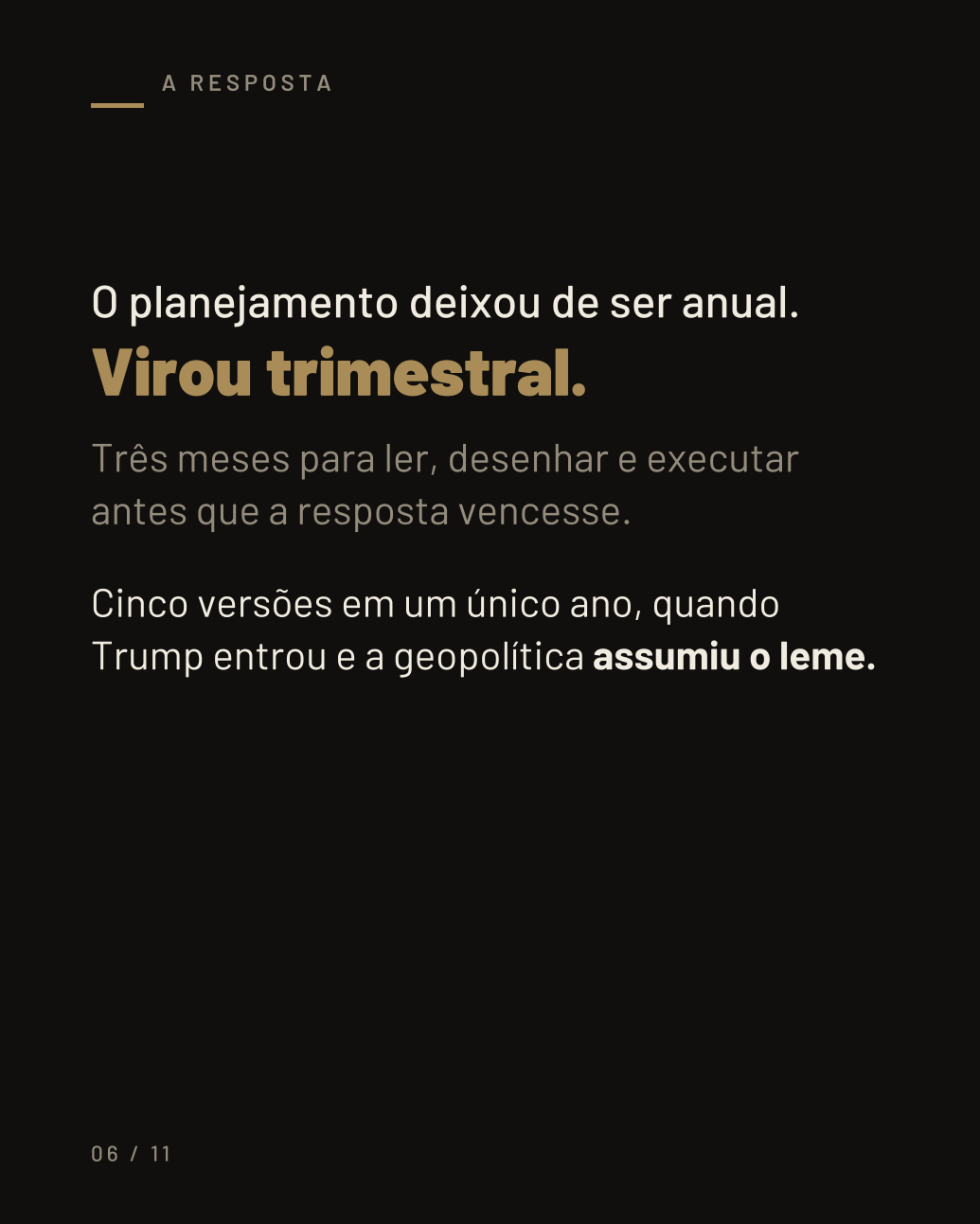
So strategic planning stopped being annual and became quarterly. Three months to read the new scenario, design the response and execute before it expired. Five versions in a single year, when Trump came in and geopolitics took the helm of the sector.

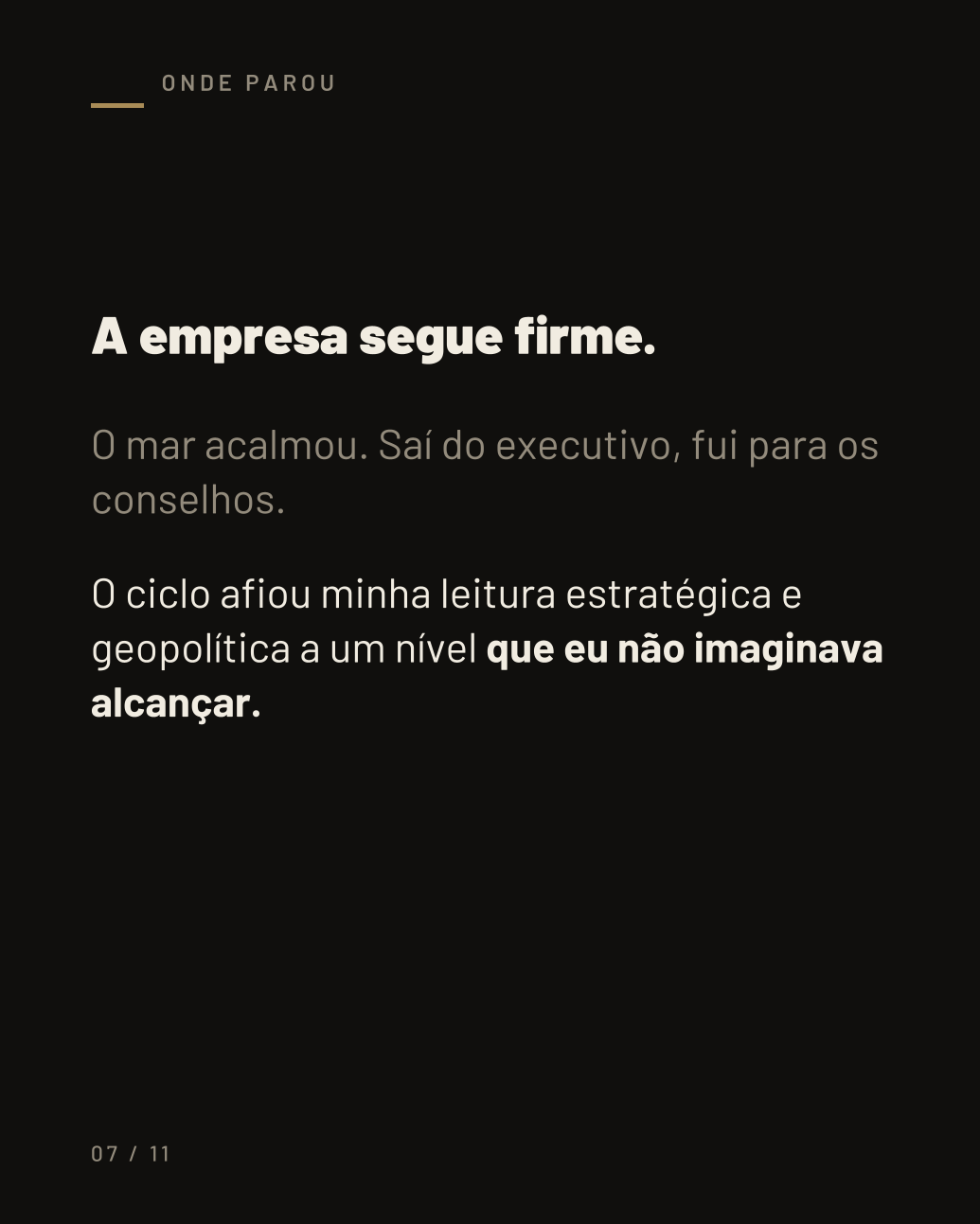
The company remains solid. The sea calmed down, I left the executive role and dedicated myself to Boards. That cycle sharpened my strategic and geopolitical reading to a level I never imagined reaching.

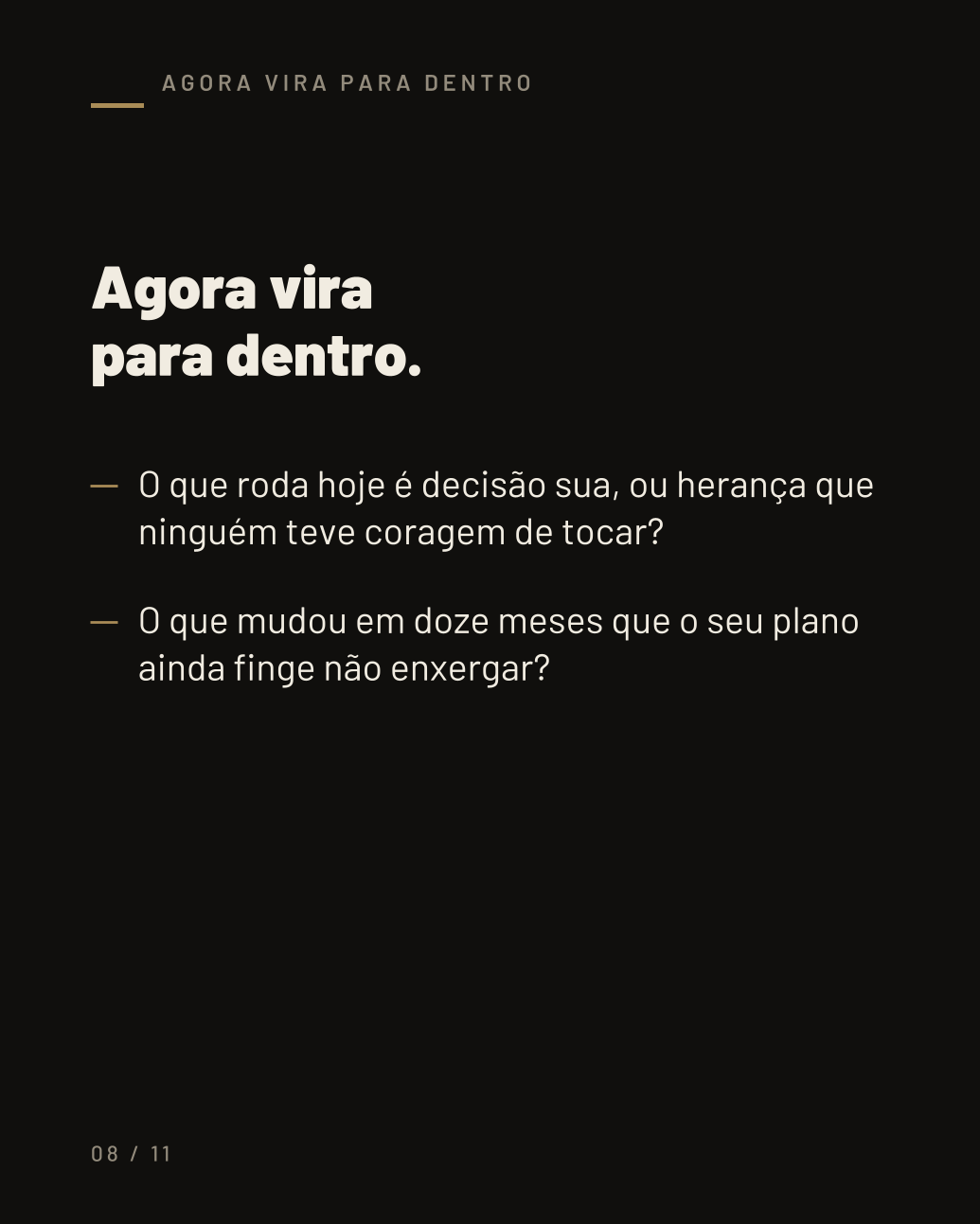
Now turn it inward.

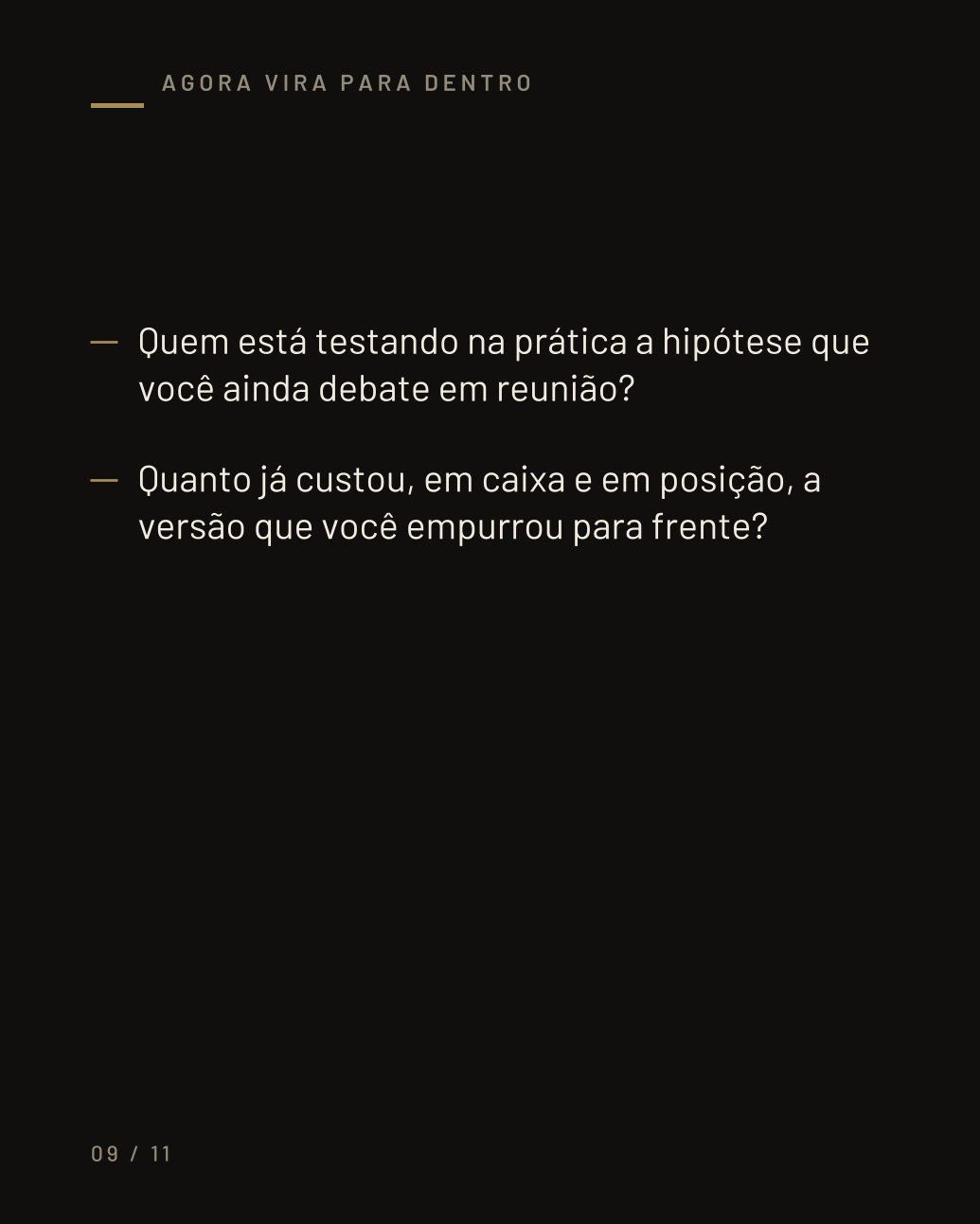
• Is what runs today your decision, or an inheritance nobody had the courage to touch?
• What changed in the last twelve months that your plan still pretends not to see?
• Who is testing in practice the hypothesis you are still debating in meetings?
• How much has the version you pushed to next quarter already cost, in cash and in position?

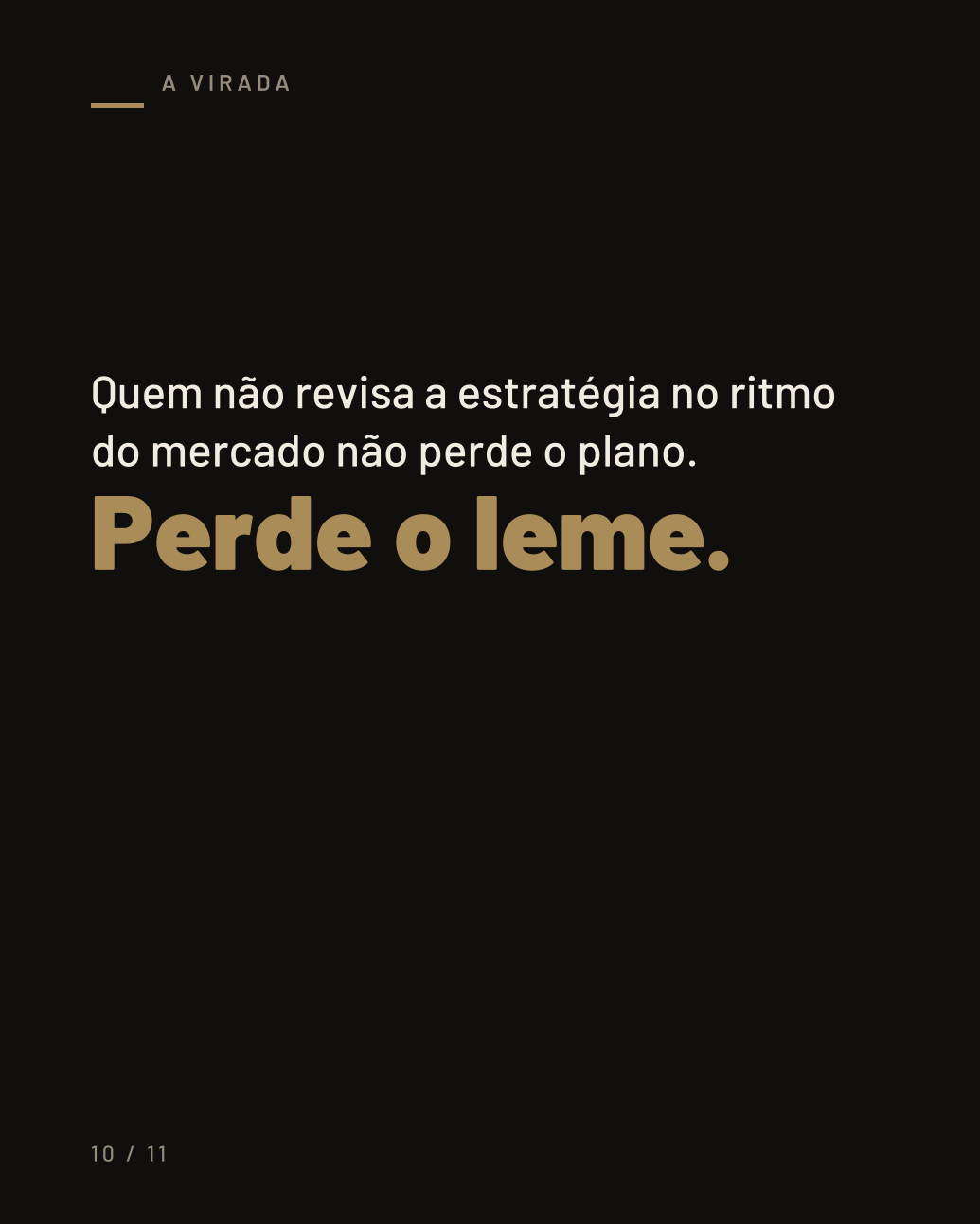
Whoever does not review strategy at the market's pace does not lose the plan. He loses the helm.

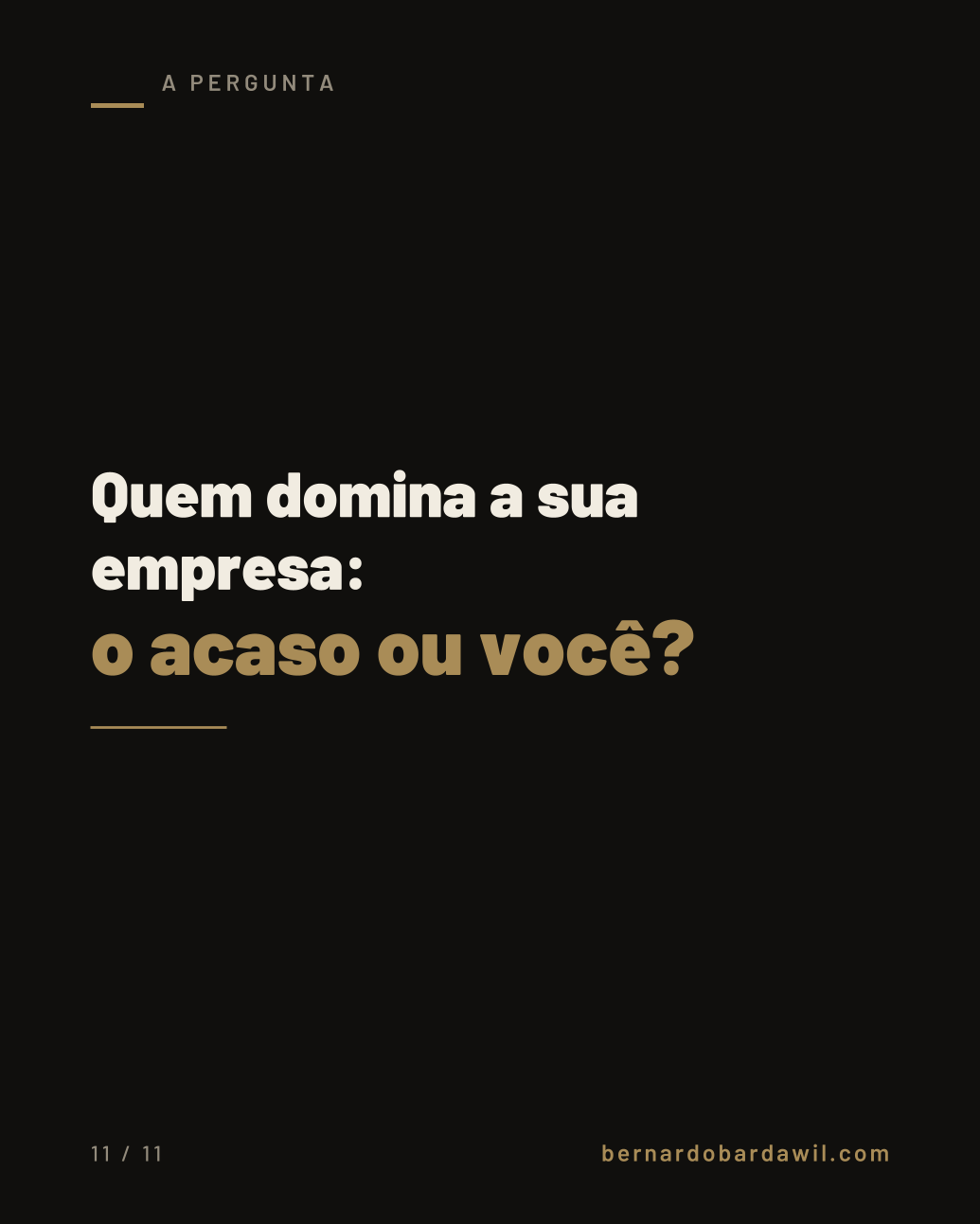
Who rules your company: chance or you?

Post page · Comment on LinkedIn

Jun 4, 2026

A complex decision is the one nobody wants to sign

image 1/5image 2/5image 3/5image 4/5image 5/5
1 / 5

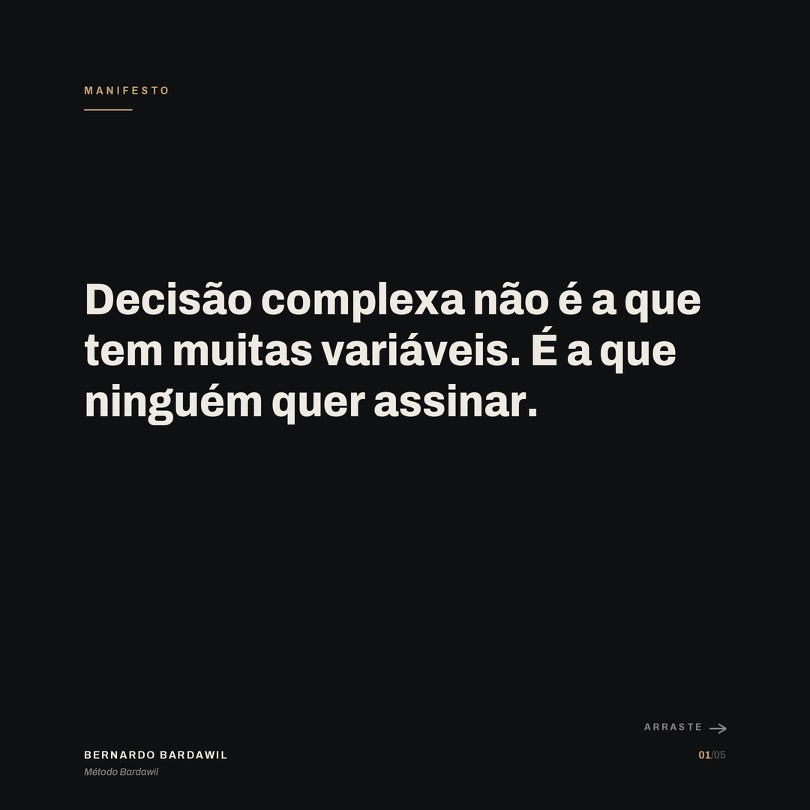
A complex decision is not the one with many variables. It is the one nobody wants to sign.

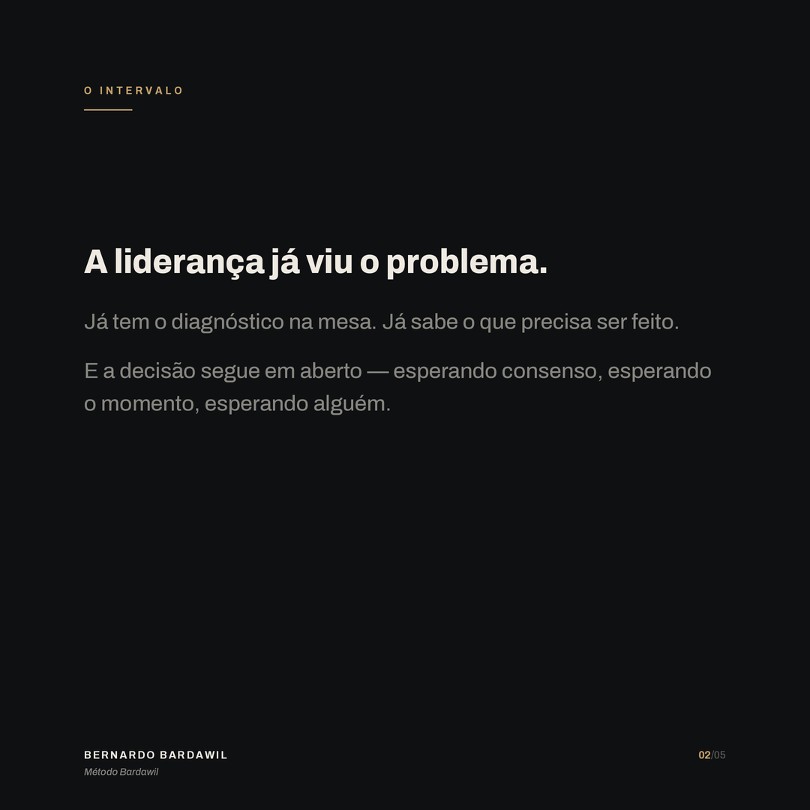
Leadership has already seen the problem. It already has the diagnosis on the table. It already knows what needs to be done.

And the decision stays open, waiting for consensus, waiting for the moment, waiting for someone.

It is in that gap that Business Strategy stops being planning and becomes silent cost. It is where Corporate Governance exists on the org chart, but not in deliberation.

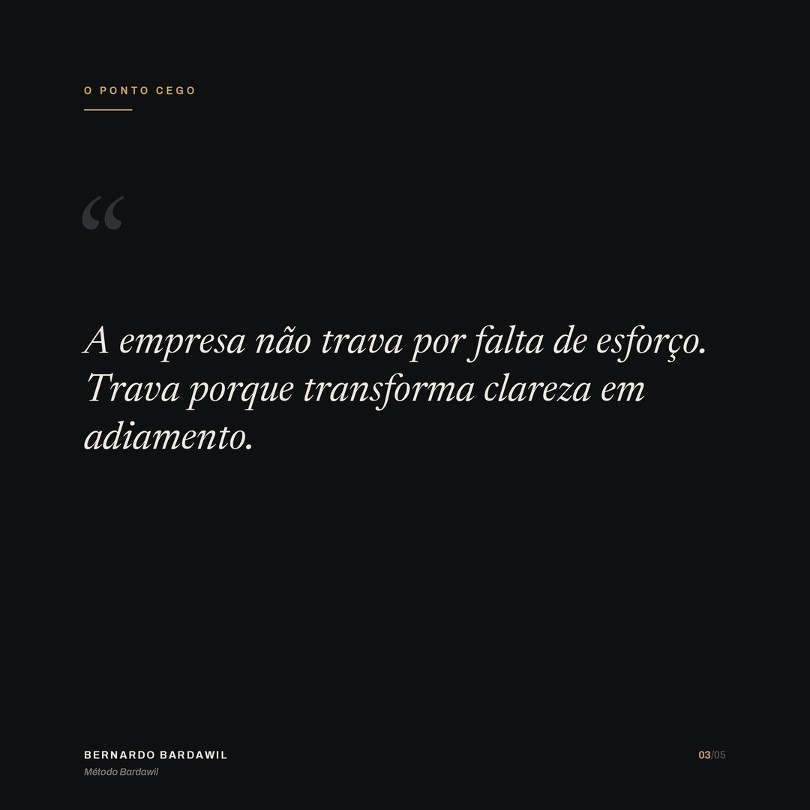
The company does not stall for lack of effort. It stalls because it turns clarity into postponement.

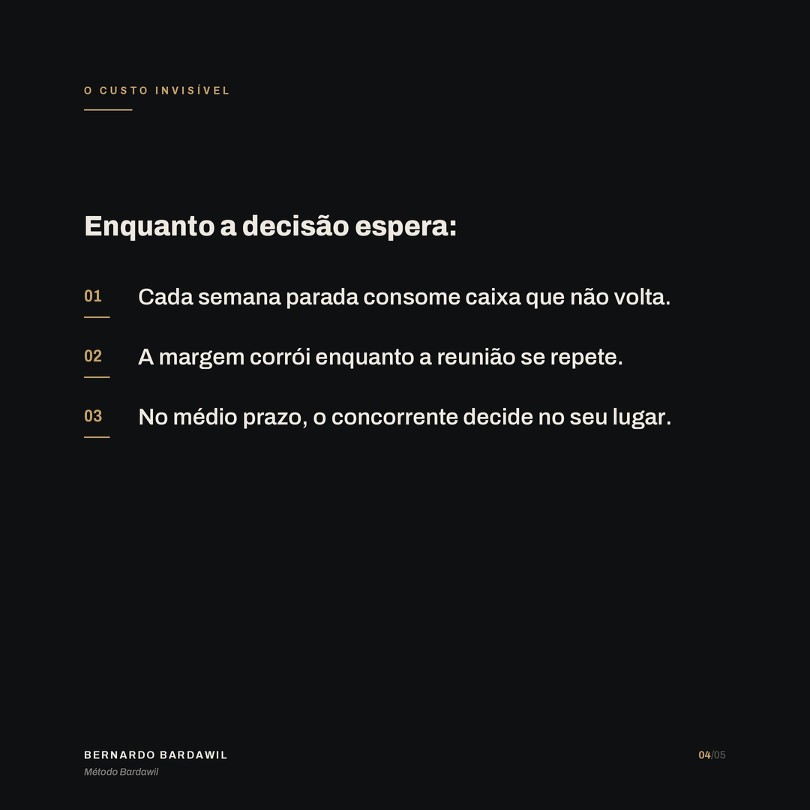
• Every stalled week consumes cash that does not come back.
• Margin erodes while the meeting repeats itself.
• In the medium term, the competitor decides in your place.

There is no recommendation. There is a decision.

Not deciding is more expensive than deciding wrong. And the cost has already started.

Post page · Comment on LinkedIn

Jun 3, 2026

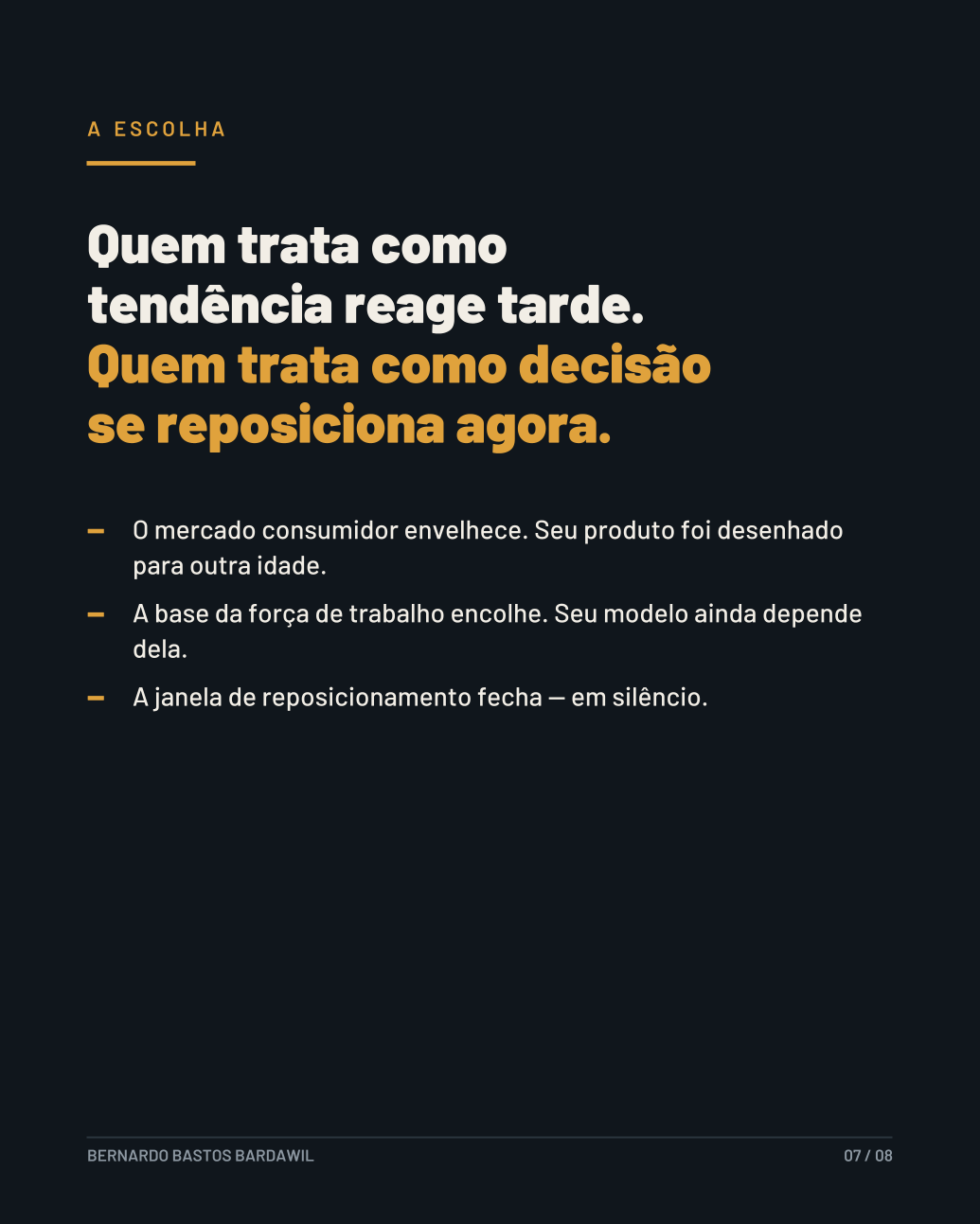
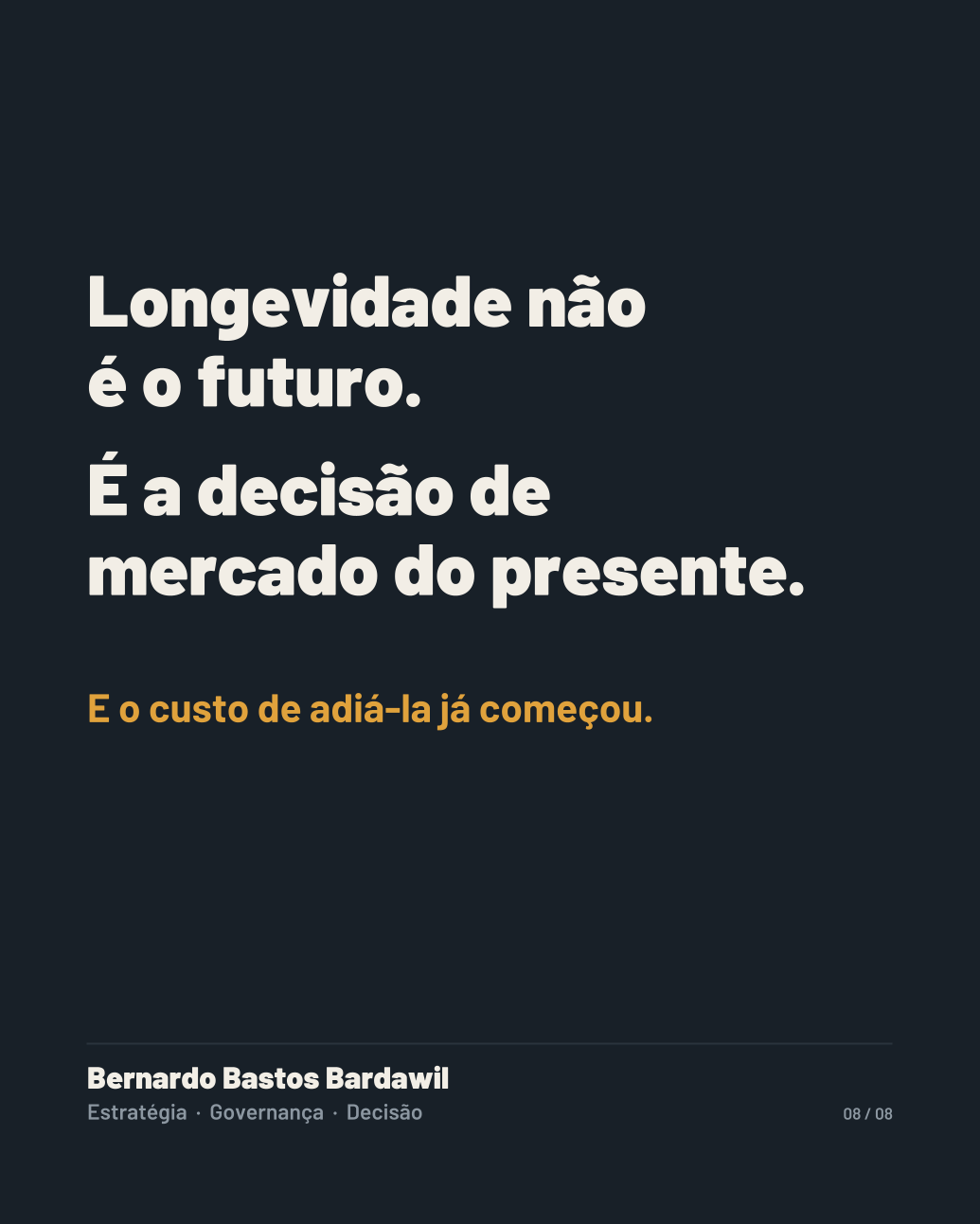
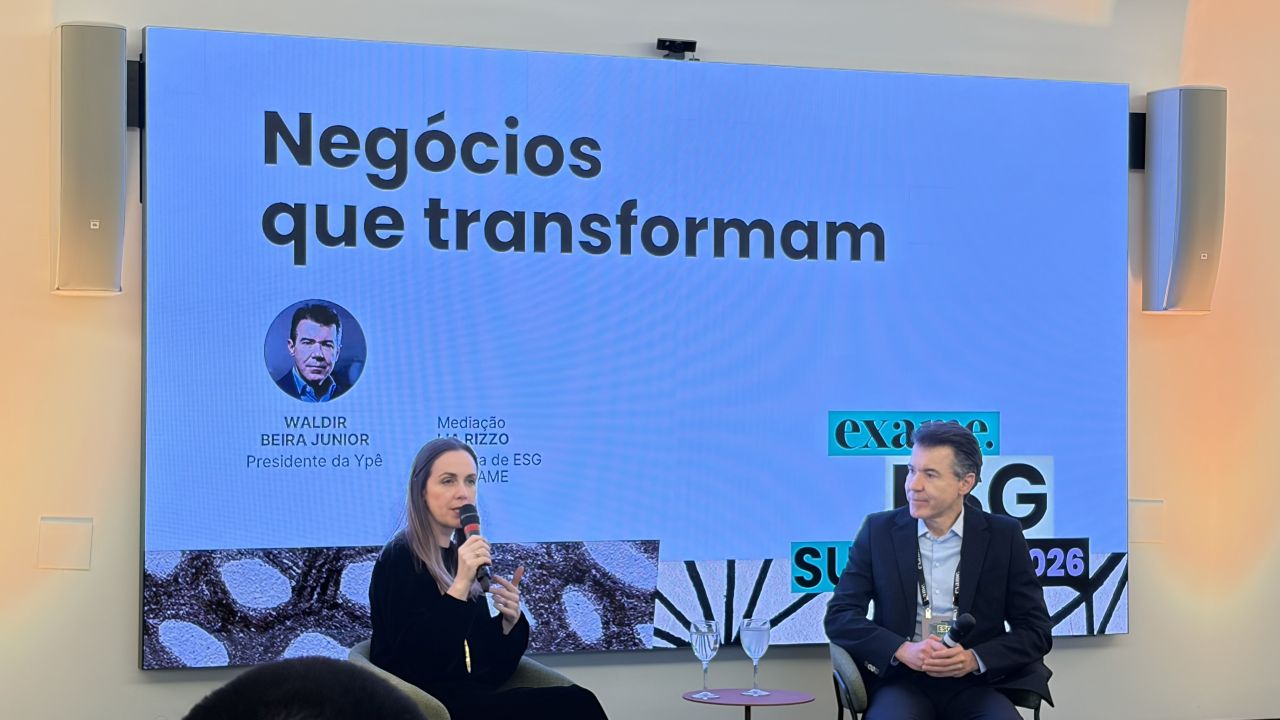
One sentence on the EXAME ESG Summit stage stopped the room

image 1/8image 2/8image 3/8image 4/8image 5/8image 6/8image 7/8image 8/8
1 / 8

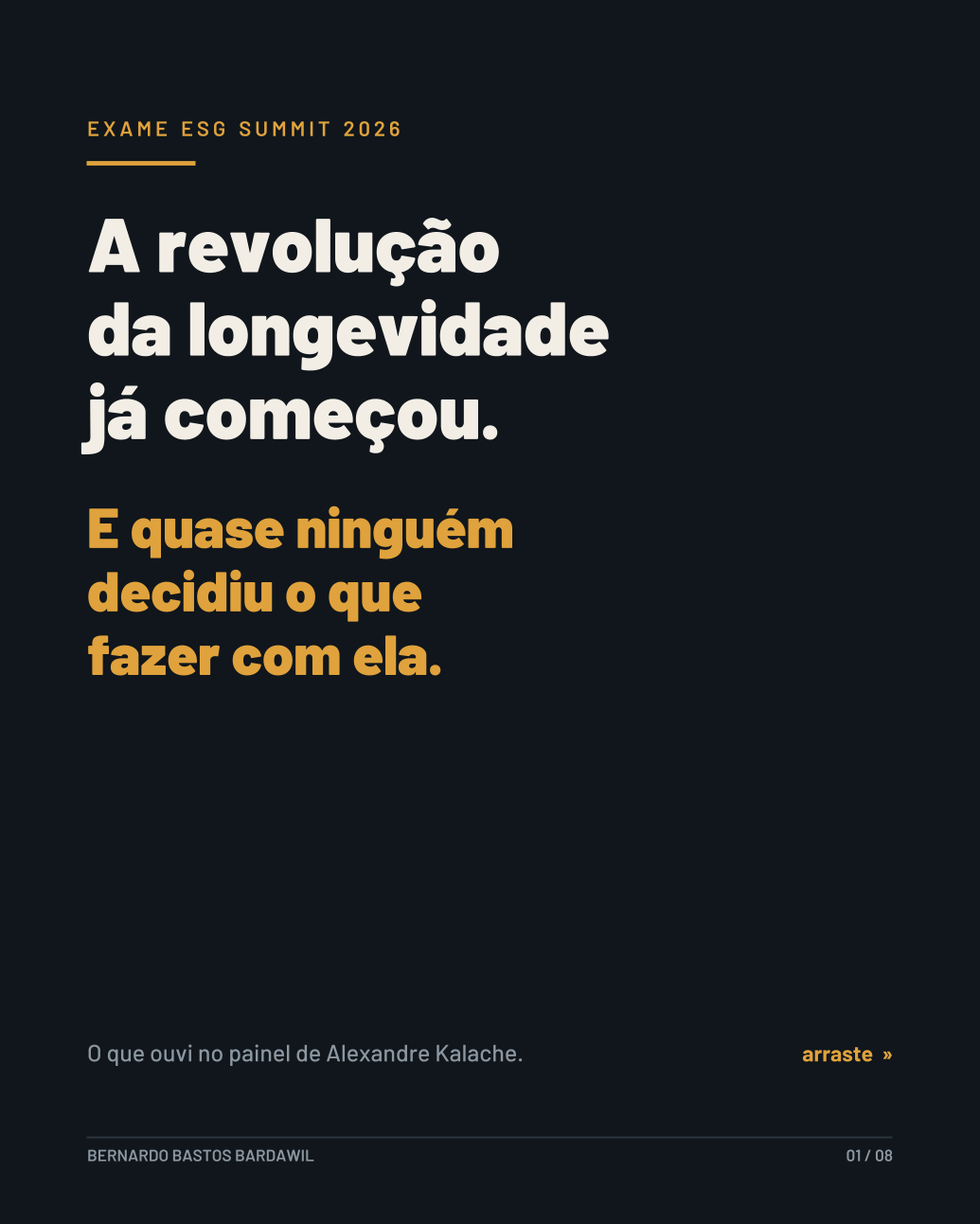
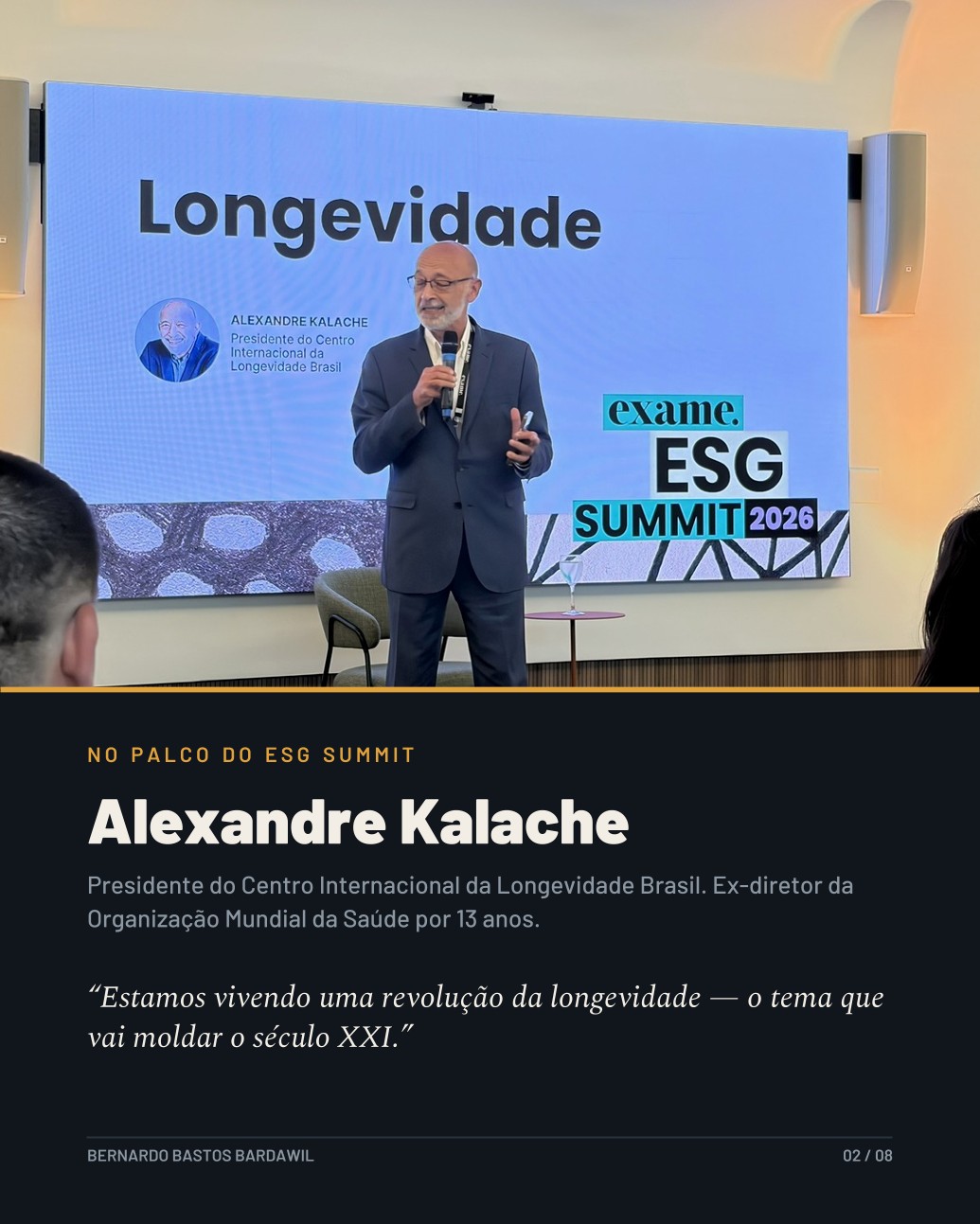
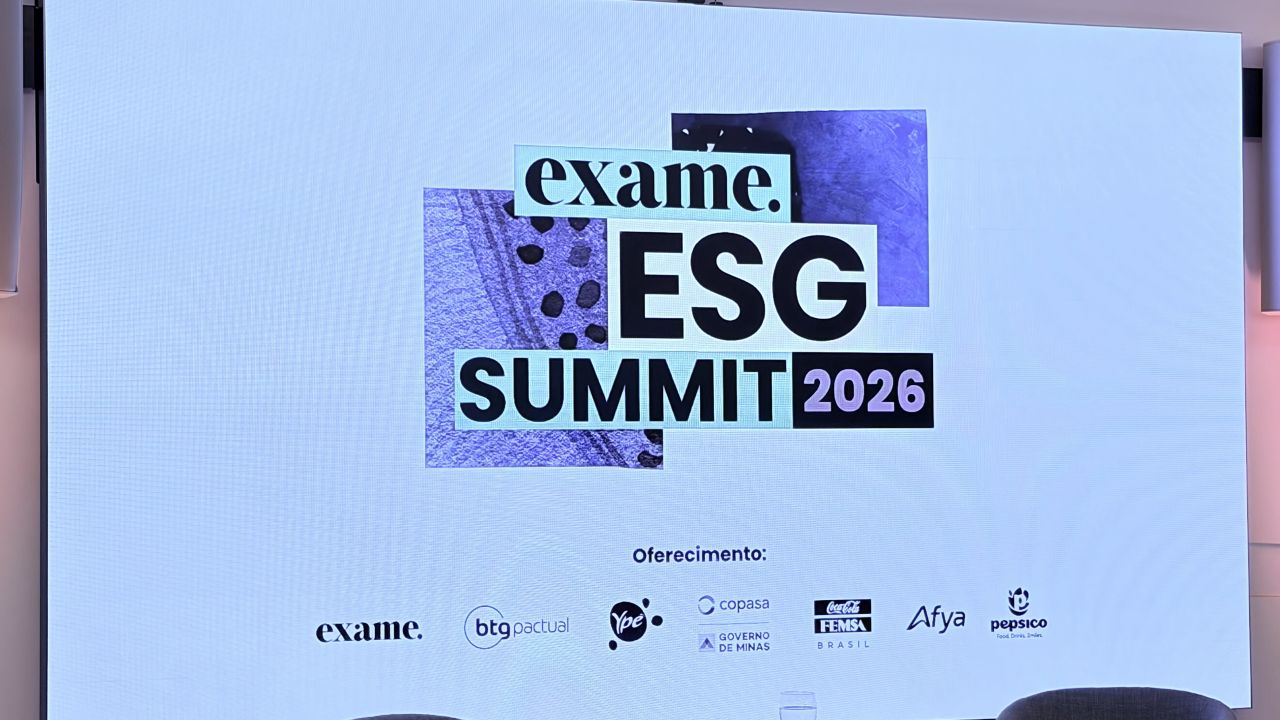
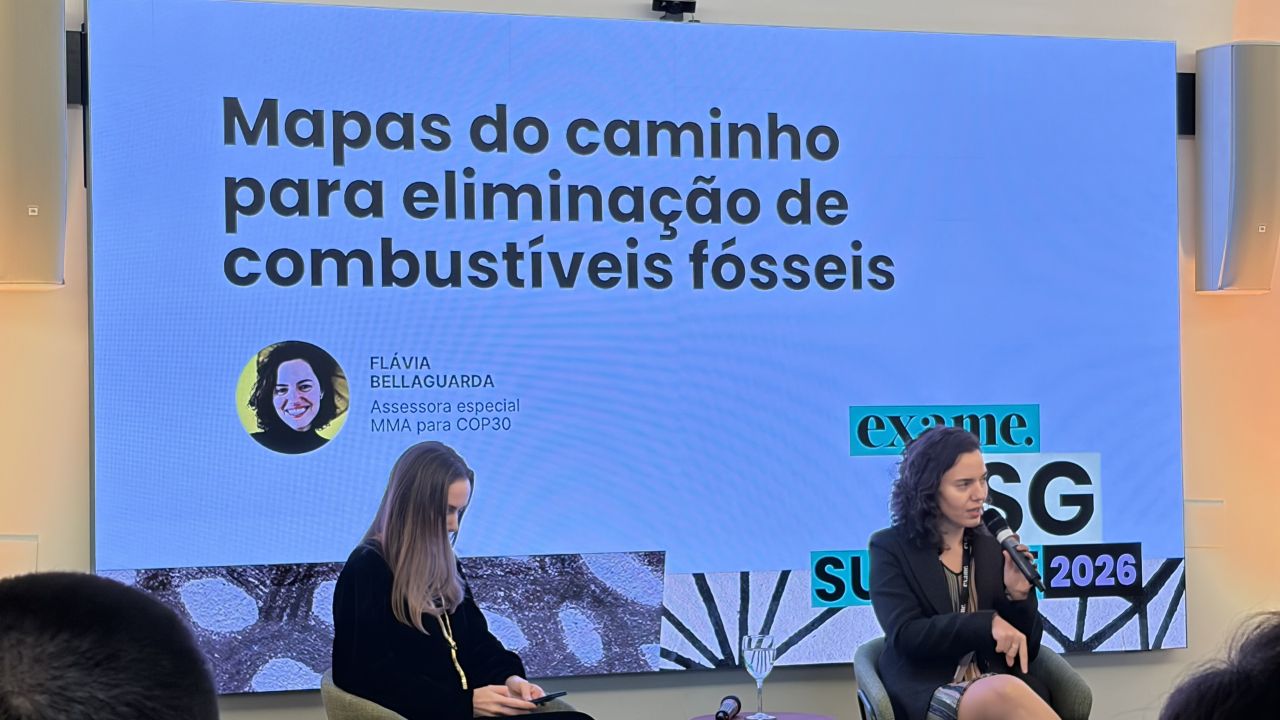
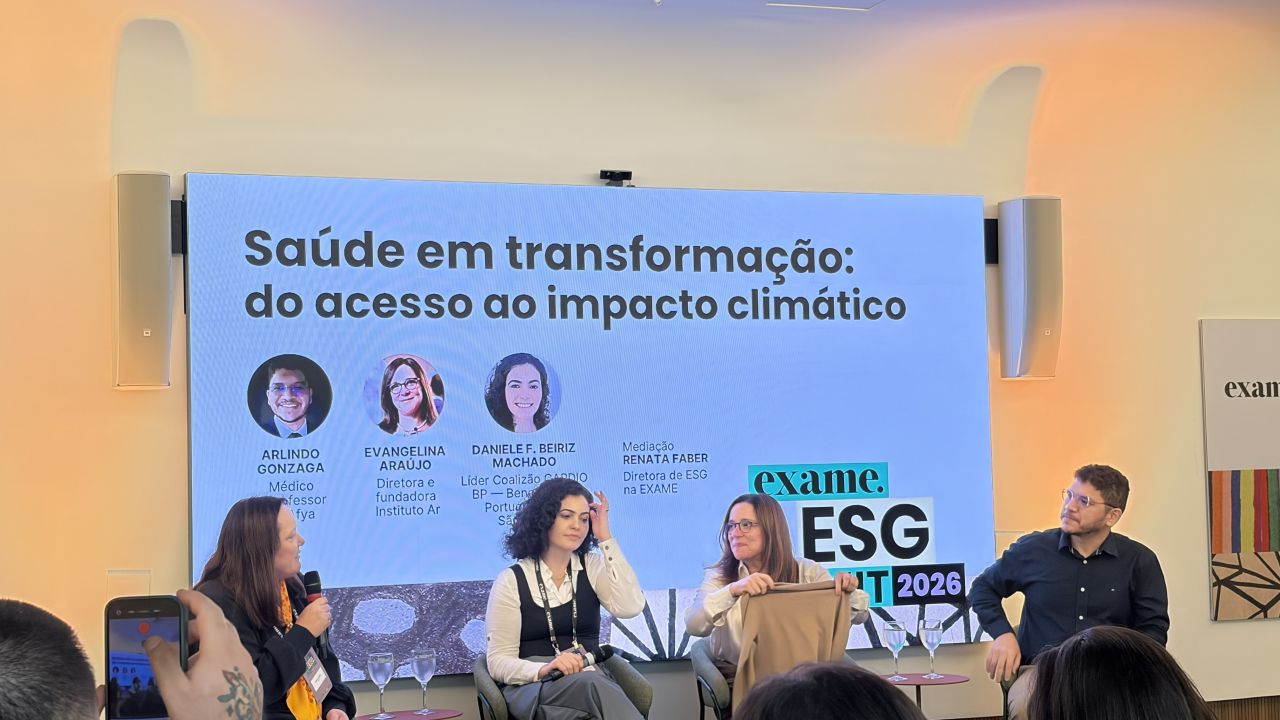
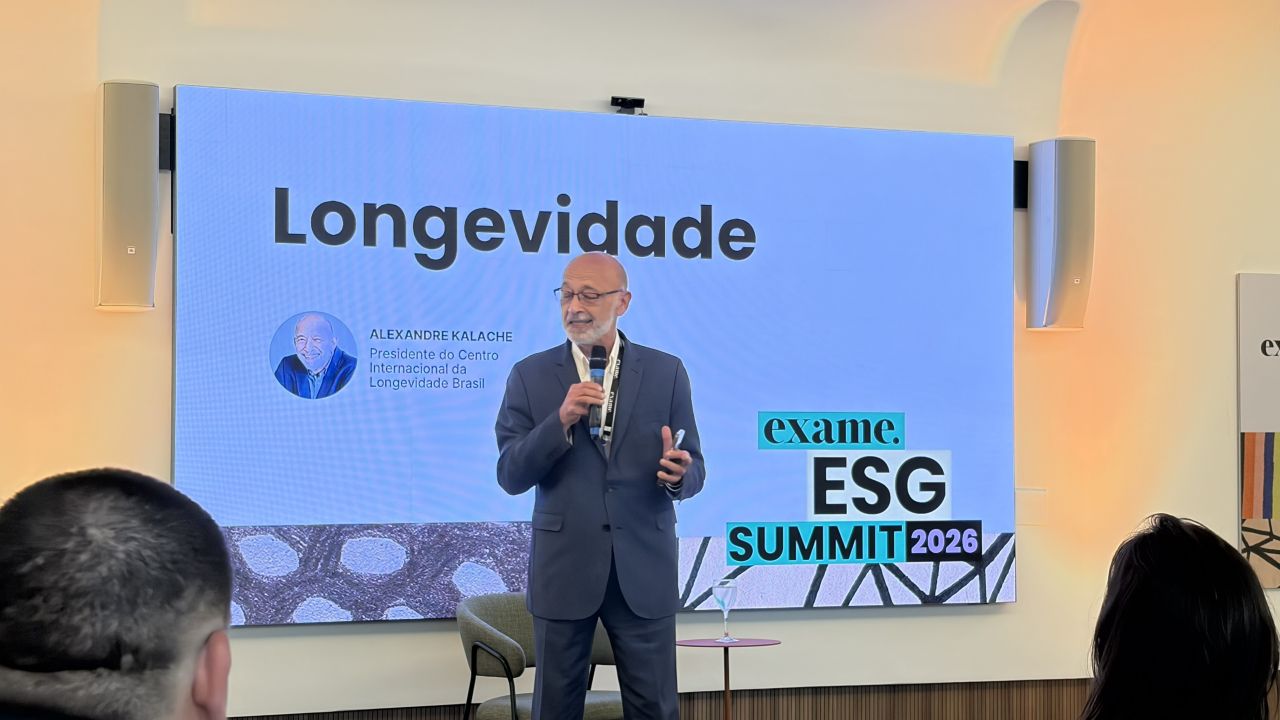
One sentence on the stage of the EXAME ESG Summit 2026 stopped the room.

Alexandre Kalache went up to talk about longevity and handed back a bill nobody had asked for.

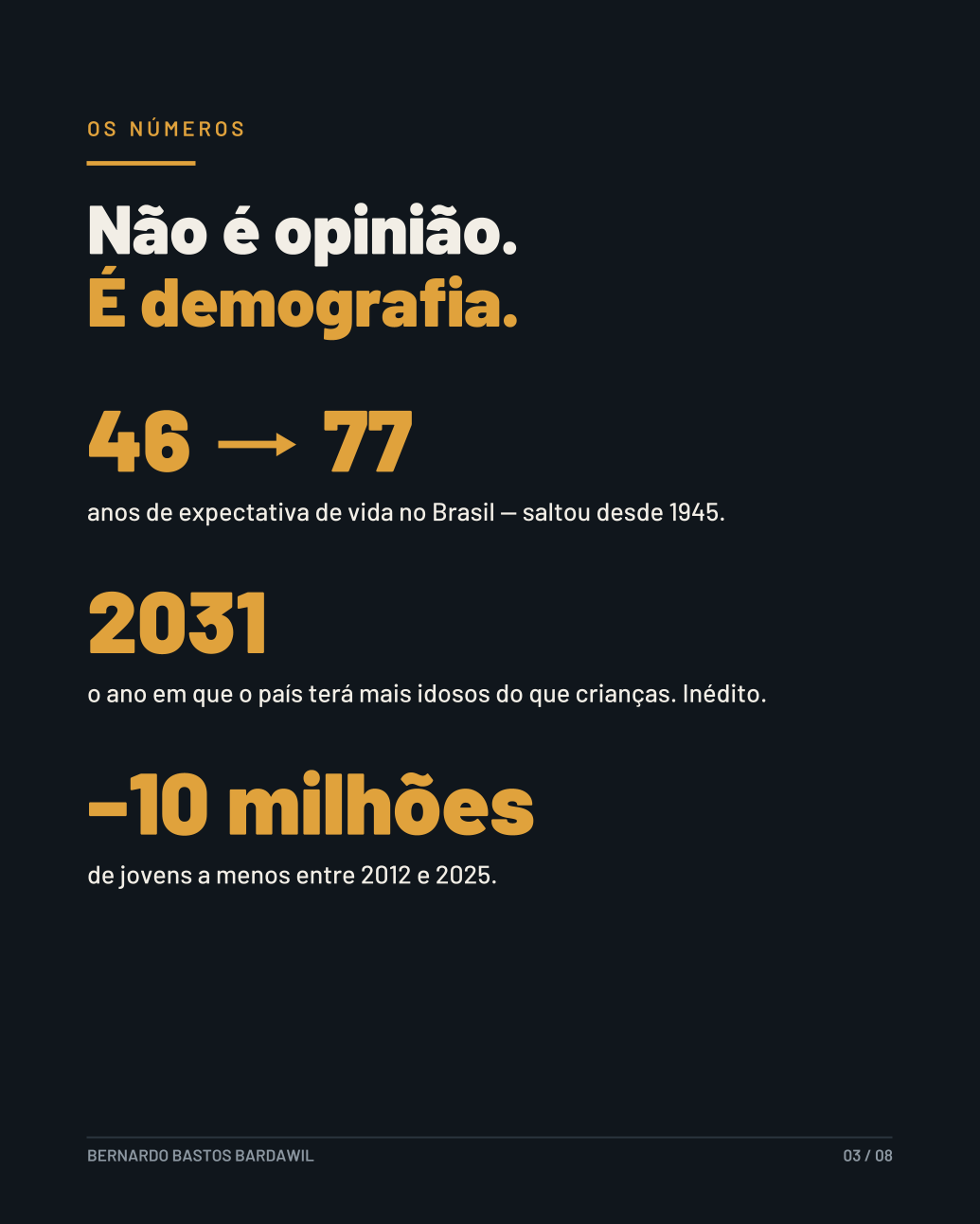
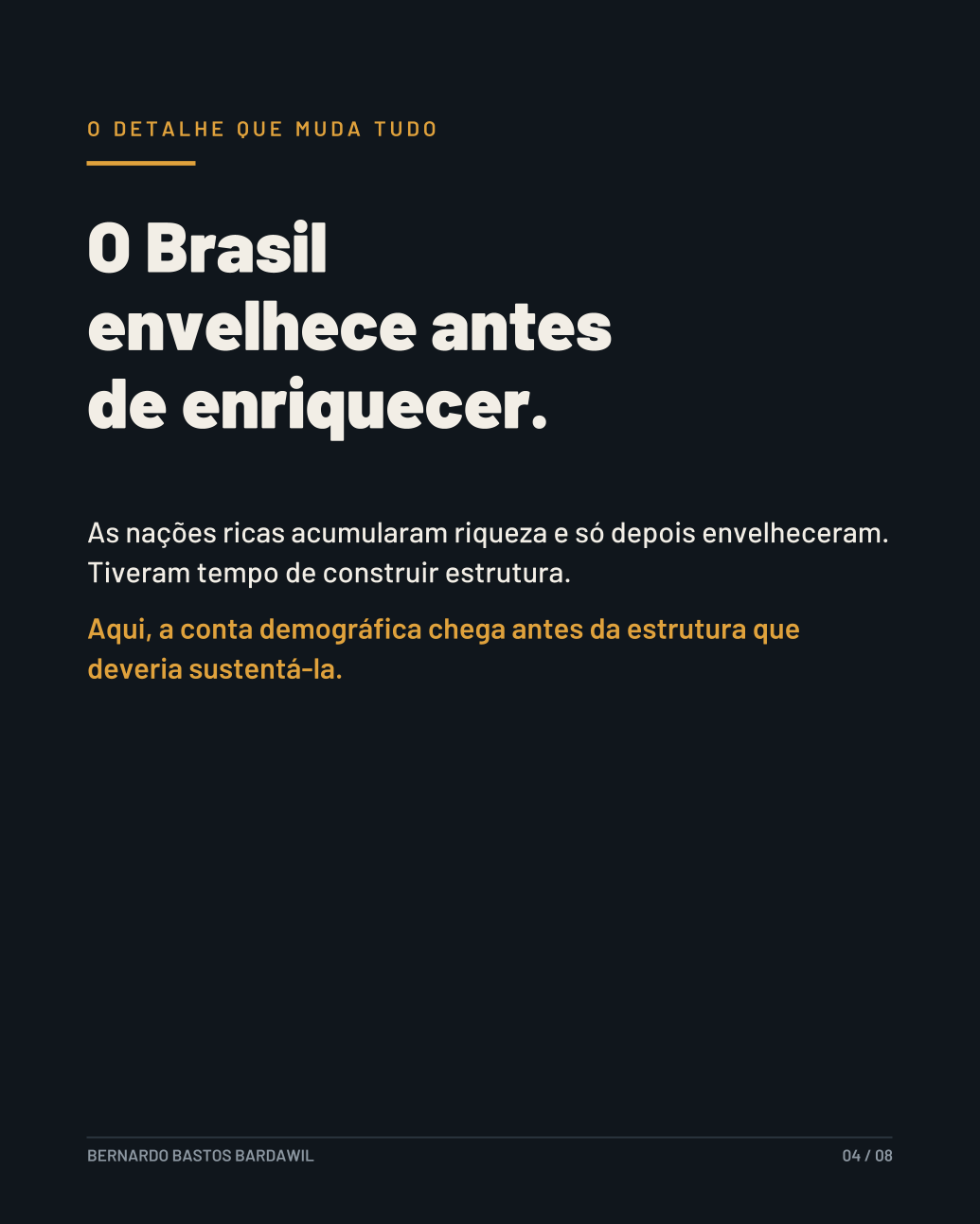
Life expectancy jumped from 46 to 77 years. By 2031, Brazil will have more elderly people than children for the first time in its history. And we are growing old before growing rich.

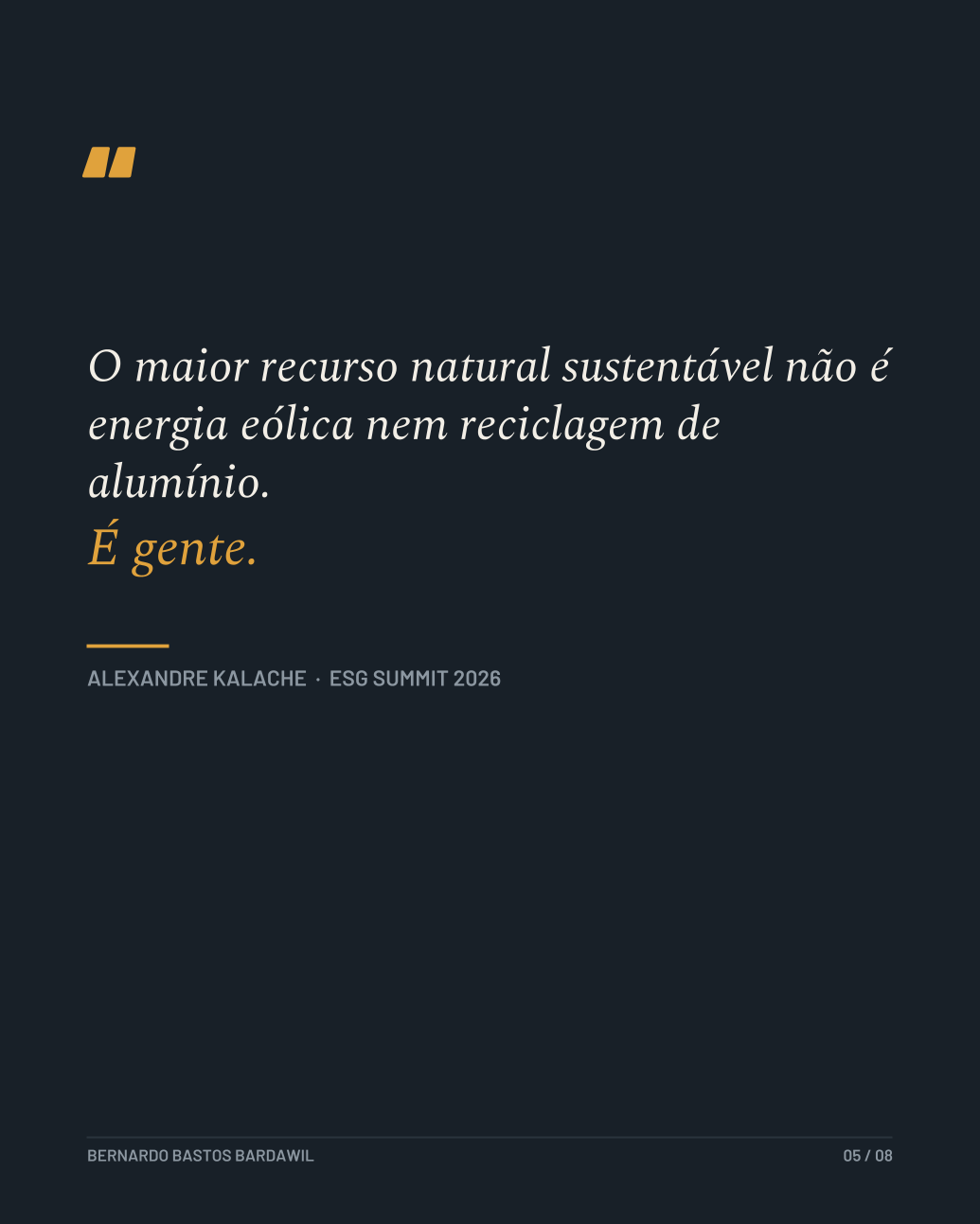
It is not a public health topic. It is the largest market reconfiguration of the century, consumption, work, cities and products shifting their axis at the same time.

And most companies still treat it as a trend for reports.

A trend is followed. A decision is made.

On the Board, the reading is direct: every business transformation agenda that becomes a slide and not a deliberation costs market position in the medium term.

Longevity is not the future. It is the decision of now. And the cost of postponing it has already started.

Post page · Comment on LinkedIn

Jun 2, 2026

ESG stopped being talk. It became a line in the longevity math

image 1/8image 2/8image 3/8image 4/8image 5/8image 6/8image 7/8image 8/8
1 / 8

ESG stopped being talk. It became a line in the math of a company's longevity.

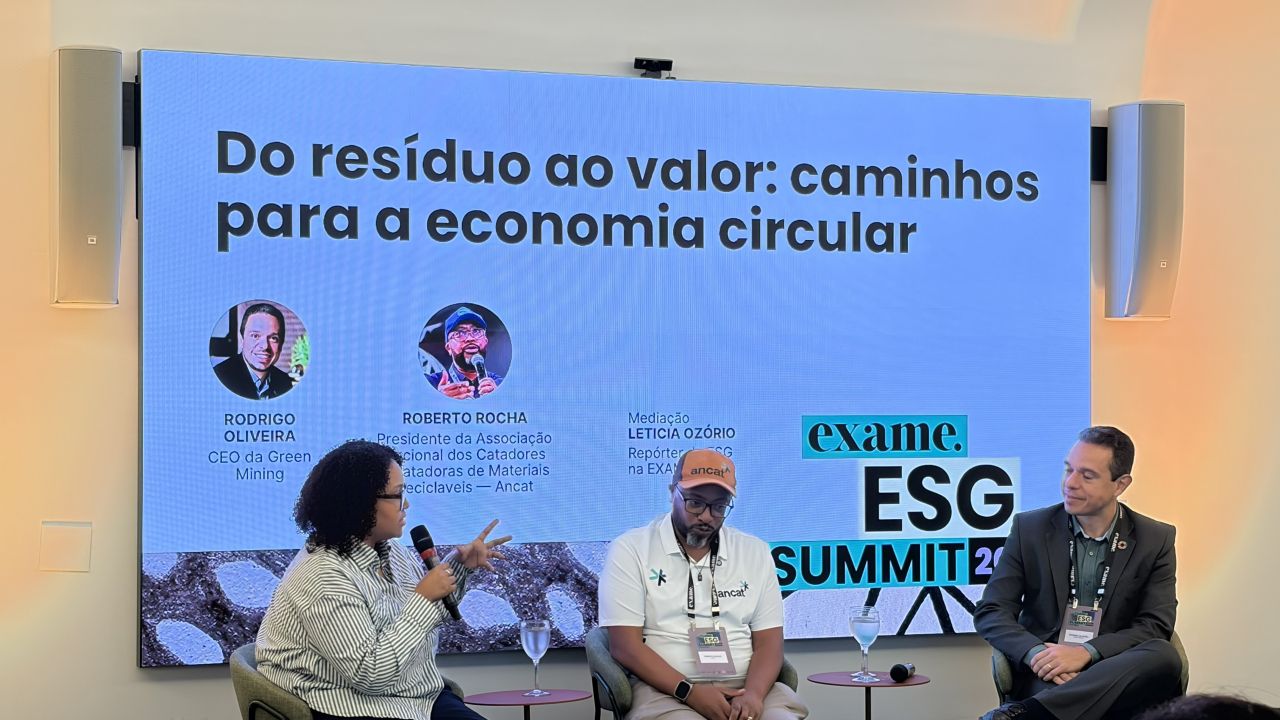
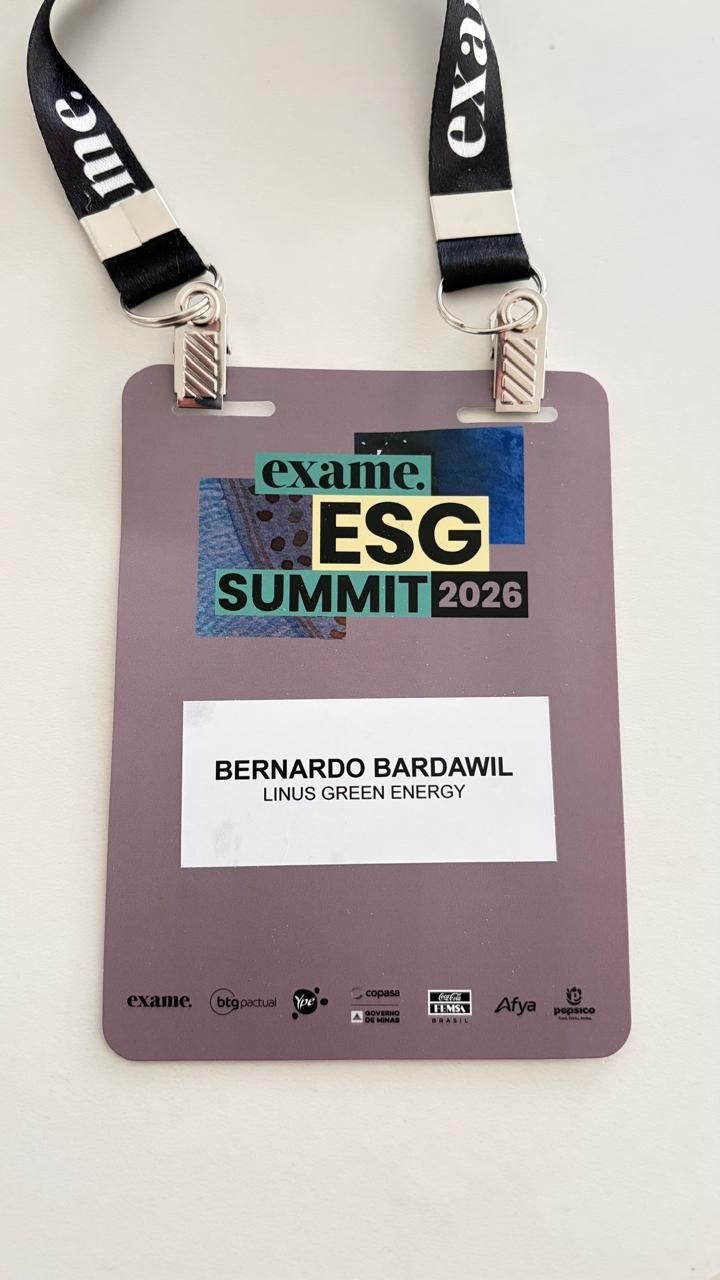
I was at EXAME's ESG Summit 2026. I left with a conclusion that does not fit in a reputation report.

Ypê did not put R$ 250 million into renewable energy for image. It did it because the numbers worked: the packaging that weighed 23 grams dropped to under 11. Sustainability that became operational efficiency, not a committee agenda.

Alexandre Kalache was harsher: life expectancy jumped from 46 to 77 years, and by 2031 Brazil will have more elderly people than children. Longevity did not ask permission to arrive.

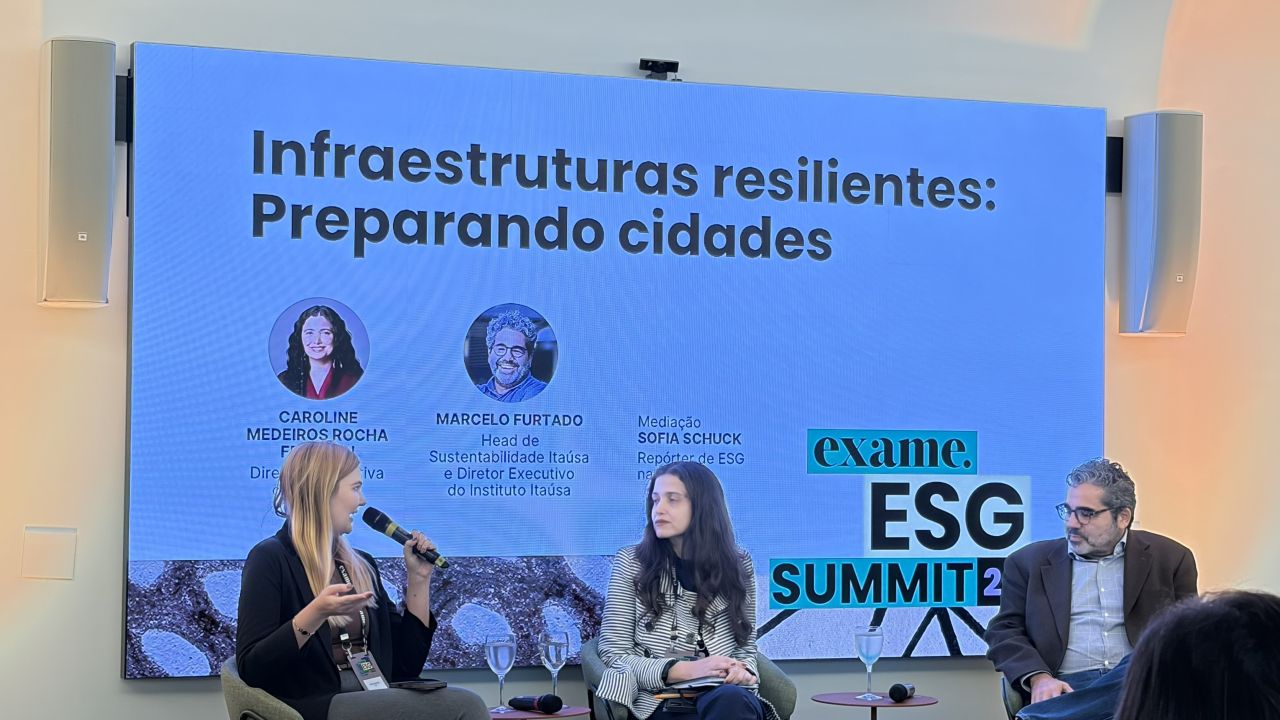
The sentence that stayed came from a panel on resilience: if you do not look through the ESG lens, look through the business lens, does your company exist five years from now?

That question is not about values. It is about survival.

Those who treated these agendas as a recommendation postponed. Those who treated them as a decision are already harvesting margin.

On the Board, I see the same mechanism: clarity that turns into postponement. Every business transformation agenda that does not become deliberation becomes silent cost. Postponing executive alignment for the sake of comfortable consensus erodes cash in the medium term.

Sustainability without governance becomes a campaign. Governance without sustainability becomes well-managed delay.

Post page · Comment on LinkedIn

Jun 1, 2026

A decision can be advised. Its consequence cannot

A decision can be advised. Its consequence cannot.

That is the point many people only understand when they reach the main chair.

While the decision is still under debate, everyone weighs in: Board Members, partners, mentors, specialists, friends and well-meaning people. But when the decision produces an effect on cash, people, reputation, growth and the future, responsibility goes back to a single person.

That is where the loneliness of power is born.

Not as drama. As structure.

I published a new version of my article on this topic because the first one still tried to soften a truth that needs no comfort: leading requires listening, but it also requires the ability to carry the final consequence alone.

Post page · Comment on LinkedIn

May 13, 2026

Positioning is what people say about you behind the scenes

image 1/6image 2/6image 3/6image 4/6image 5/6image 6/6
1 / 6

Positioning is not what you post. It is what people say about you behind the scenes.

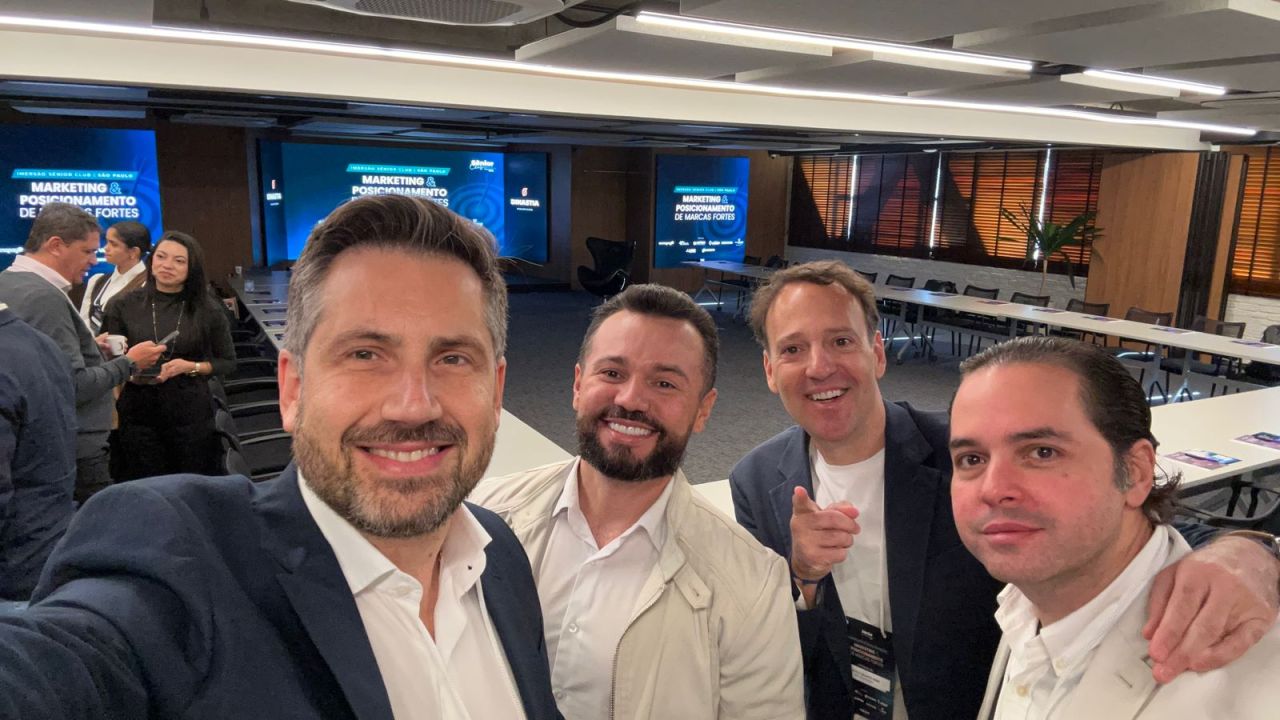
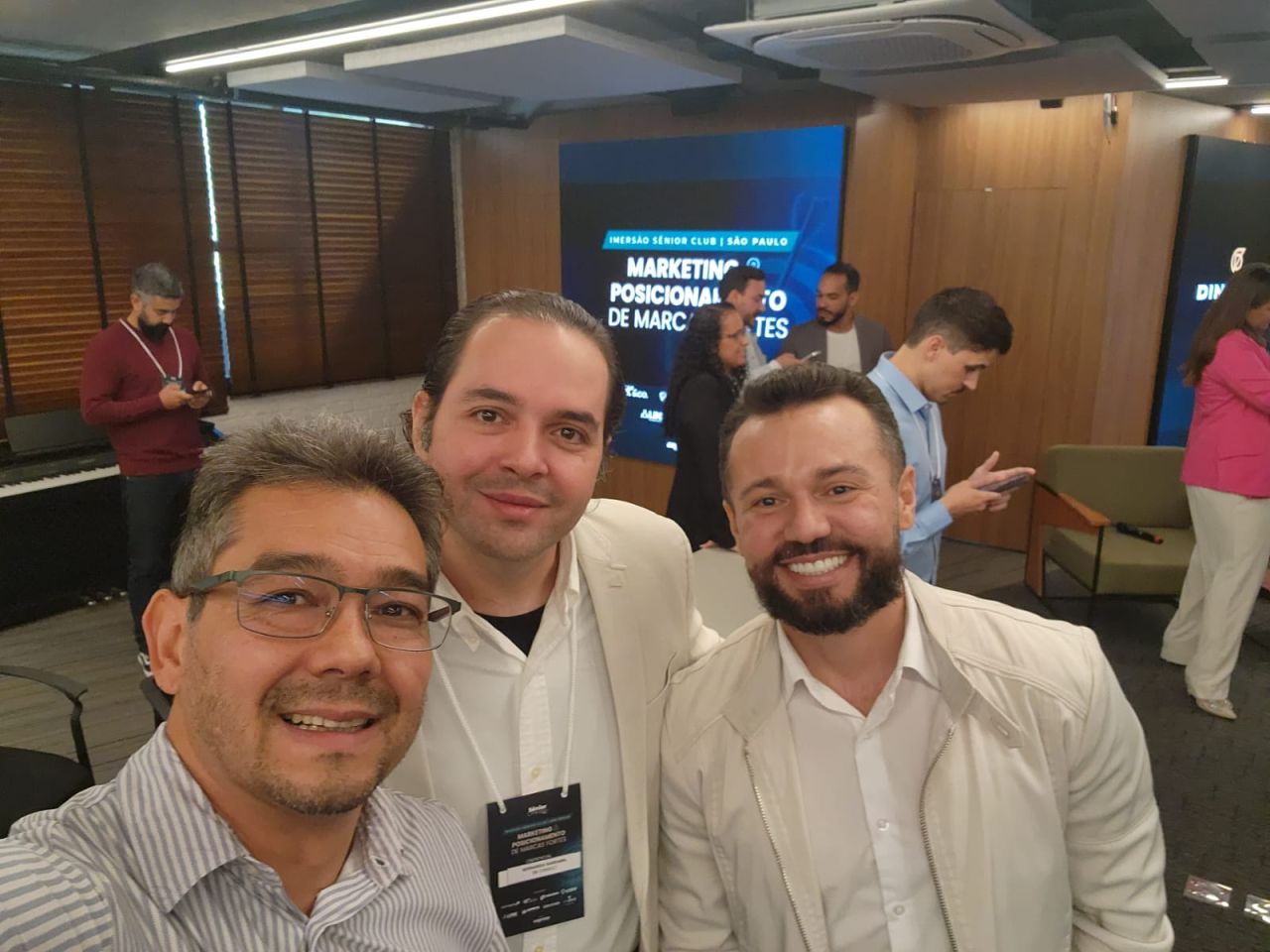
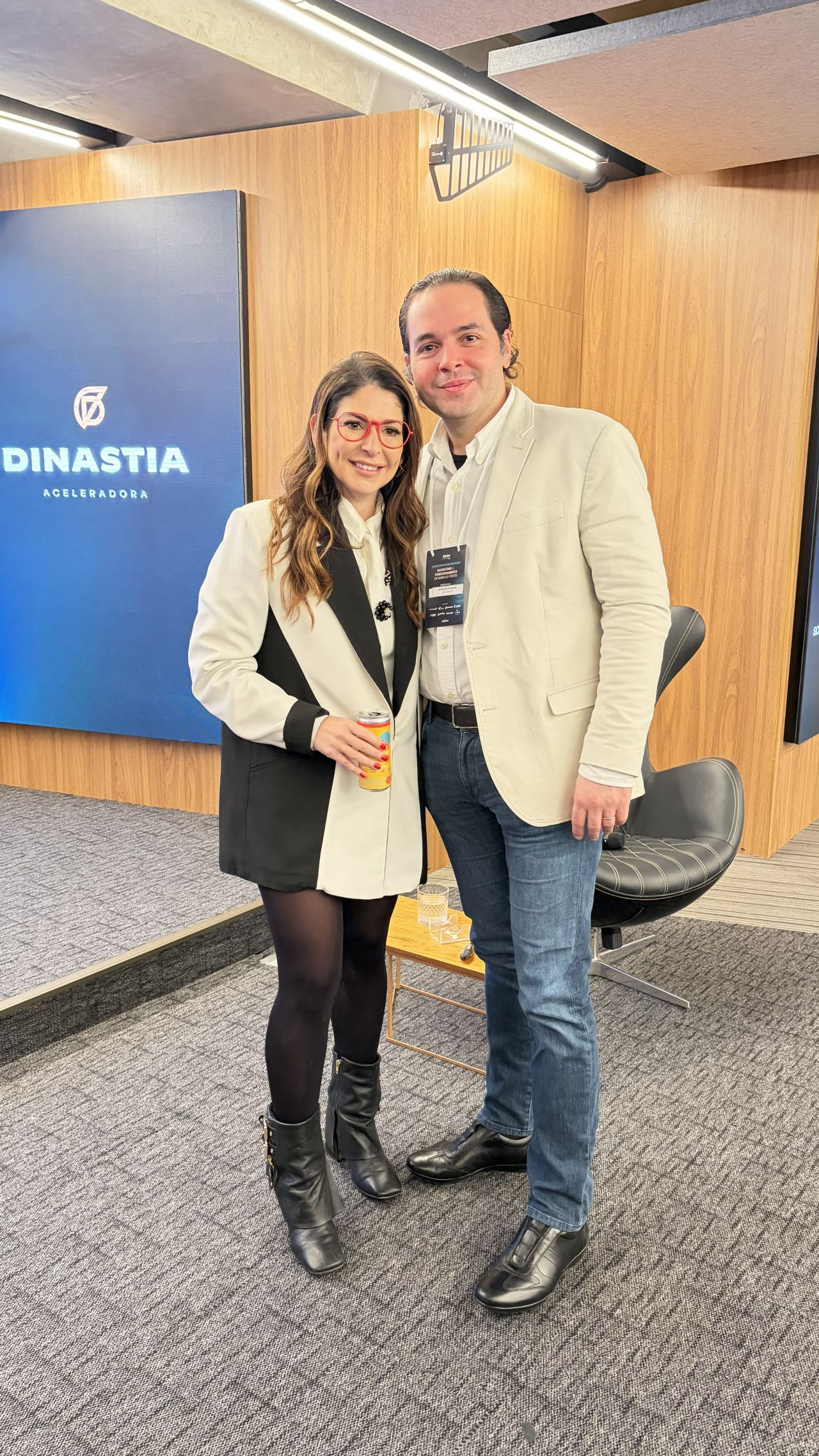
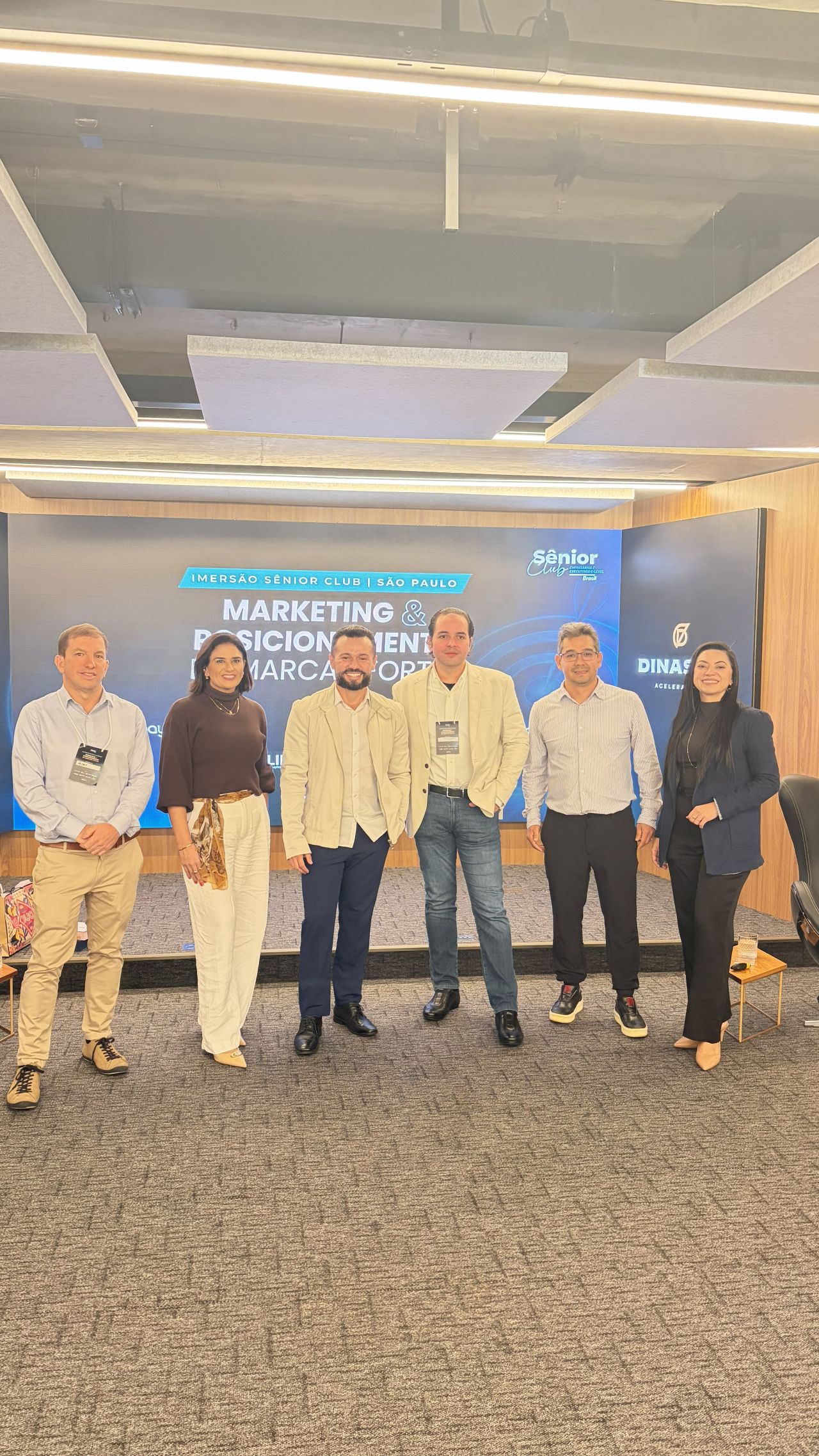
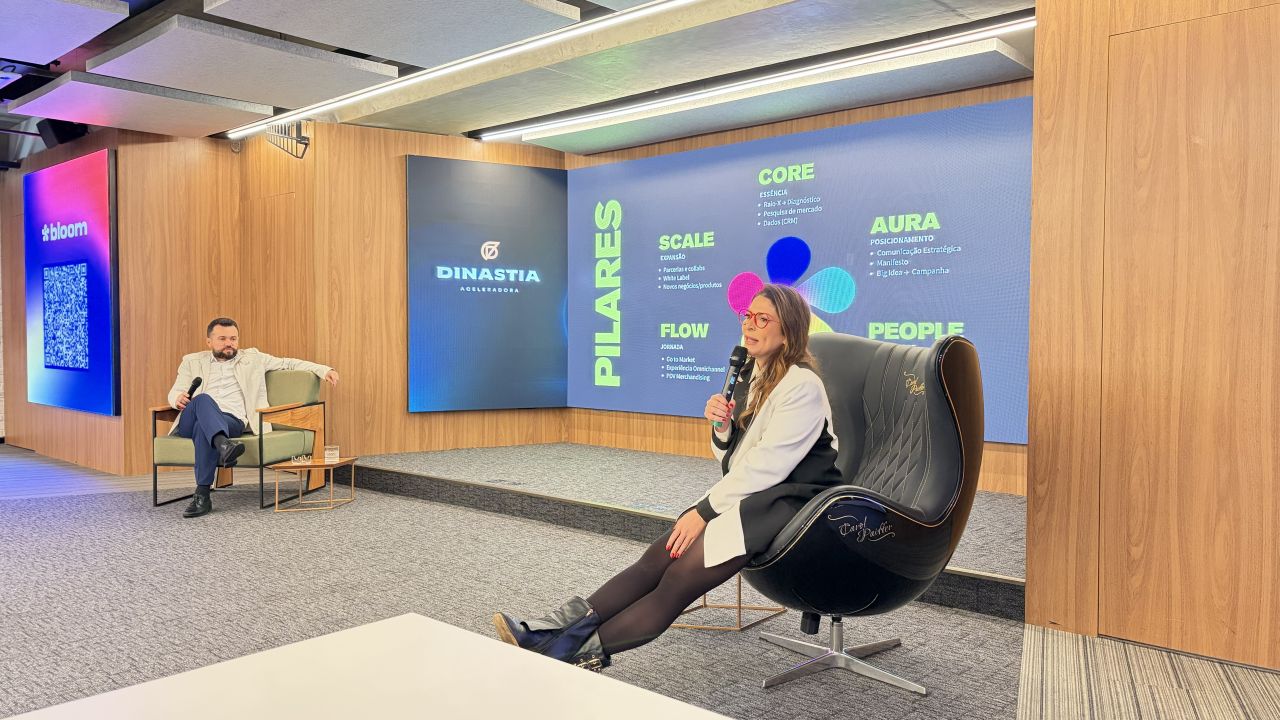
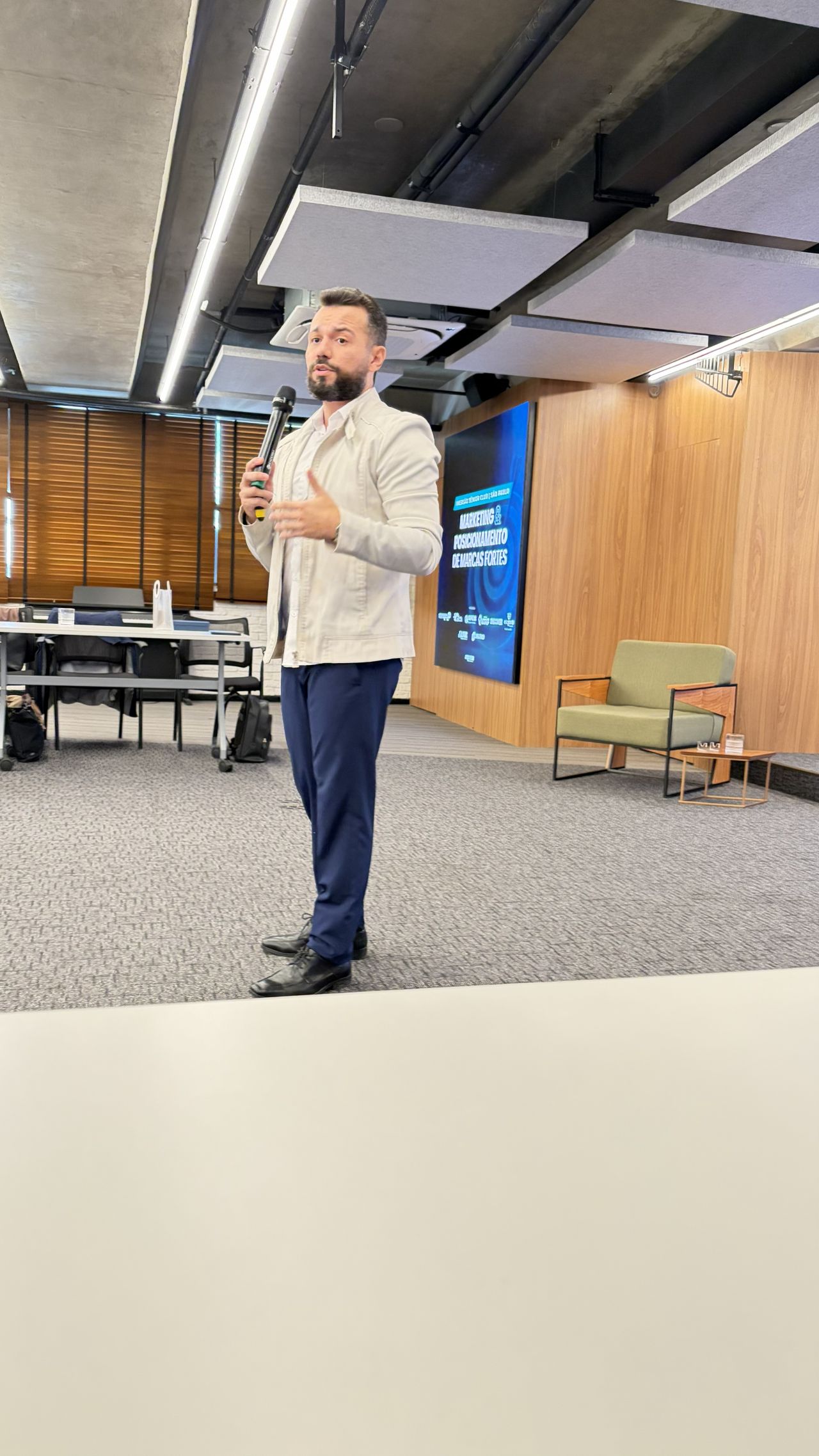
Today I was at the Sênior Club Brasil Immersion, at Dinastia Hub.

Carol Paiffer spent three hours dismantling the idea that positioning is digital presence.

The sentence that stayed:

"Quantity of networking does not matter. What matters is the quality of who remembers you, and for what reason."

She was direct: over 20 years she filled eight folders of business cards. She does not remember most of them. Not because she forgot, but because those connections were never real. They were volume without intention.

What builds real positioning is not the event you attend. It is the deliberate choice of what you turn down.

Carol chose events that could not contaminate her brand. Not because she had no offers, she had many. But because positioning is protected by what you reject, not by what you accept.

That weighs differently coming from someone who was a Shark for seven seasons, took a company public at 30 and built an ecosystem of 115 invested companies.

A company without clear positioning spends more on marketing, converts less and talks to the wrong customer.

It does not lose to the competitor. It loses to its own inertia.

In the afternoon, a visit to G4 Club. What you see of an operation at that scale from the inside does not fit in a case study. It fits in a decision.

Thank you to Carlos Mororó and Grupo Camarmo for building an environment where this level of conversation happens among people who have already decided to build, and are still building.

The right environment does not inspire. It demands.

Post page · Comment on LinkedIn

May 11, 2026

Brazil holds what the world needs

Brazil holds what the world needs. And gives it away for favors.

92% of the world's niobium. 88% renewable energy. The largest freshwater reserve on the planet. 188 million connected users. The world's largest exporter of soy, coffee and beef.

That is not potential. That is position.

And yet the decisions about these assets are not in the hands of those who produce, who build businesses, who absorb the cost of postponement.

It is not a lack of resources. It is not a lack of information. All these figures are public.

It is a lack of decision. And the cost has already started.

Post page · Comment on LinkedIn

Apr 13, 2026

When the executive sees it and stays silent

When the executive sees the problem and stays silent, the cost stops being operational and becomes structural.

The problem was seen. The diagnosis exists. The meeting happened.

Competence was not missing. What was missing was sustaining the decision that was already clear.

• The process eroding margin stays intact because nobody signed the change.
• The misaligned executive stays because confrontation was traded for context.
• The operation holding back growth continues because the cost has not yet appeared on the balance sheet.

The executive's silence is not neutrality. It is a choice. The cost was not avoided. It was only pushed forward, and it has already come back bigger.

It is no longer a risk. It is already in the results.

You are not accumulating risk. You are carrying a decision you chose not to make. And it is already in the results.

Post page · Comment on LinkedIn

Apr 4, 2026

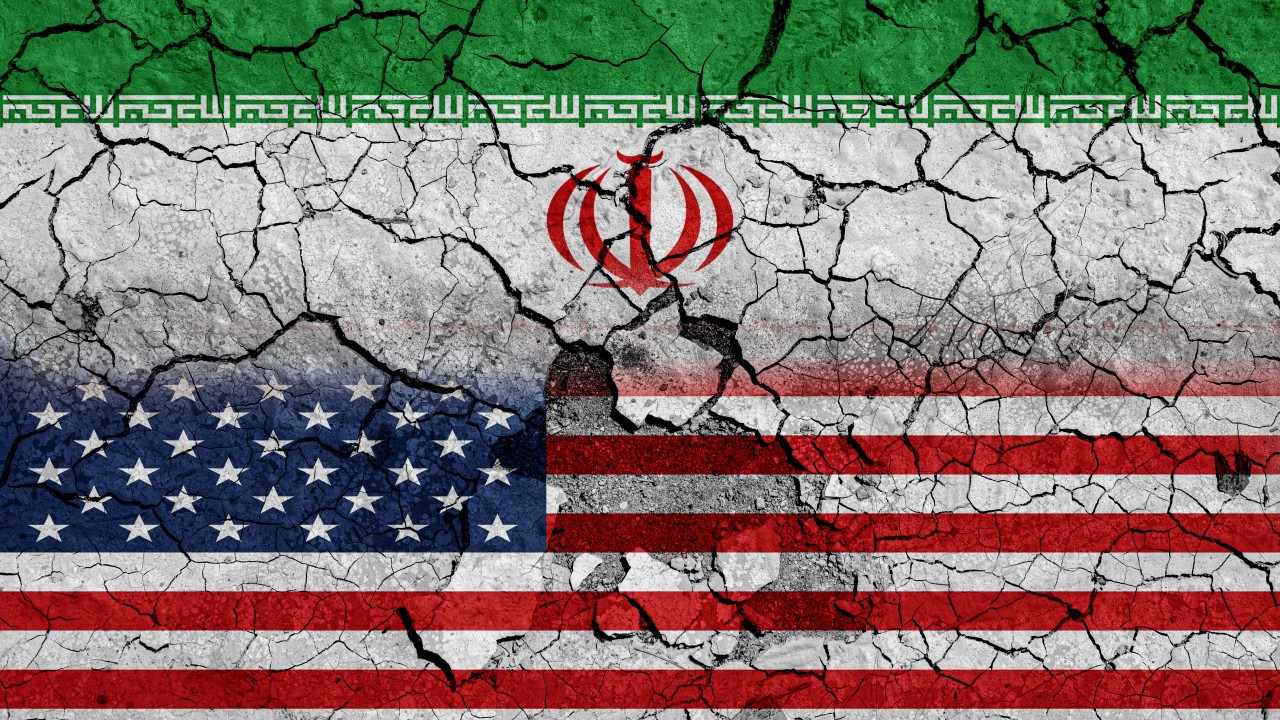
The problem is not the war. It is the lag in decision rooms

Comment on the World Economic Forum chief economists' briefing.

One month of war in Iran. The World Economic Forum has already brought the chief economists of Trafigura, Standard Chartered, FAO and Allianz to the same table to discuss what is coming.

The topic was not geopolitics. It was a commodity collapse, global food pressure and the realignment of energy routes, all at once.

When FAO and Allianz are in the same room with urgency, the signal is not of a passing crisis.

The world faces one of the most severe energy and commodity shocks in decades. And most companies are still operating on 2023 assumptions.

That is the real problem. Not the war. The lag between what is happening and what is being modeled in decision rooms.

Post page · Comment on LinkedIn

Apr 4, 2026

You do not choose to become a Board Member

Comment on clapesme, Robinson Felix's company, which I supported from the start.

You do not choose to become a Board Member.
You are placed in that position when someone decides to truly grow.

I was there at the beginning of clapesme.
I helped organize what was still only intention.
I supported Robinson Felix in decisions that had no name yet, only risk.

And that is where most people get it wrong:
They think the Board is about giving opinions.
It is not.

It is about sustaining decisions when there is no validation yet.

Today, seeing Robinson soar is no surprise.
It is the consequence of someone who had the courage to decide before being ready.

I am proud to have been "forced" into that place.
Because that is where the game changes, not on stage, but in the building.

If you still treat the Board as conversation, you are missing the point.
A real Board is where hard decisions stop being postponed.

Congratulations, my friend.
This is only the beginning, and I intend to be in the front row when your biggest dream becomes inevitable.

Post page · Comment on LinkedIn

Apr 3, 2026

Brazil could become a global data center hub

image 1/9image 2/9image 3/9image 4/9image 5/9image 6/9image 7/9image 8/9image 9/9
1 / 9

Brazil could become a global data center hub.

And most will watch it happen.

Because it is not a lack of opportunity.

It is an inability to decide.

Everyone already understands the movement:
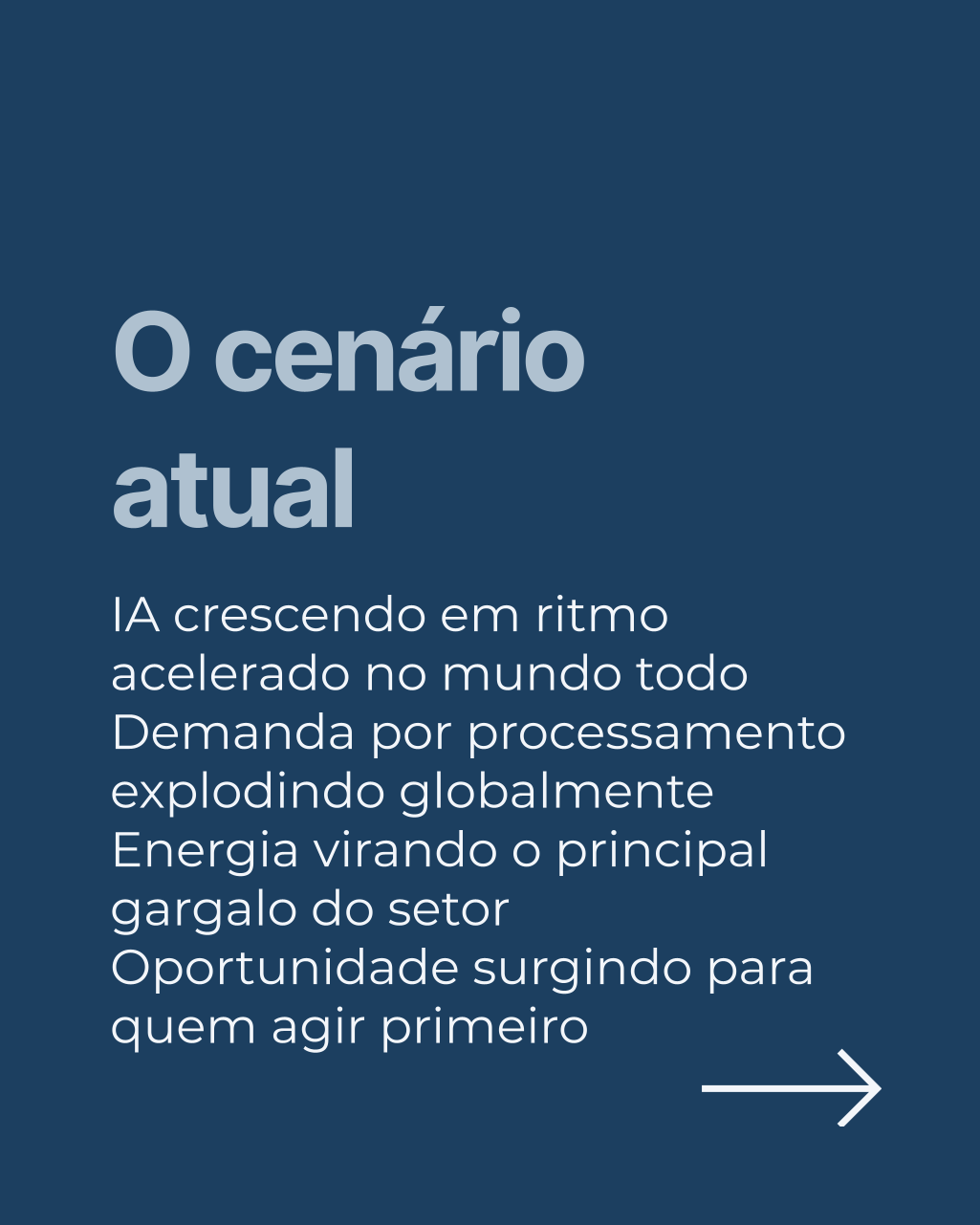
AI growing
demand for processing exploding
energy as the critical factor

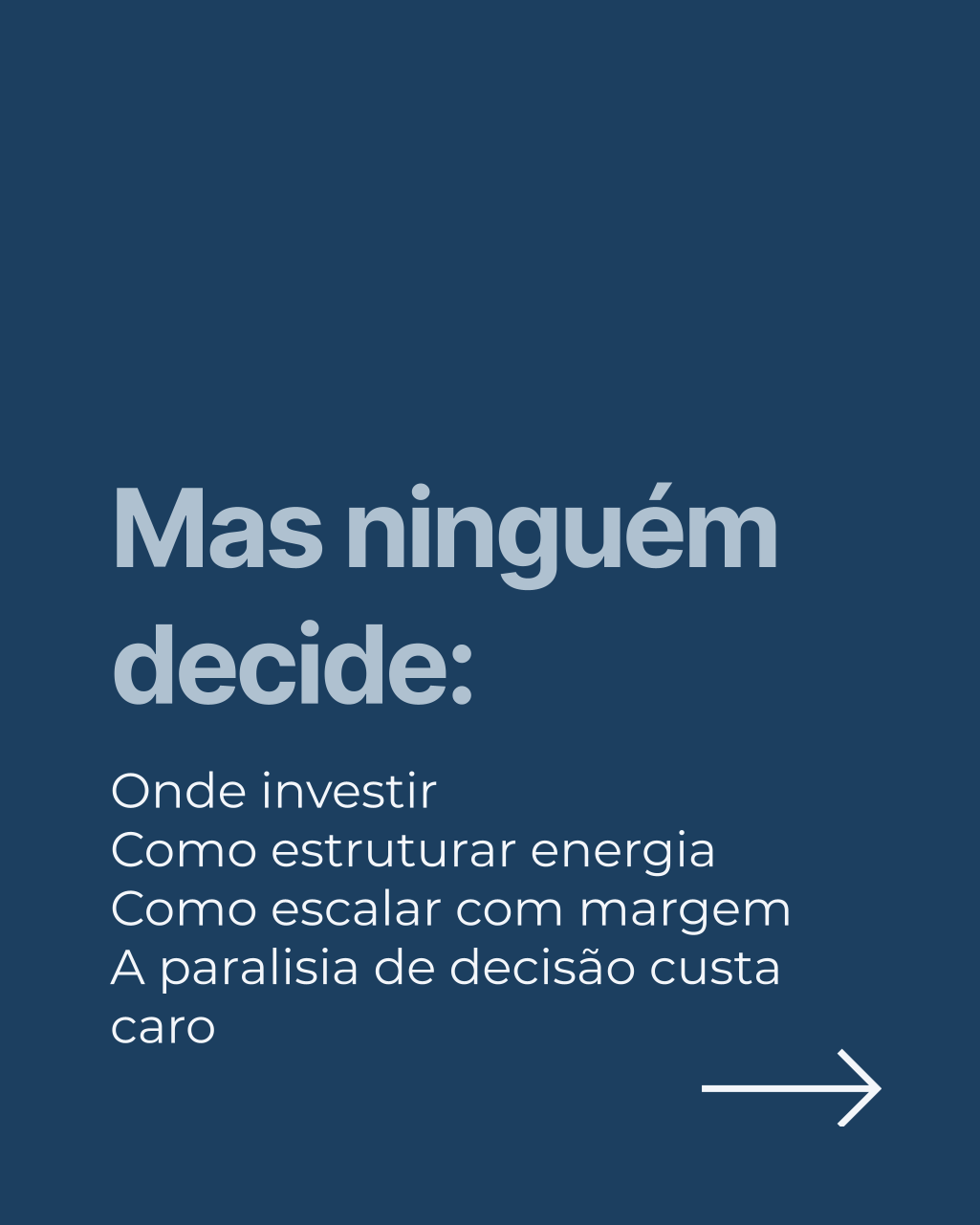
But almost nobody is prepared to decide:
• where to really invest
• how to secure energy with predictability
• how to scale without destroying margin
• how to structure operations to support it

The market does not reward those who understand.

It rewards those who decide first.

And whoever decides wrong pays dearly.

If you are watching this movement and have not yet structured how to enter, you are already late.
Post page · Comment on LinkedIn

Mar 17, 2026

The innovation of the mall service shop was in the cost

A car service shop inside a mall may not look innovative in itself, but the real innovation is in cost reduction.

Operating in a mall, running costs can be drastically lower than in a street shop. That comes from not needing restrooms, waiting areas, internet for customers or a private parking lot, plus the security the mall already provides.

These factors, which may look small one by one, add up to significant savings and hit profitability directly.

Post page · Comment on LinkedIn

Feb 25, 2026

Executing well is no longer an edge. Thinking better is

Why do so many companies work hard and still go under? Because they execute the obvious well, but still do not think differently.

Executing well is no longer an edge.
Thinking better is.

We live in an era where companies compete on speed but lose on clarity. Where decisions are made too fast... and reflected on too late.

My path has always been where few like to stay: building structures, creating new business fronts and anticipating moves that are not yet obvious to the market.

Now that experience comes out from behind the scenes. I am also taking public spaces in podcasts, talks and institutional events to share what really happens when strategy meets pressure, when innovation meets culture, and when growth meets limits.

I do not talk theory. I talk about real decisions, complex environments and markets that do not forgive amateurism.

I believe that:
• companies go under from lack of vision, not of effort
• leaders get it wrong from too much noise, not too little data
• markets change when someone has the courage to think differently first.

My commitment is to provoke better questions, broaden repertoires and help organizations and professionals cross cycles of transformation with strategic intelligence, whether in energy, technology or services.

If your company or event is looking for lucidity, direction and future, send me a message. I am open to the conversation.
We keep building.
Now also through the spoken word, count on me.

Invitations: direct message or LinkedIn.

Post page · Comment on LinkedIn

Did one of these posts describe your company?