Posts

Every week, Tuesday to Friday.

Cash, partners and succession, in the companies of those who sign. The same posts as on LinkedIn, in full, with the image or the carousel, translated from Portuguese.

Follow on LinkedIn

Oct 30, 2026

Minutes No. 047/2026

Minutes No. 047/2026.

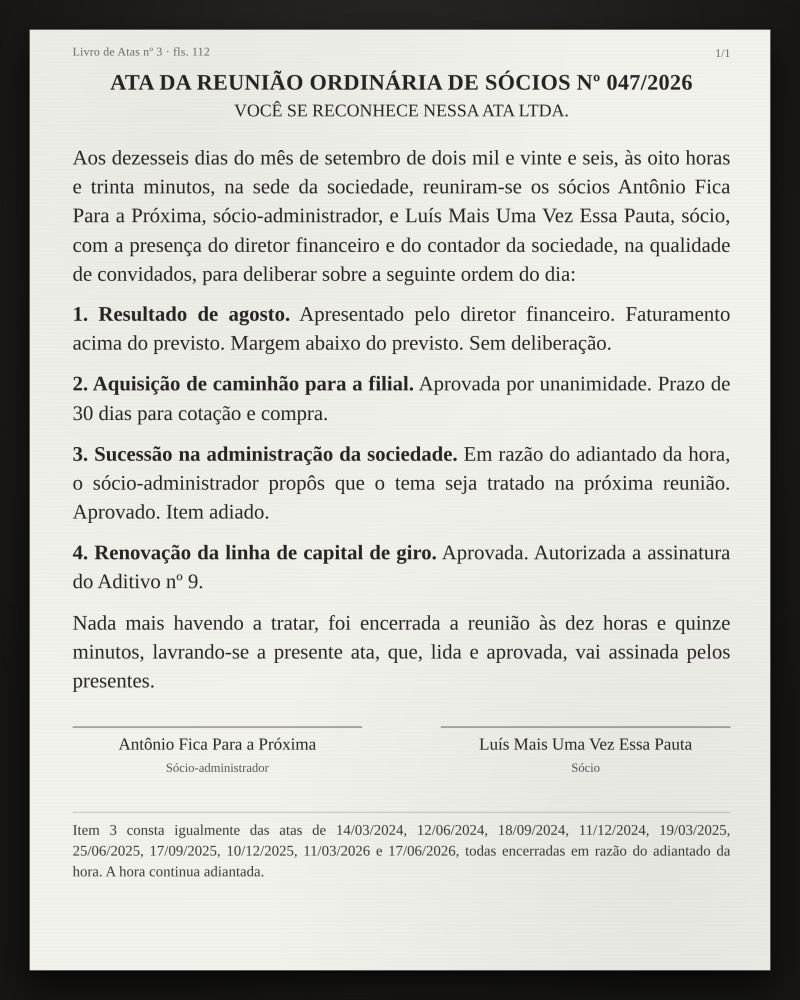
Transcript of the published image:

MINUTES OF THE ORDINARY PARTNERS' MEETING No. 047/2026. YOU RECOGNIZE YOURSELF IN THESE MINUTES LTD.

On the sixteenth day of September, two thousand and twenty-six, at eight thirty in the morning, at the company's headquarters, the partners Antônio Leave It For Next Time, managing partner, and Luís This Item Again, partner, met in the presence of the finance director and the company's accountant, as guests, to deliberate on the following agenda:

1. August results. Presented by the finance director. Revenue above forecast. Margin below forecast. No resolution.

2. Purchase of a truck for the branch. Approved unanimously. 30 days for quotes and purchase.

3. Succession in the management of the company. Given the late hour, the managing partner proposed that the matter be addressed at the next meeting. Approved. Item postponed.

4. Renewal of the working capital credit line. Approved. Signature of Amendment No. 9 authorized.

There being no further business, the meeting was adjourned at ten fifteen, and these minutes were drawn up, read, approved and signed by those present.

Item 3 also appears in the minutes of 03/14/2024, 06/12/2024, 09/18/2024, 12/11/2024, 03/19/2025, 06/25/2025, 09/17/2025, 12/10/2025, 03/11/2026 and 06/17/2026, all adjourned due to the late hour. The hour is still late.

Post page · Comment on LinkedIn

Oct 29, 2026

The risk is too high

I once wanted to bet on something and the conversation ended in one sentence: "the risk is too high."

It was true. The technology was not ready yet, the concept was abstract and there was no way to measure the risk. Nobody bought the bet.

Today what was abstract is working, and the same bet would have paid off.

I do not tell this because I was right. Being right after the numbers close is easy, and those who said no were not wrong to be afraid.

The problem was something else: the sentence ended the conversation. "The risk is high" answered whether the whole bet was worth it, when the useful question was the smallest size of it that lets you learn without breaking.

Waiting is also a bet, only without a number and without an owner.

In an owner-led company, the same sentence stalls expansion, the successor and the new partner. And it tends to stall everything at once, when it could have been decided in parts.

That is where I work with the owner: I separate what can be tested small from what needs to wait, and hand back the decision with a name and a date.

Which bet in your company is stalled whole, when it could start small?

Post page · Comment on LinkedIn

Oct 28, 2026

Two decision-makers in the same room form a queue

Two decision-makers in the same room do not form a partnership. They form a queue.

I saw this in a diagnostic at a family business. The founder in charge, his son inside the operation for years, with no room to change anything. From the outside, it looked like a family conflict: a father and son who do not get along.

It was not. It was overlapping authority. Two people with the power to decide on the same thing, in the same space, at the same time. In that arrangement no agreement holds, because every decision by one undermines the other.

What solves it is not therapy or an alignment meeting. It is separating the arenas: each one owns a front, and the two decide together only on what is truly shared, product, price and expansion.

The founder put it in place on his own, his way, in about a year. It still works today.

A strong family business is not the one that avoids conflict. It is the one that builds a structure to decide in spite of it.

If in your company two people can say yes to the same thing, count how many decisions are waiting for one of them to give up.

Post page · Comment on LinkedIn

Oct 27, 2026

We will decide after the election

The sentence I heard most this year, at owners' tables:

"we will decide after the election."

The election ended on Sunday.

Whatever your vote, your company's queue of decisions is exactly where it was.

The investment left in the drawer.
The conversation with the partner nobody scheduled.
The successor who has been waiting years for a date.
The credit line renewed once again so the structure would not be touched.

None of these decisions depended on Brasília. They depended on an alibi, and the alibi is over.

The uncertainty is not over. Interest rates, the exchange rate and fiscal rules will keep moving, as they always have. What is over is the excuse to wait for them.

I have seen it from the inside: those who get through a political cycle well are not the ones who called the result. They are the ones who decided what was in their own hands while everyone else waited.

Sunday defined the government. What your company does in 2027 is defined at your table.

A postponed decision is not prudence. It is accumulated cost.

My work starts in that queue: sitting with the owner, putting a number on each month of waiting and handing back the decisions with names and dates.

Which decision did you push to after Sunday?

Post page · Comment on LinkedIn

Oct 23, 2026

The decision everyone already knows you are postponing

I have spent the last few weeks more at owners' tables than here.

Almost every conversation starts with money. Tight cash, the bank pressing, a partner who wants out, a son or daughter who wants in.

Almost none of them ends with money.

They end with a decision that has been stalled for months. Everyone in the company knows which one it is. The owner knows too. What is missing is not information. It is someone from outside, with no seat to lose, saying how much each month of delay costs.

That is the work. Sitting with the owner, putting a number on the delay and handing back the decision agenda with names and dates.

The rhythm here comes back. What changes is the subject: cash, partners and succession, in the companies of those who sign.

A question for the weekend:

What is the decision everyone in your company already knows you are postponing?

Post page · Comment on LinkedIn

Oct 13, 2026

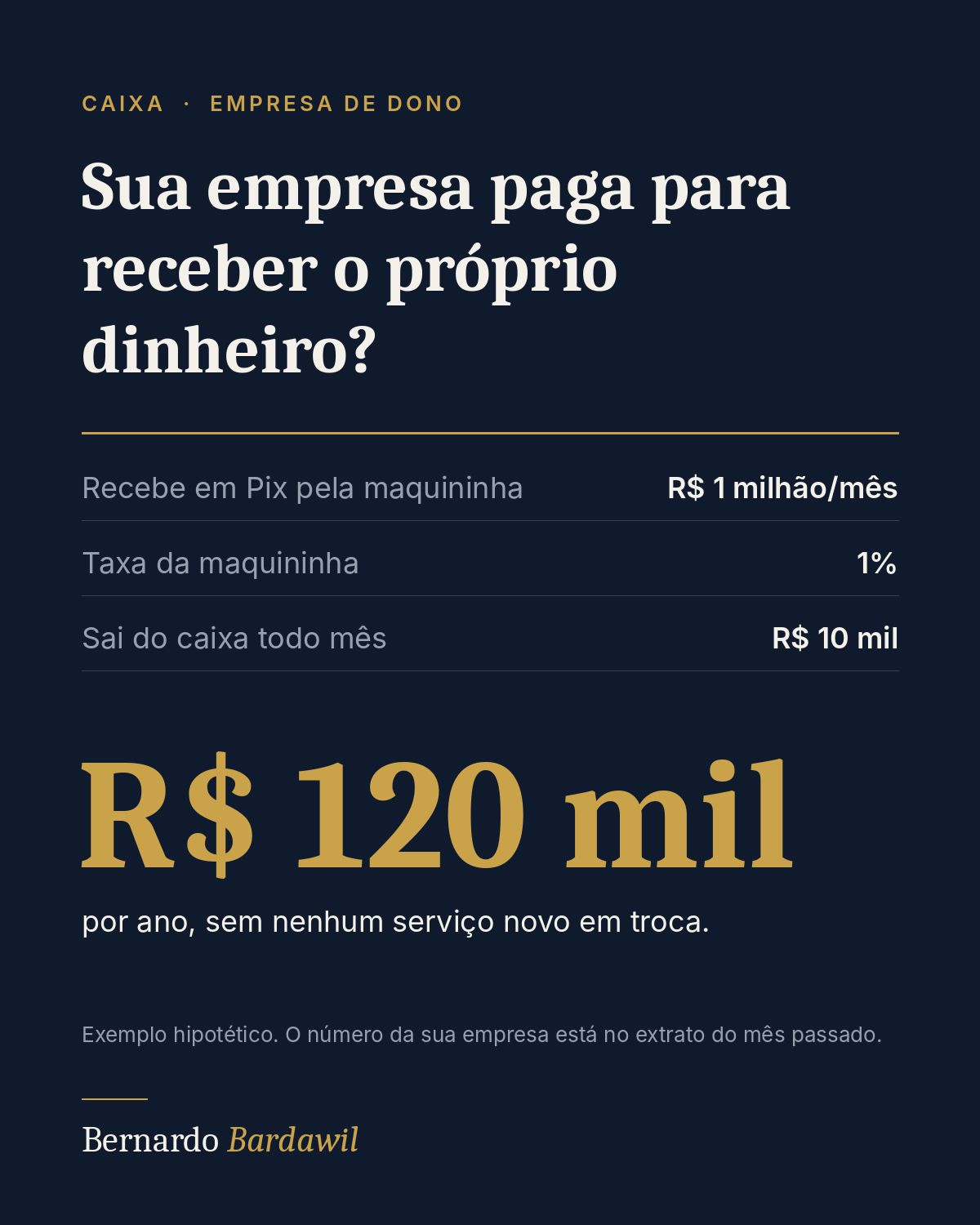
Your company is paying to receive its own money

Your company is paying to receive its own money if:

• the customer pays by Pix, Brazil's instant payment system, on the card machine, and the machine keeps a percentage;
• the bank slip carries a Pix QR Code, and the fee charged is the same as for the barcode;
• the bank charges the company to receive Pix, when there are banks that charge nothing;
• someone justified all of this with "it's because of the integration with the system".

Do a simple calculation, with hypothetical numbers. A store that receives R$ 1 million a month in Pix through the card machine and pays a 1% fee hands over R$ 10 thousand a month. That is R$ 120 thousand a year leaving cash with no new service in return.

Your company's number is in last month's bank statement. It takes ten minutes: add up the receiving fees and see how much of them falls on money that could arrive for free.

Integration with the system is the excuse I hear most. Today there are platforms that integrate at no cost. When the fee stays, it is almost always because nobody stopped to look.

If you do the math and the number bothers you, send me a message. That is the first leak I look for when I walk into a company with tight cash.

Post page · Comment on LinkedIn

Oct 11, 2026

Reconnecting with retail at Connect Talk

Comment on the invitation from Connect Executive Hub and ESPM to the Connect Talk on consumer transformation.

Thank you, Silvana Pampu, and everyone at Connect Executive Hub, for the invitation to hear about retail, which is my passion. After more than 20 years in it, you never forget your first store or your farewell. It was good to reconnect with a market I took part in for so long, and to know that being on the other side of the operation today, supporting companies on this journey, also makes me very proud.

Post page · Comment on LinkedIn

Oct 11, 2026

AI has become an infrastructure problem

This week I was at Futurecom at the invitation of Lamerica Tech and Jackie Chen. Thank you for the trust. Standing alongside the people building infrastructure changes the quality of the questions we bring back to our companies.

My takeaway from the event, for those of us who sit on Boards:

The conversation about artificial intelligence is no longer about software. It is about what sustains the software: connectivity, data centers, energy, and security. AI has become an infrastructure problem.

And infrastructure has a trait Boards tend to underestimate: timelines are long, contracts are long, and so are the mistakes.

The question for the next Board meeting is not "which AI tool should we adopt?" It is "can our foundation support the strategy we are approving?"

Those who answer it first capture the gains. Those who answer it later pay the cost of adapting.

TI Inside's coverage, in Portuguese, sums up this year's agenda well: https://lnkd.in/d9C2Ah5S

Post page · Comment on LinkedIn

Oct 5, 2026

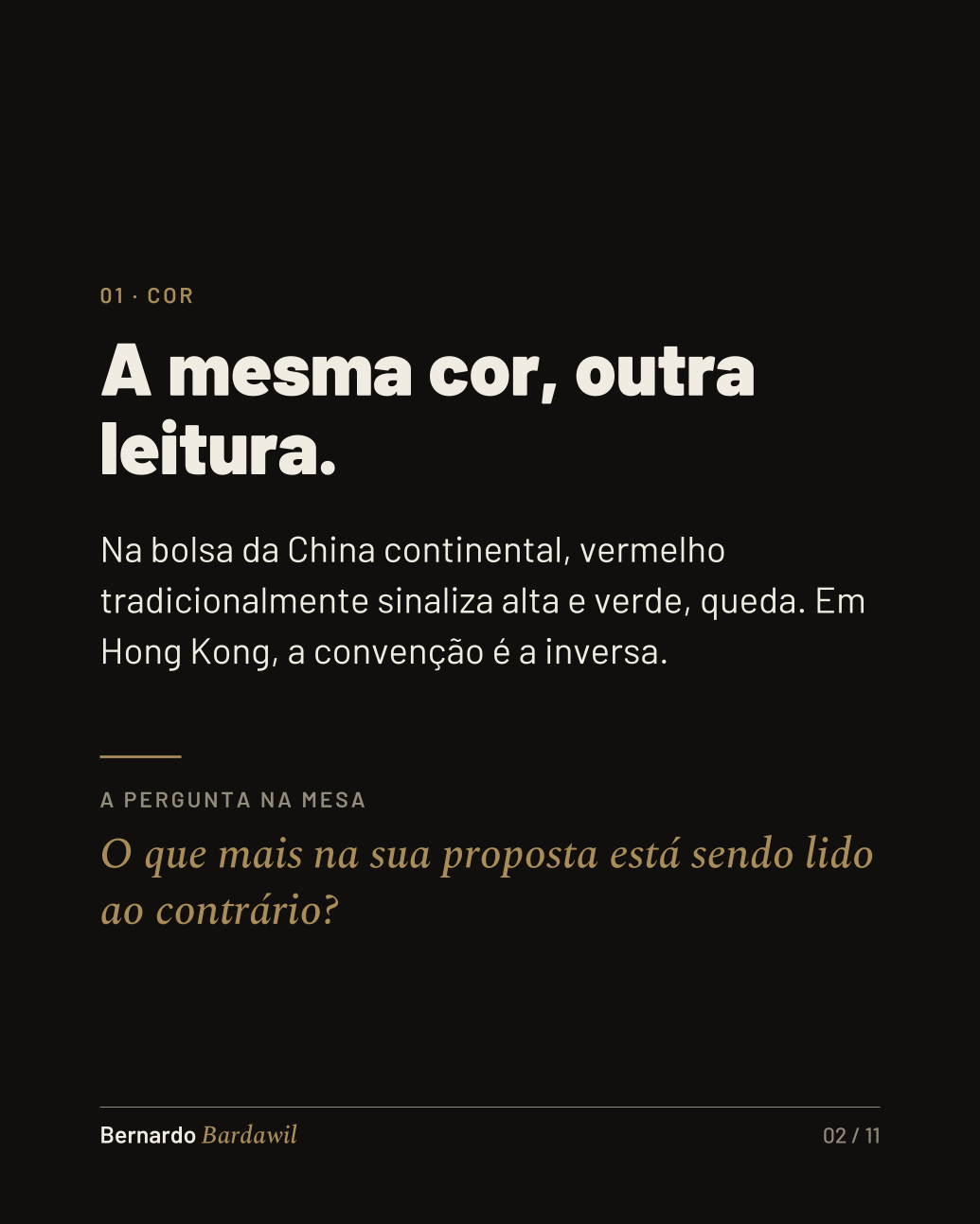
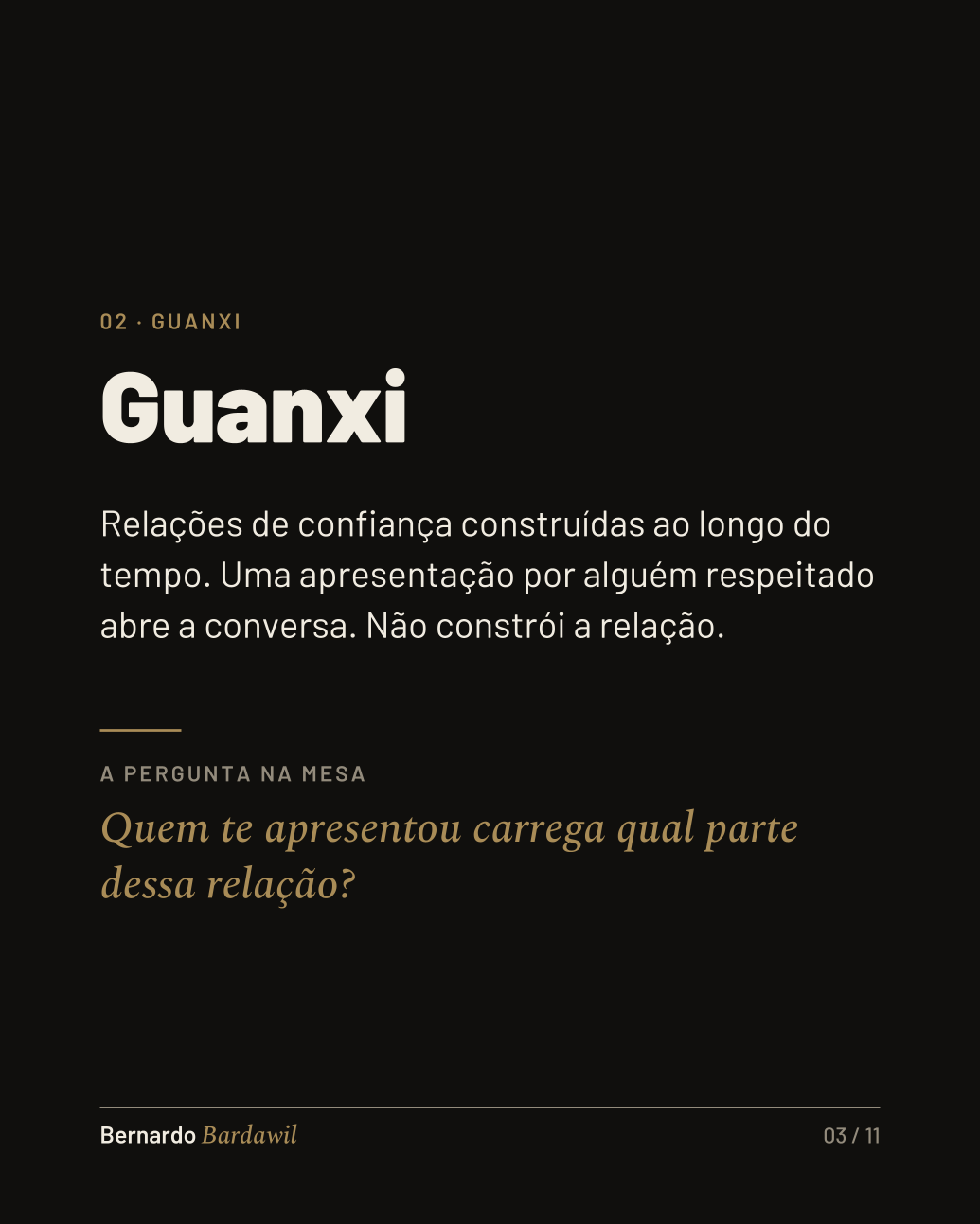
Translating the proposal into Mandarin does not change the language you are negotiating in

image 1/11image 2/11image 3/11image 4/11image 5/11image 6/11image 7/11image 8/11image 9/11image 10/11image 11/11
1 / 11

Translating the proposal into Mandarin does not change the language you are negotiating in.

I spent ten years negotiating with China and South Korea. What stays with you is not the vocabulary. It is the layers.

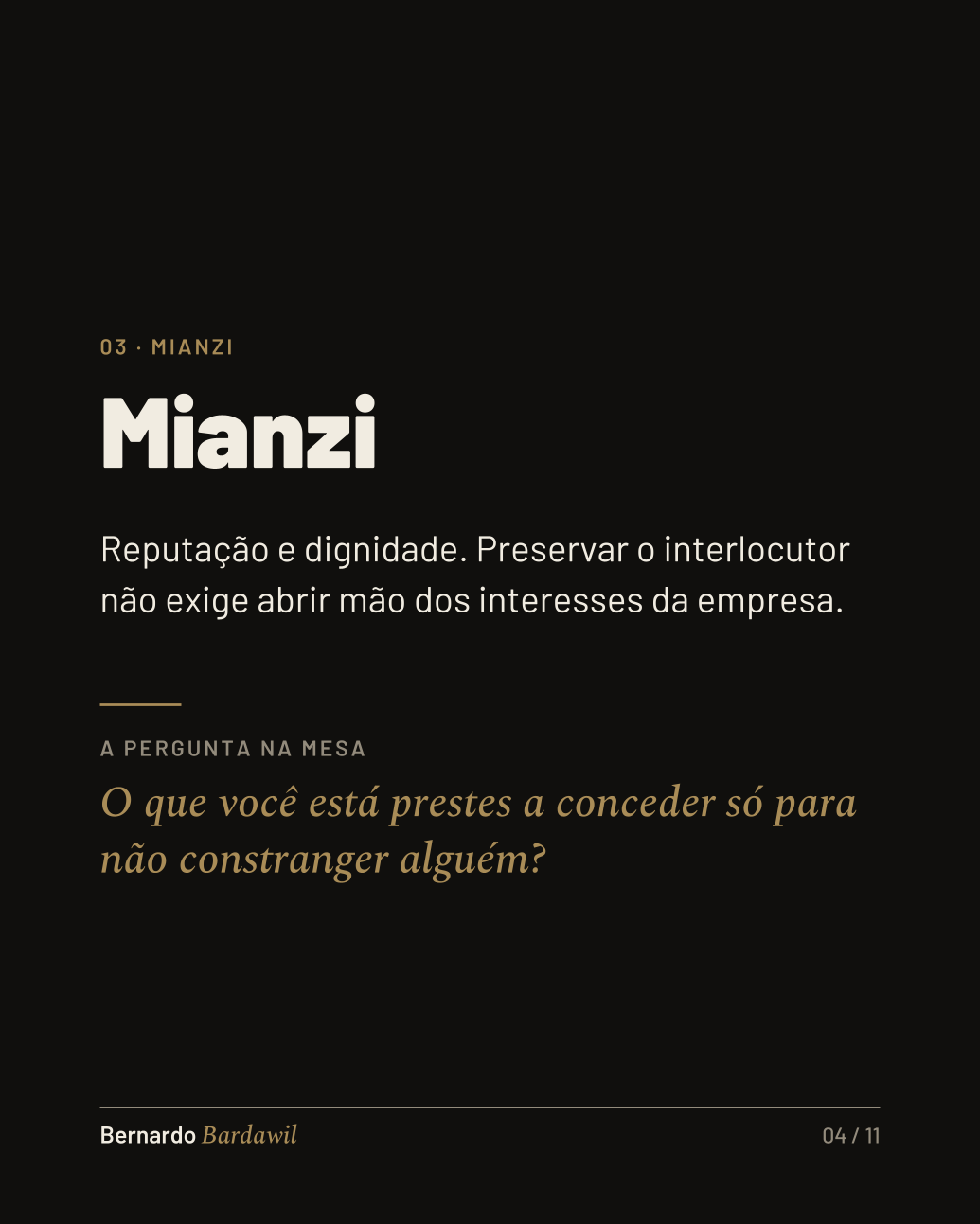
Guanxi, mianzi, hierarchy. Any guide explains the three terms. None explains what they do to price, timeline and signature.

A nod at the table may mean "I understood." Whoever reads it as "I agree" finds out the difference when the contract comes back revised. The person who approves the deal is not always the person in front of you, and a concession made to preserve someone's face rarely shows up in the minutes as a concession. It shows up as a clause.

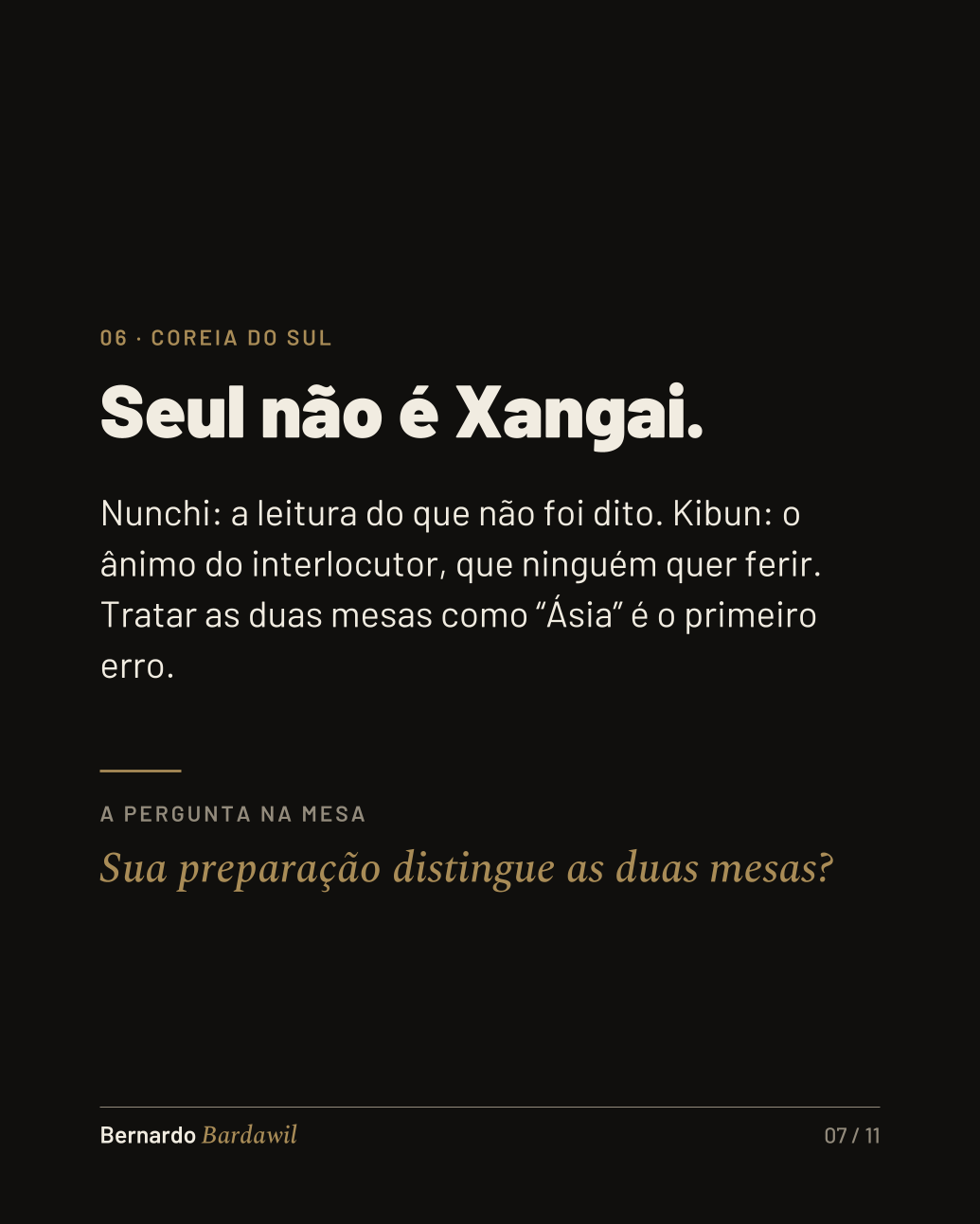
Seoul is not Shanghai. Whoever treats both tables as "Asia" has already made the first misreading.

Culture is not meeting etiquette. It is a negotiation variable.

Nor is it an excuse to skip verifying the partner. Relationship and diligence move together, or one of them does not move.

Whoever does this reading beside the leadership does not just sit in on meetings. He says what was conceded without anyone noticing.

The PDF has the codes worth knowing before you sit down at the table.

What can be taught is in the PDF. The rest is read at the table.

Whoever negotiates without this reading has already paid. He just has not received the invoice yet.

Post page · Comment on LinkedIn

Sep 30, 2026

"Let's wait until the election is over"

"Let's wait until the election is over."

It is the most common sentence in owner-led companies this semester. And it looks like prudence.

The first round is on Sunday. If there is a runoff, on the 25th. Then comes the inauguration, in January. Then the first quarter, to see what the new government does. Whoever decided to wait for the election has, in practice, decided to wait until March.

Meanwhile, these stay frozen:
• the investment nobody approves;
• the renegotiation with the bank that was left for later;
• the conversation between partners about who comes in, who leaves and who decides;
• the son or daughter ready to take over a front, who keeps waiting.

None of these decisions depends on who wins on Sunday. The result changes the price of money and the mood of the market. Your company's problem still has the same name in November.

Preparing for what comes next means separating two lists: what truly depends on the result, and what the election is serving as an excuse not to resolve. The second one is usually longer.

Which decision in your company is waiting for the election?

Post page · Comment on LinkedIn

Sep 16, 2026

Brazil passed the law. It has not decided the map

Comment on Einer Lima's post about Redata, Brazil's new data center tax regime, and the 3rd GRI Data Center.

Brazil passed the law. It has not decided the map.

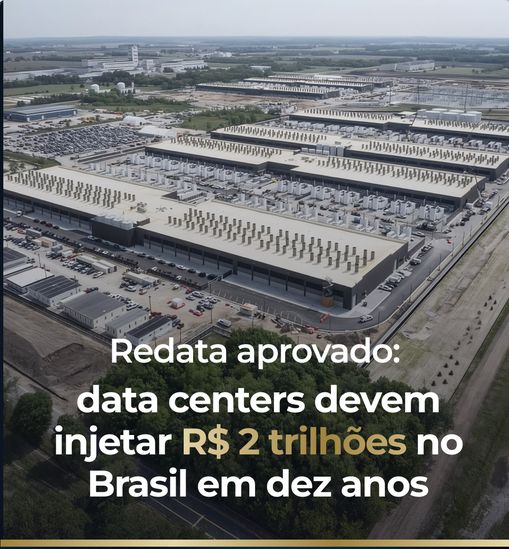
Redata was signed into law on September 15. It is a genuine milestone, and I will not downplay it. For the first time the country treated digital infrastructure as a strategic question rather than an expense.

But look at what the law actually does. It makes the equipment cheaper.

Equipment is the easy part of the problem.

What was left open is larger than what was settled. The definition of which energy qualifies was deferred to regulation that has not been issued. The list of equipment covered by the benefit does not exist yet. The tax that weighs most on this kind of investment is a state tax, and it was not touched: it remains stuck among the states, inside a levy the tax reform will phase out. And most of the federal benefit runs only until December 31 of this year, despite the five-year term the headlines announced.

None of that is the main point.

The main point is that almost no one is discussing where.

A data center is not a building. It is energy, water, land, connectivity and permitting, at the same coordinate, for twenty years. When a company approves billions and only then starts asking where the power will come from, that is not boldness. That is a decision made out of sequence.

The question is not what it costs to build. It is where the project still makes sense in year ten.

Apply criteria instead of preference and the map of Brazil changes shape. Where the energy resource is abundant and proven. Where the land does not compete with food production. Where the project's water does not compete with the population's water. Where international connectivity already lands instead of having to be built. Where technical talent is being formed inside the territory rather than imported into it. And where permitting has a written ruler, so the investor knows what timeline he is subject to before signing the cheque.

Ceará meets those criteria. Not because it is my home state. Because it is the only one that has already written the ruler: in July it passed the country's first state law specific to data centers and energy storage, with permitting scaled by project size and the full process preserved for large projects.

That does not make the state immune to error. Projects there have already shown what happens when you skip the conversation with the people who live on the land, and that cost shows up in litigation, not in a spreadsheet. The difference is that Ceará answered the error with a rule.

The federal law gave the country a tax regime. It did not give it a siting criterion. And while the criterion does not exist, capital is being allocated by inertia. Inertia in a twenty-year asset is not corrected with a tax break.

Disclaimer: I work in this sector.
Post page · Comment on LinkedIn

Sep 11, 2026

Your Board has a vote to grow. It has no vote to shrink

image 1/11image 2/11image 3/11image 4/11image 5/11image 6/11image 7/11image 8/11image 9/11image 10/11image 11/11
1 / 11

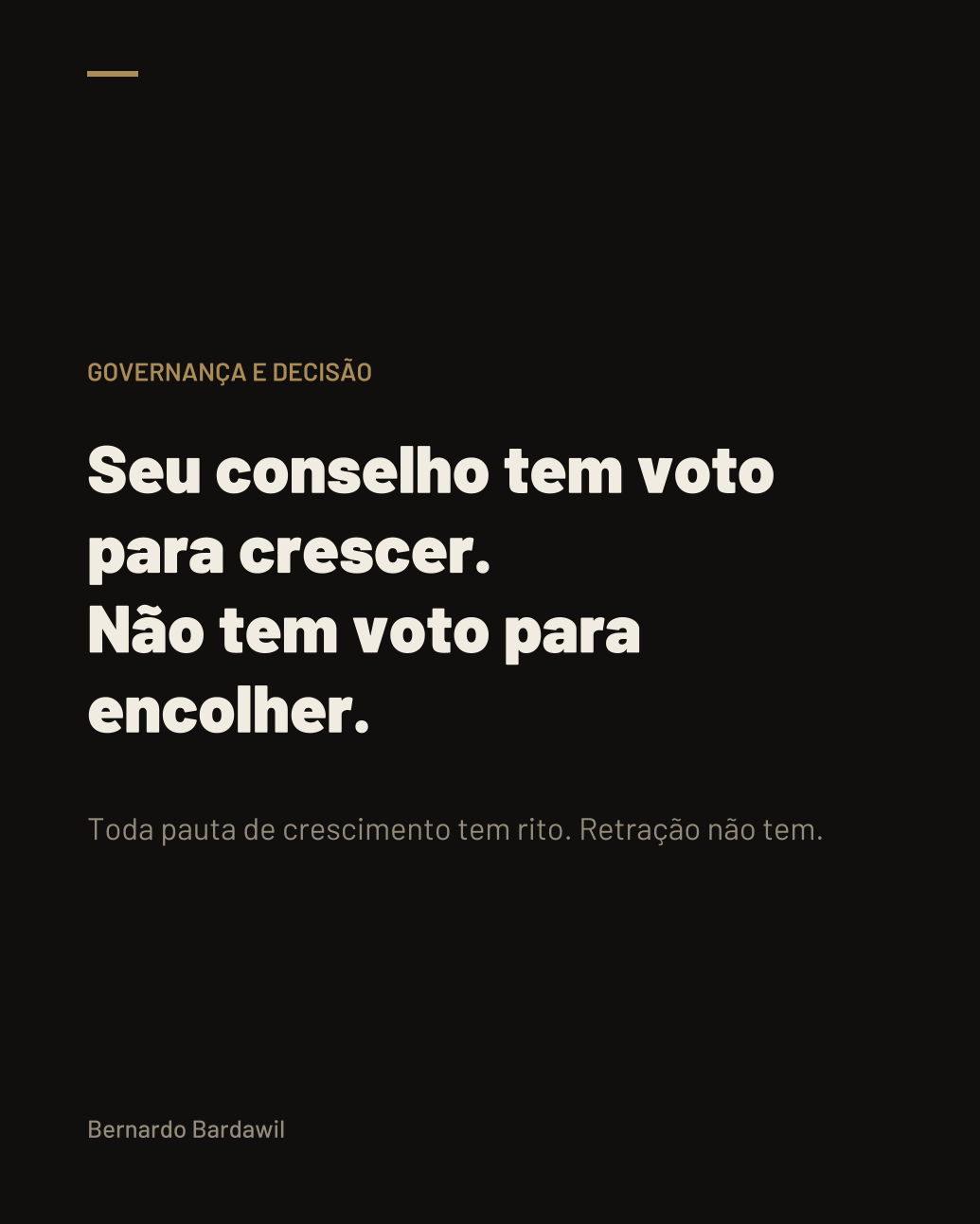
Your Board has a vote to grow. It has no vote to shrink.

Every growth agenda has a ritual. Retrenchment has none, and it happens without minutes.

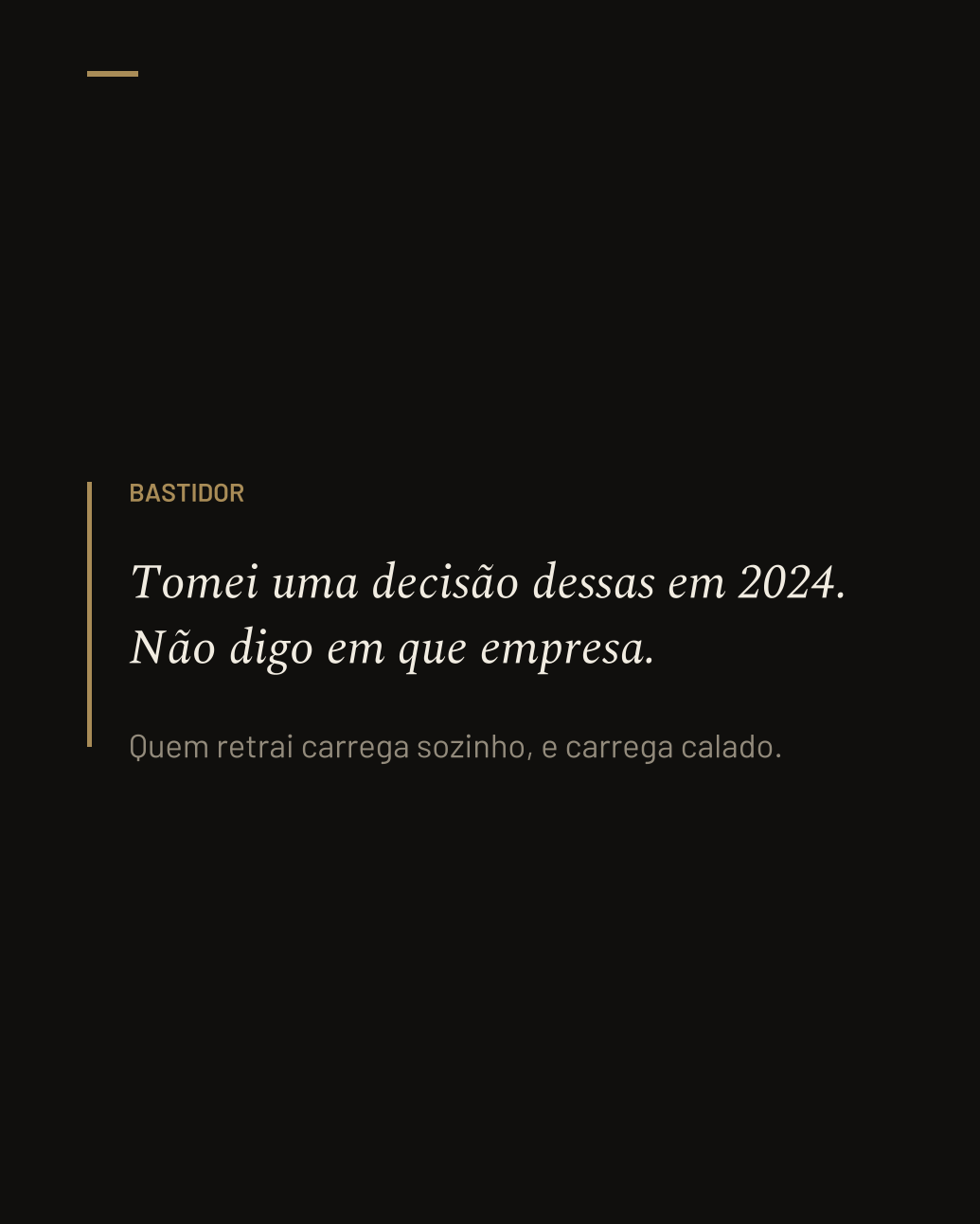
I made one of those decisions in 2024. I will not say in which company.

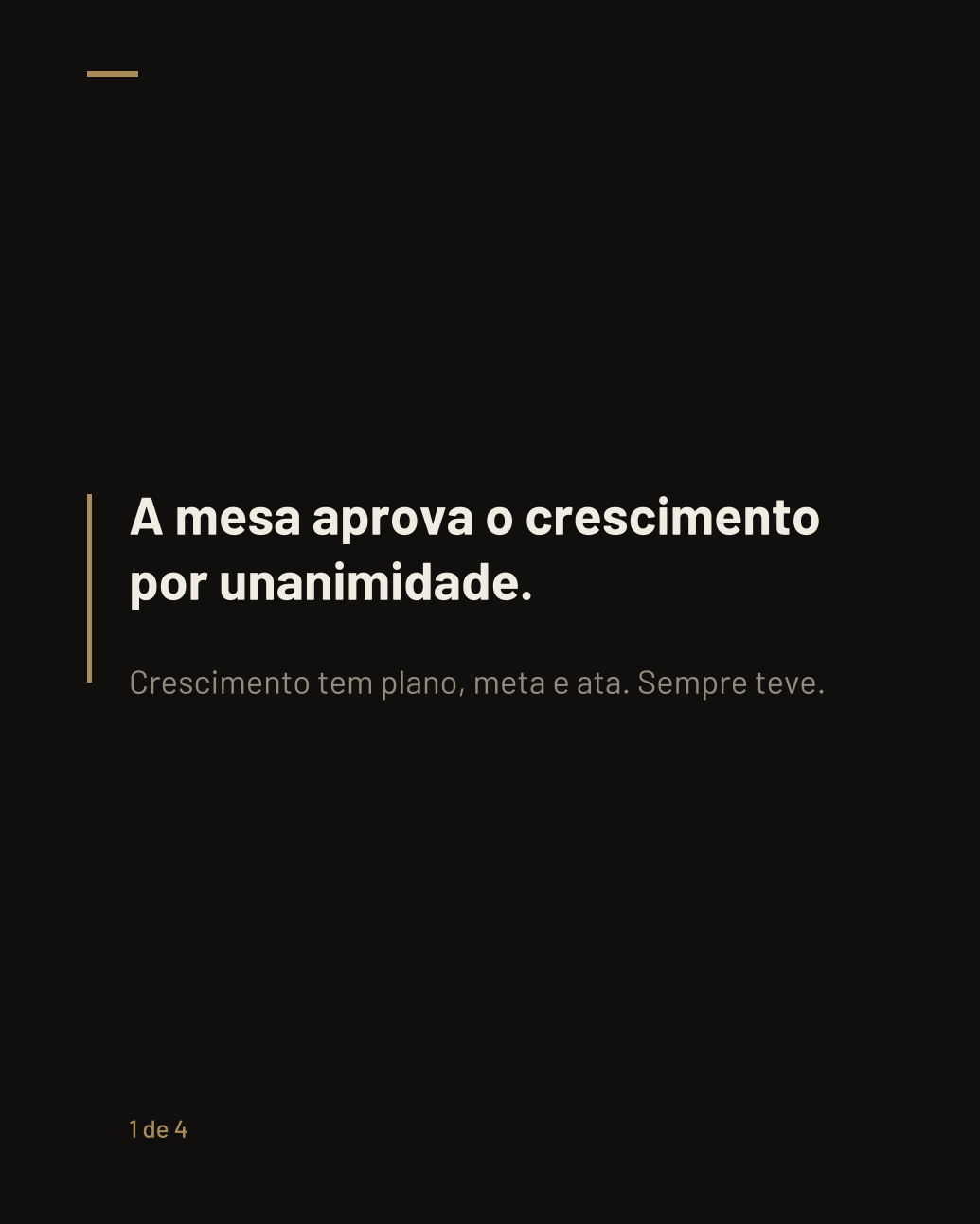
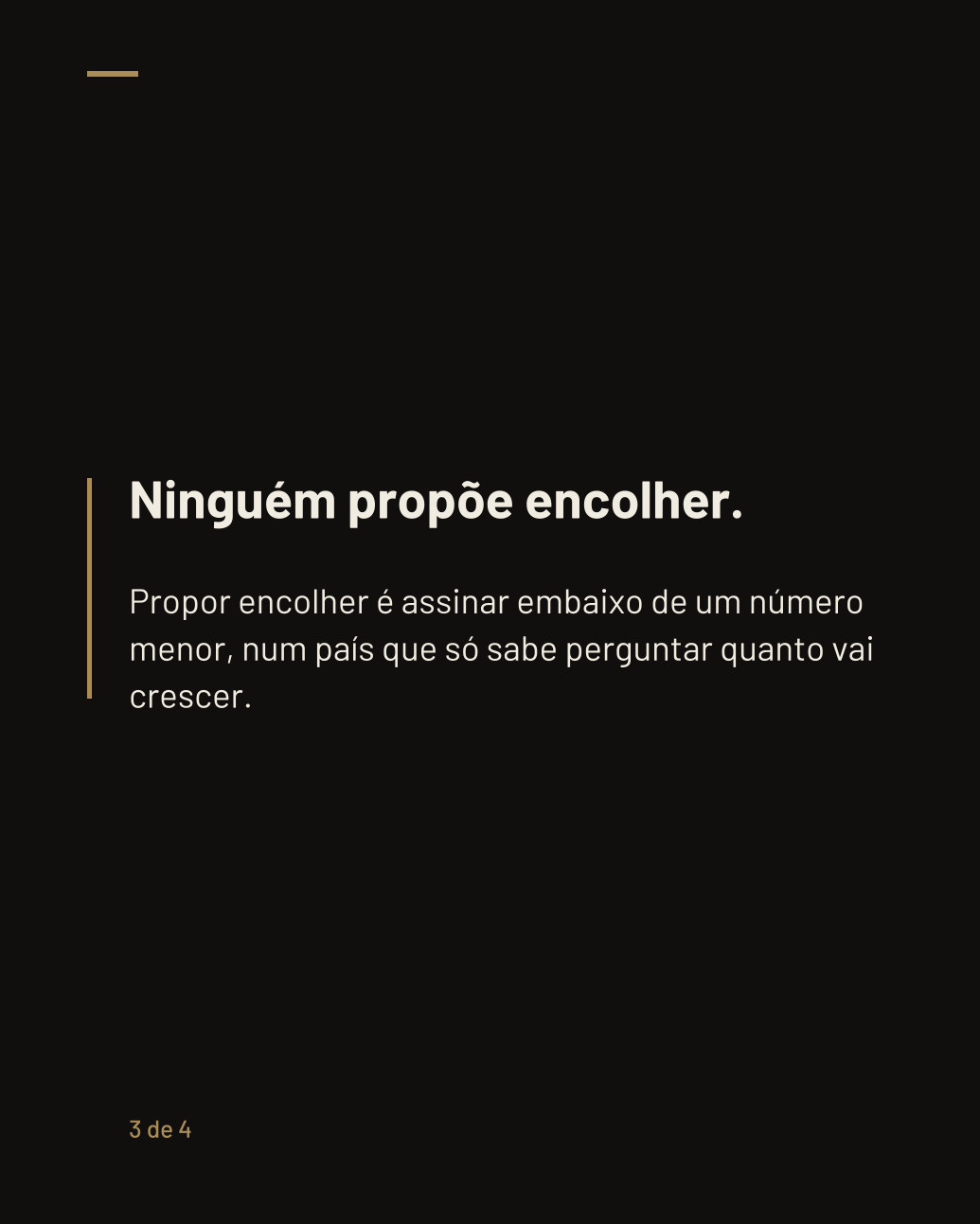
The mechanism repeats itself. The table approves growth unanimously. Then the opposite signal arrives: defaults rising, cash stretched, debt maturing before revenue comes in. Nobody proposes shrinking, because that means signing off on a smaller number in a country that only knows how to ask how much it will grow. Then someone acts. If it works, the result belongs to the Board. If it fails, the name on it belongs to whoever acted.

The table did not reject the retrenchment. It never had anywhere to vote on it.

A table that only deliberates growth hands the company's most expensive decision to a single person.

Acting alone kept the company alive and fixed nothing. The ritual still did not exist, and the next person who sees it first does the same math I did: proposing costs your name, acting costs your name, staying quiet costs nothing.

Retrenchment never gets on the agenda by itself. It gets there when cash forces it, and by then nobody chooses the size.

At the next meeting, ask which trigger forces the table to discuss shrinking. Without an answer, the decision is delegated to whoever acts alone, and the bill goes in his name.

Post page · Comment on LinkedIn

Did one of these posts describe your company?