Posts

Every week, Tuesday to Friday.

Cash, partners and succession, in the companies of those who sign. The same posts as on LinkedIn, in full, with the image or the carousel, translated from Portuguese.

Follow on LinkedIn

Aug 17, 2026

You have heard this sentence at every results meeting since 2023: the market changed


image 1/10image 2/10image 3/10image 4/10image 5/10image 6/10image 7/10image 8/10image 9/10image 10/10
1 / 10

You have heard this sentence at every results meeting since 2023: the market changed.

The market does not break companies. It reveals who never decided where they make money.

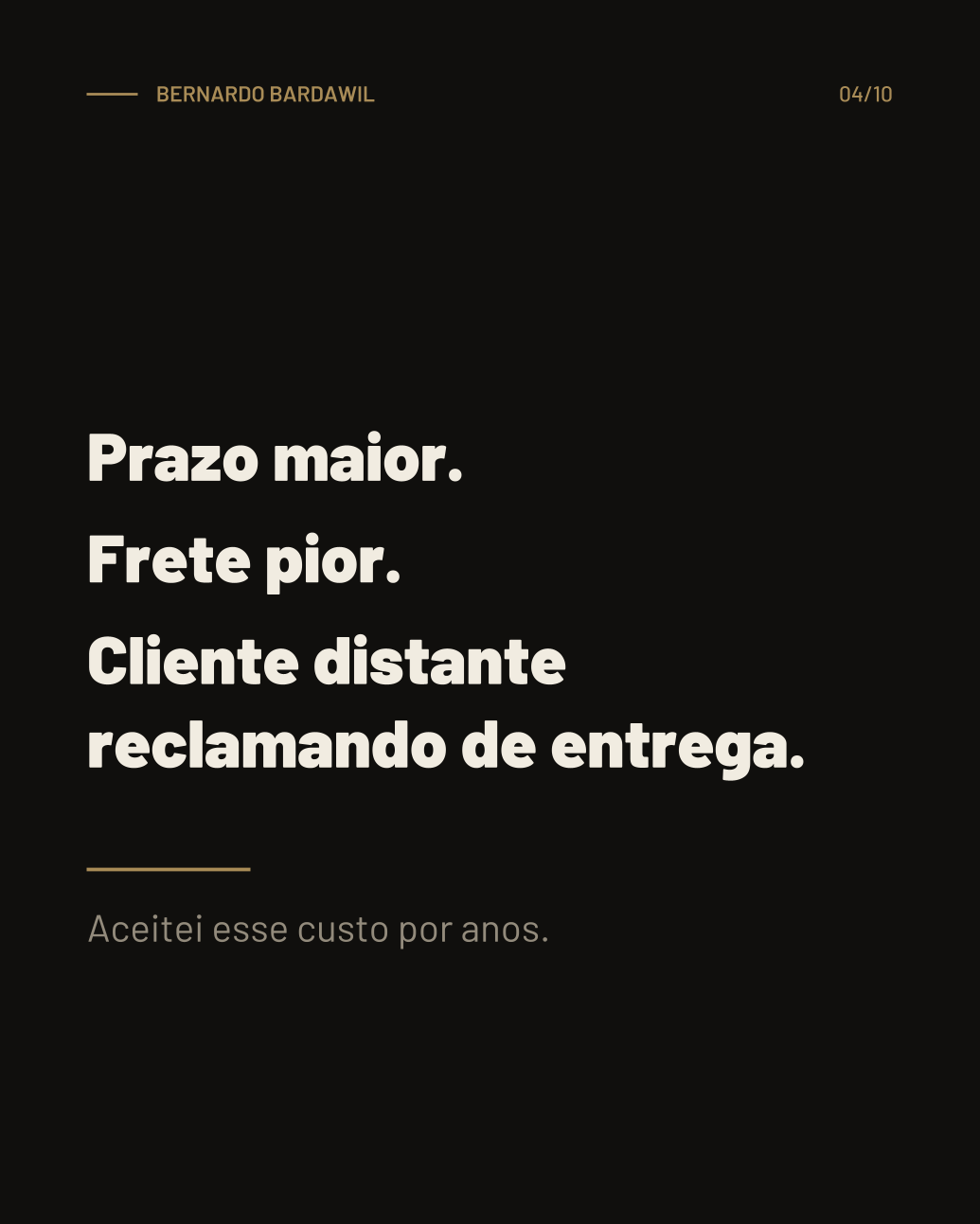
I served 18 states from a single distribution center, in Indaiatuba. It was the most criticized decision in my operation: longer lead times, worse freight, distant customers complaining about delivery time. I accepted that cost for years.

Then the price of solar modules fell and inventory lost a third of its value in three months.

Whoever had a center in each region did not have the same inventory spread out. They had more inventory. Where inventory sleeps is a Business Strategy decision, and it charges you in margin long before it charges you in service.

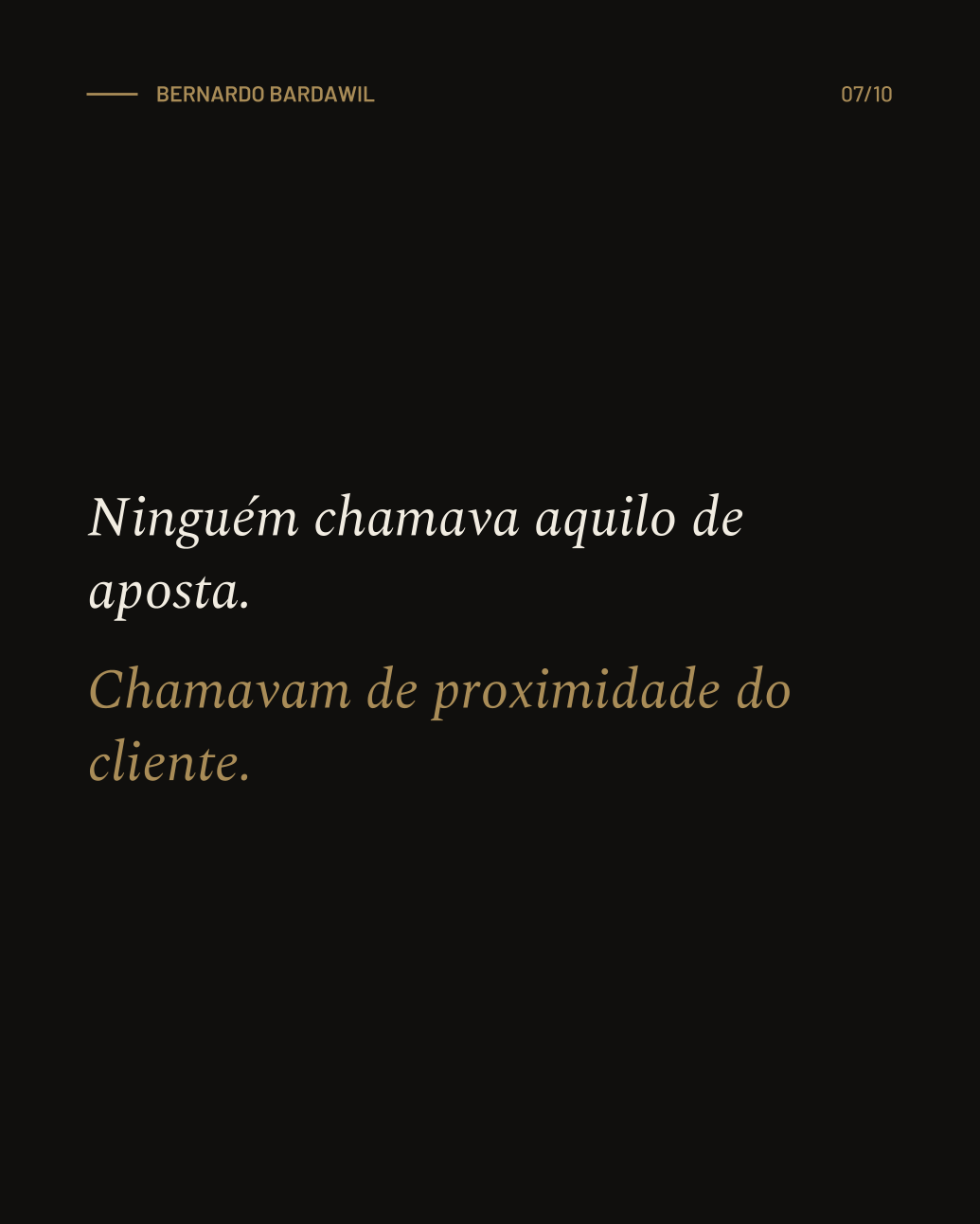
Nobody called that a bet. They called it being close to the customer.

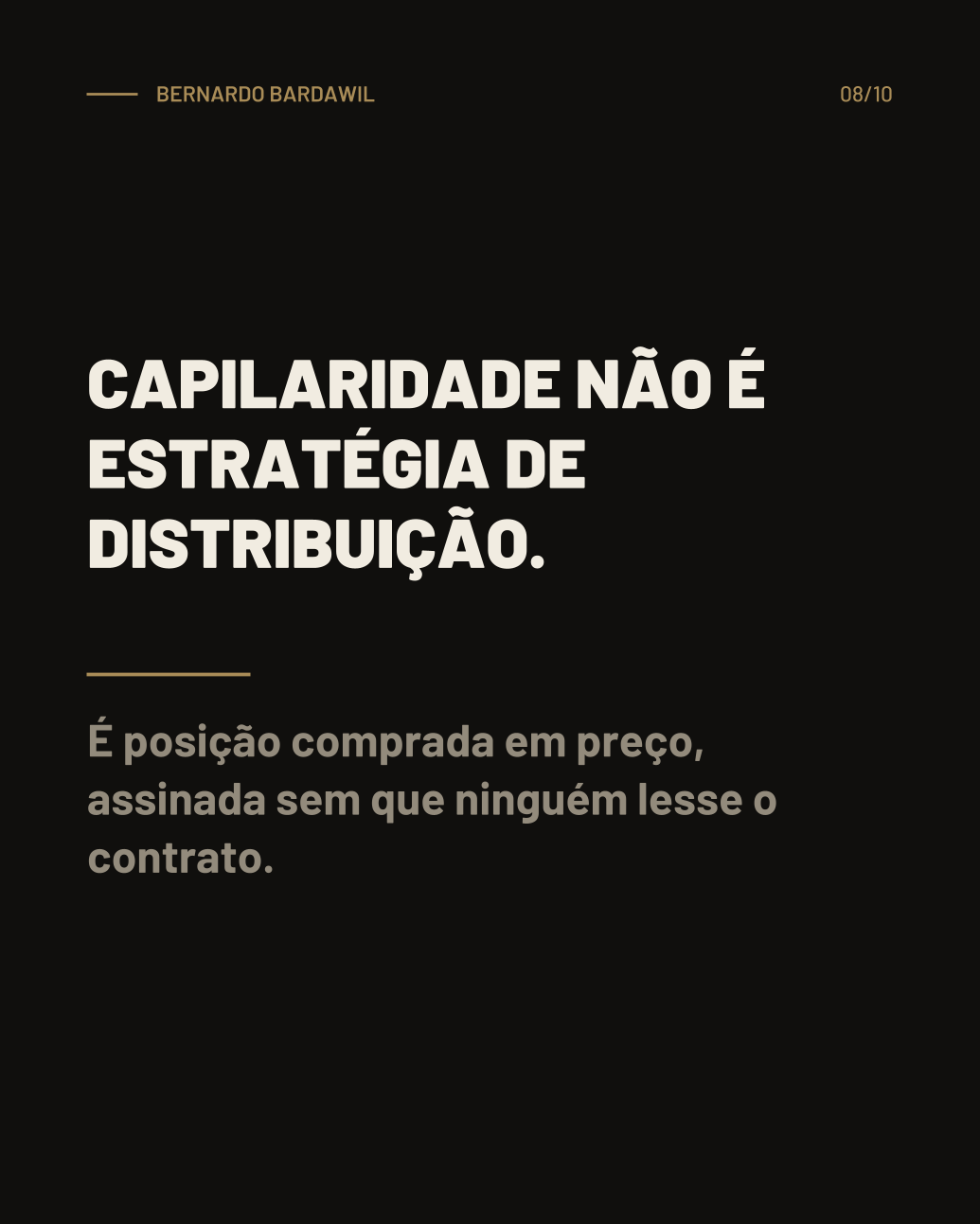
Capillarity is not a distribution strategy. It is a price position bought and signed without anyone reading the contract.

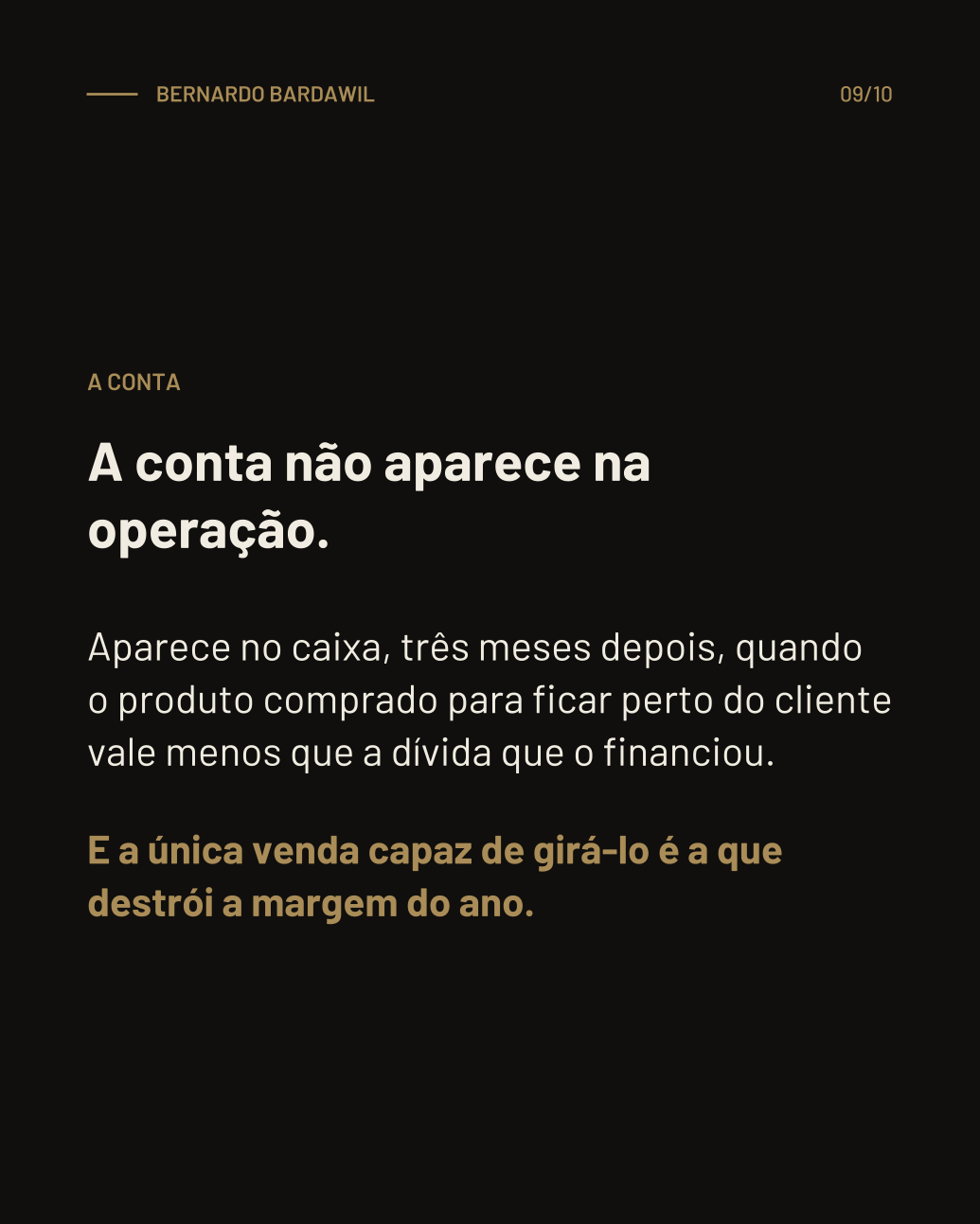
The bill does not show up in the operation. It shows up in cash, three months later, when the product bought to stay close to the customer is worth less than the debt that financed it, and the only sale able to turn it is the one that destroys the year's margin.

The market did not break those companies. It liquidated a position they had kept open for years. Yours only closes when you decide to close it.


Post page · Comment on LinkedIn

Aug 14, 2026

In your company, looking outward is nobody's job. It is whatever is left of the agenda

image 1/10image 2/10image 3/10image 4/10image 5/10image 6/10image 7/10image 8/10image 9/10image 10/10
1 / 10

In your company, looking outward is nobody's job. It is whatever is left of the agenda.

In January 2023 the price per Wp started to fall. By the end of the quarter it was close to a third of what it had been. Whoever had bought volume in the previous quarter was left with expensive inventory and the certainty that competitors would receive cheaper goods first.

I froze volume purchases and started buying the minimum. I lost scale discounts and took on stockout risk. It worked, and that is exactly why it cannot be proven: an avoided loss shows up nowhere.

I did not decide by looking at the month. I decided by looking at the months before. In energy the market warns you early, and it warns you quietly.

The problem is not lack of information.

Reading the market needs to be someone's job. As long as it is a task the owner does in the gaps, between operations and cash, Business Strategy becomes improvisation.

What this costs when nobody has that function declared:

• cash finances inventory bought at the price of the previous phase
• margin disappears without anyone pointing out where
• in the medium term the company reacts to the competitor, not to the market

As long as this is not someone's function, with a name and a schedule, the company discovers the change of phase through the competitor's invoice. Who is looking at the market for you today?

Post page · Comment on LinkedIn

Aug 10, 2026

There is a spreadsheet in your company that knows more than your system. Everyone knows whose it is

image 1/8image 2/8image 3/8image 4/8image 5/8image 6/8image 7/8image 8/8
1 / 8

There is a spreadsheet in your company that knows more than your system. Everyone knows whose it is.

Nobody keeps the wrong person out of affection. They keep them because that person was decisive in the previous phase and nobody wants to be the one who closes that account.

In 2022 I replaced three people in the energy operation. One held a position of trust and ran the area on a spreadsheet, not on the ERP. It was not incompetence: it was the way of working that functioned when the company was smaller, and nobody asked him to let go of it. The information existed, but it only existed when that person was available. I knew this before acting. I held on for six months after knowing, and I have no good defense for those six months.

The problem was never the spreadsheet.

Loyalty is not a virtue in decisions about people. A position of trust is the license the structure gives someone not to be held to the same standard as everyone else.

When information lives in one person, cash starts depending on that person's calendar. The company loses the ability to audit its own operation and calls that agility. Corporate Governance arrives late in these cases, and it arrives expensive: the bill shows up when it is time to raise capital, sell or split.

The chair will be changed one way or another.

The later it happens, the less legacy is left to celebrate.

Post page · Comment on LinkedIn

Aug 10, 2026

5,000 followers do not make me more certain about anything

5,000 followers do not make me more certain about anything.

When I started publishing here, there was only one ruler: I only write what I would say inside a Boardroom, with the owner present, the number on the table and nobody to protect me. That ruler does not loosen because the audience grew. It tightens. Every text published in recent months came out of a real meeting, out of a decision that stayed stuck too long, out of a bill someone ended up paying without having chosen to pay it.

An audience does not increase the chance of being right. It increases the price of being wrong.

The commitment stays the same, with one more requirement: no generic advice, no thesis without a scene, no softening of what really blocks family businesses. The people who read me decide expensive things. In corporate governance, a sentence that pleases charges its price later, when the decision no longer fits.

Thank you to those who read. And thank you, above all, to those who disagree in the comments and sign their name to it.

The number does not change what I write. It changes what I can no longer let slide.

Post page · Comment on LinkedIn

Aug 7, 2026

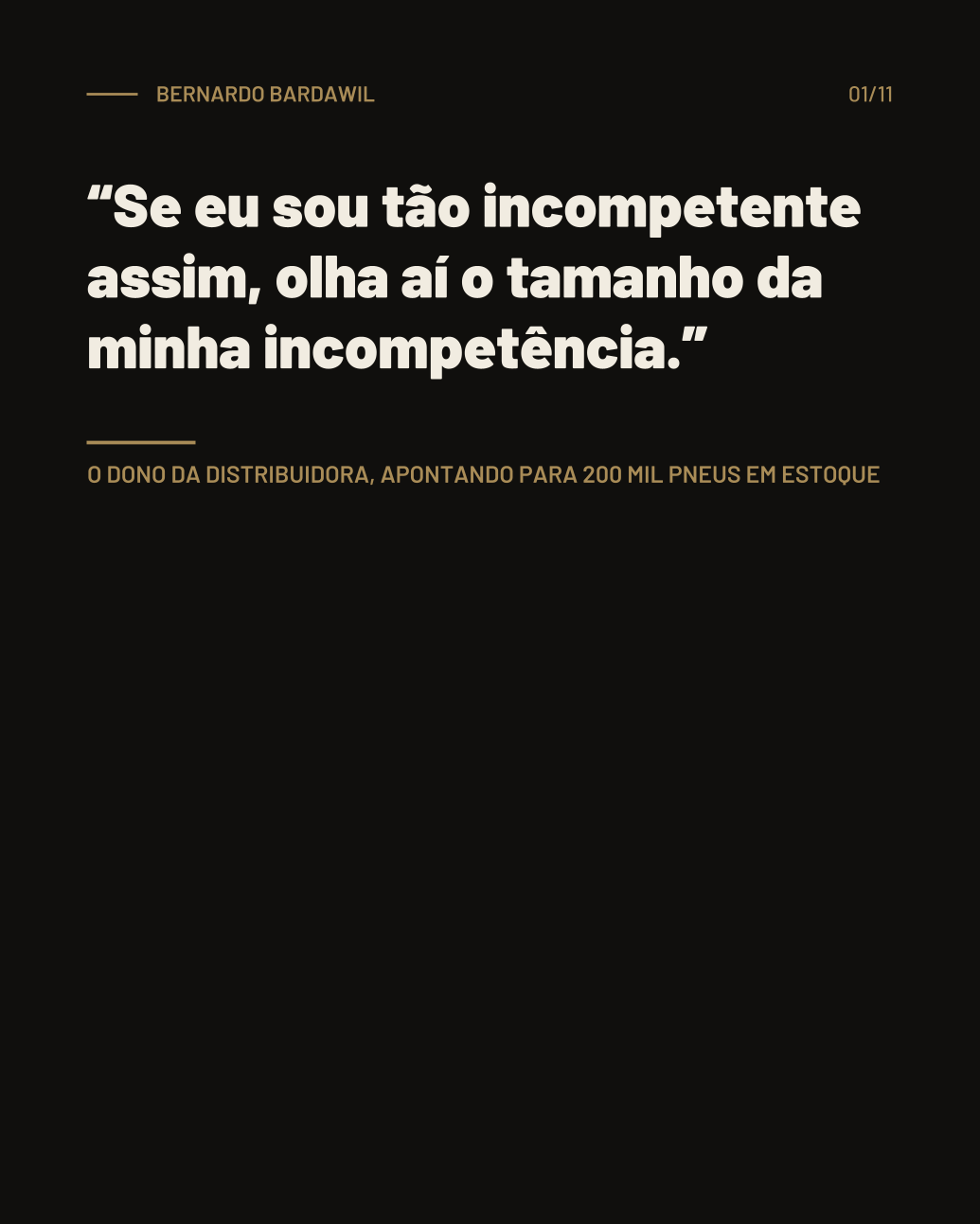
"If I am so incompetent, look at the size of my incompetence"

image 1/11image 2/11image 3/11image 4/11image 5/11image 6/11image 7/11image 8/11image 9/11image 10/11image 11/11
1 / 11

"If I am so incompetent, look at the size of my incompetence."

The owner of the distributor said this pointing at two hundred thousand tires in stock. It was the polite way of telling you to shut up.

Later I heard the same sentence in other companies. The owner of a poultry business told people to go sell his fifty useless farms.

Years later I saw how those stories ended. The poultry owner set up the entire succession and took part in none of its stages. Another hired an outside Board member, said they should sort it out, that he would stay in his chair, and left for Europe.

Neither of them refused to do succession. Both paid for it. Both left the room.

It is the reading I make at every table since then: when wealth becomes the answer to any question, the owner stops being evaluated inside his own company. And whoever is not evaluated does not transfer command.

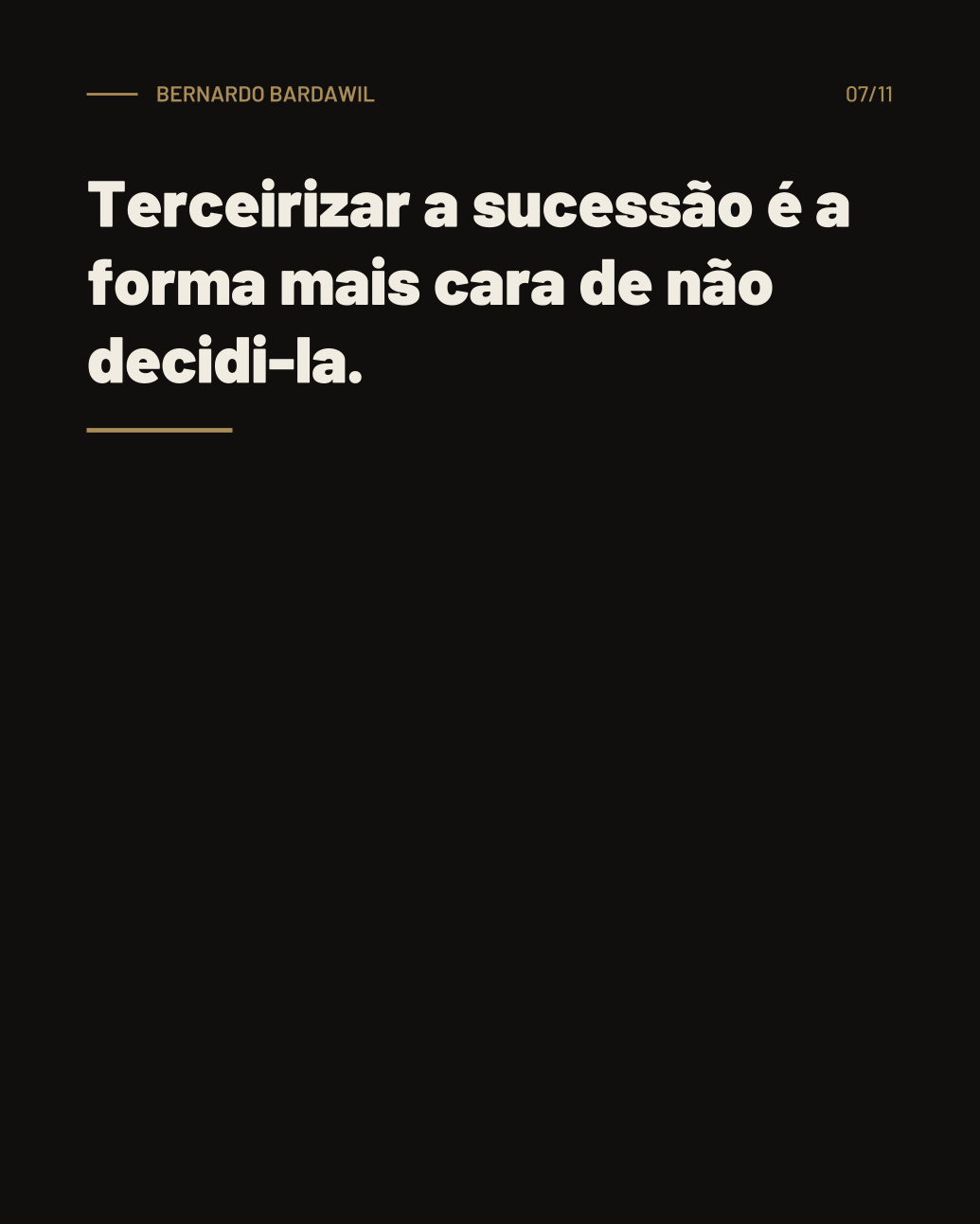
Outsourcing succession is the most expensive way of not deciding it. Corporate Governance on paper does not become real authority: the successor receives a title without a mandate and the team keeps consulting the founder. Then it is not succession, it is probate, and the cost shows up in the controlling stake.

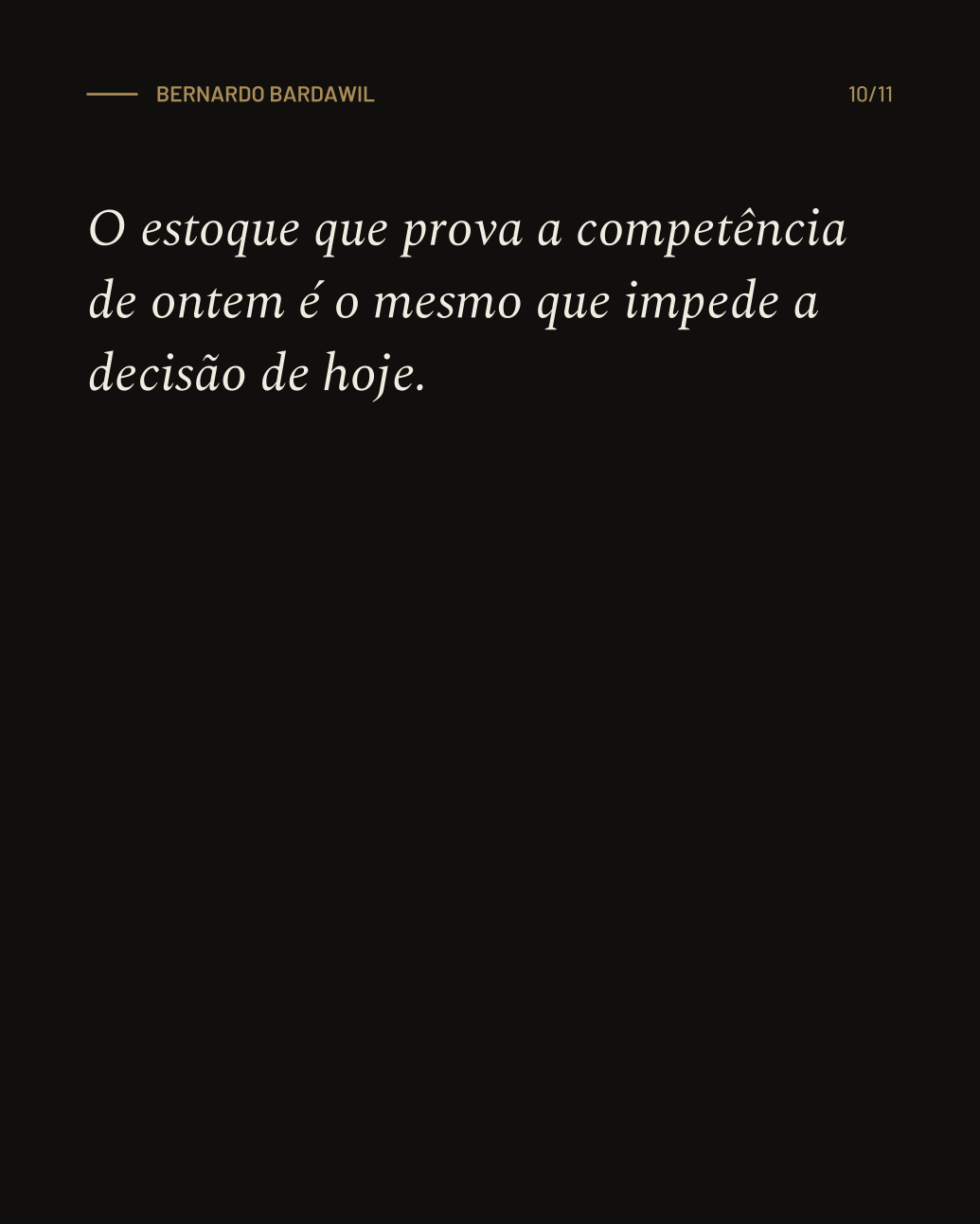
The inventory that proves yesterday's competence is the same one that blocks today's decision.

If the owner is not in the room, someone decides for him. The bank, the buyer or the probate.

If you cannot remember the last time you changed your mind inside your own company, the date of your succession already exists. You just were not the one who set it.

Post page · Comment on LinkedIn

Aug 6, 2026

Good post. The deciding variable is missing

Comment on Tiago Henrique's post about ENEOS, Japan's largest refiner, which built a plant in Yokohama able to produce liquid fuel from water and CO₂, and later paused the project because of the cost of clean hydrogen.

Good post. The deciding variable is missing.

The Yokohama plant produces about one barrel a day. 159 liters. The plan was 300 barrels a day in 2028 and 10,000 in 2040. ENEOS did not build the pilot plant and announced the end of the project within the GI fund in March 2027.

Fischer-Tropsch dates from 1925. Germany ran a war on it. South Africa ran an embargo on it. Nobody needed to prove that hydrogen and carbon become liquid hydrocarbons. What ENEOS tested was the integrated chain: direct air capture, electrolysis with clean energy, FT synthesis, refining. Integration engineering. Not discovery.

I spent more than 25 years in operations. I started at the end of the fuel chain, in automotive retail, and moved into energy by decision, not by chance. I built an operation in 18 states. Today I am a Director at Linus Green Energy, which generates power, and the math ENEOS did is the same math I do here every week.

Here the input is green hydrogen. While it costs what it costs, e-fuel competes with nothing. It is not a matter of time. It is a matter of the curve.

And before anyone thinks this is a Japanese problem: in Brazil we stopped growing for the same kind of math. Not for lack of sun, not for lack of demand, not for lack of technology. Because of the wire costs and transmission charges the country stacked on top of generation. The project still works. It just stopped closing.

I held back expansion because the line does not close. When that math rebalances, I resume the next day. I have the operation ready, waiting for the number, not waiting for the technology.

I have seen Boards approve projects because they work. Working is the floor. The question is at what price, with what CAPEX, over what horizon, and who funds the gap. ENEOS did that math and changed direction before burning the pilot. That is discipline, not retreat.

Whoever did not look at that line grew beautifully for two years and today is asking for help not to close.

Cost does not fall on its own with time. It falls because someone decides to fund scale before there is a return. ENEOS looked at its own balance sheet and said no. There are people here who looked at their own balance sheet and said nothing.

Post page · Comment on LinkedIn

Aug 3, 2026

Succession does not start with whoever takes the chair

image 1/10image 2/10image 3/10image 4/10image 5/10image 6/10image 7/10image 8/10image 9/10image 10/10
1 / 10

Have you ever seen a succession plan, perfect on paper, fail to survive the owner's office?

When the owner says the successor is not ready, he is describing himself.

2007, a tire distributor. The owner fell ill and the doctors treated the case as terminal. Weeks later the diagnosis fell apart. Recovered, he was persuaded to hire a succession consultancy.

The consultancy executed the playbook without missing a line. It mapped the family, named the successor, divided the areas among the children and reserved for him the chair of the Board.

No Corporate Governance design survives the absence of whoever still signs the decisions: the org chart changes, the power stays where it always was.

They presented his retirement ready-made, on a slide. Nobody had sat down with him beforehand.

He paid every remaining month of the contract, without asking for a discount, and gave them five minutes to leave the room.

Succession does not start with whoever takes the chair. It starts with whoever is going to leave it.
• A plan closed without the owner stalls at the first decision that goes against his will.
• A successor with a title and no mandate teaches the team to keep asking the father.
• The bill is paid in full, the contract ends in months and command stays where it always was.

The owner may be paying for the process without agreeing with it.
Until the conversation starts with him, succession keeps being decided. Only by illness, by the calendar or by the estate inventory.

Post page · Comment on LinkedIn

Jul 31, 2026

The room where everyone agrees and nothing is decided

image 1/9image 2/9image 3/9image 4/9image 5/9image 6/9image 7/9image 8/9image 9/9
1 / 9

Have you ever been in the room where everyone agrees and nothing is decided?

In a tire operation, I held the helm with several owners at the table. Each had a different opinion. The only common ground was that nobody wanted to fight.

So the position never closed. It stayed open until the deadline arrived.

And when it arrived, I decided with what I had in hand. Never with what I needed to have.

That was not a lack of information. A company with many owners and no decision forum has Corporate Governance on the org chart, not in practice, and the price comes out of cash in the form of late decisions.

Harmony between partners is not a sign of health. It is the most expensive asset a company carries when it replaces deliberation.

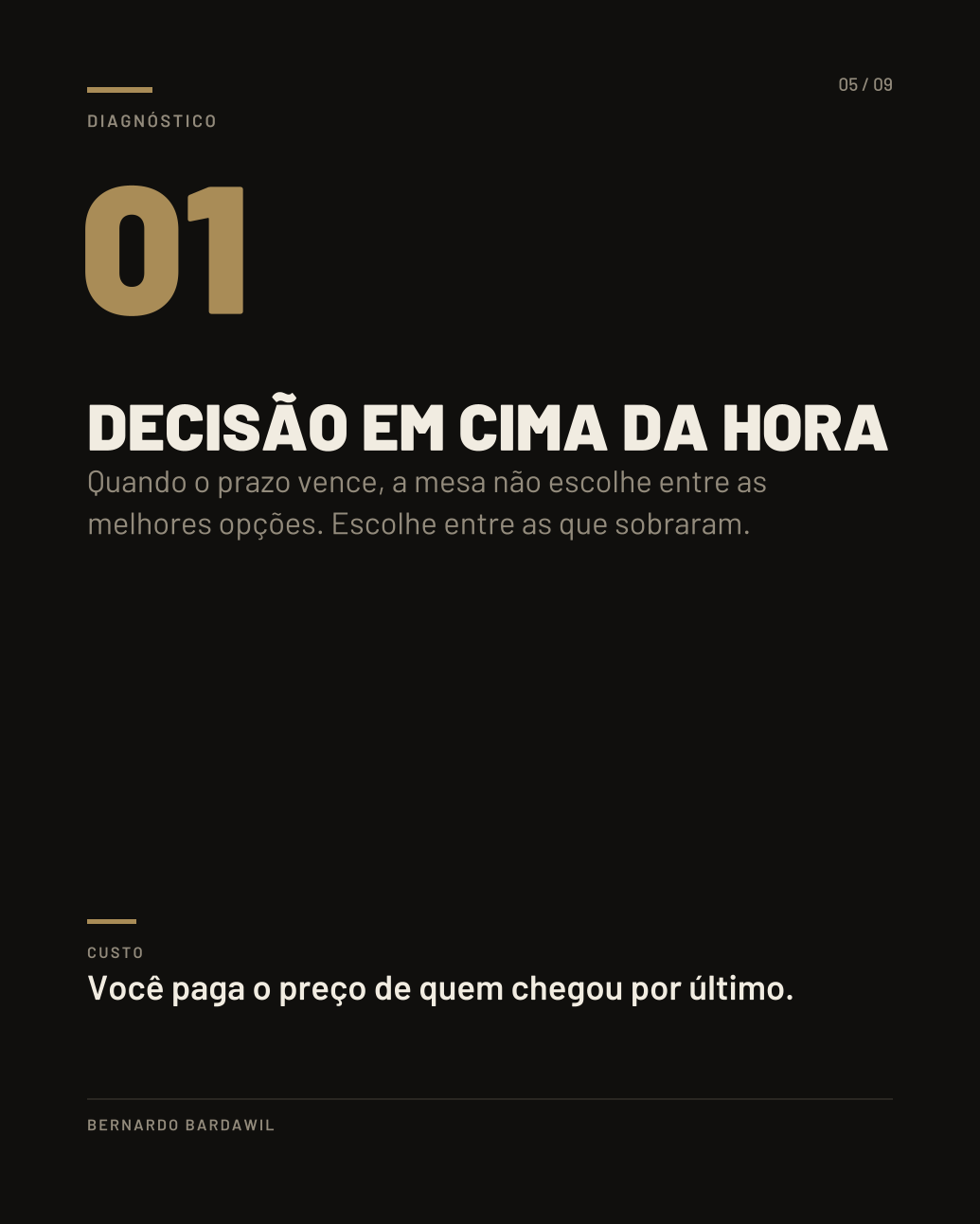
• A last-minute decision does not choose the best option. It chooses the one still available.
• The external deadline starts to set the agenda, and an external deadline does not negotiate price.
• Whoever avoids friction today transfers the cost to tomorrow's cash, and nobody signs that transfer.

What the room calls consensus shows up three months later, in the price you accepted for lack of an alternative.

Look at the next decision on your table and answer two things: who signs, and what happens if he gets it wrong. Without a name and without a consequence, there is no owner. There is a deadline.

Post page · Comment on LinkedIn

Jul 29, 2026

Most companies are not behind on AI. They are behind on doing the math

Most companies are not behind on AI. They are behind on doing the math.

At Oracle's headquarters, on the PodTecno YouTube channel, Weligton Pinto put the numbers on the table: AI demands heavy capital, the return takes years, and the technology is replaced every two.

This is not a technology discussion. It is arithmetic.

From 2016 on, I started using data centers in the companies I ran. And I have already paid to learn this math. I contracted cloud on a pay-per-use model. It looked like the prudent choice, you only pay for what you use. But the bill moved with the dollar, with volume, with everything I did not control. Every month was a surprise.

Then I contracted a server ten times larger than my need, on a long contract. The annual cost was lower than the flexible model. And there was capacity left over.

The smaller company almost always picks the variable model, because it looks cheap in the first month. It is the most expensive over the year.

A technology decision is a financial decision. Whoever treats it as an IT matter does not decide, only signs.

The episode is live on PodTecno.

Post page · Comment on LinkedIn

Jul 24, 2026

I have lived both sides of this table

image 1/7image 2/7image 3/7image 4/7image 5/7image 6/7image 7/7
1 / 7

I have lived both sides of this table. I was the son who asked for room. Today I am the third party who sits in the middle.

And what I have learned watching business families is uncomfortable: the fight over the division of power almost never comes from ego. It comes from something worse, because it is invisible: there is no translator.

The son does not want the father's place. The father does not want to lose what he built. Both want compatible things and fight anyway, because they speak different languages: one speaks of the future, the other speaks of history.

Without that bridge, the missing structure is always the same:

• Nobody defines what is being negotiated: power or autonomy. Without that, every request sounds like a threat.
• Nobody separates the company's agenda from the family's agenda. Hurt feelings walk into the meeting with voting rights.
• Nobody records what was agreed. And an agreement that does not exist gets renegotiated every Sunday.

A well-built Board, or an advisor who knows this dynamic, does not decide for the family. It takes each person to the point they need to reach and cannot reach alone.

The cost of postponing this conversation does not show up in the income statement. It shows up in the medium term: in the stalled decision, in the family talent that leaves, in the business that ends up smaller than the surname.

If this conversation is being postponed in your company, the cost has already started. The bridge is built before the next meeting, not after the next fight. Send me a message.

Post page · Comment on LinkedIn

Jul 22, 2026

The fight did not start with a shout. It started with a polite request

image 1/7image 2/7image 3/7image 4/7image 5/7image 6/7image 7/7
1 / 7

The fight did not start with a shout. It started with a polite request.

I have sat in that room more than once. On one side, the founder: the man who built everything from scratch, who went through sleepless nights, who carries the company the way one carries an eldest child. On the other, the real son, asking for room.

And the answer is almost always the same: "he is not ready. He does not know what I went through to get here."

What I have seen up close is more delicate than it looks. The founder's attachment is not ego. It is history. Letting go of something born from his own dream is different from delegating a task.

But this is where the void is born. The father cannot explain why he does not hand over authority. The son only feels he has been pushed aside. And the plain truth: one does not know how to say it, the other only knows how to feel it.

The fight that explodes months later is not about a title. It is about the conversation that never happened.

In the room I was in, the course changed when the father said the first honest sentence: "I do not know how to live without this." The son did not want his chair. He wanted to hear that.

The room the son asks for fits inside the company. What does not fit is the silence.
Post page · Comment on LinkedIn

Jul 20, 2026

At the Sunday table, losing at cards costs nothing

image 1/7image 2/7image 3/7image 4/7image 5/7image 6/7image 7/7
1 / 7

At the Sunday table, losing at cards costs nothing.

I grew up in a business family. I know the ritual: who talks loudest, who argues most elegantly, who stays quiet waiting for the next round. At home, that is living together. There is a winner, there is a loser, and lunch goes on.

The problem starts when that table walks into the meeting room.

There, the moment a winner appears among siblings, the business has already left the stage. The dispute is no longer about the company: it has become about who has the right to speak first. Ego has taken the chair of the presidency.

And when ego presides, there is only one loser. It is not the sibling. It is the company.

• The decision that mattered is postponed to preserve the pride of whoever lost.
• Whoever stayed quiet collects on that silence later, at the worst moment for cash.
• The same conflict comes back in six months, bigger and more expensive.

The Sunday table forgives. The meeting table collects.

I lived this firsthand. And I learned there is a way: this week I am writing about how to turn dispute into dialogue inside the family business.

In a company that needs a winner, the family has already started to lose.

Post page · Comment on LinkedIn

Did one of these posts describe your company?