Translating the proposal into Mandarin does not change the language you are negotiating in
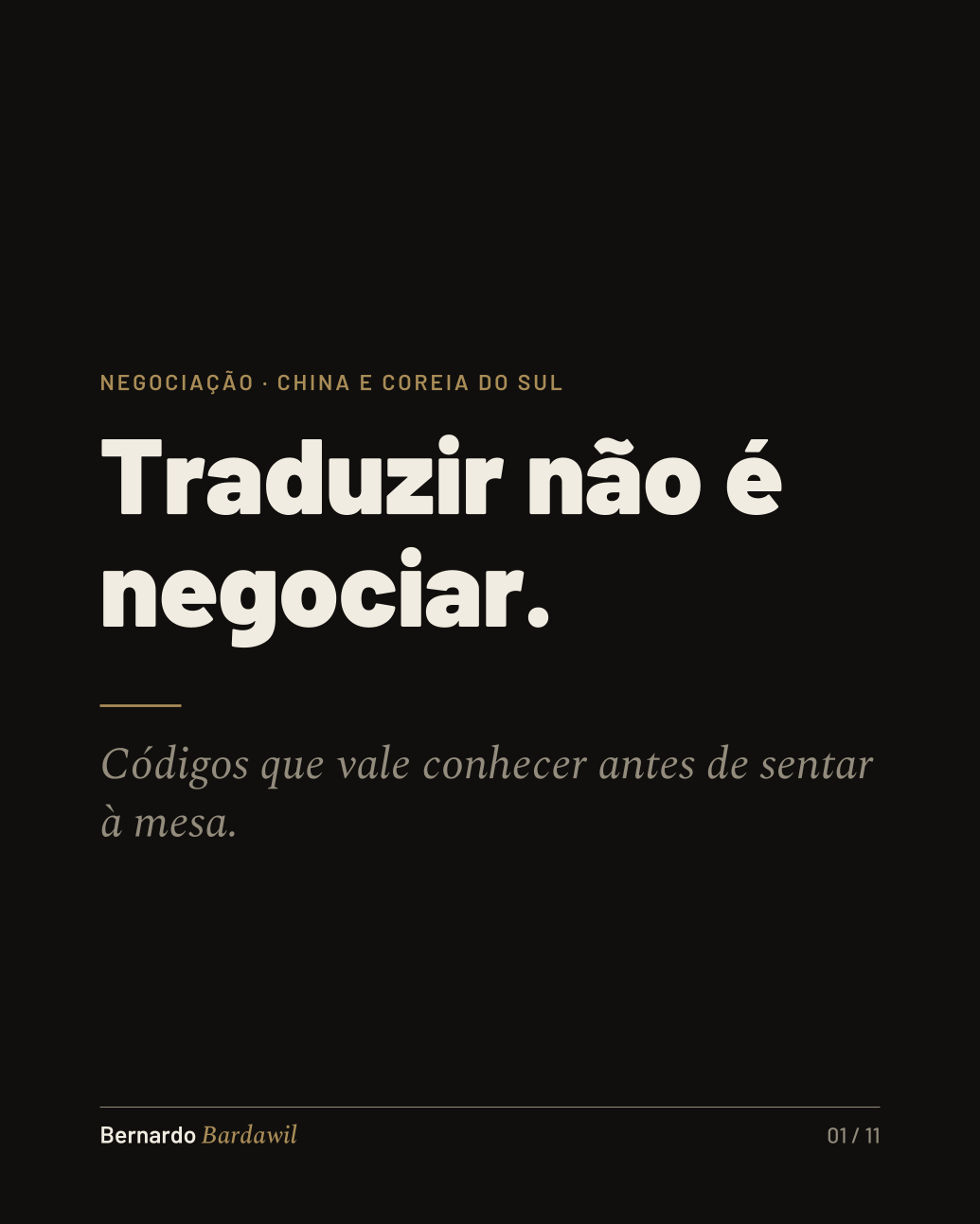





Translating the proposal into Mandarin does not change the language you are negotiating in.
I spent ten years negotiating with China and South Korea. What stays with you is not the vocabulary. It is the layers.
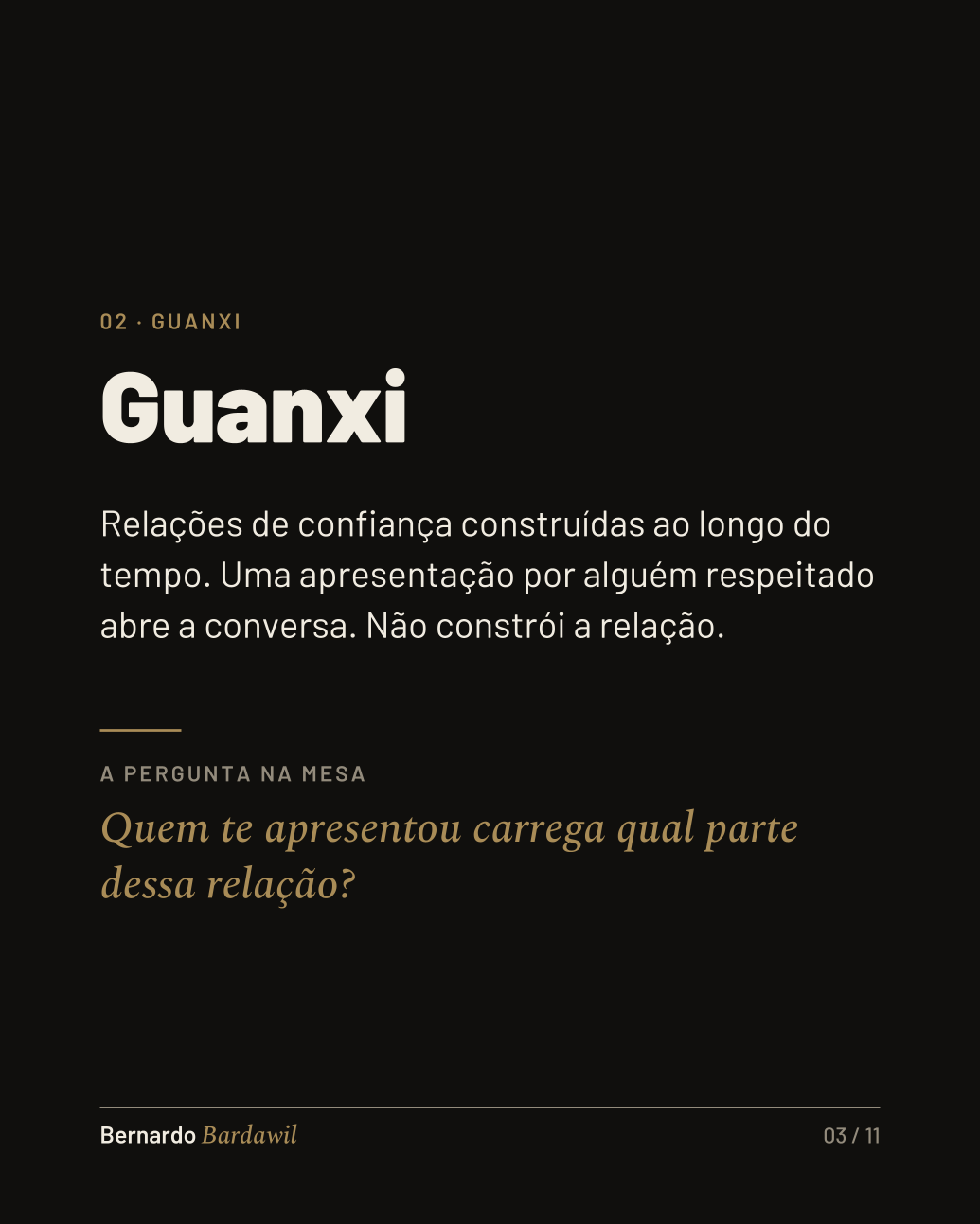
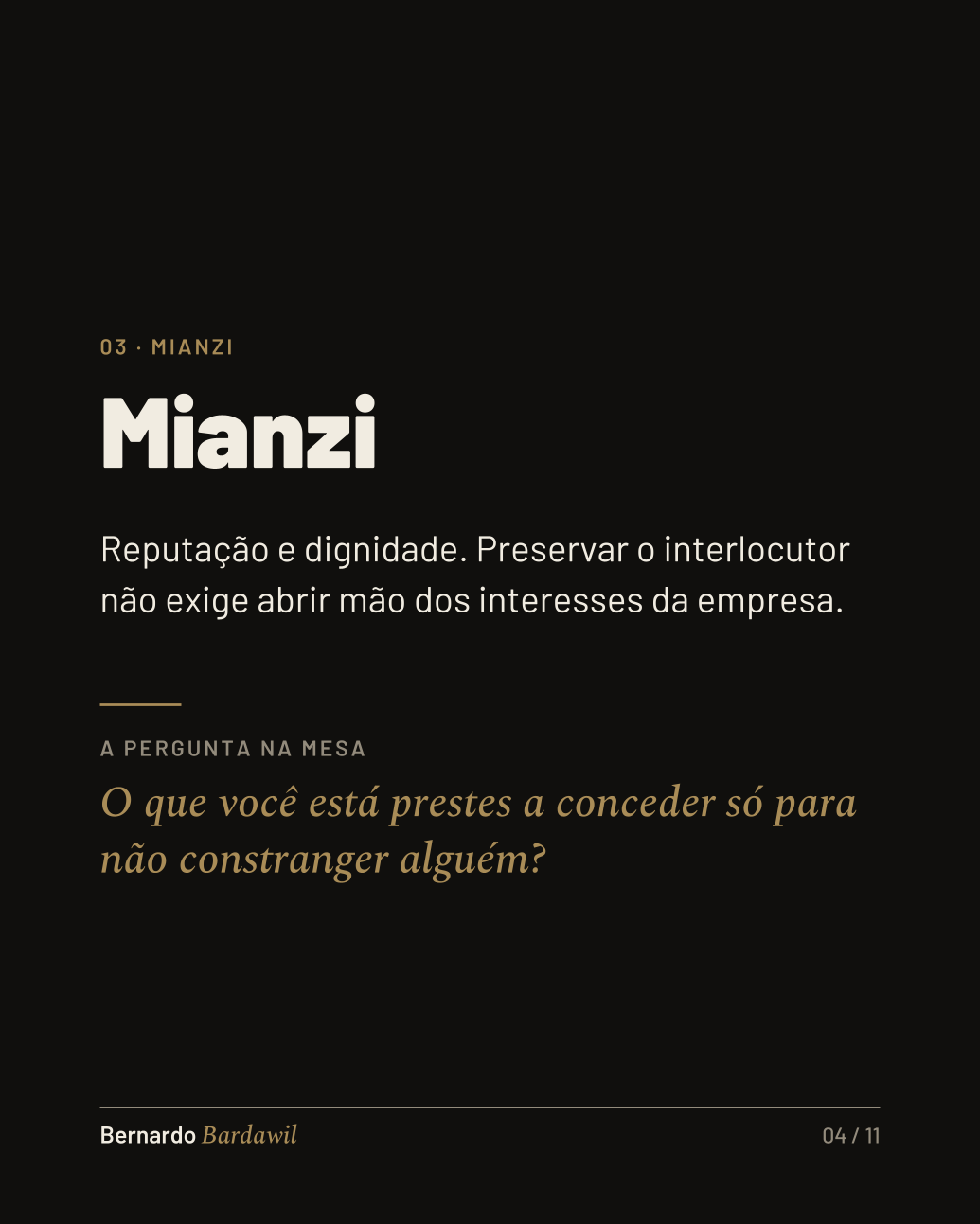
Guanxi, mianzi, hierarchy. Any guide explains the three terms. None explains what they do to price, timeline and signature.
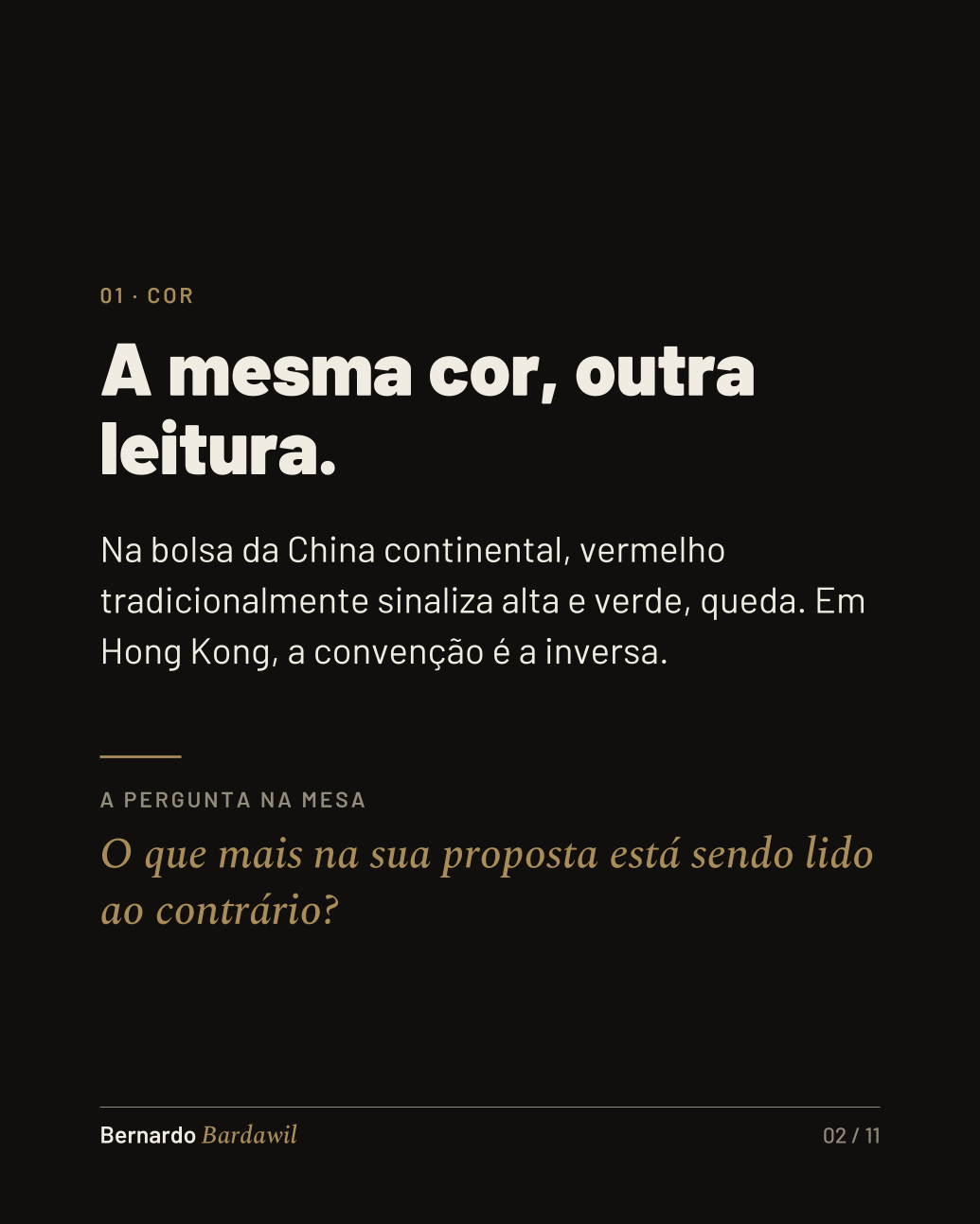
A nod at the table may mean "I understood." Whoever reads it as "I agree" finds out the difference when the contract comes back revised. The person who approves the deal is not always the person in front of you, and a concession made to preserve someone's face rarely shows up in the minutes as a concession. It shows up as a clause.
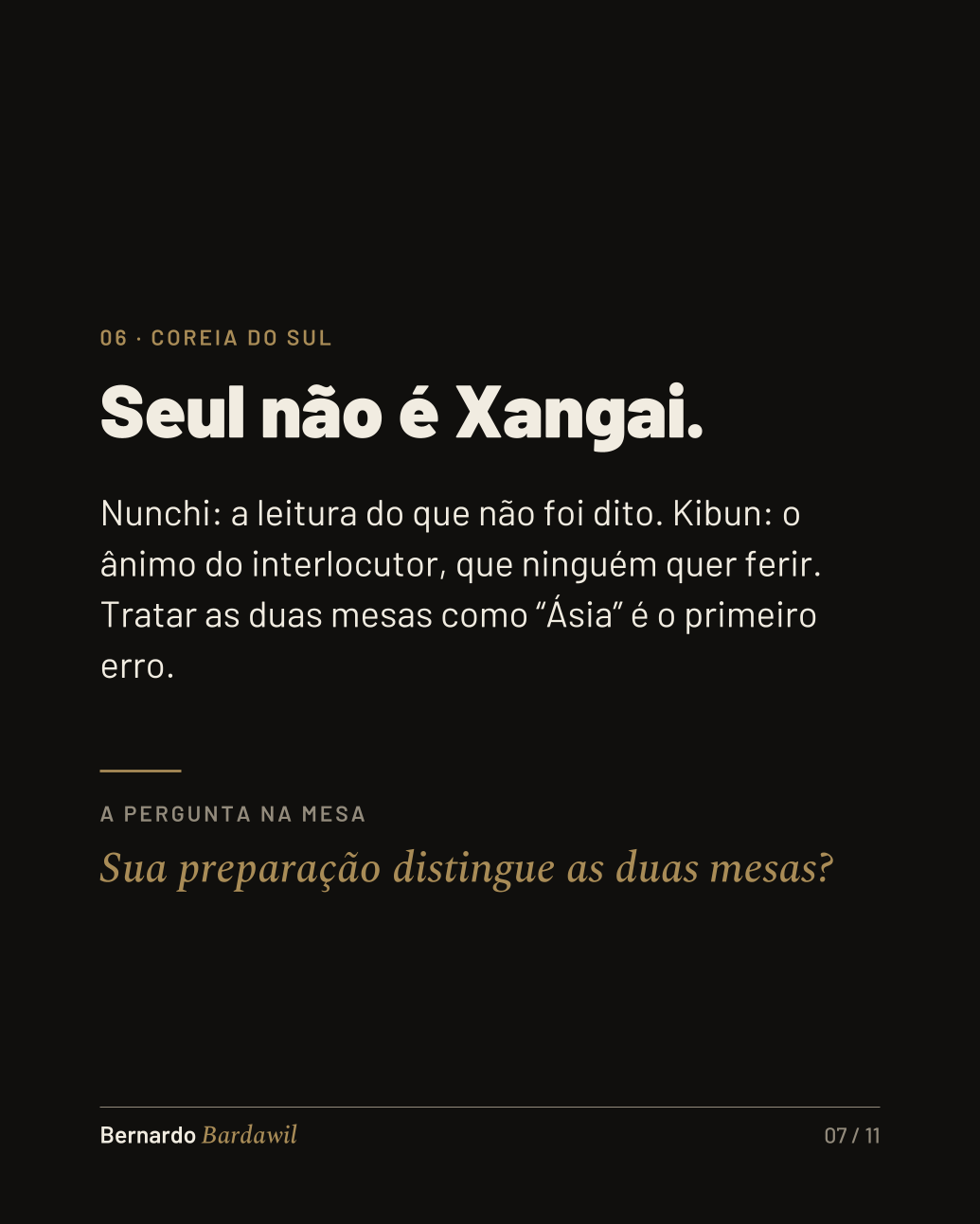
Seoul is not Shanghai. Whoever treats both tables as "Asia" has already made the first misreading.
Culture is not meeting etiquette. It is a negotiation variable.
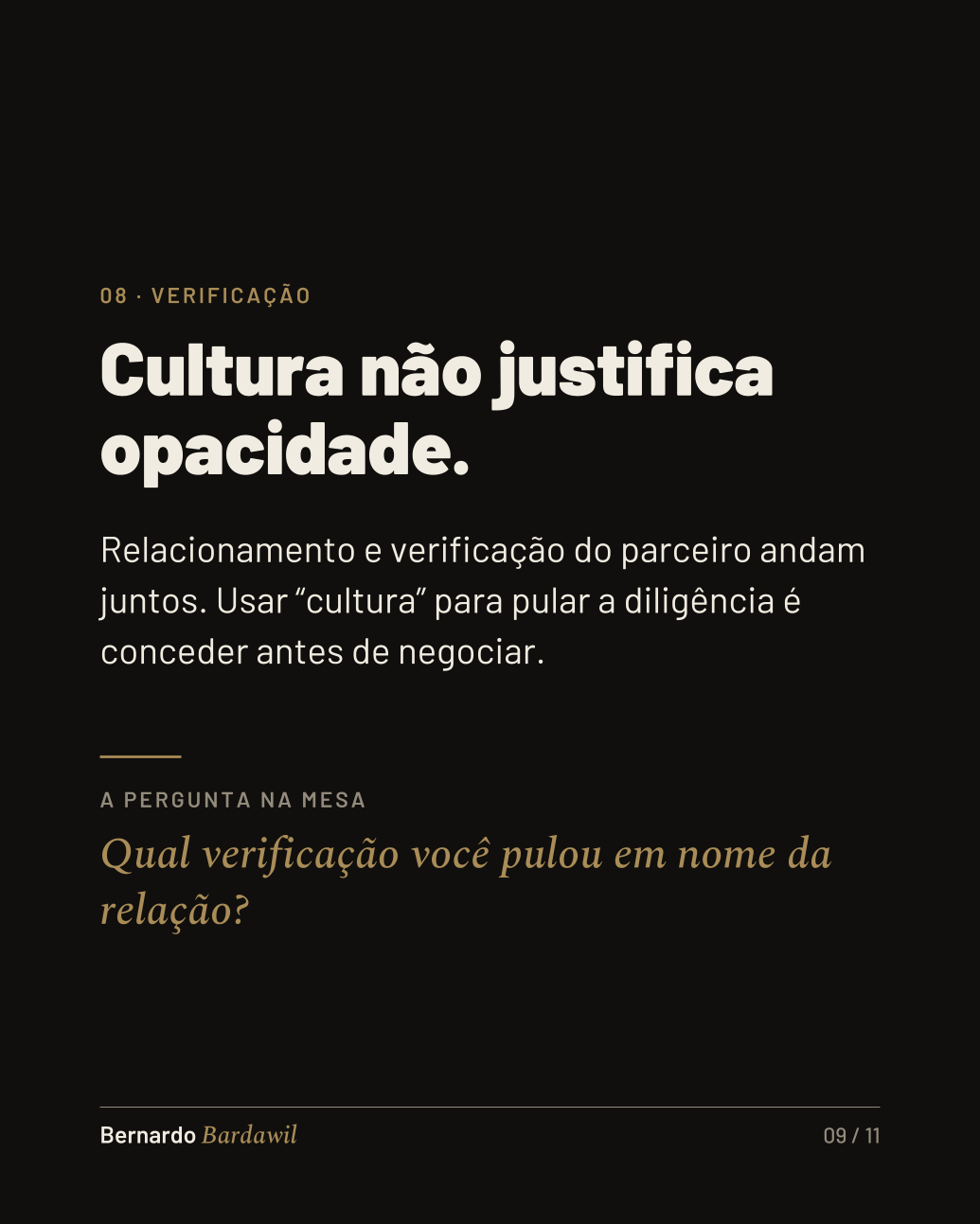
Nor is it an excuse to skip verifying the partner. Relationship and diligence move together, or one of them does not move.
Whoever does this reading beside the leadership does not just sit in on meetings. He says what was conceded without anyone noticing.
The PDF has the codes worth knowing before you sit down at the table.
What can be taught is in the PDF. The rest is read at the table.
Whoever negotiates without this reading has already paid. He just has not received the invoice yet.
Also published on LinkedIn, where the conversation continues in the comments.
Previous post"Let's wait until the election is over"