Brazil passed the law. It has not decided the map
Comment on Einer Lima's post about Redata, Brazil's new data center tax regime, and the 3rd GRI Data Center.
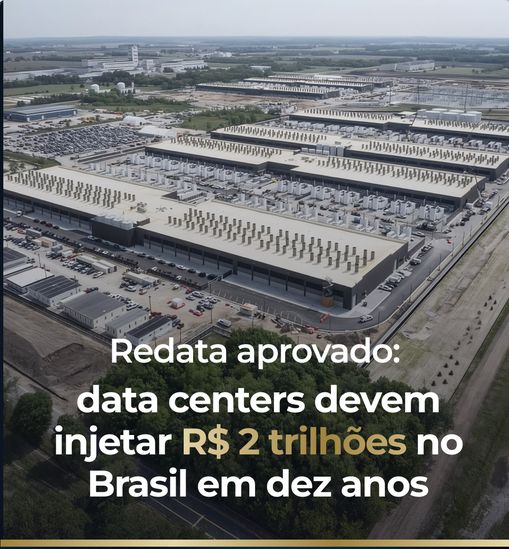
Brazil passed the law. It has not decided the map.
Redata was signed into law on September 15. It is a genuine milestone, and I will not downplay it. For the first time the country treated digital infrastructure as a strategic question rather than an expense.
But look at what the law actually does. It makes the equipment cheaper.
Equipment is the easy part of the problem.
What was left open is larger than what was settled. The definition of which energy qualifies was deferred to regulation that has not been issued. The list of equipment covered by the benefit does not exist yet. The tax that weighs most on this kind of investment is a state tax, and it was not touched: it remains stuck among the states, inside a levy the tax reform will phase out. And most of the federal benefit runs only until December 31 of this year, despite the five-year term the headlines announced.
None of that is the main point.
The main point is that almost no one is discussing where.
A data center is not a building. It is energy, water, land, connectivity and permitting, at the same coordinate, for twenty years. When a company approves billions and only then starts asking where the power will come from, that is not boldness. That is a decision made out of sequence.
The question is not what it costs to build. It is where the project still makes sense in year ten.
Apply criteria instead of preference and the map of Brazil changes shape. Where the energy resource is abundant and proven. Where the land does not compete with food production. Where the project's water does not compete with the population's water. Where international connectivity already lands instead of having to be built. Where technical talent is being formed inside the territory rather than imported into it. And where permitting has a written ruler, so the investor knows what timeline he is subject to before signing the cheque.
Ceará meets those criteria. Not because it is my home state. Because it is the only one that has already written the ruler: in July it passed the country's first state law specific to data centers and energy storage, with permitting scaled by project size and the full process preserved for large projects.
That does not make the state immune to error. Projects there have already shown what happens when you skip the conversation with the people who live on the land, and that cost shows up in litigation, not in a spreadsheet. The difference is that Ceará answered the error with a rule.
The federal law gave the country a tax regime. It did not give it a siting criterion. And while the criterion does not exist, capital is being allocated by inertia. Inertia in a twenty-year asset is not corrected with a tax break.
Disclaimer: I work in this sector.
Also published on LinkedIn, where the conversation continues in the comments.
Previous postYour Board has a vote to grow. It has no vote to shrink